A running toilet may seem like a small household problem, but it can waste a surprising amount of water every day if left untreated. Many homeowners notice a constant trickling sound, random refilling noises, or water continuously moving inside the bowl long before they realize something is wrong. While the issue can feel frustrating at first, learning how to fix a running toilet is often much easier than people expect.
Most toilet problems happen inside the tank, where a few simple components control the flow of water during and after flushing. When one of these parts stops working correctly, water keeps flowing into the bowl instead of shutting off properly. In many cases, the problem comes from a worn toilet flapper, an incorrectly adjusted float, a faulty fill valve, or a tangled flush chain.
This guide explains how to fix a running toilet step by step using simple methods that most homeowners can handle without professional help. You will also learn how the toilet tank system works, how to inspect the important parts safely, and how to identify whether the problem is minor or requires replacement parts.
Quick Guide Table
| Problem | Common Cause | Quick Fix |
| Toilet runs nonstop | Faulty flapper | Clean or replace flapper |
| Water spills into overflow tube | High water level | Lower the float setting |
| Random refilling sounds | Slow tank leak | Check flapper seal |
| Weak flush with running water | Flush valve issue | Inspect flush assembly |
| Button flush keeps running | Stuck push-button mechanism | Adjust button rods |
| Tank won’t stop filling | Broken fill valve | Replace fill valve |
Why a Running Toilet Shouldn’t Be Ignored
Many people delay fixing a running toilet because the problem does not seem urgent at first. However, a toilet that constantly leaks water can significantly increase monthly water bills over time. Even a slow leak may waste hundreds of gallons of water each week without being obvious.
Continuous water flow also places unnecessary stress on the toilet’s internal components. Parts like the fill valve and flapper wear out faster when they constantly cycle on and off throughout the day. Over time, this can lead to more expensive repairs that could have been avoided with early maintenance.
Long-term leaking may also create hidden moisture problems around the toilet area. In some homes, excess water exposure can damage flooring, weaken seals, or encourage mold growth near the base of the toilet. What begins as a simple repair can eventually turn into a larger plumbing issue if ignored for too long.
Understanding how to fix a running toilet early helps prevent unnecessary water waste while protecting the toilet from further damage.
The Most Common Causes of a Running Toilet
A running toilet usually happens because one of the internal tank components is no longer sealing or adjusting water correctly. The most common cause is a faulty toilet flapper. This rubber piece sits at the bottom of the tank and seals the flush valve opening after each flush. When the flapper becomes warped, cracked, or dirty, water slowly leaks into the bowl and causes the toilet to refill continuously.
Fill valve problems are another frequent reason toilets keep running. The fill valve controls how much water enters the tank after flushing. If the valve fails or the float is adjusted incorrectly, water may rise too high and spill into the overflow tube.
Flush chain issues can also prevent proper sealing. A chain that is too tight may keep the flapper slightly open, while a chain that is too loose or tangled may interfere with normal flushing.
Modern button flush toilets sometimes develop problems inside the push-button mechanism or dual-flush assembly. In older toilets, worn internal parts may simply reach the end of their lifespan after years of daily use.
How to Inspect the Toilet Tank Before Starting Any Repair
Before making repairs, it is important to inspect the toilet tank carefully. Start by turning off the water supply valve located behind the toilet near the wall. Rotate the valve clockwise until the water stops flowing into the tank.
Next, remove the tank lid slowly and place it on a flat, secure surface. Toilet lids are made of porcelain and can crack easily if dropped or handled roughly.
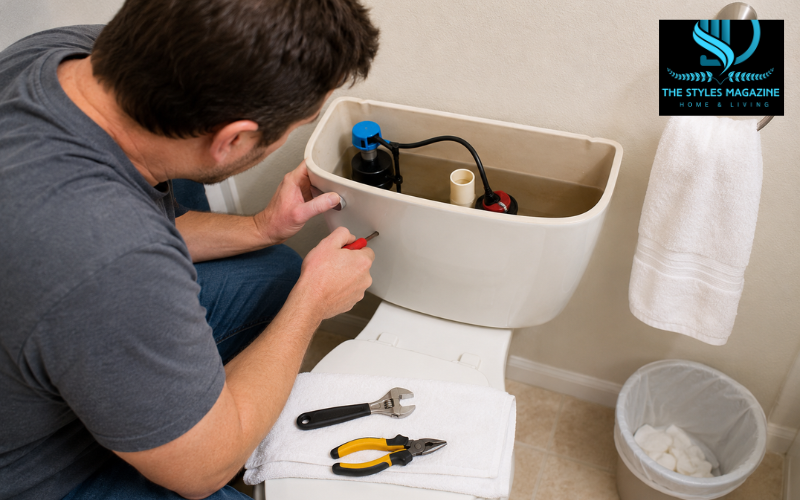
Once the lid is removed, you will see the main toilet components inside the tank. The fill valve is usually positioned on one side of the tank and controls incoming water flow. The overflow tube stands vertically near the center. At the bottom of the tank sits the rubber flapper, which lifts during flushing and seals afterward. A chain connects the flapper to the flush handle or button mechanism.
Inspect each component closely for obvious problems such as tangled chains, mineral buildup, worn rubber seals, or water overflowing into the tube.
Adjusting the Water Level Inside the Tank
One of the simplest ways to fix a running toilet is adjusting the water level inside the tank. If the water rises too high, it spills continuously into the overflow tube and causes nonstop running.
A common sign of high water level is hearing water movement even when the toilet has not been flushed recently. You may also notice water flowing directly into the open overflow pipe.
The float mechanism controls water flow inside the tank. Older toilets often use a floating ball attached to a metal arm, while newer models use a floating cup that slides along the fill valve column. As the water rises, the float tells the fill valve when to shut off.
To lower the water level, locate the adjustment screw or clip connected to the float assembly. Turn the adjustment slightly until the water settles about half an inch below the top of the overflow tube. This small adjustment often stops the toilet from running immediately.
Fixing a Toilet Flapper That Won’t Seal Properly
The toilet flapper is one of the most important parts inside the tank. When it no longer seals properly, water slowly escapes into the bowl and forces the toilet to refill repeatedly.
A leaking flapper often causes random refilling sounds every few minutes. Sometimes the toilet runs continuously because the seal never closes completely after flushing.
Mineral deposits and dirt commonly collect around the flapper and flush valve seat. Cleaning these surfaces may restore a proper seal. Turn off the water supply, flush the toilet to empty the tank, and gently wipe away buildup using a sponge or cloth.
If the flapper looks cracked, stiff, warped, or damaged, replacement is usually the better solution. Unhook the old flapper from the overflow tube pegs and disconnect the chain. Then install a matching replacement flapper and reconnect the chain with a slight amount of slack.
Learning how to fix a running toilet flapper is one of the most effective ways to stop toilet leaks quickly and inexpensively.
Solving Flush Chain Problems Inside the Tank
Flush chain problems are small but surprisingly common causes of running toilets. When the chain length is incorrect, the flapper may not close completely after flushing.
A chain that is too tight keeps tension on the flapper and prevents proper sealing. On the other hand, a chain that is too loose may tangle underneath the flapper or fail to lift it correctly during flushing.
To adjust the chain, reconnect the clip to a different hole on the flush lever rod until the chain has only a small amount of slack when the flapper rests closed. The chain should move freely without pulling or hanging excessively.
If extra chain length remains, trimming the excess helps prevent future tangling inside the tank.
How to Fix a Running Toilet Fill Valve
The fill valve controls water entering the toilet tank after each flush. When the valve becomes worn or damaged, water may continue running even after the tank appears full.
One common sign of a failing fill valve is water constantly flowing into the overflow tube despite lowering the float. Some valves also produce hissing sounds or inconsistent filling behavior.
Minor blockages caused by mineral buildup can sometimes be cleaned without replacing the entire valve. Shut off the water, remove the valve cap according to the manufacturer’s instructions, and rinse away debris carefully.
If cleaning does not solve the issue, replacing the valve is often necessary. Start by emptying the tank completely and disconnecting the water supply line beneath the tank. Remove the old fill valve locknut, lift out the valve, and install a compatible replacement.
After reconnecting the water supply, turn the water back on and test the toilet several times to ensure the valve shuts off correctly.
How to Fix a Running Toilet Flush System
Sometimes the problem involves the entire flush system rather than a single part. A weak flush seal or damaged flush valve can allow continuous leaking from the tank into the bowl.
Over time, the flush valve seat may wear down or develop rough surfaces that prevent proper sealing. In these cases, replacing only the flapper may not completely stop the leak.
Some toilets also develop cracks or damage around the flush assembly itself. If multiple parts continue failing despite repairs, replacing the entire flush assembly may provide a longer-lasting solution.
Although this repair takes more time, many universal flush kits are designed for simple home installation and include clear instructions.
How to Fix a Running Toilet With a Button Flush
Modern dual-flush and button flush toilets use slightly different internal systems than traditional handle-operated toilets. These designs are efficient, but they can also develop running water problems when the push-button mechanism becomes misaligned.
In many cases, the flush buttons fail to reset completely after flushing. This keeps the internal seal partially open and allows water to leak continuously into the bowl.
Adjusting the push-button rods or resetting the flush mechanism often solves the problem. Some toilets also require cleaning around the sealing surfaces to remove debris that interferes with proper closure.
Because button flush systems vary by manufacturer, checking the toilet model instructions may help identify the correct adjustment method.
How to Fix a Running Toilet Without Removing the Tank
Many homeowners prefer trying simple repairs before removing the tank entirely. Fortunately, several common running toilet problems can be solved without major disassembly.
Minor water level adjustments, chain corrections, and flapper cleaning can usually be completed while the tank remains fully installed. These quick fixes often solve the issue within minutes.
However, some situations require more extensive repairs. If the fill valve, flush valve, or tank seals need replacement, partial tank removal may become necessary for proper access.
Knowing how to fix a running toilet without removing the tank can save time and reduce stress for smaller maintenance problems.
How to Fix a Running Toilet Without a Flapper
Some newer toilets use flapperless systems instead of traditional rubber flappers. These designs often rely on tower-style flush mechanisms that lift vertically during flushing.
When these systems fail, the seals inside the flush tower may become worn or misaligned. Mineral buildup can also interfere with smooth movement.
Repairing flapperless toilets usually involves cleaning the tower assembly, replacing worn seals, or adjusting the flush mechanism according to the manufacturer’s instructions.
Although these systems look different from traditional toilets, the repair process is often still manageable for homeowners with basic tools.
Mistakes That Often Make a Running Toilet Worse
Many toilet repairs become more complicated because of small mistakes made during installation or adjustment. Overtightening plastic parts is a common issue that can crack fittings or damage threads inside the tank.
Using the wrong replacement flapper may also prevent proper sealing. Since toilets use different flush valve sizes, choosing the correct flapper model is important for preventing leaks.
Ignoring small leaks can gradually damage other components over time. Incorrect float adjustments may also cause overflow problems instead of solving them.
Mixing incompatible toilet parts from different brands sometimes creates fitting issues that lead to additional leaks or poor flushing performance.
Signs It’s Time to Replace Toilet Parts Instead of Repairing Them
Some toilet parts simply wear out after years of use and repeated repairs. If the toilet continues running despite multiple adjustments, replacement may be more practical than temporary fixes.
Rubber seals and flappers eventually become brittle, cracked, or misshapen. Plastic components may weaken with age and stop functioning properly.
Older toilet hardware may also become less efficient compared to newer replacement parts designed to conserve water and improve performance.
When repairs become frequent or several parts fail at the same time, replacing the affected components can restore reliable operation and reduce future maintenance.
Simple Maintenance Tips to Prevent a Running Toilet
Regular maintenance helps prevent many common toilet problems before they become serious. Checking inside the tank every few months allows homeowners to catch worn parts early.
Cleaning mineral deposits from seals and moving components helps maintain proper operation. Hard water buildup is one of the leading causes of flapper and valve problems.
It is also helpful to inspect chains, floats, and seals periodically for signs of wear or misalignment. Replacing aging rubber seals before they fail completely can prevent unexpected leaks and unnecessary water waste.
Simple preventive care keeps the toilet working efficiently while reducing the chances of future running problems.
Conclusion
Learning how to fix a running toilet can save water, lower utility bills, and prevent small plumbing problems from becoming expensive repairs. In many cases, the solution involves simple adjustments or replacing inexpensive parts like the toilet flapper, fill valve, or flush chain.
Most running toilet repairs are manageable for homeowners with basic tools and a little patience. The key is identifying the exact cause before replacing components unnecessarily.
By inspecting the toilet regularly and addressing leaks early, homeowners can keep their toilets operating efficiently while avoiding wasted water and long-term damage. A properly functioning toilet not only improves household comfort but also helps conserve one of the home’s most valuable resources.
FAQs
Why Does My Toilet Keep Running After Flushing?
A toilet usually keeps running because the flapper is leaking, the fill valve is faulty, or the water level inside the tank is set too high.
Can I Fix A Running Toilet Without Calling A Plumber?
Yes, most running toilet problems are simple and can be fixed at home using basic tools and inexpensive replacement parts.
How Do I Know If The Toilet Flapper Is Bad?
If the toilet refills randomly or water constantly leaks into the bowl, the flapper may be cracked, warped, or unable to seal properly.
What Causes A Fill Valve To Fail?
Fill valves can fail because of mineral buildup, worn internal seals, aging plastic parts, or constant water pressure over time.
Can A Running Toilet Increase Water Bills?
Yes, a running toilet can waste hundreds of gallons of water every week, which may significantly increase your monthly water bill.
Enjoyed it? Find more exclusive content on The Styles Magazine.
Disclaimer: This article is for general informational and educational purposes only. Repair methods may vary depending on toilet model and plumbing condition. If major leaks, damaged plumbing, or complex issues are present, consult a licensed plumber for professional assistance.