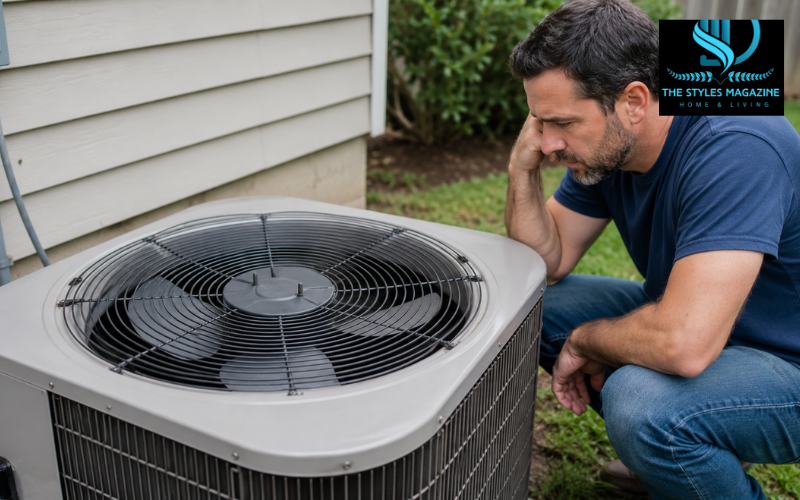
When the fan on AC unit not spinning becomes the problem, most homeowners notice it at the worst possible time: the house feels warm, the thermostat is set to cool, and the outdoor unit looks like it is not doing its job. In many cases, the indoor vents may still blow air, but that air is not cold enough. This can be confusing because part of the system seems to be working while another part has clearly stopped.
The outdoor fan is one of the most important parts of a central air conditioning system. Its job is to move air across the outdoor coil so the system can release heat from inside your home. When that fan stops spinning, the AC cannot remove heat properly. Even if the compressor is still running, the system may quickly become too hot and unsafe to operate.
Some early warning signs may appear before the fan fully stops. You may hear humming, buzzing, clicking, rattling, or grinding from the outdoor unit. You may also notice weak cooling, warm air from the vents, short cooling cycles, or an outdoor unit that feels unusually hot. If your AC unit fan is not spinning and hot, it is best to turn the system off and check the issue carefully before more damage happens.
Fan on AC Unit Not Spinning
| Symptom | Possible Cause | What It Means | Best Next Step |
| AC fan not spinning but humming | Bad capacitor or stuck motor | Unit has power but fan cannot start | Turn AC off and have capacitor/motor checked |
| Outside AC fan not running but inside is | Outdoor unit failure | Indoor blower works, but cooling system cannot remove heat | Stop cooling and inspect outdoor unit |
| Fan blade feels stiff | Seized fan motor | Motor bearings may be damaged | Call an HVAC technician |
| Unit is completely silent | Tripped breaker or no power | Outdoor unit may not be receiving electricity | Check breaker once; call if it trips again |
| Fan blocked by debris | Leaves, sticks, or nest material | Blade cannot spin freely | Turn power off before clearing debris |
| Compressor running but fan stopped | Serious overheating risk | Compressor may be damaged if AC keeps running | Shut off AC immediately |
How an AC Unit Fan System Actually Works
A home AC system usually has two main fan areas: the indoor blower and the outdoor condenser fan. The indoor blower pushes cooled air through your vents. The outdoor condenser fan helps remove heat from the refrigerant inside the outdoor unit. These two fans work together, but they do different jobs.
This is why you may run into a situation where the outside AC unit fan not running but inside is still blowing air. The indoor blower can keep moving air through the home even if the outdoor fan has stopped. However, without the outdoor fan, the system cannot release heat properly, so the air from your vents may become warm or only slightly cool.
Air conditioning depends on steady airflow and heat transfer. The outdoor fan pulls air through the condenser coil, helping the system push heat outside. If the fan stops, heat builds up inside the outdoor unit. This can place stress on the compressor, wiring, capacitor, and motor. A small failed part, such as a weak capacitor or loose electrical connection, can stop the entire cooling process.
Main Reasons Your AC Fan Is Not Spinning
There are several reasons why the fan on AC unit not spinning issue can happen. The most common causes include a failed capacitor, tripped breaker, bad fan motor, faulty contactor, loose wiring, or something physically blocking the fan blades. In window units, the cause may also involve the internal fan motor, control board, or dirt buildup inside the compact unit.
The tricky part is that several different problems can look the same from the outside. A bad capacitor can make the fan sit still and hum. A seized motor can also make the unit hum. A failed contactor may stop power from reaching the fan. A tripped breaker may make the outdoor unit completely silent. Because the symptoms overlap, guessing can lead to replacing the wrong part.
Before buying parts, the safest approach is to observe what the unit is doing. Is it humming? Is it silent? Is the compressor running? Is the fan blade stiff? Is the breaker tripped? These simple clues can help narrow down the cause. Still, electrical parts inside an AC unit can hold dangerous voltage, so homeowners should avoid opening panels or touching parts unless they know how to work safely.
Faulty Dual Run Capacitor: The Most Common Failure Point
A faulty dual run capacitor is one of the most common reasons for an AC fan not spinning outside. The capacitor gives the fan motor and compressor the electrical boost they need to start and keep running. Over time, capacitors weaken because of age, heat, heavy use, and normal wear.
Hot summer weather can be especially hard on capacitors. When an AC runs for long hours, the capacitor works repeatedly. Eventually, it may lose strength. When that happens, the motor may not get enough starting power. The outdoor unit may hum, but the fan blade may not move. This is why many homeowners search for air conditioner fan not spinning but hums when the capacitor begins to fail.
Sometimes a bad capacitor looks swollen, bulged, rusted, or oily. However, not every failed capacitor shows visible damage. A capacitor can look normal and still be weak. The only reliable way to confirm capacitor failure is with proper testing. Since capacitors store electricity, replacement should be handled carefully. Matching the correct rating is also important because the wrong capacitor can damage the motor or compressor.
Outdoor AC Unit Fan Not Running but Inside Is Working
If the outside AC unit fan not running but inside is still blowing air, it means your indoor blower and thermostat may still be receiving power. This does not mean the whole system is healthy. It only means the indoor side is still operating.
In this situation, the home may feel warmer even though air is coming from the vents. The air may be room temperature or slightly cool at first, then become warmer. This happens because the outdoor unit is not removing heat the way it should. The system may continue trying to cool, but it cannot complete the heat-release process.
This condition can be risky for the compressor. The compressor is one of the most expensive parts of the AC system. If it keeps running without the outdoor fan, heat and pressure can rise inside the unit. That can shorten the life of the compressor or lead to a major repair. If you notice the indoor fan working but the outdoor fan stopped, turn cooling off and inspect safely from a distance.
AC Fan Not Spinning but Compressor Is Running
When people ask, “Why is my AC fan not spinning but the compressor is running?” the answer is usually urgent. This is not a condition you should ignore. The compressor may still be trying to move refrigerant through the system, but the outdoor fan is not removing heat from the condenser coil.
In simple terms, it is like running a car engine without enough cooling. The system may keep working for a short time, but heat builds up fast. The compressor may overheat, shut down, or become damaged. Some units have safety controls that turn the system off, but you should not depend on that protection.
If the compressor is running and the outdoor fan is stopped, shut off the AC at the thermostat. Do not keep lowering the temperature to force cooling. That can make the system run longer and increase the chance of damage. This problem often points to a bad capacitor, fan motor, contactor issue, or wiring fault.
Contactor Relay or Electrical Connection Failure
The contactor is a switch inside the outdoor unit. When your thermostat calls for cooling, the contactor closes and sends power to major outdoor components. If the contactor is worn, burned, stuck, or blocked by insects or dirt, the fan may not receive power properly.
A bad contactor can cause clicking, buzzing, or no response from the outdoor unit. In some cases, it may send power to one part but not another, depending on the failure. This is one reason the symptoms can be confusing. The unit may seem partly alive, but the fan may not spin.
Electrical connections can also loosen over time because of vibration, heat, corrosion, or age. Loose or damaged wiring is not something to handle casually. If you smell burning, see melted insulation, or notice repeated breaker trips, stop using the system and call a professional. Electrical faults can damage parts and create safety risks.
Burnt-Out or Seized Condenser Fan Motor
A burnt-out or seized condenser fan motor is another common reason for the fan on AC unit not spinning. The fan motor works hard during every cooling cycle. Over time, bearings can wear out, internal parts can overheat, or the motor windings can fail.
One sign of a seized motor is a fan blade that feels stiff, rough, or hard to move when the power is completely off. A healthy fan blade usually turns with some resistance, but it should not feel locked in place. If it does not move or feels grinding and heavy, the motor may be failing.
Motor failure can look similar to capacitor failure. The unit may hum but not start. The difference is that a capacitor problem may allow the fan to spin freely by hand when power is off, while a seized motor may feel tight or stuck. If the motor is burnt out or the bearings are gone, replacing the capacitor will not fix the problem. The fan motor will likely need replacement.
Air Conditioner Fan Not Spinning but Hums
An air conditioner fan not spinning but hums often means the system is receiving power but cannot start the fan. This humming sound is an important clue. The unit is trying to work, but something is stopping the fan from rotating.
The most common cause is a weak or dead capacitor. Without enough starting power, the motor may sit still and hum. Another possible cause is a failing motor. If the motor bearings are seized or the windings are damaged, the fan may also hum without spinning.
Some homeowners hear humming and try to keep the system running, hoping it will eventually start. That is not a good idea. A motor that hums but does not spin can overheat quickly. If you hear a strong hum and the fan is not moving, turn off the cooling system. The longer it runs in that condition, the more stress it puts on the motor and compressor.
Physical Obstructions and Environmental Blockages
Sometimes the cause is not electrical at all. Leaves, sticks, plastic bags, small branches, nest material, or other debris can get into the outdoor unit and block the fan blades. Storms, high winds, yard work, and nearby trees can all create this problem.
Even a small obstruction can stop the fan or make it wobble. If the blade hits debris, it may bend or become unbalanced. A damaged blade can shake the motor and cause more wear. That is why it is important to keep the outdoor unit clear.
Before inspecting, turn the AC off. Look through the top grille with a flashlight. Do not reach into the unit while it has power. If you see loose debris, clear it only when the unit is fully off and safe to access. If the fan blade is bent, cracked, or rubbing against the grille, it may need professional adjustment or replacement.
Window AC Unit Fan Not Spinning: Special Case Overview
A window fan on AC unit not spinning is a little different from a central AC outdoor fan problem. Window air conditioners are compact units with the fan, coil, controls, and motor all built into one box. Because everything is packed tightly together, airflow problems, dirt buildup, worn motors, and control issues can stop the fan.
In a window unit, the fan may stop because the motor has failed, the blade is blocked, the selector switch is bad, or the unit is dirty inside. Sometimes the fan may run on one speed but not another. This can point to a control or motor issue.
DIY repairs on window AC units are often more limited. Many newer models are not designed for easy part replacement, and opening the cabinet may expose electrical parts. A simple cleaning, filter check, and reset may help, but if the fan still does not spin, repair cost should be compared with the price of replacing the unit.
Quick Diagnostic Checks Homeowners Can Safely Perform
There are a few safe checks you can do before calling for service. Start at the thermostat. Make sure it is set to cool and the temperature is set lower than the room temperature. Then check whether the indoor vents are blowing air and whether the outdoor unit is making any sound.
Next, check your main electrical panel for a tripped breaker. If the breaker is tripped, switch it fully off, then back on once. If it trips again right away, do not keep resetting it. Repeated tripping means there may be a short, overload, or serious electrical problem.
You can also look at the outdoor unit from the outside. Check for debris, visible damage, or signs that the fan blade is blocked. Some people use a careful “fan spin test” through the top grille to see whether the blade moves, but this must be done with extreme caution and only with an insulated tool or wooden stick. Never put your hand inside the grille. If the fan starts only after being nudged, a bad capacitor is possible, but this is not a permanent fix.
When the AC Fan Issue Becomes a Reddit-Level Emergency Discussion
Many homeowners search for fan on AC unit not spinning Reddit or outside AC unit fan not running but inside is Reddit because they want quick real-world answers. Online discussions can be useful because people describe the same symptoms in plain language: humming outside unit, warm air inside, fan blade not moving, or compressor running without airflow.
The problem is that online advice can also be incomplete. One person may say it is definitely the capacitor. Another may say it is the fan motor. Someone else may suggest resetting the breaker. All of these can be possible, but the right answer depends on the exact symptoms and testing.
A common misdiagnosis is assuming every humming outdoor unit has a bad capacitor. While that is often true, a seized motor can create a similar sound. Another mistake is continuing to run the system because the indoor blower still works. If the outdoor fan is stopped, the safest move is usually to shut off cooling and diagnose before the compressor is harmed.
When to Call a Technician Instead of DIY Fixing
You should call a technician if the fan does not spin after basic checks, if the unit hums loudly, if the breaker keeps tripping, or if the compressor appears to be running without the fan. You should also call for help if you smell burning, see damaged wires, notice oil around electrical parts, or hear grinding from the outdoor unit.
Capacitors, contactors, motors, and wiring all involve electrical risk. Even when the power is off, some components can hold a charge. A trained technician can test voltage, check the capacitor, inspect the motor, confirm the contactor is working, and make sure the compressor has not been damaged.
Professional diagnosis can save money in the long run. Replacing random parts can get expensive, especially if the real cause is different from what you expected. A proper repair also helps protect the compressor, which is usually far more costly than a capacitor or fan motor.
Preventing AC Fan Failures in the Future
You cannot prevent every AC fan failure, but regular care can reduce the risk. Keep the area around the outdoor unit clear. The U.S. Department of Energy recommends keeping debris away from the condenser and trimming foliage back to allow proper airflow around the outdoor unit.
Change or clean your air filter during the cooling season. A dirty filter reduces airflow and makes the system work harder. The Department of Energy notes that clogged filters can lower efficiency and allow dirt to build up inside the system, which may contribute to performance problems.
Seasonal maintenance is also helpful. Before heavy summer use, have the unit inspected, cleaned, and tested. A technician can check the capacitor, tighten electrical connections, inspect the fan motor, and clean the condenser coil. These simple steps can help catch weak parts before the fan stops on the hottest day of the year.
Conclusion: What Your AC Fan Problem Is Really Telling You
When the fan on AC unit not spinning becomes the issue, your AC system is telling you something important. The cause may be simple, such as a tripped breaker or debris in the fan path. It may also be more serious, such as a failed capacitor, bad contactor, seized motor, or compressor risk.
The most important thing is not to ignore it. If the AC fan not spinning outside is paired with humming, heat, or a running compressor, shut the system off and investigate safely. Running the AC in that condition can turn a smaller repair into a larger one.
A careful visual check, breaker check, and basic observation can help you understand what may be wrong. But if the problem involves electrical parts, repeated breaker trips, a stiff fan blade, or burning smells, call a qualified HVAC technician. Acting early protects your cooling system, your comfort, and your repair budget.
FAQs
Why Is My Fan On AC Unit Not Spinning?
Your AC fan may not spin because of a failed capacitor, tripped breaker, bad fan motor, faulty contactor, loose wiring, or debris blocking the blades.
Is It Safe To Run AC If The Outside Fan Is Not Spinning?
No. Running the AC while the outdoor fan is not spinning can overheat the system and may damage the compressor, which is often expensive to repair.
Why Does My AC Fan Hum But Not Spin?
A humming sound usually means the unit has power, but the fan motor cannot start. This often happens because of a weak capacitor or failing motor.
Can I Fix An AC Fan Not Spinning Myself?
You can safely check the thermostat, breaker, and visible debris. Electrical parts like capacitors, contactors, and motors should be handled by a trained technician.
What If The Inside AC Fan Works But The Outside Fan Does Not?
This means the indoor blower is running, but the outdoor unit is not removing heat properly. Turn off cooling and inspect the outdoor unit safely.
Enjoyed it? Find more exclusive content on The Styles Magazine.
Disclaimer: This article is for general informational purposes only and is not a replacement for professional HVAC service. Air conditioning units contain electrical components that can be dangerous. Always turn off power before basic inspection, and contact a licensed HVAC technician for electrical testing, capacitor replacement, motor repair, or repeated breaker problems.