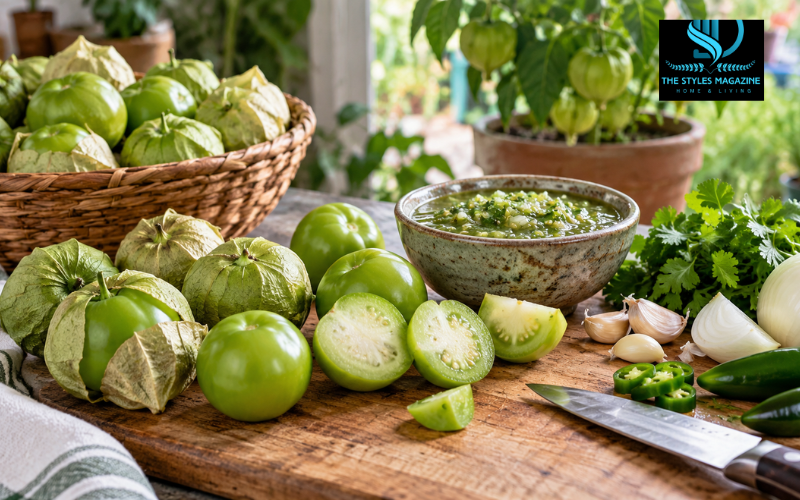
A tomatillo may look like a small green tomato wearing a papery jacket, but it is a distinct fruit with its own flavor, texture, and culinary role. Peel away the thin husk and you will find a firm, usually green fruit with a bright, tart taste. That lively flavor is one reason tomatillos have long been important in Mexican cooking, especially in green sauces and salsa verde.
Tomatillos can be eaten raw, simmered, roasted, broiled, or charred. Each method changes their character slightly, making them useful in everything from fresh salsa and salads to soups, stews, enchiladas, and braised dishes.
Knowing how to choose, clean, cook, and store tomatillos makes them much less mysterious. It is also useful to understand how they differ from green tomatoes, what to use when fresh tomatillos are unavailable, and even how the plant grows in a home garden.
Quick Guide: Tomatillo at a Glance
| Feature | Tomatillo |
| Appearance | Small green or purple fruit inside a papery husk |
| Flavor | Tart, bright, slightly fruity, and mildly citrus-like |
| Texture | Firm and denser than a ripe tomato |
| Common use | Salsa verde, sauces, soups, stews, tacos, and enchiladas |
| Raw or cooked? | Both |
| Preparation | Remove husk, rinse sticky coating, then cut or cook |
| Best substitute | Green tomatoes with a little added acidity |
| Storage | Refrigerate with husks on; keep dry and well ventilated |
| Plant family | Nightshade family, genus Physalis |
Simple Step-by-Step Guide to Preparing Tomatillos
- Remove the husk: Peel away and discard the dry, papery covering.
- Rinse well: Wash the sticky natural coating from the fruit under running water.
- Check the fruit: Discard tomatillos that are badly moldy, leaking, or extremely soft.
- Cut as needed: Slice, quarter, chop, or leave whole depending on the recipe.
- Use raw or cook: Blend them fresh, simmer them, roast them, or char them for different flavors.
What Is a Tomatillo? Meaning, Origin, and Botanical Identity
The Spanish word tomatillo is commonly translated as “little tomato.” In English, the fruit is still normally called a tomatillo, although names such as Mexican husk tomato and husk tomato are also used.
Botanically, the tomatillo is commonly identified as Physalis philadelphica. The name Physalis ixocarpa also appears in horticultural and culinary references. It belongs to the nightshade family, or Solanaceae, which also includes tomatoes, peppers, potatoes, and eggplants. However, tomatillos belong to the Physalis genus rather than the tomato genus Solanum. Ground cherries are close relatives within the same genus, but they are different fruits.
One of the easiest ways to recognize a tomatillo fruit is its husk. This thin covering begins as part of the flower and expands around the developing fruit. As the tomatillo grows, it eventually fills much of the husk.
Tomatillos have deep roots in Mexican food culture. Evidence from Mexican sources shows they were eaten in Mexico before Spanish arrival, and they remain an important ingredient in traditional sauces and many everyday dishes. Their native range is centered on Mexico and extends into Central America.
Tomatillo vs Tomato — Similar Family, Very Different Fruit
The tomatillo vs tomato comparison starts with one similarity: both belong to the nightshade family. Beyond that, they are noticeably different.
A common tomato normally grows without a papery covering and becomes soft and juicy as it ripens. A tomatillo develops inside a husk and generally stays firmer and denser. When cut, it usually contains less free-flowing juice than a ripe tomato.
Flavor is another important difference. Red tomatoes often balance sweetness with gentle acidity, while green tomatillos are brighter, sharper, and more noticeably tart. Their flavor can sometimes suggest citrus or a tart green fruit without actually tasting like lime or apple.
A green tomato is also not the same thing as a tomatillo. Most green tomatoes sold or used in recipes are simply tomatoes harvested before they have fully ripened. They do not have the characteristic tomatillo husk and do not provide exactly the same taste or texture.
Both can be eaten raw or cooked, but they behave differently in recipes. Green tomatoes can work as an emergency replacement in some sauces or cooked dishes, although they may need extra acidity. For a dish in which the flavor of tomatillo is central, the substitution will be noticeable.
What Tomatillos Taste Like and How Ripeness Changes Them
A fresh green tomatillo has a crisp, lively flavor. It is tart, mildly fruity, and more acidic-tasting than a typical ripe tomato. That sharpness helps explain why it works so well with rich meats, beans, cheese, tortillas, chiles, and other ingredients that benefit from a fresh acidic contrast.
Ripeness changes the experience. Commercial tomatillos are often harvested when the fruit has filled much of its husk while remaining firm and green. UC Davis notes that green color, firmness, and acidity are desirable qualities for many culinary uses. As green types mature further and begin turning yellowish, they generally become sweeter and lose some of the sharp character for which they are valued.
Color can also depend on the variety. Tomatillos are not limited to one shade of green. Purple varieties exist, and some have a somewhat sweeter flavor than common green types. A purple tomatillo therefore should not automatically be treated as spoiled or overripe simply because of its color.
For classic savory dishes and green salsa, firm tomatillos with a fresh, tart character are usually the easiest choice.
Tomatillo Nutrition and What It Adds to a Meal
Tomatillos can fit comfortably into a varied diet without needing exaggerated health claims. USDA FoodData Central has both legacy and newer Foundation Foods information for raw tomatillos. Its older raw tomatillo entry lists about 32 calories per 100 grams, while a newer Foundation Foods record for dehusked raw tomatillos reports roughly 1.1 grams of protein and 1.7 grams of dietary fiber per 100 grams. USDA records show that tomatillo fiber data received an update in the 2026 data cycle.
Tomatillos also provide naturally occurring micronutrients, including folate and vitamin C, although the exact amounts can differ among samples and USDA data records. They are naturally very low in sodium when no salt has been added.
Their practical nutritional advantage is simple: they can add flavor, acidity, texture, and produce to a meal without requiring heavy sauces or large amounts of added fat.
Tomatillos should still be viewed as one ingredient within an overall balanced diet rather than as a cure, treatment, or “superfood.”
Where to Buy Tomatillos and How to Choose Good Ones
If you are wondering where to buy tomatillos, start with the fresh produce section of larger supermarkets. Mexican and Latin American grocery stores are often particularly reliable sources. Depending on where you live and the growing season, they may also appear at farmers markets and farm stands.
Availability varies by region. Local crops are generally most noticeable during the warmer growing season, while stores with established produce supply chains may carry tomatillos for much more of the year.
When choosing them, pay more attention to condition than size. Look for fruit that feels firm rather than soft or collapsed. The husk should still surround most or all of the fruit and should not show extensive mold or decay.
A tomatillo that fills its husk is generally a good sign of development. Avoid fruit that is badly shriveled, mushy, leaking, or clearly decaying. Green varieties that have become heavily yellow and soft have moved beyond the stage generally preferred for their classic sharp flavor.
Do not worry about a slightly sticky surface under the husk. That coating is normal.
How to Clean and Prepare Tomatillos Before Cooking
Preparing a tomatillo is refreshingly simple. Start by pulling away the papery husk and discarding it. The fruit underneath commonly feels sticky or slightly tacky. This natural coating is not a sign that the tomatillo has spoiled.
Rinse the fruit thoroughly under running water, gently rubbing its surface with your fingers until most of the sticky feeling is gone. There is normally no need to peel the green skin.
You also do not have to scoop out the seeds. Unlike some peppers or seeded vegetables that require extra preparation, a cleaned tomatillo can usually be cut and used whole.
How you cut it depends on the dish. Dice it finely for a raw salsa or topping, slice it for salads, quarter it before roasting, or leave smaller fruits whole when boiling or broiling them for a sauce.
If you are preparing several at once, remove all the husks first and then wash the fruits together. This makes the process faster while still leaving them ready for whatever cooking method comes next.
Raw, Boiled, Roasted, or Charred — Choosing the Right Cooking Method
How you cook a tomatillo can make a major difference to its flavor.
Raw tomatillos are at their brightest and most assertive. Their crisp texture and sharp acidity work well in fresh salsa, salads, relishes, and toppings where you want a clean, lively bite.
Simmering or boiling softens both the fruit and its sharper edge. The tomatillos become easier to blend into a smooth sauce, and their flavor becomes gentler. This approach is useful when you want a clean salsa verde without much roasted flavor.
Roasting or broiling adds another layer. High heat softens the fruit while encouraging light browning, which can make the finished sauce taste rounder and less sharply acidic. Roasted tomatillos work particularly well in salsa, enchilada sauces, and sauces served with roasted meats or vegetables.
Charring takes that idea further. Dark blistered spots introduce a smoky, toasted character that pairs especially well with roasted chiles, onion, and garlic.
There is no single “correct” method. The best choice depends on whether you want fresh acidity, a softer sauce, roasted depth, or smoky flavor.
Tomatillo Salsa and the Role of Tomatillos in Salsa Verde
For many people, tomatillo salsa is their first introduction to the fruit. Tomatillos are closely associated with Mexican salsa verde because their naturally tart flavor creates a bright green sauce that can balance spicy, salty, and rich foods.
A basic salsa verde commonly combines tomatillos with green chiles such as serranos or jalapeños. Onion, cilantro, garlic, and salt are also frequent companions, although recipes vary widely by cook, region, and intended use.
The tomatillo cooking method changes the personality of the salsa. A raw version tends to taste crisp, fresh, and sharply acidic. A salsa made with simmered tomatillos is usually softer and smoother. Roasting produces a deeper flavor, while charring the fruit and chiles adds smokiness.
Lime juice is common in many modern salsa recipes, but tomatillos already bring considerable acidity of their own. It is better to taste the finished salsa before adding large amounts.
Salsa verde can be spooned over tacos, eggs, grilled foods, beans, or enchiladas, or simply served with tortilla chips.
Tomatillo Recipes That Go Beyond Salsa
Although salsa verde is famous, tomatillo recipes can extend much further.
Their acidity makes them especially useful in stews and braises. Chile verde is a classic example: tomatillos and green chiles form a flavorful sauce in which pork or another meat can cook until tender. The fruit helps keep a rich dish from tasting too heavy.
Tomatillos are also useful in soups. They can be blended into a base with onion, garlic, chiles, herbs, or broth, producing a fresh flavor that is different from a red tomato soup.
For tacos and enchiladas, cooked tomatillo sauces can be used as a topping or as part of the filling and cooking sauce. Roasted tomatillos can also be blended into sauces for chicken, vegetables, seafood, beans, or rice.
Raw tomatillos deserve attention too. Thin slices or small dice can add crispness and tartness to salads, slaws, corn dishes, and taco toppings.
The easiest way to experiment is to think about balance. Foods that are rich, smoky, creamy, or mildly spicy often benefit from the bright contrast that tomatillos provide.
The Best Tomatillo Substitutes When You Cannot Find Them
There is no perfect tomatillo substitute because its firm texture, fruitiness, and tart flavor are difficult to reproduce with one ingredient.
If a recipe depends heavily on tomatillos, canned tomatillos are often a better alternative to fresh ones than replacing them with a completely different fruit. Their texture will be softer, so they are best suited to cooked or blended dishes.
When neither fresh nor canned tomatillos are available, green tomatoes are one of the most practical substitutes. Their firmness works reasonably well in sauces and cooked recipes, but their flavor is different. Adding a modest amount of lime juice can supply some of the acidity that is missing.
For a salsa, start with green tomatoes and add lime gradually while tasting rather than trying to copy a fixed ratio. For stews and braises, green tomatoes may need less adjustment because other ingredients contribute more of the final flavor.
When tomatillo is the defining taste of a traditional dish, however, a substitute should be viewed as an adaptation rather than an identical replacement.
How to Store Tomatillos and Keep Them Fresh Longer
Fresh tomatillos keep best when excess moisture and trapped condensation are avoided.
For normal home storage, leave the husks on and place the tomatillos in the refrigerator in a breathable or paper bag rather than sealing wet fruit tightly in an airtight bag. University of Minnesota Extension notes that tomatillos can keep for around two weeks in a paper bag in the refrigerator, although storage conditions and the condition of the fruit at purchase will affect actual shelf life.
It is generally better to wash tomatillos shortly before using them rather than before storage. If the husks become wet or moldy, remove them and inspect the fruit carefully.
Tomatillos can also be frozen. Remove the husks, wash the fruits, and dry them well. Freeze them in a single layer first, then transfer the frozen fruits to freezer-safe packaging. Their texture will soften after thawing, so frozen tomatillos are most useful for salsa, sauces, soups, and cooked dishes.
Discard fruit that develops significant mold, leaking areas, severe softness, or an unpleasant smell.
The Tomatillo Plant — Growing, Pollination, and Harvesting
The tomatillo plant is a warm-season crop that can become surprisingly large and spreading. It grows best with plenty of sunlight, well-drained soil, and enough space for good air movement.
Home-garden guidance from the University of Minnesota recommends allowing as much as three feet of space for tomatillos because of their bushy habit. Cages, trellises, or other supports can help manage plants as they spread. Soil should be kept reasonably even in moisture, although established plants can tolerate periods of heat and dryness.
Pollination is particularly important. Unlike the common assumption that one plant will always produce a large crop by itself, extension guidance recommends growing more than one tomatillo plant for dependable fruit set. Cross-pollination between separate plants, helped by bees and other insects, can greatly improve results.
Harvest timing is easy to judge once you know what to look for. For common green varieties, pick the fruit when it has substantially filled its husk but is still firm and green. If it remains on the plant much longer, it may soften and become sweeter and less sharply flavored. Purple and other specialty varieties should be judged according to their expected mature color rather than by green color alone.
Conclusion
A tomatillo is much more than a small green tomato. Its protective husk, firm texture, distinctive tart flavor, and long connection with Mexican cooking make it a unique ingredient.
Once the husk is removed and the sticky surface is rinsed, the fruit is simple to work with. Use it raw when you want crispness and bright acidity, simmer it for a softer flavor, or roast and char it when a deeper, smokier result suits the dish.
Choose firm, healthy-looking tomatillos, store them carefully, and remember that green tomatoes can only approximate them when a substitute is necessary. If you grow your own, give the plants space and grow more than one for more reliable pollination.
Whether used in salsa verde, a slow-cooked stew, an enchilada sauce, or a fresh salad, tomatillos offer a combination of acidity, texture, and versatility that is difficult to get from any other ingredient.
FAQs
What Is A Tomatillo?
A tomatillo is a small husked fruit from the Physalis genus. It has a firm texture and naturally tart flavor and is especially well known as a main ingredient in Mexican salsa verde.
Is A Tomatillo The Same As A Green Tomato?
No. A tomatillo is a different fruit with a papery husk and firmer texture. Green tomatoes are ordinary tomatoes harvested before ripening, so their flavor and cooking characteristics are not identical.
Can You Eat Tomatillos Raw?
Yes. Raw tomatillos are edible and have a crisp texture with a sharp, fresh taste. They work particularly well in fresh salsa, salads, relishes, and toppings when bright acidity is wanted.
What Is The Best Substitute For Tomatillos?
Green tomatoes are a practical substitute in many cooked dishes and sauces. Because their flavor differs, a small amount of lime juice may help add the tartness normally provided by tomatillos.
Do Tomatillos Need To Be Peeled Before Cooking?
The papery husk should be removed, but the fruit itself does not need peeling. Rinse away its naturally sticky coating, and the skin and small seeds can normally remain in the recipe.
Enjoyed it? Find more exclusive content on The Styles Magazine.
Disclaimer: This article is provided for general informational and educational purposes only. Information about tomatillo nutrition, storage, preparation, cooking, and growing may vary according to variety, freshness, local conditions, and individual circumstances. Always follow proper food-safety practices and reliable local gardening guidance where appropriate. The content is not intended as medical, nutritional, or professional advice and should not be used to diagnose, treat, or prevent any health condition.