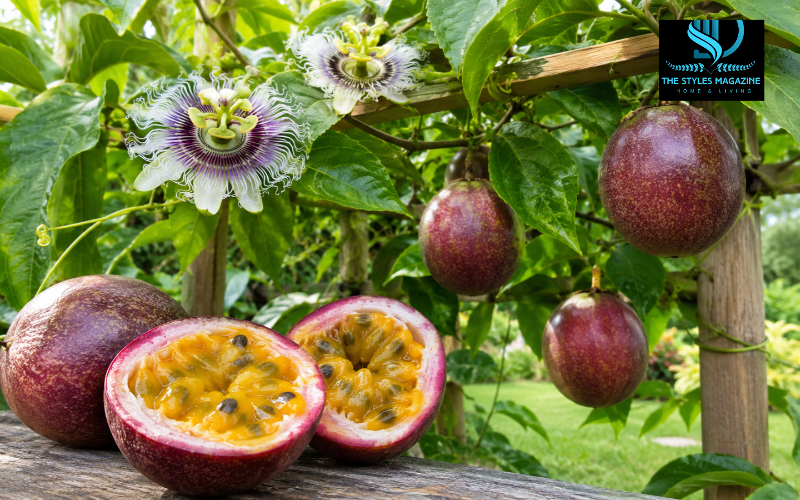
Cut open a ripe passionfruit and you will find a small surprise: golden, fragrant pulp filled with dark, crunchy seeds. Its sweet-sharp flavour brightens a bowl of yoghurt. The plant that produces it is anything but ordinary.
Passionfruit comes from a vigorous climbing vine with glossy leaves and remarkable flowers. In warm regions, it can cover a trellis and produce fruit in the same growing season. In the UK, growing it takes more planning, particularly during winter, yet it remains an appealing choice for gardeners with a warm greenhouse or conservatory.
Whether you want to grow your own or learn how to choose, store and eat the fruit, understanding a few basics makes all the difference.
Quick Answer:
Passionfruit is a tropical fruit grown on the climbing vine Passiflora edulis. Known for its fragrant, sweet-tart pulp and edible seeds, it can be grown in warm conditions and enjoyed fresh or in recipes.
Passionfruit Comparison Table
| Feature | Purple Passionfruit | Yellow Passionfruit |
| Skin colour | Dark purple | Golden yellow |
| Fruit size | Usually smaller | Usually larger |
| Flavour | Sweet-tart, aromatic | Often more acidic |
| Growing climate | Subtropical to tropical | Warm tropical |
| Pollination | Many varieties self-compatible | Often needs cross-pollination |
| Common uses | Fresh eating, desserts | Juices, drinks, sauces |
| UK growing | Protected, warm conditions | Protected, warm conditions |
Step-by-Step Guide: How to Grow Passionfruit at Home
- Choose a suitable variety: Select an edible Passiflora edulis plant suited to your growing conditions.
- Prepare the container: Use a large pot with drainage holes and fertile, well-draining compost.
- Provide sunlight: Position the plant somewhere warm and bright, with plenty of direct sunlight.
- Install a trellis: Give the climbing vine a strong structure for support.
- Water and feed carefully: Keep the compost lightly moist during active growth and avoid waterlogging.
- Protect from cold: Move container-grown plants into a warm, bright greenhouse or conservatory before cold weather arrives.
What Is Passionfruit? Understanding the Fruit and Its Meaning
The familiar edible passionfruit comes from Passiflora edulis, a species native to subtropical South America, including parts of Brazil, Paraguay and northern Argentina. It belongs to the passionflower family.
Although people sometimes search for a “passionfruit tree”, the plant is actually a perennial vine. It sends out curling tendrils that grip nearby supports and help its long stems climb towards the light.
The word “passion” does not describe the fruit’s taste or suggest a romantic effect. It comes from the Christian term for the suffering of Jesus Christ. Early missionaries interpreted parts of the unusual passionflower as symbols connected with that story. The name remained even as the plant became widely appreciated for its fruit.
The fruit itself has a firm outer skin and a cavity full of juicy, seed-covered pulp. Most people eat the contents and leave the rind. That combination makes passionfruit distinctive.
Passionfruit or Passion Fruit: Names, Varieties and Differences
There is no botanical difference between “passionfruit” and “passion fruit”. Both spellings refer to the same fruit, although usage varies by country and publication. You might also see names such as purple granadilla or maracujá on labels and menus.
The two most familiar forms are purple and yellow passionfruit. Purple types generally produce smaller fruit with dark purple skin and a richly aromatic, sweet-tart pulp. Yellow types often produce larger, yellow-skinned fruit with a more pronounced acidic flavour. Sweetness also varies by cultivar and conditions, so colour cannot guarantee taste.
The comparison “maracuja vs passion fruit” can be confusing. Maracujá is a Portuguese name used for passionfruit and sometimes for several related passionflower fruits. It is not automatically a separate species or a sweeter variety. In recipes, particularly Brazilian ones, the word often refers to the familiar tangy fruit used in drinks and desserts.
Portal Embrapa+1
When buying a plant, look beyond its common name. Check the botanical label and whether the cultivar is intended to produce edible fruit, because ornamental passionflowers are not necessarily suitable substitutes.
The Passionfruit Flower and How It Produces Fruit
A passionfruit flower looks almost too elaborate to be real. Around its central reproductive parts sit pale petals and a ring of fine, often purple-and-white filaments. Each bloom is relatively short-lived, so noticing an open flower can feel like a small event. Flowers form on new growth, which is one reason sensible pruning matters.
Fruit develops only after successful pollination. Bees, especially larger bees in suitable climates, move pollen between flower parts as they visit.
Many purple passionfruit cultivars are self-compatible, meaning a single plant can set fruit with its own pollen. Yellow types are often self-incompatible and may require pollen from a different, compatible plant. Hybrids vary, so the seller’s cultivar information is worth checking.
In a greenhouse, natural pollinators may be scarce. A small, soft brush can help move pollen from the pollen-bearing anthers to the sticky stigmas of an open flower. For a variety that needs cross-pollination, pollen must come from another compatible vine. Cool temperatures or weak light can still limit fruit set.
The Best Climate and Growing Conditions for Passionfruit
Passionfruit grows best with warmth, plenty of light and soil that drains freely. In suitable climates, a sunny position encourages stronger growth and flowering.
Aim for several hours of direct sunlight daily, while remembering that leaves behind greenhouse glass may need light shading during exceptionally hot weather. Shelter from strong, drying winds is useful too.
The roots dislike sitting in water. Fertile, well-drained soil or a quality loam-based potting compost is a better choice than heavy, constantly wet ground. A slightly acidic to near-neutral growing medium is generally suitable.
Water availability also matters: a plant that repeatedly dries out may lose buds, flowers or young fruit.
For UK gardeners, the main challenge is temperature. The common edible P. edulis is tropical and cannot be treated like a reliably hardy garden climber. The Royal Horticultural Society recommends growing it under glass, with winter warmth; around 15°C or above is a sensible target for dependable conditions. An unheated greenhouse may be too cold.
A bright, heated conservatory or greenhouse offers the best chance of fruit. A plant can spend warm summer days outside in a sheltered spot, but it should return indoors before nights turn cold.
The hardier blue passionflower, P. caerulea, may survive outdoors in milder UK locations, but its fruit is not a direct replacement for the supermarket kind.
Starting a Passionfruit Plant from Seeds or Young Vines
Growing passionfruit from seed is inexpensive and interesting, particularly if you enjoy watching a plant develop from the beginning.
Wash seeds taken from fully ripe fruit to remove the pulp, then sow them in moist, free-draining seed compost. Keeping the compost warm helps germination, but sprouting can be uneven. A seedling also may not produce fruit identical to the one it came from.
A healthy nursery-grown vine is usually the more predictable choice. It starts with an established root system, and a named cultivar gives you a clearer idea of fruit type and pollination needs. In the UK, choose a supplier that identifies the plant as Passiflora edulis rather than simply “passionflower”.
When transplanting, place the root ball at roughly the same depth as before. Water it in gently and provide a climbing support immediately.
Avoid exposing tender young growth to frost or suddenly moving a plant from indoor conditions into intense outdoor sun. Gradual adjustment helps prevent damage. Fruiting can take time, particularly when warmth and daylight are limited.
Growing Passionfruit in Pots, Gardens and Small Spaces
A pot can make passionfruit easier to manage because the plant can be moved into winter protection.
Start with a generous container that has several drainage holes and move up a size as roots fill the compost. A mature, vigorous vine may eventually need a large, heavy pot, but an oversized container around a tiny seedling can hold too much unused, damp compost.
Choose peat-free, loam-based potting compost with good drainage. Set the pot somewhere bright and accessible for watering.
Passionfruit climbs with tendrils rather than wrapping its whole stem around a pole, so a trellis, horizontal wires or a strong mesh gives it places to grip. Loose ties can guide young stems without squeezing them.
A patio wall or balcony trellis may look ideal, but consider the vine’s mature size and the weight of wet compost before choosing a location.
In a warm climate it can spread rapidly; in the UK you will normally need enough sheltered indoor space for winter. Moving a large pot still takes effort.
Caring for Passionfruit Throughout the Growing Season
The simplest approach to passionfruit care is to watch the plant and compost rather than follow a rigid calendar.
During active growth, water thoroughly when the upper layer of compost begins to dry. Excess water should drain away. Hot weather can increase watering needs, while cool, dull days slow them down. Never leave a container standing in a saucer of water for long periods.
Container plants also use up nutrients. A balanced liquid fertiliser during the growing season can support healthy growth; follow the product’s instructions and avoid heavy feeding. Excess nitrogen may encourage masses of leaves without improving fruiting. In winter, when growth slows, reduce both watering and feeding.
Prune in early spring to remove dead, damaged or crowded stems and shorten old flowering growth. Keep a framework of strong stems and leave room for fresh shoots, which carry new flowers. Harsh cutting can delay flowering, so gradual control is better than repeatedly stripping the vine back.
Check ties and supports as the plant expands. Good airflow and regular inspection help prevent problems.
In the UK, winter care is especially important: give edible passionfruit warmth and as much useful light as possible, rather than assuming a frost-free shed will be sufficient.
Common Passionfruit Growing Problems and Their Solutions
Yellowing leaves do not point to one single problem. Older leaves may naturally age, but widespread yellowing can result from overwatering, poor drainage, nutrient shortages or low light.
Feel the compost before adding more water. If it remains wet and the plant wilts, inspect the drainage and roots rather than watering again.
Brown, damaged leaves may indicate sun scorch after a sudden move outdoors, cold exposure or dry roots.
Plants grown under glass can also attract whitefly, mealybugs, scale insects and spider mites. Look beneath the leaves regularly. Removing badly affected growth and using suitable, labelled controls when needed can prevent a small infestation from spreading.
Another common frustration is a healthy-looking vine that flowers but produces no fruit. Start by checking the cultivar’s pollination requirements.
A yellow, self-incompatible variety may need a second compatible plant, and an indoor vine may need hand-pollination. Too little sun, unsuitable temperatures or dry compost can also affect flowering and fruit set.
If the vine develops unusual mottling, badly distorted leaves or fruit, consider a disease problem and seek local horticultural advice. Do not take cuttings from a plant that may be infected. Persistent root decline or rotting stems also deserves attention, as correcting drainage alone may not reverse advanced damage.
When and How to Harvest Ripe Passionfruit
Passionfruit changes colour as it matures. Purple varieties deepen from green towards purple, while yellow varieties become yellow.
Some ripe fruit drops naturally from the vine, especially in warm growing regions. If you collect fallen fruit, check it promptly for bruising, splits and damage from insects or animals.
A mature fruit can also be picked carefully when it has developed its characteristic colour. Avoid pulling hard enough to tear the vine. It may continue to soften after picking, although fruit harvested too immature will not develop the same quality as fruit allowed to mature properly.
A slightly wrinkled skin is often a good sign for eating passionfruit: moisture loss creates dimples while the pulp remains pleasantly aromatic.
But wrinkles alone are not proof of freshness. Reject fruit that is leaking, mouldy, badly damaged or smells fermented. A healthy ripe fruit should offer fragrant pulp and a balanced sweet-sharp taste.
Where to Buy Passionfruit and How to Store It
In the UK, fresh passionfruit is available at some supermarkets, greengrocers and specialist fruit shops, although stock and origin change with the season.
When choosing fruit, look for its expected ripe colour and a sound, unbroken skin. It should feel reasonably heavy for its size. A few wrinkles are normal; wet spots, mould or obvious collapse are not.
If you are searching for “passionfruit buy” options online, check whether the listing is for fresh fruit, juice, frozen pulp, seeds or a live plant. Check product details carefully.
For plants, confirm the botanical name and suitability for your growing space.
Firm fruit can be left at room temperature briefly to develop colour and soften, away from direct heat. Once ripe, refrigerate it and use it within roughly a week.
Postharvest Research and Extension Center
Wash the rind before cutting, even though you will not eat it. For longer storage, scoop the pulp into a clean freezer-safe container and freeze it in small portions.
How to Eat Passionfruit and Enjoy Its Tropical Flavour
Passionfruit is one of the easiest tropical fruits to serve. Wash the outside, cut it across the middle and scoop out the yellow-orange pulp with a spoon.
The dark seeds are edible and give a gentle crunch. The tough rind is normally discarded. If the fruit tastes particularly sharp, pair it with a naturally sweet food rather than assuming it has gone bad.
A spoonful works beautifully over plain yoghurt, porridge or a fruit salad. The acidity also lifts rich desserts such as cheesecake, pavlova and ice cream.
For drinks, press the pulp gently through a sieve if you prefer juice without seeds; avoid crushing the seeds, which can affect the texture and taste.
You can stir passionfruit into a smoothie, combine it with citrus in a refreshing drink, or warm the pulp briefly with a little sugar for a dessert topping.
It also suits savoury dishes: a small amount can brighten a dressing or glaze. Begin with less than you think you need, taste, and adjust. Its flavour can easily dominate mild ingredients.
Passionfruit Nutrition and Its Potential Health Benefits
Beyond its flavour, passionfruit offers useful nutrients. The edible pulp and seeds supply dietary fibre, vitamin C and potassium, along with naturally occurring plant compounds.
Based on standard nutrient data, 100g of raw purple passionfruit provides approximately 10g of fibre and 30mg of vitamin C. That is a substantial amount of edible pulp, however, and a single fruit contributes much less.
Fibre helps normal digestion, while vitamin C contributes to normal immune function and collagen formation. Potassium plays a role in normal muscle and nerve function.
Passionfruit also contains some carotenoids and other plant compounds, but it should not be described as a treatment for skin conditions, high blood pressure or any other illness.
There is a practical difference between eating the seeds and straining them out. Whole pulp generally retains more fibre than strained juice.
Sweetened passionfruit drinks and desserts may contain considerable added sugar, so their nutrition is not the same as that of fresh fruit.
Enjoy passionfruit as part of a varied diet rather than relying on it for one particular health result. Even a small serving adds plenty of flavour.
Conclusion
Passionfruit brings together two pleasures: an unusual flowering climber and a fruit with a bright, fragrant flavour.
Growing Passiflora edulis at home is possible, but success depends on matching the plant to its climate. For most UK gardeners, a warm, bright greenhouse or conservatory is a more realistic choice than an exposed outdoor wall.
If growing is not practical, buying ripe fruit is an easy way to enjoy it. Choose sound fruit, keep it cool once ripe, and scoop the pulp into food you already like.
With the right expectations, passionfruit can be just as rewarding in a breakfast bowl as it is on a well-supported vine.
Frequently Asked Questions
Can Passionfruit Grow In The UK?
Yes, passionfruit can grow in the UK, but the edible Passiflora edulis generally needs a warm greenhouse or conservatory. Outdoor growing is challenging because cold temperatures can damage the plant.
Is Passionfruit A Tree Or A Climbing Vine?
Passionfruit grows on a climbing vine, not a tree. Its long stems use curling tendrils to attach to supports, making it suitable for sturdy trellises, fences and protected garden structures.
Can You Eat Passionfruit Seeds?
Yes, passionfruit seeds are edible. They have a crunchy texture and are normally eaten with the juicy pulp. You can also strain them out when preparing smooth drinks, sauces or desserts.
Why Does My Passionfruit Flower But Not Produce Fruit?
Poor pollination is a common reason, particularly in greenhouses. Insufficient sunlight, unsuitable temperatures and water stress can also affect fruit production. Some varieties need pollen from another compatible passionfruit plant.
How Can You Tell When Passionfruit Is Ripe?
Ripe passionfruit usually develops its characteristic purple or yellow colour and a noticeable fragrance. Slightly wrinkled skin is common, but avoid fruit showing mould, leaking juice or signs of decay.
Disclaimer: The information in this article is provided for general gardening, food and nutritional guidance. Passionfruit growing requirements may vary depending on the variety, local climate and growing conditions. Nutritional information is general and should not replace professional medical or dietary advice. Always confirm that a plant is an edible passionfruit variety before consuming its fruit.
Enjoyed it? Find more exclusive content on The Styles Magazine.