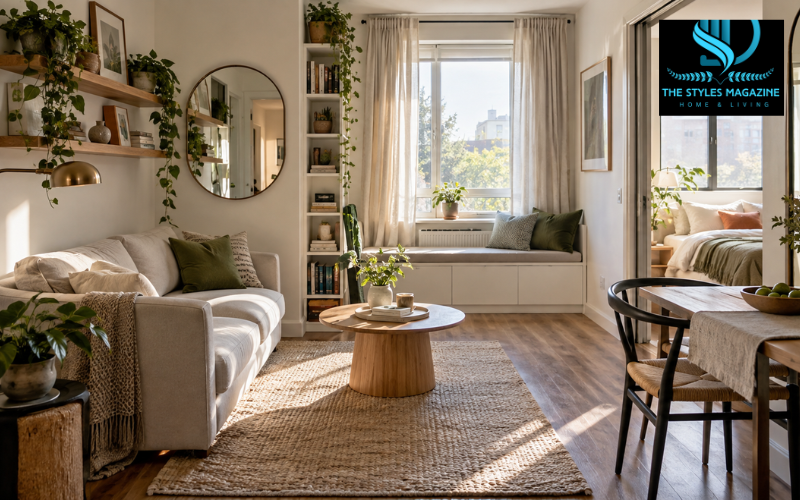
Learning how to decorate a small apartment is less about filling empty corners and more about making thoughtful choices. In a compact home, every piece of furniture, storage solution, light source, and decorative item has a greater effect on how the space feels and functions.
The main challenge is finding the right balance between comfort, storage, personal style, and everyday practicality. A room may look attractive in a photograph, but if furniture blocks walkways or there is nowhere to store daily essentials, it can quickly become frustrating to live in.
That is why layout and furniture choices usually matter more than simply adding more décor. Before buying cushions, wall art, lamps, or accessories, it helps to understand how the apartment is used. Think about where you relax, sleep, eat, work, and store your belongings.
A well-planned small apartment does not have to look empty or completely minimalist. The aim is to create a home that feels comfortable, organized, and personal. Good decorating starts with planning the layout, using space efficiently, improving light, choosing useful furniture, and controlling clutter without removing everything that gives the home character.
Quick Guide: Small Apartment Decorating Ideas
| Area | Best Approach | Why It Helps |
| Layout | Measure and plan before buying furniture | Prevents overcrowding and blocked walkways |
| Furniture | Choose multifunctional pieces | Saves floor space and adds useful storage |
| Storage | Use walls and vertical space | Keeps everyday items organized without using extra floor area |
| Lighting | Maximize daylight and layer artificial lighting | Makes rooms feel brighter and more comfortable |
| Living Room | Use appropriately sized furniture and a clear focal point | Creates a more organized and open layout |
| Décor | Choose fewer, meaningful pieces | Adds personality without creating visual clutter |
| Budget | Reuse, rearrange, and buy selectively | Improves the apartment without unnecessary spending |
Simple Step-by-Step Guide
- Measure your apartment first. Record wall lengths, windows, doors, and available floor space.
- Decide what each area needs to do. Plan places for sleeping, relaxing, dining, working, and storage.
- Arrange the largest furniture first. Position the bed, sofa, table, and major storage pieces before adding décor.
- Choose furniture with more than one purpose. Consider storage beds, ottomans, folding tables, or flexible side tables.
- Use vertical space carefully. Add shelves, hooks, tall cabinets, or hanging storage where useful.
- Improve the lighting. Keep windows clear and combine general, task, and accent lighting.
- Add personality gradually. Finish with artwork, textiles, plants, and decorative objects without overcrowding surfaces.
Start With the Apartment Layout Before Buying Anything
Before purchasing furniture, measure the apartment carefully. Record the width and length of walls, the size of windows, the position of doors, and the amount of clear floor space available. It is also important to note features that cannot easily be moved, such as radiators, electrical outlets, kitchen cabinets, built-in wardrobes, heating units, and plumbing.
These measurements help prevent one of the most common small-space problems: buying furniture that looks suitable in a showroom but feels oversized once it arrives.
Next, decide what activities need space in your home. A one-bedroom apartment may need separate areas for sleeping, relaxing, eating, and working. A studio apartment may need all of these functions within one open room.
Plan the main walking routes before deciding where large furniture will go. Doors should open freely, and people should be able to move between important areas without squeezing around tables or chairs.
A simple floor plan can be very useful. You do not need professional design software. A basic sketch with measurements is often enough to compare furniture sizes and test different layouts before spending money.
Build a Simple Small Apartment Design That Feels Cohesive
A simple design usually works well in a compact home because it reduces visual confusion. This does not mean every room needs to be plain or neutral. Instead, try to create a clear connection between the different parts of the apartment.
Choose a general style or mood and carry it through the space. You might prefer modern, warm and natural, traditional, Scandinavian-inspired, or something more colorful and personal. Whatever direction you choose, consistency helps a small apartment feel calmer.
A limited color palette can also create continuity. This could include two or three main colors supported by a few accent shades. Repeating similar wood tones, metals, fabrics, or shapes can make different rooms feel connected.
When decorating small spaces, avoid adding dozens of small accessories simply because they fit. A few carefully chosen objects often create more impact than many unrelated pieces. One larger artwork, an attractive lamp, or a well-placed plant can give a room personality without making it feel busy.
The goal of a small apartment design simple approach is not to remove character. It is to make every decorative choice feel intentional.
Create Separate Zones Without Adding Permanent Walls
Open-plan apartments can be practical, but they may feel disorganized when there is no clear difference between sleeping, working, dining, and relaxing areas.
You can create separate zones without building walls. An area rug can visually define the living room, while a small dining table can mark the eating area. A sofa can also act as a natural divider when positioned with its back toward another zone.
Open shelving and slim consoles can help separate spaces while still allowing light to travel through the room. In studios, curtains or lightweight folding screens can provide extra privacy around a sleeping area without making permanent changes.
Try to keep important sightlines open. Heavy dividers, tall solid cabinets, or oversized screens can sometimes make a compact apartment feel more enclosed than necessary.
The best zoning solution depends on how you use the space. If you work from home every day, creating a clearly defined work area may be more valuable than adding a formal dining zone that is rarely used.
Choose Furniture That Does More Than One Job
Multifunctional furniture is especially useful when floor space is limited. Instead of filling the apartment with separate pieces for every purpose, choose furniture that can solve two or more needs.
A storage ottoman can provide seating, act as a footrest, and hide blankets or other items. A bed with drawers can reduce the need for an extra chest of drawers. A drop-leaf or extendable table can stay compact most of the time and provide more surface space when needed.
Nesting tables are useful because they can be separated when guests arrive and stacked together afterward. A sofa bed may make sense when you regularly host overnight visitors, while a desk that doubles as a console or dining surface can help in a small studio.
However, multifunctional does not automatically mean better. A complicated piece of furniture that is difficult to open, move, or maintain may become annoying in everyday use.
Always choose furniture based on actual room measurements. Small apartments do not necessarily require the smallest furniture available. Sometimes one properly sized sofa looks better and functions more comfortably than several tiny chairs placed around the room.
Use Vertical Space for Storage and Decoration
When floor space is limited, walls can provide valuable storage.
Floating shelves above a desk, sofa, or sideboard can hold books, décor, or everyday items without adding another piece of floor furniture. Tall, narrow bookcases and cabinets can also provide more storage while using relatively little floor area.
Look for overlooked spaces as well. The area above a doorway, an empty wall beside a wardrobe, or the wall above a kitchen counter may have room for useful storage. Hooks, rails, pegboards, and hanging organizers can help keep frequently used items accessible.
Plants can also be displayed vertically. Wall planters, hanging baskets, or tall plant stands allow you to bring greenery into the apartment without filling the floor with pots.
Vertical storage should still be practical. Items you use every day should remain easy to reach, while high shelves are better for seasonal or less frequently used belongings.
Avoid covering every wall with storage. Too many shelves, hooks, and objects can create visual clutter and make the apartment feel busier.
Small Apartment Living Room Ideas That Keep the Space Open
Good small apartment ideas for the living room usually begin with one clear focal point. This might be the sofa, a window, artwork, a fireplace, or a media unit. Organizing furniture around a focal point can make the room feel more deliberate.
Choose a sofa that fits the actual scale of the room while still being comfortable enough for everyday use. Furniture with visible legs may create a lighter appearance because more of the floor remains visible.
Rugs can help connect seating areas, but extremely small rugs often make the furniture look disconnected. Choose a size that visually anchors the main seating arrangement.
Wall-mounted media units, narrow consoles, and shallow storage can reduce the amount of floor space used by bulky furniture. Flexible side tables are useful because they can be moved when needed.
Hidden storage is particularly valuable in the living room. Remote controls, chargers, games, blankets, paperwork, and other everyday items can quickly create clutter when they do not have a dedicated place.
If your living room also serves as an office or dining room, prioritize the functions you use most often.
Make a One-Bedroom Apartment Feel More Organized and Spacious
Many 1 bedroom apartment decorating ideas focus on helping the bedroom and living area feel separate while still belonging to the same home.
Give each room a clear purpose. Keep most sleep-related items in the bedroom and reserve the living room for relaxing, entertaining, working, or dining. This simple separation can make the apartment feel more organized.
Try to keep large storage furniture concentrated rather than spreading several bulky cabinets throughout the home. Make full use of wardrobes before adding additional freestanding units. Bedside tables with drawers can also provide useful storage without taking much extra space.
In the bedroom, keeping visible surfaces relatively calm can make the room easier to maintain. You can still add personality through bedding, artwork, lighting, and a few meaningful objects.
Using related colors or materials in both the bedroom and living area creates visual continuity.
Renters can make noticeable changes without permanent renovations. Removable wallpaper, freestanding shelving, plug-in wall lights, rugs, curtains, and artwork can add personality while respecting rental restrictions.
Use Natural Light, Mirrors, and Layered Lighting Strategically
Light can strongly influence how comfortable a small apartment feels. Start by allowing as much natural daylight into the room as practical.
Avoid placing tall, bulky furniture directly in front of windows. Choose curtains or blinds that provide privacy without unnecessarily blocking daylight. Hanging curtains slightly higher than the window frame can also help emphasize the height of the room when the proportions allow it.
Mirrors can reflect light and interesting views, but placement matters. Instead of automatically positioning a mirror opposite a window, look for a location where it reflects something attractive and helps brighten a darker part of the room.
Artificial lighting is equally important. A single overhead fixture may leave corners dark and make the room feel flat. Combining general lighting with task lighting and softer accent lighting creates more depth.
A floor lamp near the sofa, a desk lamp in the work area, and a small lamp or wall light near the bed can make different zones feel more comfortable and useful.
Add Color, Texture, Art, and Personality Without Creating Clutter
Small apartments do not have to be completely white. Light colors can work well, but deeper or brighter shades can also look attractive when used thoughtfully.
Choose colors that suit the mood you want to create. You might keep larger surfaces calm and introduce stronger shades through cushions, artwork, rugs, or accessories. Alternatively, one darker wall can add depth and character.
Texture is another simple way to make a compact home feel more inviting. Soft cushions, woven rugs, linen curtains, wood, ceramics, and natural materials can make a simple room feel layered without adding excessive objects.
Instead of filling every wall with small pictures, consider one larger artwork or a carefully arranged gallery wall.
Plants can add life and softness, but choose varieties that suit the light conditions and your ability to care for them.
Group smaller decorative objects together rather than spreading them across every surface. Leaving some empty space around your possessions helps important pieces stand out.
How to Decorate a Small Apartment on a Budget
If you are learning how to decorate a small apartment on a budget, begin by deciding which changes will make the biggest difference.
Rearranging existing furniture costs nothing and may immediately improve the layout. Try different positions before assuming you need new pieces.
Secondhand furniture can also be a good option, especially for tables, shelves, chairs, and storage units. Always check dimensions and condition before buying.
Spend more carefully on furniture you use every day, such as a mattress, sofa, or work chair, rather than using most of the budget on short-lived decorative trends.
Affordable changes can still create a noticeable improvement. New cushion covers, curtains, bedding, lamps, removable wallpaper, framed prints, and rugs can refresh a space without requiring major renovations.
Simple renter-friendly updates may also help existing furniture look better, such as replacing removable handles or using temporary surface coverings where appropriate.
The same rule applies when considering how to decorate an apartment on a budget of any size: buy slowly and avoid purchasing items simply because an empty corner needs to be filled.
A Modern Small Apartment Design Plan for Around 30m²
A modern small apartment design plan for a home of around 30 square metres should begin with essential functions rather than decorative details.
First, identify where sleeping, relaxing, eating, working, and storage will happen. Keep the main path through the apartment clear so movement feels natural.
Limit large furniture to pieces you genuinely use. A comfortable sofa and bed may be more valuable than trying to squeeze in a full dining set, large desk, several chairs, and extra cabinets.
Combining functions can be useful in a small apartment design 30m2 layout. A compact dining table may also serve as a desk. A storage bench can provide seating and organization. Vertical cabinets can hold more while using less floor space.
Try to keep the apartment visually connected through similar colors and finishes. This makes separate zones feel like parts of one planned home.
Most importantly, leave some flexible open space. Filling every available corner often makes a 30m² apartment harder to use.
Small Apartment Decorating Mistakes That Waste Space
One of the biggest mistakes is buying furniture before measuring. Even attractive furniture becomes a problem when it blocks doors, windows, or walkways.
Another common mistake is filling the apartment with too many small pieces. Several tiny tables, shelves, chairs, and decorative objects can create more visual clutter than a few appropriately sized items.
Avoid blocking natural light with tall storage units or heavy furniture unless there is no practical alternative.
Storage should also be easy to use. Deep containers hidden behind furniture may technically provide storage, but they are not very helpful if accessing them is difficult.
Be careful with products marketed specifically for small spaces. A piece should earn its place because it suits your measurements and lifestyle, not simply because the packaging calls it space-saving.
Finally, do not follow design trends that reduce comfort. A beautiful apartment should still be easy to clean, easy to move through, and suitable for your real daily habits.
Conclusion
Understanding how to decorate a small apartment starts with thoughtful planning rather than simply buying more décor. A good layout, practical storage, useful furniture, comfortable lighting, and carefully chosen personal details can make even a limited space pleasant to live in.
Focus first on how you use the apartment. Choose multifunctional furniture where it genuinely saves space, make use of walls without overcrowding them, and keep natural light and walking routes as open as possible.
Your home does not need to follow every small-space design rule. A compact apartment can still be colorful, comfortable, personal, and full of character.
The most useful approach is simple: keep what supports your everyday life, add pieces that make the home feel like yours, and leave enough open space for the apartment to remain comfortable and easy to use.
FAQs
How Can I Decorate A Small Apartment Without Making It Feel Cluttered?
Start with a clear layout, choose furniture that fits the available space, use hidden storage, and limit unnecessary accessories. Leave some open surfaces and floor space so the apartment remains comfortable and organized.
What Colors Work Best In A Small Apartment?
Light and neutral colors can create a calm, open feeling, but they are not required. Dark or bold colors can also work well when used thoughtfully alongside balanced lighting and coordinated décor.
How Do I Decorate A Small Apartment On A Budget?
Rearrange existing furniture first, shop secondhand when practical, and focus spending on items you use every day. Affordable rugs, curtains, artwork, lighting, and cushion covers can refresh the space without major expense.
What Furniture Is Best For A Small Apartment?
Choose furniture that fits the room and serves a useful purpose. Storage beds, compact sofas, nesting tables, extendable dining tables, storage ottomans, and desks with multiple uses can work particularly well.
How Can I Make A Small Apartment Feel More Organized?
Give belongings dedicated storage places, use vertical space, keep walkways clear, and avoid filling every surface. Regularly removing items you no longer use can also make the apartment easier to maintain.
Enjoyed it? Find more exclusive content on The Styles Magazine.
Disclaimer: This article is provided for general informational and home-decorating guidance only. Decorating needs can vary depending on apartment size, layout, rental rules, personal preferences, building restrictions, and budget. Always check measurements, installation requirements, and your rental or building policies before making permanent changes, drilling into walls, installing fixtures, or purchasing large furniture. The information is intended to help readers make practical decorating decisions and should be adapted to their individual living space.