When people think about the interior of a medieval castle, they often imagine cold, dark rooms made entirely of grey stone. Many castles today appear this way because time has stripped away much of their original decoration. However, during the Middle Ages, castle interiors looked very different from the empty ruins we see now.
In reality, the interior of a medieval castle was often more colorful and comfortable than most people expect. Many walls were covered with plaster and whitewash rather than bare stone. Some rooms were painted with decorative patterns or bright colors. Large woven tapestries were also hung on walls, adding warmth and decoration while helping to block the cold from thick stone walls.
Medieval castles were not just defensive structures built for war. They were also homes, administrative centers, and symbols of power. Lords, ladies, servants, soldiers, and visitors all lived or worked inside castle walls. Because of this, castle interiors were designed to support many activities such as social gatherings, family life, religious worship, food preparation, storage, and protection.
Each part of the castle interior had a purpose. Some spaces were open and public, while others were private and secure. From the busy Great Hall to quiet bedchambers and kitchens filled with smoke and heat, every room played a role in daily life. This article explores the layout, rooms, furnishings, decoration, and everyday comfort found inside the interior of a medieval castle, giving a clearer picture of how people actually lived behind those massive stone walls.
Key Spaces in the Interior of a Medieval Castle
| Castle Area | Purpose | Key Features |
| Great Hall | Social and administrative center | Feasts, meetings, raised dais for nobility |
| Keep | Most secure living area | Private quarters, strong defensive structure |
| Bedchambers | Sleeping and private space | Large curtained beds, limited furniture |
| Kitchens | Food preparation | Large hearths, roasting spits, busy work area |
| Chapel | Religious worship | Prayer services, simple decoration |
| Garderobes | Toilets and sanitation | Built into walls, waste dropped outside |
| Wardrobe | Storage of valuables | Clothes, fabrics, jewelry, spices |
The Layout and Structure of a Medieval Castle Interior
The interior of a medieval castle was carefully organized to balance safety, function, and daily living. Castles were built to protect their inhabitants, so the layout often reflected the need for defense while still providing space for everyday activities.
Most castles were built around a central courtyard or enclosed area surrounded by thick walls and towers. Inside these walls were multiple buildings and rooms that served different purposes. Some rooms were used for public gatherings and administration, while others were reserved for private living.
Defense played a major role in how these spaces were arranged. Important rooms were often placed higher in the structure, where they were safer during attacks. Narrow staircases, thick doors, and limited entry points helped control movement inside the castle.
Another key feature of the interior of a medieval castle was vertical living. Instead of spreading out across one level, many castle rooms were stacked across multiple floors within towers or keeps. Lower levels often held storage areas, kitchens, or guard rooms, while upper levels contained more comfortable living spaces.
Public and private spaces were also clearly separated. Areas like the Great Hall were designed to host many people, while bedchambers and private apartments were located deeper inside the castle for greater privacy and security.
The Great Hall – The Social Heart of the Castle
The Great Hall was one of the most important rooms in the interior of a medieval castle. It served as the social, political, and ceremonial center of castle life.
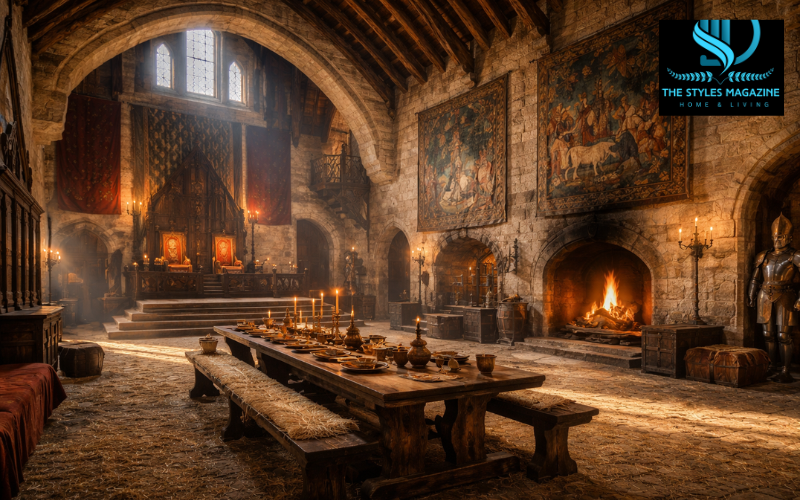
In many castles, the Great Hall was the largest and most impressive room. High ceilings, long wooden tables, and large fireplaces made it suitable for gatherings of many people. Feasts, celebrations, meetings, and court proceedings often took place here.
At one end of the hall was a raised platform known as a dais. The lord and lady of the castle sat here during meals and important events. Their elevated position clearly showed their higher status compared to guests and servants who sat at lower tables.
Beyond meals and celebrations, the Great Hall was also used for administrative tasks. Lords held court here, settled disputes, and managed the affairs of their lands. Visitors, travelers, and messengers might also be welcomed in this room.
Because of its size and importance, the Great Hall often reflected the power and wealth of the castle owner. Decorative tapestries, carved wooden furniture, and painted walls were common features that helped create an impressive setting.
The Keep and the Lord’s Private Living Quarters
At the center of many castles stood the keep, also known as the donjon. This tall, fortified tower was the most secure part of the interior of a medieval castle.
The keep served both defensive and residential purposes. Its thick walls and elevated position made it a stronghold during attacks. At the same time, it often contained private living quarters for the lord and his family.
Inside the keep, rooms were arranged across several floors. Lower levels might include storage rooms, wells, or guard areas. Higher levels contained more comfortable spaces such as living rooms, bedchambers, and private halls.
Privacy was an important factor in the design of the keep. Narrow staircases and limited entrances made it easier to control access. Only trusted members of the household were allowed into the most private areas.
For the noble family, the keep provided a secure retreat within the castle. During times of danger, it acted as the last line of defense while still functioning as part of the castle’s residential space.
Bedchambers and Private Rooms Inside the Castle
Bedchambers were among the most personal spaces within the interior of a medieval castle. These rooms were used for sleeping, resting, and private conversations.
Noble bedchambers often contained large wooden beds with heavy curtains. These curtains were not only decorative but also practical. They helped retain warmth in cold stone rooms and provided privacy from servants or visitors.
Unlike modern bedrooms, medieval bedchambers could serve several purposes. The lord or lady might meet advisors, receive guests, or conduct personal business in these rooms.
Other members of the household also had sleeping areas, though these were usually simpler. Servants and guards often slept in shared rooms or near their work areas within the castle.
Warmth and comfort were always concerns inside stone buildings. Thick curtains, rugs, and wooden furniture helped reduce the chill and make these private rooms more comfortable for daily life.
The Wardrobe and Storage Rooms for Valuables
Within the interior of a medieval castle, wardrobe rooms served as important storage areas for valuable possessions. These spaces were not just closets for clothing but also places where wealth was carefully stored and managed.
The wardrobe often held fine fabrics, expensive garments, jewelry, and rare spices. In medieval times, textiles and spices were considered luxury goods, so they were kept in secure locations.
These rooms were usually located close to the private chambers of the lord and lady. Their proximity allowed easy access while also ensuring that valuable items remained protected.
The wardrobe also functioned as a work space. Tailors, seamstresses, and servants might repair clothing or prepare garments for special occasions in this room.
Because clothing represented status and wealth, the wardrobe played an important role in managing the household’s resources and maintaining the appearance of noble power.
Kitchens and Food Preparation Areas
Food preparation was another essential part of the interior of a medieval castle. Kitchens were often located on the ground floor or in a nearby building within the castle grounds.
This placement helped reduce the risk of fire, which was a serious concern in medieval structures. Large cooking fires and hot ovens could easily cause damage if placed too close to important living areas.
Castle kitchens were busy and energetic places. Large hearths allowed cooks to roast meat on spits or prepare stews in heavy pots. Bread ovens, storage shelves, and preparation tables filled the space.
Servants worked together to prepare meals not only for the lord’s family but also for soldiers, guests, and other members of the household. During large feasts, kitchens had to produce large quantities of food quickly.
Once meals were prepared, servants carried dishes to the Great Hall where they were served to guests and household members.
The Chapel and Religious Spaces Within the Castle
Religion played a central role in medieval life, and this was reflected in the interior of a medieval castle. Many castles included a private chapel where the lord’s family and household could pray.
Chapels were often located close to the Great Hall or private living quarters. This allowed easy access for daily prayers and religious ceremonies.
Although smaller than church buildings in towns or cities, castle chapels were often beautifully decorated. Stone carvings, painted walls, and simple stained glass windows created a peaceful and sacred atmosphere.
Priests or chaplains sometimes lived within the castle and conducted services for the household. Important events such as weddings, baptisms, and special prayers also took place here.
The presence of a chapel reminded residents that faith was an important part of everyday life during the Middle Ages.
Garderobes and Sanitation in Medieval Castles
Sanitation inside the interior of a medieval castle was handled through structures known as garderobes. These were small toilet rooms built into the thickness of the castle walls.
A typical garderobe consisted of a stone seat with a hole beneath it. Waste dropped through vertical shafts that led outside the castle walls, into a moat, or into a cesspit below.
While this system may seem simple, it was an effective way to manage waste in a fortified building. Placing toilets within the walls helped keep unpleasant smells away from living areas.
Despite these practical solutions, sanitation was still a challenge in medieval times. Cleaning systems were limited, and hygiene standards were very different from modern expectations.
Even so, the design of garderobes shows how builders tried to address everyday needs while working within the limitations of castle architecture.
Decoration and Wall Coverings in Castle Interiors
Decoration played a larger role in the interior of a medieval castle than many people realize. Tapestries were among the most important decorative elements.
These large woven fabrics were hung on stone walls to provide insulation and visual interest. They often displayed scenes from history, mythology, or religious stories.
Walls were also sometimes painted with decorative patterns. One common style used red lines on white plaster to imitate large blocks of stone. Other designs included floral patterns or simple geometric shapes.
Beyond decoration, these coverings also served practical purposes. They helped reduce drafts and made large rooms feel warmer and more comfortable.
For wealthy nobles, decorative elements inside the castle were also a way to display status, taste, and cultural identity.
Lighting and Heating Inside Stone Castles
Lighting inside the interior of a medieval castle was limited compared to modern homes. Thick stone walls required small windows to maintain structural strength and security.
These small windows allowed only a small amount of daylight to enter the rooms. In earlier centuries, glass was expensive and uncommon, so windows were sometimes covered with parchment or cloth.
To light rooms after dark, people relied on candles made from animal fat or wax. Oil lamps were also used in some areas.
Heating was another challenge. Large fireplaces or hearths provided warmth, but their heat did not always spread evenly through the room. Heavy curtains, tapestries, and thick clothing helped people stay warm during colder months.
Despite these limitations, medieval builders developed creative ways to make castle interiors more livable.
Flooring Materials and Interior Comfort
Floors in the interior of a medieval castle were usually made of stone or wooden planks. To improve comfort, these hard surfaces were often covered with layers of rushes or straw.
Rushes were plants that could be easily gathered and spread across the floor. They provided a softer walking surface and helped absorb moisture.
Over time, the rushes would collect dirt and waste. Servants regularly replaced them with fresh layers to maintain cleanliness.
Although this system may seem unusual today, it was a practical solution in medieval times. It provided a basic level of comfort while requiring materials that were easy to obtain.
Furniture and Everyday Objects in Castle Rooms
Furniture inside the interior of a medieval castle was usually simple and practical. Unlike modern homes, rooms were not filled with large numbers of permanent pieces.
One of the most common items was the wooden chest. These chests were extremely versatile. They could be used for storage, seating, or even as tables.
Benches, stools, and basic wooden tables were also common. Because furniture was often portable, rooms could be rearranged depending on the needs of the household.
This flexible approach made it easier to host large gatherings, prepare for feasts, or reorganize spaces when necessary.
Even though furniture was limited, the pieces that did exist were designed to serve multiple functions in everyday castle life.
Daily Life Inside the Interior of a Medieval Castle
The interior of a medieval castle supported a complex daily routine for everyone living inside its walls. Different rooms served specific purposes throughout the day.
The Great Hall might host meals, meetings, or celebrations. Kitchens remained busy preparing food. Servants moved between rooms carrying supplies or completing tasks.
Private chambers offered spaces for rest, conversation, or personal work. Meanwhile, guards and soldiers watched over the castle’s entrances and towers.
Life inside a castle involved a mix of comfort and responsibility. Nobles managed their lands and households, while servants and workers supported the daily functioning of the castle.
In this way, the castle interior served both as a home and as a center of power and protection.
Conclusion
The interior of a medieval castle was far more complex and lively than the empty stone ruins we see today. Behind thick walls and defensive towers existed a carefully organized environment designed to support both security and everyday life.
Rooms inside castles served many purposes. Great Halls hosted feasts and meetings, private chambers provided comfort and privacy, and kitchens, chapels, and storage rooms supported the needs of the entire household.
Decoration also played an important role. Tapestries, painted walls, and wooden furniture added warmth and character to what might otherwise have been cold stone spaces.
By combining architecture, decoration, and practical design, the interior of a medieval castle created a unique living environment. It was not just a fortress but also a functioning home where power, protection, and daily life came together within the castle walls.
Frequently Asked Questions (FAQs)
What Did The Interior Of A Medieval Castle Look Like?
The interior of a medieval castle was more decorated than many ruins suggest today. Walls were often plastered or painted, rooms had tapestries, wooden furniture, fireplaces, and separate areas for living, dining, storage, and worship.
Why Were Castle Interiors So Dark?
Castle interiors were dark mainly because walls were thick and windows were small. Small openings helped protect the building from attacks while keeping the structure strong.
What Rooms Were Inside A Medieval Castle?
Common rooms included the Great Hall, bedchambers, kitchens, chapels, storage rooms, garderobes (toilets), and the keep where the noble family often lived.
How Were Medieval Castles Heated?
Castles were heated mainly by large fireplaces or hearths. Heavy curtains, tapestries, and thick bedding were also used to keep rooms warmer during cold weather.
Were Medieval Castles Comfortable To Live In?
Compared to modern homes, castles were not very comfortable. However, for their time they provided protection, basic heating, decorated interiors, and organized living spaces for nobles and their households.
Disclaimer: This article is intended for educational and informational purposes only. Historical details about medieval castles may vary depending on region, time period, and archaeological interpretation. The information presented reflects general historical understanding rather than descriptions of a single specific castle.
Loved Reading This? Discover More Exclusive Stories And Updates At The Styles Magazine!