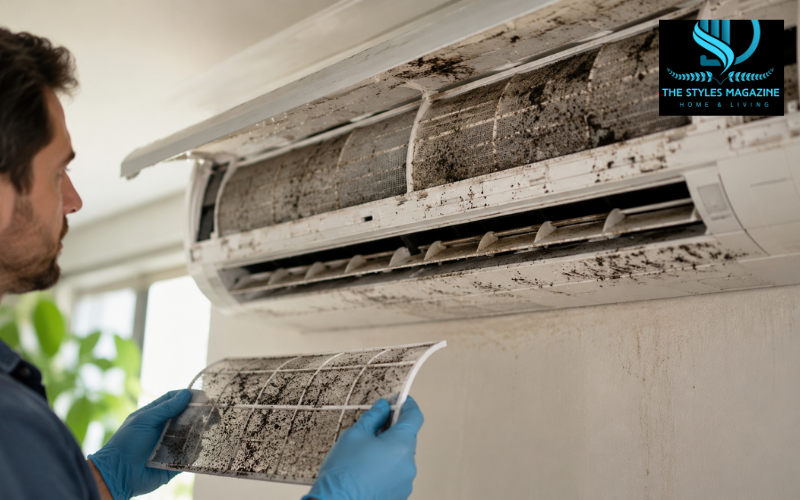
An air conditioner with mold is more than just a dirty cooling unit. It usually means moisture, dust, and poor airflow have created a place where mold can grow inside or around the AC system. Mold may appear as black, green, gray, or white spots, or it may not be visible at first. In many homes, the first clue is a musty smell when the air conditioner turns on.
Air conditioners naturally handle moisture. As warm indoor air passes over cold parts inside the unit, water can form and drain away. When that moisture does not dry properly, or when dirt builds up inside the system, mold has a better chance to grow. This can happen in a window air conditioner, portable air conditioner, wall air conditioner, or central air conditioner.
The main concern is indoor air quality. If mold is inside the airflow path, the AC may spread mold particles and musty odors into the room. According to the CDC, mold exposure can cause symptoms such as a stuffy nose, sore throat, coughing, wheezing, burning eyes, or skin rash in some people, while people with asthma, mold allergies, weak immune systems, or chronic lung disease may be more sensitive.
In this article, you will learn why mold grows in air conditioners, how to recognize the signs, when cleaning may be safe, when to call a professional, and how to prevent the problem from coming back.
Air Conditioner With Mold
| Issue | What It Means | What You Should Do |
| Musty smell from AC | Moisture or mold may be inside the unit | Turn off the AC and inspect filters, vents, and drain areas |
| Black or green spots | Possible visible mold growth | Clean small surface mold carefully or call a professional |
| Coughing or allergy symptoms | Mold particles may be affecting indoor air | Stop using the unit if symptoms worsen and check the AC |
| Weak airflow | Dirty filter, blocked coils, or buildup inside | Clean or replace the filter and inspect for moisture |
| Mold keeps coming back | Hidden moisture or drainage problem | Call an HVAC technician for deeper inspection |
| Mold in central AC | Possible duct or system contamination | Avoid DIY deep cleaning and get professional help |
What Causes Mold to Grow in an Air Conditioner
Mold needs moisture to grow, and an air conditioner can provide moisture if it is not draining or drying correctly. The EPA explains that controlling moisture is the key to controlling mold, and if mold is present, the moisture problem must be fixed or mold can return.
One common cause is moisture buildup inside the unit. This can happen when condensation collects on coils, drain pans, filters, or nearby surfaces. If the AC turns off before the inside has a chance to dry, dampness may remain for hours.
Dirty filters also make the problem worse. Dust, pet hair, pollen, and other particles can collect on the filter and inside the unit. Mold can grow on dust when moisture is present. A clogged filter can also reduce airflow, which makes it harder for the unit to dry out.
Poor drainage is another major cause. If the condensate drain line, drain pan, or hose is blocked, water may sit inside the air conditioner. Standing water creates the kind of damp environment mold needs.
High indoor humidity can also encourage mold growth. If the air inside the home stays humid, the AC has to remove more moisture. When humidity is not controlled, mold can grow not only inside the AC but also around vents, walls, windows, and other cool surfaces.
Lack of regular maintenance is often the final reason. An air conditioner with mold is usually not caused by one issue alone. It is often the result of moisture, dirt, weak airflow, and missed cleaning over time.
Is Mold in an Air Conditioner Dangerous?
Many people ask, is mold in air conditioner dangerous? The honest answer is that it can be, especially if mold is being blown into the air you breathe. Not everyone reacts the same way, but mold inside an AC should never be ignored.
When an air conditioner runs, it pulls air in and pushes cooled air back out. If mold is growing on parts that air passes over, mold spores or fragments may move into the room. This can make the air smell musty and may trigger symptoms in sensitive people.
Some people react quickly because they already have allergies, asthma, sinus problems, or other breathing issues. Children, older adults, people with weakened immune systems, and people with chronic lung disease may also be more vulnerable. The CDC notes that exposure to damp and moldy environments may cause health effects in some people, while others may not have any symptoms.
Mold exposure becomes a bigger concern when the smell is strong, the mold is widespread, symptoms happen when the AC runs, or mold is suspected in a central HVAC system. Ignoring AC mold can allow it to spread, worsen odors, reduce comfort, and lower indoor air quality.
Common Mold in Air Conditioner Symptoms
The most common mold in air conditioner symptoms often look like normal allergy or cold symptoms. This can make the problem easy to overlook.
A musty smell when the AC turns on is one of the clearest signs. The odor may smell like wet socks, damp clothing, or a basement. It may fade after the unit runs for a while, but if it returns every time the AC starts, mold or mildew may be present.
Physical symptoms can include coughing, sneezing, throat irritation, watery eyes, nasal congestion, headaches, or skin irritation. People with asthma may notice more wheezing, chest tightness, or flare-ups. Some people feel worse when they are inside the home and better when they leave for several hours.
These symptoms do not prove that the air conditioner has mold. Dust, pollen, pet dander, smoke, and other indoor air problems can cause similar reactions. However, if symptoms appear with a musty AC smell or visible mold near vents, the air conditioner should be inspected.
Warning Signs Your Air Conditioner Has Mold
Visible spots are a major warning sign. Mold may look black, green, white, or gray. It may appear as dots, fuzzy patches, powdery stains, or slimy buildup. Common places to check include vents, louvers, filters, drain pans, and the area around the air outlet.
Black dust near air vents can also be suspicious, especially if it returns after cleaning. However, not all black dust is mold. It may also be ordinary dirt, soot, or debris. The EPA notes that a substance may look like mold, but a clear confirmation may require expert evaluation or lab testing.
A damp or sour “dirty sock” smell is another warning sign. This odor often points to moisture and microbial growth somewhere inside the cooling system.
Weak airflow or reduced cooling can also happen when filters, coils, or internal parts are dirty. Mold may not be the only cause, but poor airflow can create damp conditions that allow mold to grow more easily.
Window Air Conditioner With Mold
A window air conditioner with mold is a common problem because window units sit partly indoors and partly outdoors. They collect condensation, dust, outdoor particles, and indoor air debris. If the unit is not tilted, drained, cleaned, or dried properly, moisture can stay inside.
The main areas to inspect are the front grille, filter, louvers, coils, drain pan, and the inside edges where air flows out. If mold is only on a washable filter or easy-to-reach plastic surface, careful cleaning may be enough.
However, if the mold is deep inside the unit, keeps returning, or appears along insulation or hidden parts, professional cleaning or replacement may be safer. Older window units with heavy mold, rust, poor drainage, or damaged internal material may not be worth saving.
Portable Air Conditioner With Mold
A portable air conditioner with mold can develop problems because it collects moisture while cooling the room. Some portable units drain through a hose, while others collect water in an internal tank. If water sits too long, mold and odors can develop.
Mold-prone areas include the air filter, exhaust hose, water tank, drain plug, vents, and internal airflow path. If the unit smells musty when it starts, check whether the tank needs emptying or the filter needs cleaning.
Cleaning a portable AC usually means washing or replacing the filter, emptying the tank, wiping reachable surfaces, and allowing the unit to dry. The exhaust hose should also be checked because moisture and dust can collect there.
To reduce future mold growth, drain the unit as recommended, clean the filter often, avoid storing it while damp, and let it run in fan mode for a short time after cooling to help dry the inside.
Wall Air Conditioner With Mold
A wall air conditioner with mold can be harder to inspect because part of the unit sits inside a wall sleeve. Moisture can collect around the sleeve, vents, filter, and drainage area. If the wall around the unit feels damp or stained, the issue may extend beyond the air conditioner.
Through-the-wall units need clear airflow and proper drainage. If the unit is blocked by furniture, dust, or a dirty filter, airflow drops and moisture can stay inside longer. If the wall sleeve does not drain correctly, water may pool and create hidden mold problems.
A deeper inspection is needed when there is a strong odor, visible staining around the wall, repeated mold after cleaning, or signs of water damage near the unit.
Central Air Conditioner With Mold
A central air conditioner with mold can be more serious because it connects to ducts and vents throughout the home. If mold is only on a vent cover, the issue may be local. But if mold is inside ducts, on coils, in the air handler, or near the return intake, it may affect multiple rooms.
There is a difference between surface mold and deeper HVAC contamination. Surface mold near a vent may be caused by condensation, dust, and poor airflow at that location. Mold inside the HVAC system may involve the evaporator coil, drain pan, blower area, ducts, or insulation.
The EPA says air duct cleaning should be considered when there is substantial visible mold growth inside hard-surface ducts or on other heating and cooling system components. It also warns that if insulated ducts become wet or moldy, they usually cannot be effectively cleaned and should be removed and replaced.
Central systems usually need professional inspection because many parts are hidden and difficult to clean safely. Signs that mold may be beyond the main unit include musty smells from several vents, mold around multiple registers, water leaks, and symptoms that happen throughout the home when the AC runs.
Carrier Air Conditioner With Mold
A Carrier air conditioner with mold should be handled the same way as any other brand. Mold is usually not a brand-specific issue. It is normally caused by moisture, dirt, drainage problems, poor airflow, or lack of maintenance.
If you have a Carrier unit, check the filter, visible vents, coils, drain pan, and any accessible drainage areas. Always follow the maintenance guidance for your specific model because different units may have different cleaning instructions.
For central Carrier systems, mini-splits, or units with hidden internal mold, it is best to contact a qualified HVAC technician. If the problem involves confirmed mold contamination, a mold remediation professional may also be needed.
Can You Clean Mold From an Air Conditioner Yourself?
You may be able to clean light surface mold from an air conditioner yourself if the growth is small, easy to reach, and limited to washable parts such as filters, grilles, or vent covers. DIY cleaning may be reasonable for a window, wall, or portable unit when the mold is clearly on removable parts.
DIY cleaning is not enough when mold is heavy, deep inside the unit, inside ducts, on insulation, or keeps returning. It is also not the best choice if anyone in the home has serious breathing issues, a weak immune system, or strong symptoms linked to the AC.
Before cleaning, turn off the power completely. Wear gloves, eye protection, and a well-fitting mask to reduce contact with dust and spores. Work in a well-ventilated area when possible.
Deep internal mold should be handled carefully because poor cleaning can spread particles into the air or damage the unit. The EPA advises not running an HVAC system if you know or suspect it is contaminated with mold because it could spread mold throughout the building.
How to Clean Light Mold From an Air Conditioner Safely
For light mold on accessible parts, start by turning off power completely. Unplug the unit or shut off the breaker if needed. Never clean an air conditioner while it is running.
Wear basic protective gear before opening the unit. Remove the filter and wash it if it is reusable. If the filter is disposable, replace it instead. A dirty filter should not be put back into the unit.
Next, wipe accessible plastic surfaces, vents, and louvers with a mild cleaner suitable for the material. Clean visible buildup from the drain pan if you can reach it safely. Avoid soaking electrical parts, motors, wiring, or control panels.
After cleaning, let all parts dry fully before restarting the AC. This step is important because moisture left inside can invite mold back.
Avoid harsh or unsafe chemical use inside the unit. Strong chemicals may damage parts, create fumes, or blow irritating residue into the room. When in doubt, follow the manufacturer’s instructions or call a professional.
When to Call a Professional for AC Mold
Call a professional if mold keeps returning after cleaning. Recurring mold usually means the real moisture problem has not been fixed.
You should also get help if there is a strong musty smell from vents, mold inside ducts or central HVAC components, large visible mold patches, or water leaks near the unit. Hidden moisture problems can keep feeding mold even after surface cleaning.
If people in the home feel sick when the AC runs, professional inspection is a smart step. A technician can check drainage, airflow, coils, filters, duct conditions, and other possible causes. If mold contamination is confirmed, a trained remediation specialist may be needed.
Should You Replace an Air Conditioner With Mold?
You do not always need to replace an air conditioner with mold. If the problem is small, recent, and limited to removable parts, cleaning and better maintenance may solve it.
Replacement may be safer or more practical when the unit is old, heavily contaminated, damaged, rusty, leaking, or has mold inside materials that cannot be cleaned well. Replacement may also make sense if repair costs are close to the price of a new unit.
When people search for the best air conditioner with mold, they usually do not mean they want an AC that has mold. They usually want an air conditioner that is easier to keep clean and less likely to trap moisture. The better choice is a unit with washable filters, good drainage, easy access for cleaning, and proper size for the room.
How to Prevent Mold From Coming Back in Your Air Conditioner
Prevention starts with moisture control. Clean or replace filters regularly so air can move freely. A clean filter helps reduce dust buildup and allows the unit to work more efficiently.
Keep drain lines, drain pans, hoses, and tanks clear. If water cannot drain, mold can return quickly. Portable units should be emptied as recommended, and central AC drain lines should be checked during routine maintenance.
Using fan-only mode for a short time after cooling can help dry moisture inside some units. This is especially useful in humid weather or after long cooling cycles.
Indoor humidity also matters. Many home comfort and indoor air sources recommend keeping humidity around 30% to 50% to reduce mold risk and improve comfort; the key point is to avoid long periods of high humidity.
Schedule routine HVAC maintenance for central systems and clean smaller units before and after heavy use. Keep vents and coils clean, avoid blocking airflow, and fix water leaks quickly.
Final Thoughts on Dealing With an Air Conditioner With Mold
An air conditioner with mold should not be ignored. Even if the mold looks minor, it can affect comfort, air quality, and health for sensitive people. A musty smell, visible spots, black dust, weak airflow, or symptoms that appear when the AC runs are all signs worth checking.
Small surface mold on removable parts may be manageable with careful cleaning and full drying. But central AC mold, recurring mold, heavy growth, hidden moisture, or mold linked to health symptoms should be handled by a qualified professional.
The best long-term solution is prevention. Keep the unit clean, control moisture, maintain good airflow, clear drainage problems, and service the system regularly. When your air conditioner stays dry and clean, your indoor air feels fresher, your cooling system works better, and your home becomes a healthier place to breathe.
FAQs
Is An Air Conditioner With Mold Dangerous?
Yes, it can be dangerous for some people. Mold spores may spread through the air and trigger coughing, sneezing, allergies, asthma symptoms, or breathing discomfort.
Can I Clean Mold From My Air Conditioner Myself?
You can clean light surface mold on removable parts like filters or vent covers. Deep mold inside coils, ducts, or central HVAC systems should be handled professionally.
Why Does My Air Conditioner Smell Musty?
A musty AC smell usually means moisture, dust, or mold is trapped inside the unit. Dirty filters, poor drainage, or high humidity are common causes.
Should I Replace An Air Conditioner With Mold?
Replacement may be needed if the unit is old, heavily contaminated, damaged, or mold keeps returning after cleaning. Small surface mold may only need proper cleaning.
How Do I Stop Mold From Coming Back In My AC?
Clean or replace filters often, keep drain lines clear, control indoor humidity, dry the unit after use, and schedule regular HVAC maintenance.
Enjoyed it? Find more exclusive content on The Styles Magazine.
Disclaimer: This article is for general informational purposes only and does not replace professional HVAC, mold remediation, or medical advice. If you see heavy mold growth, notice recurring odors, or experience health symptoms, contact a qualified technician or healthcare professional.