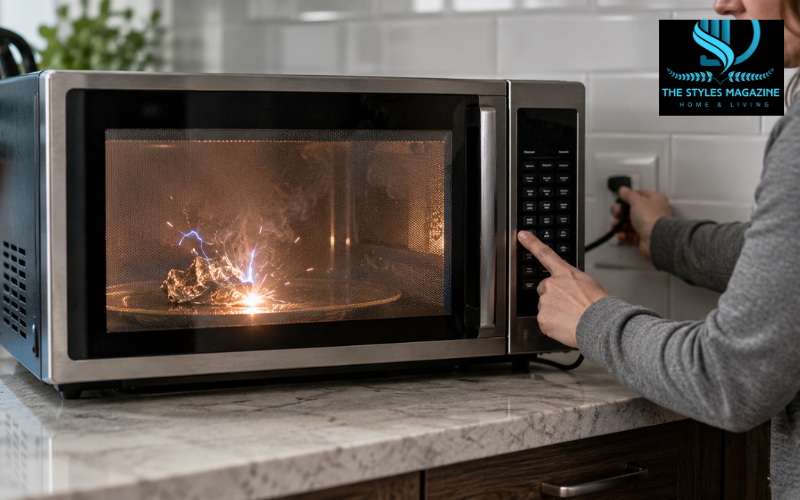
Microwave sparking can be scary, especially when it happens suddenly while you are heating food. You may see bright flashes, hear popping sounds, or notice a burning smell inside the microwave. This sparking is also called arcing, and it means electrical energy is jumping or reacting inside the microwave instead of heating food normally.
In many cases, microwave sparking has a simple cause. A small piece of foil, a fork, a metal twist tie, or a plate with metallic trim can create sparks almost immediately. Food splatter, grease buildup, a damaged microwave waveguide cover, or chipped paint inside the microwave can also cause the problem.
However, microwave sparking should always be taken seriously. Even if the cause looks small, repeated sparking can burn the inside of the appliance, damage important parts, or create a fire risk. The safest first step is simple: turn the microwave off and unplug it before checking anything.
Some causes can be fixed with careful cleaning or by replacing a small removable part, such as the waveguide cover. Other causes may involve internal parts that should never be repaired at home. Microwave ovens can hold dangerous electrical charge even when unplugged, so opening the outer cabinet is not safe for most people.
This guide explains what microwave sparking usually means, whether it is dangerous, why a microwave may spark without metal, what a burning smell or popping sound may suggest, and how to fix microwave sparking safely.
Microwave Sparking Causes and What to Do
| Problem | What It May Mean | What You Should Do |
| Sparks with metal inside | Fork, foil, twist tie, or metallic trim is reacting | Turn off the microwave and remove the metal item |
| Sparks without metal | Grease, food buildup, chipped paint, or waveguide issue | Unplug, clean the inside, and inspect for damage |
| Sparks with burning smell | Burned food, grease, damaged cover, or electrical issue | Stop using it until the cause is found |
| Sparks after cleaning | Moisture, scratched paint, loose cover, or leftover scrubber pieces | Dry fully and inspect the interior carefully |
| Sparks from side wall | Possible microwave waveguide cover problem | Check the cover and replace it if burned or cracked |
| Repeated sparks | Possible cavity damage or internal fault | Do not keep testing it; call a technician |
What Microwave Sparking Usually Means
Microwave sparking usually means something inside the cooking area is reacting badly to microwave energy. A microwave works by sending energy into the oven cavity to heat food. According to the FDA, microwaves are reflected by metal, pass through materials such as glass and paper, and are absorbed by food. This is why metal inside the microwave can cause problems when it is not part of the appliance’s approved design.
When sparks appear, the microwave energy may be hitting metal, burned food, grease, damaged paint, or a dirty cover inside the appliance. Sometimes the sparks happen only once because a small metal object was accidentally left inside. Other times, sparking returns again and again because there is damage or buildup inside the microwave.
A single spark does not always mean the microwave is ruined. But it does mean you should stop using it until you find the cause. If sparking continues after you remove metal objects and clean the inside, the microwave may need repair or replacement.
Is Microwave Sparking Dangerous?
Yes, microwave sparking can be dangerous if ignored. The danger depends on the cause, how long the sparking continues, and whether the appliance is damaged.
A quick spark from a forgotten fork or a small piece of foil may not permanently damage the microwave if you stop it immediately. But repeated arcing can burn the inside wall, damage the waveguide cover, harm the magnetron area, or create smoke and fire. If you see flames, heavy smoke, or repeated sparks, stop using the microwave right away.
The FDA advises using microwave ovens according to the manufacturer’s instructions and avoiding use if the door, hinges, latches, or seals are damaged. A microwave in good condition is generally safe when used correctly, but a damaged microwave can present safety risks.
Microwave sparking becomes more serious when it comes with a burning smell, visible scorch marks, damaged paint, rust, melted plastic, or sparks from the same spot every time. These signs suggest the problem is not just a simple mistake.
Why Is My Microwave Sparking Without Metal?
Many people ask, “Why is my microwave sparking without metal?” The answer is that metal is not the only cause of sparks.
Food splatter can burn onto the walls or ceiling of the microwave. Over time, grease and food particles may become hard, black, and conductive. When microwave energy hits these burned spots, sparks may appear. This is especially common if the microwave has not been cleaned regularly.
A damaged microwave waveguide cover is another common reason. The waveguide cover is usually a small square or rectangular panel on the inside wall. It may look like cardboard, plastic, or a thin mica sheet. Its job is to protect the area where microwave energy enters the cooking space. If it becomes greasy, burned, cracked, or loose, it may cause sparking.
Sparking without obvious metal may also happen because of chipped interior paint. When the protective paint inside the microwave wears away, bare metal can become exposed. That exposed metal can spark during cooking.
In some cases, certain foods can also spark. Dense vegetables, small pieces of food, or foods with minerals may create tiny flashes, especially if they are dry. This does not always mean the microwave is broken, but it should still be watched carefully.
Common Causes of Microwave Sparking
The most common causes of microwave sparking are metal objects, dirty surfaces, a damaged waveguide cover, chipped paint, incorrect rack placement, and certain foods.
The good news is that many causes can be checked without opening the microwave cabinet. You only need to inspect the cooking area, the turntable, the walls, the ceiling, the waveguide cover, and the cookware you used. Never remove the outer shell of the microwave to look at internal parts.
If the sparking started suddenly, think about what was inside the microwave at that moment. A new plate, a takeout container, a food wrapper, or a metal rack placed incorrectly may be the reason. If sparking has been getting worse over time, the cause may be grease buildup, burned debris, or internal wear.
Metal, Foil, and Metallic Trim Inside the Microwave
Metal is one of the easiest causes to understand. Forks, spoons, aluminum foil, metal twist ties, steel containers, and cups or plates with metallic trim can all cause microwave sparking.
Some packaging also contains hidden metal. Takeout containers, sandwich wrappers, and decorative food packaging may have thin metal layers that are not easy to see. Even a small piece of foil stuck to food can create sparks.
Some microwaves come with metal racks, especially over the range microwave models. These racks are designed for specific use and must sit correctly on their support brackets. LG’s support guidance notes that incorrect metal rack placement can lead to sparking if the rack touches the microwave wall.
If your microwave sparks when a metal rack is inside, remove the rack and check the owner’s manual. Do not use the rack unless it belongs to that exact microwave model and is placed exactly as instructed.
Food Splatter, Grease Buildup, and Burned Debris
Food splatter is one of the most overlooked causes of microwave sparking. Small bits of sauce, oil, cheese, or grease can stick to the inside walls and ceiling. If they are heated again and again, they may burn into dark spots.
These burned spots can become hot and cause arcing. You may notice sparks near the ceiling, around the waveguide cover, or close to old food stains. The microwave may also smell smoky or burned.
Regular cleaning helps prevent this. The FDA recommends cleaning the oven cavity, door edge, and nearby surfaces with water and mild detergent, while avoiding steel wool, scouring pads, or harsh abrasives.
Always unplug the microwave before cleaning. Use a soft cloth or sponge, and avoid soaking any openings. If food is stuck, warm a bowl of water in the microwave first, then let the steam soften the mess before wiping it away. But if the microwave is actively sparking, do not run it again until you inspect the cause.
Microwave Waveguide Cover Problems
The microwave waveguide cover is a small but important part. It covers the opening where microwave energy enters the cooking area. It also helps protect internal parts from food splatter, steam, and grease.
When the waveguide cover becomes dirty, greasy, cracked, burned, or loose, microwave sparking can happen. You may see black marks on the cover or sparks coming from the same side wall. A burning smell may also appear.
Some waveguide covers can be cleaned if they are only dirty. If the cover is burned, cracked, soft, or broken, it usually needs to be replaced. Many covers are made from mica and are inexpensive, but the replacement must fit properly and be safe for microwave use.
Do not operate the microwave with the waveguide cover removed unless the manufacturer’s instructions clearly say it is safe. In most cases, using the microwave without this cover can allow food and grease to enter areas that should stay protected.
Microwave Sparking and Burning Smell
Microwave sparking and burning smell together are a warning sign. The smell may come from burned food, grease, a damaged waveguide cover, scorched paint, plastic packaging, or an electrical problem.
First, turn the microwave off and unplug it. Let it cool before touching anything inside. Then inspect the cooking area. Look for burned food, melted containers, black marks, or damage around the waveguide cover.
If the smell came from a dirty interior, cleaning may solve the issue. If the smell comes back every time you use the microwave, stop using it. A repeated burning smell may mean that internal parts are overheating or that arcing has damaged the oven cavity.
Do not ignore a chemical, electrical, or plastic-like burning smell. That kind of smell can point to a more serious problem than simple food splatter.
Microwave Sparking and Popping Sounds
Microwave sparking and popping sounds often happen together. The popping may come from food, but it may also come from arcing.
Some foods pop naturally as steam builds up inside them. This is common with foods that have skins, such as potatoes, sausages, and some vegetables. But if the popping is paired with flashes of light, a burning smell, or sparks from the wall, the problem is likely not just food.
If you hear popping and see sparks, stop the microwave. Check for metal, damaged cookware, food buildup, and the waveguide cover. If everything looks clean and safe but the popping and sparking continue, the microwave should be inspected by a professional.
Microwave Sparking After Cleaning
Microwave sparking after cleaning can happen for several reasons. If you used a harsh scrubber, you may have scratched the interior paint. If you used too much water, moisture may have entered small openings. If you cleaned around the waveguide cover, it may have shifted, cracked, or loosened.
It can also happen if a piece of cleaning pad, foil, or metal scrubber fiber was left behind. Steel wool and rough scouring pads should not be used inside a microwave because they can damage the surface and leave small metal fragments.
After cleaning, make sure the microwave is fully dry before using it. Check that the turntable, roller ring, and waveguide cover are properly in place. If the microwave sparks after cleaning and you see chipped paint or a damaged cover, do not continue using it until the damaged area is handled correctly.
Over the Range Microwave Sparking Issues
An over the range microwave can spark for the same reasons as a countertop microwave. Metal, grease buildup, waveguide cover damage, chipped paint, and incorrect rack use can all cause arcing.
However, over the range models may collect more grease because they sit above the stove. Cooking steam, oil, and smoke can rise into the microwave area. If the vents and interior are not cleaned regularly, greasy buildup may become a bigger problem.
The metal rack in many over the range microwaves is another possible cause. If the rack is not sitting correctly on its supports, it may touch the side wall and spark. Remove the rack and check the manual before using it again.
If sparks appear near the vent area or the same upper corner every time, stop using the appliance and inspect it carefully.
Chipped Interior Paint and Exposed Metal
The inside of a microwave has a protective painted surface. When that paint chips, scratches, bubbles, or peels, bare metal may show underneath. Exposed metal can cause microwave sparking.
Small paint chips may sometimes be repaired with microwave-safe cavity paint, but only if the area is minor and there is no deep rust, burning, or pitting. Regular household paint should never be used inside a microwave.
If the damaged area is large, rusted, deeply burned, or close to the waveguide opening, replacement may be safer than repair. A microwave with repeated arcing in the same damaged area should not be used.
Foods That Can Spark in a Microwave
Some foods can create small sparks even when no metal is present. This can happen with dense vegetables, leafy greens, carrots, green beans, spinach, or foods cut into sharp or uneven pieces. Minerals in the food and dry surfaces may contribute to small flashes.
Usually, this type of sparking is brief and happens on the food surface, not from the microwave wall. Adding moisture can help. Cover the food with a microwave-safe lid, add a small amount of water, or use a damp paper towel when heating vegetables.
Still, do not assume all food-related sparking is harmless. If sparks come from the microwave wall, ceiling, waveguide cover, or a damaged spot, stop using the appliance and investigate.
How to Fix Microwave Sparking Safely
The safest way to fix microwave sparking is to start with simple checks. Turn the microwave off, unplug it, and let it cool. Remove any food, containers, racks, and the turntable. Look for metal, foil, damaged dishes, burned food, grease, chipped paint, or a damaged waveguide cover.
Clean the inside gently with a soft cloth, warm water, and mild soap. Dry everything well. Check that the turntable and roller ring sit correctly. If your microwave has a removable rack, make sure it is approved for that model and placed properly.
If you find a burned waveguide cover, replace it with the correct type. If you find chipped paint, use only microwave-safe cavity paint and follow product instructions carefully. If you see deep burns, holes, rust, or sparking from inside the appliance wall, stop using the microwave.
Never remove the outer cabinet to repair internal electrical parts.
When Cleaning the Microwave May Solve the Problem
Cleaning may solve microwave sparking if the cause is food splatter, grease, crumbs, or burned debris. This is especially likely when sparks appear near dirty spots or when the microwave smells like burned food.
A steam clean can help loosen stuck-on grime. Place a microwave-safe bowl of water inside and heat it only if the microwave is not currently sparking. Let the steam sit for a few minutes, then wipe the interior with a soft cloth.
If the microwave sparks as soon as it starts, do not run it for steam cleaning. Clean it manually after unplugging it.
When to Replace the Microwave Waveguide Cover
Replace the microwave waveguide cover if it is burned, blackened, cracked, soft, warped, greasy beyond cleaning, or has holes. A damaged cover can keep causing sparks and may allow grease or food particles to reach areas that should stay protected.
Use the correct replacement for your microwave model when possible. Some covers are pre-cut, while others are mica sheets that can be trimmed to match the old cover. Make sure the new cover sits flat and secure.
If the metal behind the cover is burned, pitted, or damaged, replacing only the cover may not be enough.
When Sparking Means the Microwave Should Not Be Used
Stop using the microwave if sparking continues after you remove metal and clean the inside. Also stop using it if you see flames, smoke, a strong burning smell, damaged door seals, chipped paint with exposed metal, a burned waveguide area, or sparks coming from behind the cover.
A microwave should also not be used if it runs with the door open or if the door does not close firmly. The FDA specifically warns against using a microwave with damaged door hinges, latches, or seals.
When in doubt, do not keep testing the microwave repeatedly. Repeated sparking can make the damage worse.
Microwave Parts You Should Not Repair Yourself
Some microwave parts should not be repaired by homeowners. These include the magnetron, capacitor, diode, transformer, wiring, control board, and door safety switches.
The reason is simple: microwaves can store dangerous electrical energy even after they are unplugged. Opening the outer cabinet can expose you to parts that may cause serious injury. Basic cleaning and replacing a removable waveguide cover may be reasonable for many users, but internal repair is different.
If the problem appears to be inside the appliance, call a qualified appliance technician or replace the microwave.
When to Call an Appliance Technician
Call an appliance technician if microwave sparking continues after basic cleaning, if the waveguide area is burned, if the microwave makes unusual electrical sounds, or if there is a repeated burning smell.
You should also call a professional if the microwave is built-in, over the range, expensive, still under warranty, or difficult to replace. A technician can tell whether repair is safe and worth the cost.
If the microwave is old, low-cost, badly burned, rusty, or damaged inside, replacement may be the better choice.
Should You Repair or Replace a Sparking Microwave?
The choice depends on the cause, the age of the microwave, and the cost of repair. If microwave sparking is caused by food buildup, a dirty interior, or a simple waveguide cover problem, repair may be affordable.
If the microwave has internal damage, repeated arcing, a damaged cavity, rust, door problems, or a failing high-voltage part, replacement may be safer and more practical. For a cheap countertop microwave, repair costs can quickly become higher than buying a new one. For an over the range microwave, repair may be worth considering because installation and replacement can cost more.
Safety should come first. A microwave that keeps sparking is not something to ignore.
Conclusion: Handle Microwave Sparking Quickly and Safely
Microwave sparking is a warning sign that something inside the appliance needs attention. Sometimes the cause is simple, such as foil, a metal utensil, a dirty wall, or food splatter. Other times, microwave sparking points to a damaged waveguide cover, chipped interior paint, exposed metal, or an internal problem.
The right response is always the same at first: stop the microwave, unplug it, and inspect it carefully once it cools. Remove metal, clean away grease and burned food, check the waveguide cover, and look for damage inside the cavity.
If the microwave works normally after a clear simple fix, it may be safe to use again. But if sparking returns, comes with a burning smell, creates popping sounds, or appears near damaged areas, stop using the microwave and get professional advice.
Handling microwave sparking quickly can prevent bigger damage, reduce fire risk, and help you decide whether a simple fix, professional repair, or replacement is the safest choice.
FAQs
Is Microwave Sparking Dangerous?
Yes, microwave sparking can be dangerous if it continues. It may cause burning, fire risk, or appliance damage. Stop using the microwave until you find and fix the cause.
Why Is My Microwave Sparking Without Metal?
A microwave can spark without metal because of grease buildup, burned food, chipped paint, a damaged waveguide cover, or certain dry foods with high mineral content.
Can I Still Use My Microwave After It Sparks?
Only use it again if you clearly found a simple cause, such as foil or food splatter, and removed it. If sparking returns, stop using it immediately.
How Do I Fix Microwave Sparking?
Start by unplugging it, removing metal, cleaning the inside, and checking the waveguide cover. If sparks continue or you smell burning, call an appliance technician.
Why Is My Microwave Sparking And Making Popping Sounds?
Popping with sparks may come from food, metal, grease buildup, or arcing near a damaged part. If the sparks come from the microwave wall, stop using it.
Enjoyed it? Find more exclusive content on The Styles Magazine.
Disclaimer: This article is for general informational purposes only and is not a replacement for professional appliance repair advice. Microwaves contain high-voltage parts that can remain dangerous even when unplugged. Do not open the outer cabinet or attempt internal repairs yourself. If sparking continues, contact a qualified appliance technician or consider replacing the microwave.