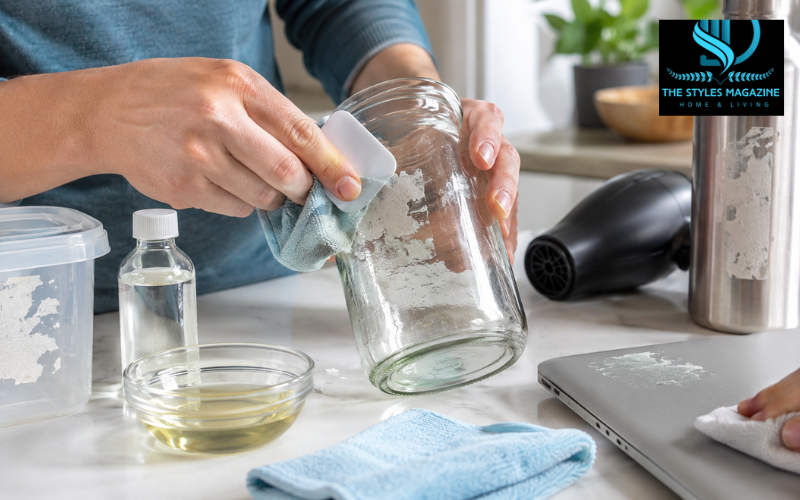
Sticker residue is the sticky glue left behind after you peel off a label, price tag, tape, or sticker. Sometimes the sticker comes off cleanly, but often it leaves a thin, gummy layer that collects dust and makes the surface look dirty. This residue can appear on glass jars, plastic containers, stainless steel appliances, wooden furniture, clothes, laptops, books, and many other everyday items.
Sticker residue becomes difficult to remove because the adhesive dries, spreads, or reacts with the surface over time. Fresh glue may feel soft and sticky, while older residue can turn hard, cloudy, or dark. On some surfaces, the glue may also mix with dust, oil, or moisture, making it even more stubborn. That is why rubbing it aggressively with your fingernail or a rough sponge often makes the mess worse instead of fixing it.
The safest way to remove sticker residue is to soften the adhesive first, then gently wipe or lift it away. You can soften it with warm water, rubbing alcohol, cooking oil, white vinegar, mild heat, or a commercial adhesive remover such as Goo Gone. The best method depends on the surface you are cleaning. Glass can usually handle stronger cleaning methods, while plastic, wood, fabric, and electronics need more care.
Learning how to remove sticker residue the right way helps you clean items without leaving scratches, stains, cloudy marks, or damaged finishes. The goal is not just to remove the sticky patch, but to protect the surface underneath.
Quick Guide Table
| Surface | Best Method | Avoid |
| Glass | Rubbing alcohol, warm soapy water, careful scraper | Steel wool or rough scrubbers |
| Plastic | Cooking oil, baby oil, dish soap | Acetone or nail polish remover |
| Stainless Steel | Alcohol, vinegar, soft cloth | Steel wool or abrasive powders |
| Wood | Gentle heat, small amount of oil, mild soap | Too much water or strong alcohol |
| Fabric | White vinegar, dish soap, warm water | Dryer heat before residue is gone |
| Laptop/Electronics | Isopropyl alcohol on microfiber cloth | Spraying liquid or using oily cleaners |
Quick Safety Check Before Removing Sticker Residue
Before you apply any cleaner, take a moment to check the surface. A method that works perfectly on glass may damage plastic or wood. This is why it is always smart to test the cleaner on a hidden area first. Apply a small amount, wait a few minutes, and check whether the surface changes color, becomes dull, or feels rough.
Avoid sharp blades on soft, painted, coated, or delicate surfaces. A razor blade may remove sticker residue from glass, but it can easily scratch plastic, painted metal, wood, or a laptop cover. For most surfaces, an old credit card, plastic scraper, or your fingers are safer choices.
If you are cleaning electronics, never pour liquid directly onto the device. Liquids can enter ports, keyboard gaps, speakers, or small openings and cause damage. Instead, dampen a microfiber cloth lightly and wipe the sticky area carefully. The cloth should be damp, not wet.
Start with gentle pressure before moving to stronger methods. Many sticker marks come off with warm soapy water or mild heat. Stronger cleaners should only be used when simple methods do not work.
Best Household Items for Removing Sticker Residue
Most sticker residue can be removed with items you already have at home. Rubbing alcohol is one of the most useful options because it helps break down sticky glue and evaporates quickly. It works well on glass, metal, stainless steel, and some electronics when used carefully on a cloth.
Cooking oil or baby oil is another simple option. Oil helps loosen adhesive by soaking into the sticky layer. It is often a good choice for plastic and some finished wood surfaces because it is gentle and does not dry out the material as quickly as alcohol can. However, oil can leave a greasy film, so the area should be cleaned afterward with warm water and dish soap.
Warm soapy water is the mildest method and should usually be tried first on washable surfaces. It works especially well when the sticker residue is fresh. White vinegar can help with residue on fabric and some hard surfaces, while hairdryer heat softens glue without adding moisture. This is useful for books, cardboard, painted walls, and other delicate surfaces.
A plastic scraper or old card is helpful for lifting softened residue without scratching the surface. Commercial adhesive removers, including Goo Gone, can be used for stubborn residue, but they should always be tested first because some surfaces may react badly to oily or solvent-based products.
How to Remove Sticker Residue from Glass
Glass is one of the easiest surfaces to clean because it is hard and non-porous. If you want to remove sticker residue from glass jars, windows, mirrors, or glass bottles, start with warm soapy water. Soak the sticky area for a few minutes if possible, then rub it with a soft cloth or sponge.
For stronger residue, rubbing alcohol works well. Dampen a cotton ball or cloth with alcohol and place it over the sticky spot for a few minutes. This gives the alcohol time to loosen the adhesive. After that, wipe the residue away in small circles. If some glue remains, repeat the process instead of scrubbing too hard.
On plain glass, a razor blade can be useful, but it must be used carefully. Hold the blade flat against the glass and gently push under the softened glue. Do not use a razor on coated, tinted, or special glass unless you are sure it is safe. Rough scrubbers and steel wool should also be avoided because they can leave fine scratches, especially on mirrors or treated glass.
Once the residue is gone, clean the glass with a regular glass cleaner or warm water and dry it with a lint-free cloth.
How to Remove Sticker Residue from Plastic
Plastic needs more care than glass because some cleaners can make it cloudy, dull, or soft. When removing sticker residue from plastic containers, toys, storage bins, or packaging, start with warm soapy water. Let the area soak if the item can be safely placed in water, then rub the residue gently with your fingers or a soft cloth.
If soap and water do not work, apply a small amount of cooking oil or baby oil to the sticky area. Let it sit for about 10 to 15 minutes so the oil can loosen the adhesive. After that, wipe it with a soft cloth and wash the area with dish soap to remove the oily film.
Avoid acetone, nail polish remover, paint thinner, or other harsh solvents on plastic. These products can damage many types of plastic and may leave cloudy marks or even melt the surface. If you want to use Goo Gone or another adhesive remover, test it first on a hidden part of the plastic.
A plastic scraper or old card can help lift the softened glue, but avoid metal tools because they can scratch the surface.
How to Remove Sticker Residue from Stainless Steel
Stainless steel is common on appliances, sinks, cookware, and kitchen tools. It is strong, but it can still show scratches and streaks if cleaned the wrong way. To remove sticker residue from stainless steel, begin with rubbing alcohol, white vinegar, or a small amount of oil.
Dampen a soft cloth with rubbing alcohol and press it against the residue for a few minutes. Then wipe gently in the direction of the grain. Stainless steel usually has fine lines running across the surface, and wiping with the grain helps prevent visible marks.
If the residue is oily or very sticky, a little cooking oil can help loosen it. Apply a small amount, wait a few minutes, and wipe it away. After using oil, clean the area with warm soapy water to remove any greasy film.
White vinegar can also help clean light residue and restore shine, but it should not be left sitting for too long. Wipe it off and dry the surface well. Avoid steel wool, abrasive powders, and harsh scraping tools because they can scratch stainless steel and make it look dull.
How to Remove Sticker Residue from Metal
Metal surfaces can usually handle stronger cleaning methods than plastic or wood, but the finish still matters. Bare metal, painted metal, coated metal, and polished metal should not all be treated the same way. For tools, appliances, frames, metal labels, and hardware, rubbing alcohol is often a safe first choice.
Apply alcohol to a cloth and hold it over the residue for a few minutes. Once the glue softens, wipe it away with gentle pressure. Warm soapy water can also work if the residue is fresh or not too thick.
For stubborn sticker residue on metal, WD-40 or Goo Gone may help. Spray or apply a small amount to a cloth, not directly onto areas with joints, openings, or electrical parts. Let it sit briefly, then wipe the glue away. Afterward, clean the surface with soap and water so it does not stay slippery or oily.
Avoid strong scraping on painted or coated metal. A metal scraper may remove the glue, but it can also remove paint or leave scratches. Use a plastic scraper when possible.
How to Remove Sticker Residue from Wood
Wood requires a gentle approach because too much moisture or strong solvent can damage the finish. The safest method depends on whether the wood is finished or unfinished. Finished wood has a protective coating, while unfinished wood can absorb liquids more easily.
For finished wood, try gentle heat first. Use a hairdryer on a medium setting and warm the sticker residue for 30 to 60 seconds. Once the glue softens, roll it away with your fingers or lift it with a plastic card. If some stickiness remains, apply a small amount of cooking oil to a cloth and rub lightly. Do not pour oil directly onto the wood.
For unfinished wood, avoid heavy oils and too much water because they can soak into the surface and leave marks. Use minimal moisture and gentle rubbing. A slightly damp cloth with mild soap may help, but the wood should be dried quickly.
Strong alcohol, acetone, and harsh chemicals can damage varnish, stain, or paint. If the furniture is valuable or antique, test carefully before treating the visible area.
How to Remove Sticker Residue from Fabric
Sticker residue on fabric can happen when a name tag, label, or sticker goes through the wash. The glue may leave a dark, sticky patch that attracts lint. To remove sticker residue from fabric, treat it before putting the item in the dryer, because dryer heat can set the adhesive deeper into the fibers.
Start by checking the care label. If the fabric is washable, place a little white vinegar on a clean cloth and dab the sticky area. Let it sit for a few minutes, then gently rub the fabric with your fingers or a soft brush. Add a small amount of dish soap to help break down the residue, then rinse with warm water.
After treating the spot, wash the garment as usual. Before drying, check the area again. If the residue is still there, repeat the treatment. Do not use oily products on fabric unless you are prepared to treat the oil stain afterward, because oil can create a new mark.
For delicate fabrics, avoid strong rubbing and harsh cleaners. Professional cleaning may be safer for expensive clothing.
How to Remove Sticker Residue on Laptop and Electronics
Removing sticker residue from a laptop, phone, tablet, or other electronic device must be done carefully. The safest method is to use isopropyl alcohol on a microfiber cloth or a ready-made alcohol wipe. The cloth should be lightly damp, not dripping.
Turn off the device before cleaning. If possible, unplug it and remove any accessories. Gently wipe the sticky area in small motions. Do not spray alcohol directly onto the device, and do not let liquid run toward ports, keyboard keys, speakers, vents, or screen edges.
For laptop covers, a plastic card can help lift softened residue, but avoid digging into the surface. Do not use cooking oil, baby oil, or Goo Gone near electronics because oily products can spread into small openings and attract dust. Avoid soaking, spraying, or using rough scrubbers.
If the sticker residue is on a screen, be extra careful. Screens often have special coatings, so use only a cleaner that is safe for screens or a lightly damp microfiber cloth recommended for electronics.
Goo Gone and Commercial Adhesive Removers
Goo Gone and other commercial adhesive removers can be useful when household methods do not fully remove sticker residue. They are designed to loosen sticky substances such as label glue, tape marks, gum, and some adhesive stains. They can work well on glass, metal, ceramic, and some plastics.
However, these products are not suitable for every surface. Some adhesive removers are oily, and some contain solvents that may affect paint, plastic, rubber, unfinished wood, or delicate coatings. Always read the product label and test on a hidden area first.
When using Goo Gone, apply a small amount to a cloth and rub it onto the residue. Let it sit briefly, then wipe away the softened glue. After the residue is removed, clean the area with warm soapy water to remove the leftover oily film. This final cleaning step is important because the surface may feel slippery if the remover is left behind.
Commercial removers should be used as a helpful option, not always as the first step. For many surfaces, warm water, alcohol, oil, or heat may be enough.
Common Mistakes to Avoid
One common mistake is scraping too hard. Sticker residue may look like it needs force, but pressure can damage the surface underneath. It is better to soften the glue and remove it slowly than to scratch the item.
Another mistake is using acetone on plastic. Acetone and nail polish remover can damage many plastic surfaces, leaving them cloudy, rough, or melted. Strong solvents should only be used when you are sure the surface can handle them.
Using too much water on wood, books, cardboard, or paper products can also cause damage. These materials may swell, stain, wrinkle, or peel. For delicate items, heat is usually safer than liquid.
Many people also make the mistake of putting clothing in the dryer before checking whether the sticker residue is gone. High heat can set the glue into the fabric and make it much harder to remove later.
Mixing cleaners unnecessarily is another thing to avoid. You do not need to combine several products at once. Start with one safe method, rinse or wipe the area clean, and only try another method if needed.
Surface Compatibility Guide
Choosing the right method is the key to removing sticker residue without damage. For glass, rubbing alcohol, warm soapy water, and a careful scraper usually work well. Glass jars, windows, and mirrors can often handle these methods, but coated glass should be treated gently.
For plastic, cooking oil, dish soap, and mild adhesive remover are better choices. Avoid acetone and harsh solvents because they can damage the surface. For stainless steel, alcohol, vinegar, a little oil, and a soft cloth are usually enough. Always wipe with the grain to reduce streaks.
For wood, use oil, gentle heat, and very little moisture. Finished wood can handle more treatment than unfinished wood, but both should be cleaned carefully. For fabric, white vinegar, dish soap, warm water, and a normal wash cycle can help lift residue from the fibers.
For laptops and electronics, use an alcohol wipe or a lightly dampened microfiber cloth with isopropyl alcohol. Keep liquid away from openings and never use oily cleaners near ports, keys, or speakers.
Conclusion
Knowing how to remove sticker residue safely can save many household items from scratches, stains, and sticky marks. The most important rule is to match the method to the surface. Glass and metal can usually handle rubbing alcohol, while plastic often responds better to oil or warm soapy water. Wood needs minimal moisture, fabric should be treated before drying, and electronics require extra care with only a lightly damp cloth.
Always start with the mildest method first. Warm soapy water, gentle heat, or a soft cloth may be enough for fresh residue. If the glue is stubborn, you can move to rubbing alcohol, oil, vinegar, or a trusted adhesive remover such as Goo Gone.
Before using any cleaner, test it on a hidden area and avoid harsh scraping. With a little patience and the right method, you can remove sticker residue cleanly without damaging the surface underneath.
FAQs
What Is The Easiest Way To Remove Sticker Residue?
The easiest way is to soften the sticky glue first. Warm soapy water works for many surfaces, while rubbing alcohol, cooking oil, or gentle heat can help with stubborn residue.
Can I Use Rubbing Alcohol To Remove Sticker Residue?
Yes, rubbing alcohol works well on glass, metal, stainless steel, and some electronics when used carefully. Apply it to a cloth first, and never pour it directly onto delicate surfaces.
How Do I Remove Sticker Residue From Plastic?
Use cooking oil, baby oil, or warm soapy water on plastic. Let it sit for a few minutes, then wipe gently. Avoid acetone because it can cloud or damage plastic.
Is Goo Gone Safe For Removing Sticker Residue?
Goo Gone can help with stubborn sticker residue, but it should be tested on a hidden area first. It may not be suitable for unfinished wood, delicate plastic, fabric, or electronics.
How Do I Remove Sticker Residue From A Laptop?
Use isopropyl alcohol on a microfiber cloth or an alcohol wipe. Rub gently and keep liquid away from ports, keyboard gaps, speakers, and screen edges.
Enjoyed it? Find more exclusive content on The Styles Magazine.
Disclaimer: This article is for general household cleaning guidance only. Always test any cleaner on a hidden area first and follow the care instructions for electronics, fabric, wood, and delicate surfaces.