If you are searching for does bleach kill mold, you probably want a clear answer before cleaning a bathroom wall, tile floor, kitchen counter, window frame, or damp surface in your home. Mold can look unpleasant, smell musty, and raise concerns about indoor air quality. Because bleach is a common household cleaner, many people believe it is the fastest and strongest solution for every mold problem.
The truth is a little more specific. Bleach can kill mold on some surfaces, but it is not always the best mold killer. It works best on hard, non-porous surfaces where mold is sitting on top, such as glass, tile, metal, countertops, stainless steel, and some plastic surfaces. However, bleach does not work well on porous materials like wood, drywall, carpet, fabric, and unsealed grout because mold can grow deeper inside these materials.
This difference matters because mold is not always just a surface stain. On porous materials, mold can spread below what you see. Bleach may lighten the color and make the area look cleaner, but the deeper mold problem may remain. This is why mold sometimes returns after bleach cleaning.
In this guide, you will learn where bleach works, where it fails, how fast bleach may act on surface mold, and what safer alternatives may work better in different situations.
Quick Guide Table: Does Bleach Kill Mold on Different Surfaces?
| Surface | Does Bleach Work? | Best Advice |
| Glass | Yes | Works well because mold stays on the surface. Rinse and dry after cleaning. |
| Tile | Yes | Good for glazed tile, but grout may need a deeper cleaner. |
| Stainless Steel | Yes, carefully | Use briefly, rinse well, and dry to avoid surface damage. |
| Plastic | Usually yes | Works on sealed plastic, but stains may remain after cleaning. |
| Wood | Not reliable | Mold can grow deeper inside the wood. Use safer cleaners or get help for heavy mold. |
| Drywall/Walls | Sometimes | Works only on washable surface mold, not mold inside drywall. |
| Fabric | Not ideal | Bleach may damage fabric and may not remove deep mold. Wash or discard badly affected items. |
| Carpet | No | Mold can grow deep in fibers and padding. Replacement may be needed. |
Does Bleach Kill Mold?
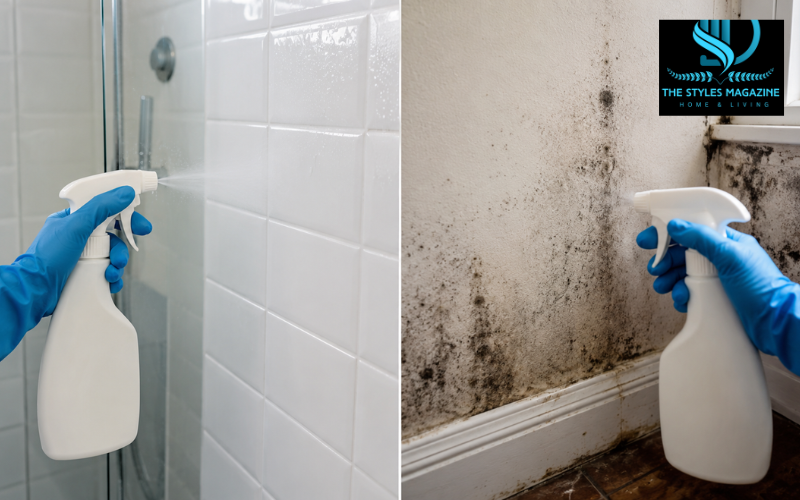
Yes, bleach can kill mold, but mainly on hard, non-porous surfaces. These are surfaces that do not absorb water easily. When mold grows on a surface like tile, glass, metal, or sealed plastic, it usually stays on the outside. In that case, bleach can reach the mold directly and may kill it when used correctly.
However, killing mold is not the same as fully removing a mold problem. Mold can leave behind stains, particles, and spores. Even dead mold can still bother some people, especially those with allergies, asthma, or breathing problems. This is why cleaning mold should focus on removal, not only killing.
The most important thing to understand is that bleach is not a magic solution for every mold situation. It may be useful for small areas on hard surfaces, but it can be a poor choice for soft, absorbent, or damaged materials. If moisture remains, mold can come back no matter what cleaner you use.
Where Bleach Works Best Against Mold
Bleach works best against mold on surfaces that are smooth, sealed, and non-porous. These surfaces do not allow mold roots to grow deep inside the material. Instead, the mold usually stays on top, where cleaning products can reach it more easily.
Good examples include glass, ceramic tile, metal, countertops, stainless steel, acrylic, and some sealed plastic surfaces. In bathrooms, bleach may work on glazed tiles, shower doors, sinks, tubs, and other washable surfaces. In kitchens, it may help clean small mold spots on hard countertops or sealed areas.
Even on these surfaces, bleach should be used with care. The area should be ventilated, the cleaner should be diluted according to label directions, and the surface should be rinsed and dried afterward. Drying is especially important because mold needs moisture to grow. If the surface stays damp, the mold can return.
Bleach may clean visible mold on hard surfaces, but it should not be used as a replacement for fixing leaks, humidity, or water damage. A clean-looking surface will not stay mold-free if the moisture problem is still there.
Does Bleach Kill Mold on Stainless Steel?
Many people ask, does bleach kill mold on stainless steel? In most cases, bleach can kill surface mold on stainless steel because stainless steel is hard and non-porous. Mold usually cannot grow deep into stainless steel, so a properly used cleaning solution can reach the mold on the surface.
However, stainless steel still needs careful handling. Bleach should not be left sitting on stainless steel for a long time because it may damage the finish, cause dull spots, or lead to surface corrosion. It is better to use a mild diluted solution, clean the area gently, rinse it well with clean water, and dry it completely with a soft cloth.
For stainless steel appliances, sinks, or shelves, always check the manufacturer’s cleaning instructions first. Some finishes are more sensitive than others. If the mold is light, warm soapy water may be enough for regular cleaning before using any stronger product. The goal is to remove the mold safely without harming the surface.
Does Bleach Kill Mold on Plastic?
Bleach may work on mold growing on sealed plastic, especially if the plastic is smooth and non-porous. Items like plastic storage bins, shower liners, sealed plastic panels, and some outdoor plastic furniture can often be cleaned if the mold is only on the surface.
Still, plastic can sometimes hold stains even after the mold has been cleaned. This means the surface may look discolored even if much of the mold has been removed. In bathrooms, plastic surfaces may also develop soap scum and mineral buildup, which can trap moisture and make mold easier to return.
After cleaning plastic with bleach, rinse the surface well and dry it fully. This helps remove cleaner residue and reduces moisture. If the plastic smells musty, feels slimy, or has deep staining that does not improve, it may be better to replace the item, especially if it is low-cost or used near food, children, or personal items.
Where Bleach Does Not Work Well
Bleach does not work well on porous materials. These are materials that absorb moisture and allow mold to grow beneath the surface. Common examples include wood, drywall, carpet, fabric, unsealed grout, ceiling tiles, insulation, and painted surfaces that have become soft or damaged.
The problem is that bleach mostly works on the surface. On porous materials, mold can grow deeper than the cleaner can reach. Bleach may remove the dark color on top, but the deeper mold may remain active. This can make the surface look fixed when the real problem is still present.
Porous materials are also more likely to hold extra moisture after cleaning. Since mold needs moisture, adding more liquid to the material can sometimes make the situation worse if the area is not dried properly. For this reason, bleach is usually not the best choice for mold on wood, drywall, carpet, or fabric.
If a porous material has heavy mold growth, a strong musty smell, or water damage, cleaning may not be enough. In some cases, the safest solution is removal and replacement.
Does Bleach Kill Mold on Wood?
Wood is one of the most common surfaces where bleach is misunderstood. Many people ask, does bleach kill mold on wood? Bleach may lighten or reduce surface mold stains on wood, but it often does not solve the deeper issue.
Wood is porous, which means it can absorb moisture. Mold can grow into tiny openings in the wood, especially if the wood has been damp for a long time. Bleach may affect the surface, but it may not reach mold growing below. This is why mold on wood can return after the area looks clean.
For small, minor mold spots on sealed or finished wood, gentle cleaning may help. A mild detergent solution, careful scrubbing, and proper drying are often safer starting points. White vinegar or hydrogen peroxide may also be considered for small areas, but they should be tested first because they can affect color or finish.
For unfinished wood, structural wood, or mold caused by leaks, it is better to be careful. If the wood is soft, rotting, heavily stained, or smells musty after cleaning, professional advice may be needed. Mold on wood should never be handled only as a stain problem. The moisture source must be fixed first.
Does Bleach Kill Mold on Walls?
The answer depends on the type of wall. If the wall has a washable, non-porous painted surface and the mold is only on the outside, bleach may help clean a small area. This is more likely in bathrooms or kitchens where steam collects on the surface.
However, many walls are made of drywall, and drywall is porous. If moisture has entered the wall, mold may grow inside the material, behind paint, or even behind the wall itself. In this case, bleach may only clean or lighten what you can see. It may not kill mold inside the drywall.
This is why does bleach kill mold on walls has no one-size-fits-all answer. Surface mold from humidity is different from mold caused by a leak behind the wall. If the paint is bubbling, the wall feels soft, there is a musty smell, or the mold keeps coming back, the problem may be deeper than the surface.
Damaged drywall may need to be removed and replaced. If mold is inside walls, ceilings, or hidden areas, professional mold remediation is often the safer option.
Does Bleach Kill Mold on Fabric?
Bleach is not usually the best answer for fabric mold. Fabric absorbs moisture, and mold can grow into the fibers. This makes it harder to remove completely. Bleach may kill or lighten some mold on white fabrics, but it can also weaken fibers, remove color, and damage the material.
For washable fabric, laundering with hot water when safe for the fabric, proper detergent, and complete drying may work better for light mold. Sun drying can also help reduce moisture and odor when the fabric type allows it. Some fabrics may need oxygen-based cleaners instead of chlorine bleach, especially colored items.
If fabric has heavy mold growth, deep stains, or a strong musty smell that does not go away after washing, it may not be worth saving. Moldy carpet, padding, upholstery, and mattresses are especially difficult because mold can grow deep inside. In many cases, badly affected soft materials should be discarded.
So, does bleach kill mold on fabric? Sometimes it may affect surface mold on white washable fabric, but it is not a reliable solution for deep mold. Cleaning, drying, and replacing badly affected items are often better choices.
Does Bleach Kill Mold or Just Hide It?
This is one of the most important questions in mold cleaning: does bleach kill mold or just hide it? The answer depends on the surface.
On hard, non-porous surfaces, bleach may kill surface mold when used correctly. On porous surfaces, it may mostly hide the mold by removing or lightening the dark color. The surface may look white or clean, but mold can remain below.
Mold is not only about appearance. A surface can look better while still holding mold particles, spores, or hidden growth. Also, dead mold can still cause irritation for some people. This is why wiping away the visible color is not always enough.
If mold returns after bleach cleaning, it usually means one of three things happened. The moisture problem was not fixed, the mold was growing deeper than the cleaner could reach, or the material was too porous to clean fully. In these cases, using more bleach is usually not the best solution. The better approach is to remove the moisture source, clean the right way, and replace materials that cannot be saved.
How Fast Does Bleach Kill Mold?
Bleach can act fairly quickly on surface mold when used on hard, non-porous materials. However, the exact time depends on the product strength, the surface, the amount of mold, and how the cleaner is applied. Many bleach-based cleaners need some contact time before they are wiped away, so it is important to follow the product label.
Still, speed does not always mean success. A cleaner may affect visible mold quickly, but that does not mean the full mold problem is solved. If the surface is porous, if moisture remains, or if mold is hidden behind the material, bleach may not fix the real cause.
When people ask how fast does bleach kill mold, they are often hoping for a quick solution. For a small mold spot on tile or glass, cleaning may be quick. For mold on drywall, wood, fabric, or carpet, the real answer is that bleach may not be the right solution at all.
The best result comes from cleaning the mold, drying the area, and stopping the moisture source. Without drying and moisture control, mold can return even after fast cleaning.
Better Mold Killer Options Than Bleach
Bleach is not the only mold cleaner, and in many cases, it is not the best mold killer. The better option depends on the surface, the size of the mold problem, and whether the material is porous or non-porous.
White vinegar is often used for minor mold cleaning because it is simple, easy to find, and less harsh than bleach. It may be useful on some surfaces, but it should not be mixed with bleach. Hydrogen peroxide is another option for small mold spots and can help lift stains on some surfaces. Like any cleaner, it should be tested first on delicate materials.
Baking soda can help with light cleaning and odor control, especially on small areas. It is mild and less likely to damage surfaces, but it may not be strong enough for serious mold growth. EPA-registered mold cleaners or fungicides may be useful when a product is specifically made for mold and the label directions are followed carefully.
For large mold problems, repeated mold growth, or mold caused by water damage, professional mold remediation is usually the safest choice. A product alone cannot solve a mold problem if the moisture source is still active.
Safety Tips Before Cleaning Mold
Before cleaning mold, safety should come first. Mold cleanup can release particles into the air, and strong cleaners can irritate the eyes, skin, throat, and lungs. Even if the mold area looks small, it is better to protect yourself.
Wear gloves, eye protection, and a mask when cleaning. Open windows or doors for fresh air when using cleaning products. If you use a bleach-based cleaner, never mix it with vinegar, ammonia, or any other household cleaner. Mixing bleach with other products can create dangerous fumes.
It is also important to fix the moisture source before cleaning. This may be a leak, poor ventilation, high humidity, condensation, or water damage. If you clean mold but leave the area damp, the mold can return.
After cleaning, dry the area fully. Use ventilation, towels, a fan that does not spread spores to clean areas, or a dehumidifier when needed. Keeping surfaces dry is one of the most important steps in preventing mold from coming back.
When to Call a Mold Professional
Some mold problems are too large or risky for simple DIY cleaning. If mold covers a large area, keeps coming back, or appears after serious water damage, it is better to call a professional. Mold inside walls, ceilings, HVAC systems, carpets, insulation, or under flooring can spread if handled incorrectly.
You should also get help if there is a strong musty smell but you cannot find the source. A hidden leak or mold behind materials may be causing the odor. If someone in the home has asthma, allergies, breathing problems, or a weak immune system, it is also safer to avoid disturbing mold without proper guidance.
Professional mold remediation is not just about using stronger chemicals. It involves finding the moisture source, containing the affected area, removing damaged materials safely, cleaning properly, and helping prevent the problem from returning. This is especially important when mold is linked to flooding, roof leaks, plumbing leaks, or long-term dampness.
Conclusion
So, does bleach kill mold? Yes, but only in the right situation. Bleach can kill surface mold on hard, non-porous surfaces like glass, tile, metal, stainless steel, sealed countertops, and some plastic surfaces. It can be useful for small, simple cleaning jobs when used carefully.
However, bleach is not the best solution for porous materials such as wood, drywall, carpet, fabric, and unsealed grout. On these surfaces, bleach may only lighten the mold stain while deeper mold remains. It may also add moisture if the area is not dried properly, which can allow mold to return.
The smartest approach is to look at the surface first, then choose the right cleaning method. Remove the moisture source, clean safely, dry the area completely, and avoid mixing cleaning products. If the mold is large, hidden, keeps coming back, or affects people with health concerns, professional help is the safest option.
Bleach can be helpful in limited cases, but it should not be treated as a complete mold solution for every surface. Real mold control starts with moisture control, safe removal, and choosing the right cleaner for the material.
FAQs
Does Bleach Kill Mold Completely?
Bleach can kill surface mold on hard, non-porous surfaces, but it may not remove mold roots from porous materials like wood, drywall, carpet, or fabric.
Does Bleach Kill Mold On Walls?
Bleach may clean mold from washable painted walls, but it does not solve mold growing inside drywall. If the wall is soft, stained, or musty, get professional help.
How Fast Does Bleach Kill Mold?
Bleach may act within minutes on surface mold, but contact time depends on the product. Fast cleaning does not always mean the full mold problem is removed.
Does Bleach Kill Mold Or Just Hide It?
On porous surfaces, bleach may mostly hide mold stains by whitening the surface. Mold roots and spores can remain deeper inside and may grow back later.
What Is Better Than Bleach For Mold?
White vinegar, hydrogen peroxide, baking soda, and EPA-registered mold cleaners may be better for some surfaces. For large or hidden mold, professional remediation is safest.
Enjoyed it? Find more exclusive content on The Styles Magazine.
Disclaimer: This article is for general information only and should not replace professional mold inspection, medical advice, or safety guidance. If mold covers a large area, keeps returning, or affects health, contact a qualified mold remediation professional.