Learning how to organize bathroom cabinet space simply means arranging your bathroom items in a way that makes them easy to find, easy to use, and easy to put back. A bathroom cabinet may look small, but it often holds many daily essentials, from skincare and toothpaste to hair products, medicine, cleaning supplies, towels, and extra toiletries. Without a clear system, it can quickly turn into a messy space where bottles fall over, drawers become crowded, and you buy things you already have.
Bathroom cabinets become messy because they are used every day. People often place products back in a hurry, keep half-used bottles for too long, or store different items together without any bathroom organization categories. Under-sink storage can also be difficult because pipes take up space, deep cabinets hide items in the back, and bathroom drawers can fill up with small things like razors, makeup, clips, and cotton pads.
A well-organized bathroom cabinet makes your morning and evening routines much easier. You spend less time searching, waste less money on duplicate products, and make better use of small spaces. Whether you want to organize bathroom cabinet under sink areas, deep bathroom cabinets, drawers, or even a bathroom closet, the goal is the same: keep useful items visible, grouped, and simple to maintain.
Quick Guide Table
| Step | What to Do | Why It Helps |
| Empty the cabinet | Remove every item first | Shows what you really have |
| Clean the space | Wipe shelves and bottles | Creates a fresh, hygienic base |
| Declutter | Remove expired and unused items | Reduces mess and waste |
| Sort by category | Group skincare, dental, hair, and medicine | Makes items easier to find |
| Use organizers | Add bins, trays, risers, or baskets | Saves space and keeps order |
| Place by use | Keep daily items in front | Makes routines faster |
Why Bathroom Cabinet Organization Matters
Bathroom cabinet organization matters because it affects your daily routine more than you may realize. When your cabinet is messy, even simple tasks like brushing your teeth, applying skincare, or finding a fresh razor can feel frustrating. You may open the cabinet and see too many bottles, expired items, or products stacked in no clear order.
When everything has a proper place, your routine becomes faster and calmer. Daily items stay close to your hand, backup products stay in a separate area, and rarely used items do not block the things you need every day. This saves time, especially during busy mornings.
It also helps reduce waste. Many people buy extra toothpaste, shampoo, medicine, or skincare because they cannot see what they already own. Once your bathroom cabinet is organized, it becomes easier to check your stock before shopping. You also notice expired medicine, old makeup, and unused products before they take over your space.
A clean cabinet also makes a small bathroom feel more open and functional. Even if your bathroom is not large, a smart system can help every inch work better.
Start by Emptying and Cleaning the Cabinet
The first step in how to organize bathroom cabinet space is to remove everything from the cabinet. Do not try to organize around the mess. Take out every bottle, box, tube, towel, brush, and container. Place everything on a clean counter, table, or floor so you can see exactly what you have.
Once the cabinet is empty, clean the inside properly. Wipe the shelves, corners, cabinet door, and drawer bottoms. Bathroom cabinets often collect dust, spilled lotion, toothpaste marks, hair, and sticky product residue. If bottles are greasy or dirty, wipe them too before placing them back.
This is also the best time to check for problems. Look for water stains, leaks, mold signs, or damaged shelves, especially in under-sink areas. If something has leaked, fix it before adding organizers or storage bins.
Starting with a clean cabinet gives you a fresh base. It also makes the final result feel more satisfying because you are not just moving clutter around; you are creating a cleaner and healthier storage space.
Declutter Expired, Empty, and Unused Products
Before putting anything back, decide what should stay and what should go. This step is important because no organizer can solve the problem if you keep too many unnecessary items.
Start with expired medicine, old makeup, dried-out creams, empty bottles, broken hair tools, and products you have not used in a long time. If a product smells strange, has changed texture, or no longer looks safe to use, remove it. Bathroom heat and moisture can also affect products over time, so it is better to be careful.
Next, check duplicates. You may find three bottles of body wash, two unopened shampoos, or several toothpaste tubes. Keep what you need, but separate backup items from daily-use items. This keeps your main cabinet from becoming overcrowded.
Decluttering helps you understand your real storage needs. It also makes it easier to organize bathroom cabinets and drawers because you are only arranging items that are useful, safe, and worth keeping.
Sort Items Into Bathroom Organization Categories
After decluttering, sort everything into clear bathroom organization categories. This makes the cabinet easier to use and helps everyone in the home understand where items belong.
Common categories include daily skincare, dental care, hair care, hair styling tools, first aid, medicine, cleaning supplies, extra toiletries, and backup products. You can also create smaller categories if needed, such as shaving items, travel-size products, feminine care, contact lenses, or children’s bath products.
The key is to group items by purpose. Toothpaste, floss, mouthwash, and toothbrush heads should stay together. Skincare products should stay in one area. Hairbrushes, sprays, and styling tools should have their own space. Cleaning sprays should not mix with personal care items.
Sorting by category also helps you choose the right storage containers. For example, small bins work well for skincare, tall baskets work well for bottles, and drawer dividers work well for small tools. Once the categories are clear, the rest of the organizing process becomes much easier.
Organize Bathroom Cabinet Under Sink Areas Smartly
Under-sink cabinets are useful, but they can be tricky because pipes often block the middle area. To organize bathroom cabinet under sink spaces, you need to work around the shape of the cabinet instead of forcing everything into one pile.
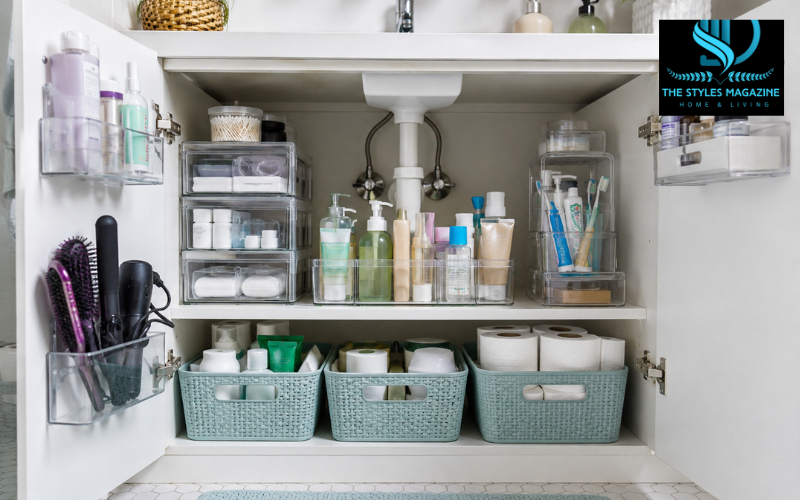
Start by placing taller items, such as cleaning bottles or extra shampoo, on the sides where there is more height. Use stackable bins, sliding baskets, or short shelves to make better use of vertical space. A pull-out basket is especially helpful because it lets you reach items at the back without removing everything in front.
Keep cleaning products separate from personal care items. If you store bathroom cleaners under the sink, place them in a clearly marked bin. This prevents them from mixing with skincare, towels, or dental products.
Daily-use items should stay near the front. Backup items, extra soap, toilet paper, and refill packs can go toward the back or in labeled bins. This keeps the space practical instead of crowded.
How to Organize Bathroom Cabinet Without Drawers
If you want to know how to organize bathroom cabinet without drawers, the answer is to create your own sections using bins, baskets, shelves, and door storage. Open cabinet space can become messy quickly because there are no built-in dividers, but simple organizers can solve this problem.
Clear bins are one of the easiest options. They let you see what is inside without opening every container. You can use one bin for skincare, one for dental care, one for hair products, and one for backup items. If your cabinet is tall, shelf risers can help you create two levels instead of wasting vertical space.
Pull-out baskets are useful for deep shelves because they bring hidden items forward. Door-mounted organizers are also helpful for small items like brushes, razors, clips, toothpaste, or daily bottles.
The main goal is to avoid loose products scattered across the shelf. When every item has a container or section, even a cabinet without drawers can feel neat and easy to use.
How to Organize Deep Bathroom Cabinets
Deep cabinets often look spacious, but they can hide clutter in the back. Items get pushed behind other products and are forgotten until they expire. To organize deep bathroom cabinets, think in layers.
Place the items you use most often in the front. These may include face wash, moisturizer, toothpaste, deodorant, or hair products. Items used less often can go in the middle or back. Backup products, travel bags, extra soap, and seasonal items can stay deeper inside the cabinet.
Long bins or pull-out trays work well in deep cabinets because you can slide the whole container forward. This makes the back of the cabinet easier to reach. Without bins, deep shelves often become messy because you have to move several items just to find one product.
Labels can also help, especially if more than one person uses the bathroom. A simple label such as “Hair,” “Dental,” “First Aid,” or “Backstock” keeps the system clear and easy to follow.
How to Organize Bathroom Cabinets and Drawers Together
When organizing bathroom cabinets and drawers together, give each space a clear job. Drawers are usually best for small daily items, while cabinets are better for taller bottles, towels, cleaning supplies, and backup products.
For example, a top drawer can hold toothbrushes, floss, lip balm, razors, and everyday skincare. A lower drawer can hold makeup, hair ties, or shaving items. The cabinet can then hold extra shampoo, body wash, toilet paper, first aid supplies, or cleaning products.
Drawer dividers are very helpful because small bathroom items can easily mix together. Without dividers, razors, cotton pads, makeup, and hair clips can turn into one messy pile. Dividers keep items separated and easier to grab.
Avoid putting too many categories in one drawer or cabinet shelf. If a space has too many different items, it becomes confusing. A simple system is easier to maintain than a complicated one.
How to Organize Deep Bathroom Drawers
Deep bathroom drawers can hold many items, but they can also become messy if products are stacked too high. The best way to organize deep bathroom drawers is to use adjustable dividers, small trays, or open containers that fit inside the drawer.
Instead of sorting only by size, sort by routine. For example, keep your morning skincare items together, shaving items together, and hair accessories together. This makes the drawer match the way you actually use the bathroom.
Small trays are useful for products that roll around, such as lip balm, tweezers, nail clippers, and small makeup items. Taller containers can hold brushes, combs, or bottles if the drawer height allows it.
Try not to stack too many products on top of each other. When items are buried, you forget about them. A good deep drawer setup should let you see most items when you open it.
How to Organize Bathroom Closet Space
A bathroom closet is perfect for items that do not need to stay in the main cabinet. This may include towels, toilet paper, extra shampoo, body wash, cleaning cloths, and bulk products. If your cabinet is small, using the closet properly can reduce clutter around the sink.
Place the most-used items at eye level or within easy reach. Towels can go on open shelves, while extra toiletries can go in baskets. If you store medicine or first aid items in the closet, keep them in a safe and clearly separate section. Make sure they are away from young children and not mixed with cleaning products.
Use baskets to group similar items. One basket can hold extra dental products, another can hold skincare backups, and another can hold hair care refills. This makes the closet look neat and helps you know what you already have before buying more.
A bathroom closet should support your cabinet, not become another cluttered storage area. Keep it simple, grouped, and easy to check.
IKEA-Style Bathroom Cabinet Organization Ideas
IKEA-style bathroom cabinet organization is popular because it focuses on simple, clean, and practical storage. You do not need expensive items to get this look. The idea is to use modular bins, drawer inserts, small shelves, and clear containers that make the space feel calm and easy to manage.
Choose containers that fit your cabinet size. Small bins work well for short shelves, while taller containers are better for bottles. Drawer inserts can separate makeup, razors, brushes, and dental items. Clear containers are helpful because you can quickly see what is inside, while labeled containers work well if you prefer a cleaner look.
Compact shelves can also help in small cabinets. They create extra levels for jars, bottles, and folded items. The goal is not to fill every inch with storage products. The goal is to make the cabinet easier to use without overfilling it.
A simple IKEA-style setup works best when you keep only what you need and avoid buying organizers before decluttering.
Best Placement Tips for Daily and Backup Items
Good placement is what makes bathroom cabinet organization last. If daily items are hard to reach, the cabinet will become messy again. Keep daily products at the front, at eye level, or in the easiest drawer. These may include toothpaste, cleanser, moisturizer, deodorant, shaving items, and hairbrushes.
Weekly items can go in middle shelves or labeled bins. These may include face masks, nail care, hair treatments, or grooming tools. Backup items should go higher, farther back, or in a bathroom closet. This includes extra soap, shampoo, toilet paper, cotton swabs, and unopened products.
Cleaning supplies should always be stored separately and safely. If possible, keep them in a separate bin under the sink or in a locked area if children are in the home. Avoid placing cleaning products near towels, skincare, or medicine.
When everything is placed by use, the cabinet becomes easier to maintain. You will know where to find items and where to return them after use.
Conclusion
Knowing how to organize bathroom cabinet space is not about making your bathroom look perfect. It is about creating a simple system that supports your daily routine. When you empty the cabinet, clean the shelves, declutter unused items, and sort products into clear categories, the space becomes easier to use right away.
The best bathroom cabinet organization system is one that matches your real habits. Daily items should stay close, backup products should stay separate, and deep spaces should be managed with bins, pull-out trays, or labels. Whether you are working with an under-sink cabinet, a cabinet without drawers, deep bathroom drawers, or a bathroom closet, the same rule applies: keep useful items visible, grouped, and easy to reach.
A simple setup is easier to maintain than a complicated one. Once every item has a clear place, your bathroom feels cleaner, your mornings feel smoother, and your cabinet works better without wasting an inch.
FAQs
How Do I Start Organizing A Bathroom Cabinet?
Start by emptying the cabinet completely, cleaning the shelves, and removing expired, empty, or unused products before sorting items into clear categories.
What Should I Store Under The Bathroom Sink?
Under the sink is best for cleaning supplies, extra toiletries, backup products, and items stored in bins around the pipes.
How Do I Organize A Bathroom Cabinet Without Drawers?
Use clear bins, shelf risers, pull-out baskets, and door organizers to create sections for skincare, dental care, hair items, and backups.
What Are The Best Bathroom Organization Categories?
Useful categories include skincare, dental care, hair care, first aid, medicine, cleaning supplies, towels, and extra toiletries.
How Often Should I Reorganize My Bathroom Cabinet?
A quick check once a month is helpful, while a full cleanout every three to six months keeps expired and duplicate items under control.
Enjoyed it? Find more exclusive content on The Styles Magazine.
Disclaimer: This article is for general home organization guidance only. Always follow product labels, store medicine safely, and dispose of expired or damaged items according to local safety guidelines.