Using outdoor paint inside may seem harmless, especially when the color and finish look right. However, exterior paint is made for weather-exposed surfaces, while interior paint is designed for occupied rooms, regular cleaning, and everyday contact. The two products can contain different resins, preservatives, solvents, and performance additives.
Exterior-only paint is generally not the best choice for indoor walls, ceilings, trim, doors, or furniture. That does not mean every accidental use will cause a serious emergency. The actual concern depends on the exact product, whether it is water-based or solvent-based, how much was applied, the size and ventilation of the room, and whether anyone develops symptoms.
Some products are clearly marked “interior/exterior” and are made for both settings. These should not be treated the same as paint labeled only for exterior use.
The safest response is to identify the product, read its label and data sheets, ventilate the space, allow the coating to dry, and then decide whether it needs to be covered or removed. Current EPA guidance also recommends plenty of fresh air when painting because paints may release volatile organic compounds, commonly called VOCs.
Quick Guide: What to Do If You Used Outdoor Paint Inside
| Situation | Recommended Action |
| Paint is labeled interior/exterior | Follow the product instructions and ventilate the room |
| Paint is exterior-only | Stop painting and check the label and safety data sheet |
| Strong odor remains | Open windows and use fans to move air outside |
| Paint stays tacky or soft | Allow more curing time and contact the manufacturer |
| Surface is dry and stable | Use a compatible primer, then apply interior-rated paint |
| Anyone feels dizzy or unwell | Leave the room and seek medical or poison-control advice |
Can You Use Outdoor Paint Inside?
In most cases, you should not intentionally use exterior-only paint indoors. It may physically stick to an indoor wall or door, but being able to apply a product is not the same as using it in the setting for which it was designed.
Interior paint is normally made and tested for indoor appearance, touch, cleaning, stain resistance, and expected exposure. Exterior paint is built mainly to tolerate rain, sunlight, temperature changes, and movement in outside materials.
Before making a decision, read the front and back labels rather than relying only on the paint’s brand or marketing name. Look for wording such as:
- Exterior
- Interior
- Interior/exterior
- For outdoor use only
The product data sheet explains suitable surfaces, drying conditions, recoat times, and application limits. The safety data sheet provides information about ingredients, exposure precautions, first aid, and protective equipment. Sherwin-Williams, for example, maintains searchable product, environmental, and safety data sheets for individual coatings.
VOC levels and additives vary widely. A modern water-based exterior paint may have less odor than an older solvent-based product, but a mild smell does not automatically prove that a paint is suitable for indoor use.
How Exterior Paint Differs from Interior Paint
Exterior paint must expand and contract as siding, wood, masonry, and other materials heat up, cool down, absorb moisture, and dry. Manufacturers often use flexible binders and weather-resistant ingredients to reduce cracking, fading, peeling, and mildew growth.
Interior paint has a different job. It is usually made to provide a smooth appearance, resist marks, and tolerate wiping or scrubbing. Interior paints are also available in finishes developed for specific areas, such as walls, ceilings, doors, trim, cabinets, kitchens, and bathrooms.
These differences explain why a paint that performs well outdoors may disappoint inside. A softer, more flexible exterior film can collect dirt or show marks on a hallway, door, cabinet, or piece of furniture.
Sherwin-Williams notes that exterior products seldom create the same scrubbable surface as interior coatings because exterior films are generally softer and more flexible. This flexibility helps the paint handle outdoor expansion and contraction but may make it less practical in busy indoor areas.
The distinction is not absolute for every product. Some paints are specifically formulated and approved for both indoor and outdoor use. If the label says “interior/exterior,” follow that product’s instructions. If it says only “exterior,” do not assume that broad weather resistance makes it a stronger or safer interior paint.
VOCs, Odors, and Exterior Paint Additives
VOCs are carbon-based chemicals that can evaporate into the air while paint is applied and dries. Paints are one of many household product categories that may release them.
Indoor VOC levels can rise when a room has limited fresh-air exchange. Higher temperatures and humidity may also increase the concentration of some indoor pollutants.
Exterior formulas may contain preservatives or ingredients intended to control mold, mildew, or fungal growth on the dried paint film. Not every product contains the same chemicals or the same amount, so it is inaccurate to claim that all outdoor paints are equally toxic.
Still, Poison Control advises using only paints intended for indoor use inside the home. It also notes that some outdoor paints contain fungicides that may not be suitable to breathe in an enclosed indoor environment.
Strong paint fumes can irritate the eyes, nose, throat, or lungs. Longer exposure, especially to solvent-containing paint in a poorly ventilated space, may cause:
- Headache
- Dizziness
- Nausea
- Coughing
- Wheezing
- Breathing difficulty
- Eye, nose, or throat irritation
Anyone experiencing serious breathing trouble should leave the area and seek urgent medical help. For less severe concerns, contact a local poison-control service or healthcare professional and keep the product container or label available.
How Outdoor Paint Dries and Cures Indoors
Paint that feels dry is not necessarily fully cured. “Dry to the touch” means the surface no longer feels wet. Curing is the longer process in which the coating reaches its expected hardness and resistance to pressure, cleaning, moisture, and wear.
Cure times vary by formula. Some common household paints need days or even weeks to reach their full hardness.
Exterior paint does not universally require sunlight or ultraviolet exposure to cure. Many water-based coatings cure through water evaporation and film formation. Other products cure through solvent evaporation or chemical reactions. The instructions for the exact product, rather than a general internet rule, should guide you.
Several conditions can affect drying and curing:
- Room temperature
- Humidity
- Air movement
- Coating thickness
- Surface porosity
- Previous coatings
- Time between coats
Cool or humid conditions normally slow the process. A heavy coat can trap moisture or solvent and remain soft longer than expected.
Warning signs of a curing problem include a tacky feel after the stated drying period, surfaces sticking together, fingerprints or dents, an unusually soft film, or a strong odor that does not improve with ventilation.
Indoor Durability, Cleaning, and Finish Problems
The result of using exterior paint indoors depends partly on the surface. On a low-contact wall, the main problems may be odor, uneven sheen, or dirt collection. On trim, doors, shelves, cabinets, or furniture, softness and sticking can become more obvious.
A common issue is blocking, which happens when two painted surfaces stick together. For example, a painted door may stick to its frame, or an object may stick to a freshly painted shelf.
Exterior paint may also scuff, hold fingerprints, or become difficult to wash. Scrubbing it before it has fully cured can damage the finish or remove part of the paint film.
Interior products are available in finishes designed for different rooms and uses, from low-sheen wall paint to harder trim and cabinet coatings. The correct sheen matters as much as the basic paint category.
Frequently handled areas normally need a finish made for cleaning and repeated contact. A weather-resistant exterior flat paint may be less practical on an indoor door than a suitable interior satin, semi-gloss, or dedicated door-and-trim coating.
I Accidentally Used Exterior Paint Inside: First Steps
If you accidentally used exterior paint inside, stop applying more paint until you identify the exact product. Keep the can, lid, receipt, or a clear photograph of the label.
Confirm whether it is exterior-only or approved for interior and exterior use. Also check whether it is water-based, oil-based, alkyd, or another type of coating.
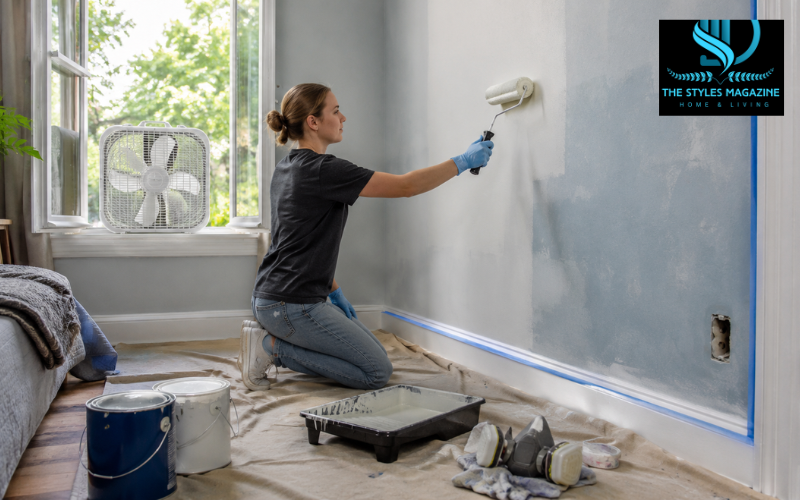
Open windows and doors when weather and outdoor air quality allow. A fan placed securely in a window and directed outward can help remove fumes rather than simply moving them around the house.
EPA remodeling guidance recommends exhaust ventilation from the work area and maximum ventilation during the work and for at least 72 hours afterward.
Limit unnecessary time in the room while a strong odor remains. Children, pets, and anyone with asthma, breathing problems, or unusual sensitivity to paint fumes should avoid the freshly painted area until it has been well ventilated and assessed.
Do not sleep in the room simply because the surface feels dry. If fumes remain strong or someone experiences headaches, dizziness, coughing, eye irritation, or breathing problems, leave the area and seek appropriate advice.
Assessing Whether the Paint Must Be Removed
Complete removal is not always necessary. Begin with the product label. If the paint is approved for both interior and exterior use and the surface is drying normally, following the stated ventilation and curing instructions may be enough.
For exterior-only paint, consider how much was used and where it was applied. One small painted section in a well-ventilated utility area is different from several coats covering an entire bedroom.
Consider the following factors:
- The size of the painted area
- The room’s size and ventilation
- The type of painted surface
- The strength and duration of the odor
- The number and thickness of coats
- The condition of the paint underneath
- Whether anyone has experienced symptoms
Inspect the coating after it has had sufficient drying time. Persistent tackiness, peeling, bubbling, poor adhesion, or an odor that remains strong despite ventilation suggests that further action may be necessary.
Contact the manufacturer with the product name, batch information if available, application date, room conditions, and surface details. Contact poison control or a healthcare provider if someone develops exposure symptoms.
A professional painter or coatings specialist may be needed when the paint remains soft, covers a large area, was applied over an unknown coating, or may require extensive sanding or stripping.
Ventilating, Priming, and Repainting the Surface
Ventilate the room by bringing fresh air in and directing indoor air outdoors. Use window, kitchen, or bathroom fans only when they genuinely exhaust to the outside.
Keep interior doors closed where practical so odors and dust do not spread through the rest of the home. EPA guidance suggests continuing strong ventilation for two or three days after painting, although a product with a persistent odor may require a longer period and advice from the manufacturer.
Do not immediately cover wet, soft, or strongly odorous paint. Applying another coating too soon may trap moisture or solvent underneath. The new layer may also fail to bond correctly.
Once the exterior paint is adequately dry, clean the surface according to the coating instructions. Light sanding may improve adhesion, but wear suitable eye and breathing protection and control the dust.
Extra precautions are necessary when sanding older painted surfaces because they may contain lead. Homes built before 1978 in the United States should be treated as potentially containing lead-based paint unless testing shows otherwise.
Choose a primer only after confirming that it is compatible with both the existing exterior coating and the new interior paint. A random sealer, shellac, enamel, or so-called vapor-barrier primer is not a universal solution.
Test the planned system on a small, less visible area. Allow it to dry, check its adhesion, and confirm that it does not remain soft or produce an unwanted reaction. Once compatibility is confirmed, repaint with an interior-rated product suited to the room and surface.
Using Exterior Paint on the Inside of a Front Door
Can you use exterior paint on the inside of your front door? It is generally better to use an interior trim or door paint unless the selected product is labeled for both indoor and outdoor locations.
The outside face of the door must resist sunlight, rain, and changing temperatures. The inside face is touched, cleaned, and pressed against weatherstripping and the door frame.
A softer coating may stick where the door meets the frame, especially if it has not fully cured. The new paint must also be compatible with the existing finish, which may be latex, alkyd, enamel, varnish, or another coating.
Using one color on both sides does not require using one type of paint. Many paint retailers can match the exterior color in an interior-rated formula. This provides a consistent appearance while giving each side a finish designed for its actual conditions.
Before closing the door normally, allow the paint to cure for the period stated by the manufacturer. Closing a freshly painted door too soon can cause sticking, marks, peeling, or damage around the frame.
Using Exterior Paint Inside a Bathroom
Exterior paint may sound suitable for a bathroom because it is made to face rain and damp outdoor conditions. However, humidity resistance alone does not make an exterior-only coating appropriate for an occupied indoor space.
Bathrooms need paint that can handle steam, condensation, cleaning, and indoor-air requirements. Choose an interior bathroom or kitchen-and-bath paint that states it is moisture resistant, washable, and suitable for the surface.
Some current bathroom paints are specifically marketed for resistance to moisture and steam, so there is usually no need to use exterior paint to obtain these benefits indoors.
Good preparation still matters. Repair leaks, remove loose or unstable paint, clean away soap residue, treat visible mildew correctly, and allow the surface to dry. Use a compatible primer where needed.
Run an exhaust fan that vents outside during showers and for a suitable period afterward. Allow the new paint to cure before exposing it to heavy condensation, since repeated moisture can affect an uncured paint film.
Sherwin-Williams, Dulux, and Product-Specific Guidance
Searches such as “Sherwin Williams outdoor paint inside” or “Dulux outdoor paint inside” cannot be answered safely by brand name alone. Both companies sell many coatings with different ingredients, intended surfaces, application limits, and drying times.
For Sherwin-Williams paint, search the exact product name on the company’s data-sheet page. Review its product data sheet and safety data sheet, and confirm whether the catalog places it under interior, exterior, or dual-use coatings.
For Dulux, check the individual product page and any available product or safety documents. Dulux Weathershield, for example, is presented as a range for exterior masonry, wood, and metal, while Dulux also offers separate interior bathroom paints.
Do not assume that two paints with the same brand, color name, or sheen have the same instructions. Even products from the same range may have different drying times, surfaces, and safety precautions.
When the label is damaged, missing, or unclear, contact the manufacturer before priming, sanding, sealing, or repainting.
Outdoor Paint Inside Colors and Common Reddit Advice
People searching for outdoor paint inside colors may be trying to keep a particular shade they have already bought. The color and the paint formula are separate choices.
In most cases, a paint retailer can create a close match in an interior product. Slight differences in sheen, paint base, lighting, and surface texture may affect how the finished color looks, so test the new paint in a small area first.
Reddit discussions about “I accidentally used exterior paint inside” or “using exterior paint inside Reddit” can provide useful personal experiences. Helpful comments may remind readers to check the can, ventilate the room, and allow enough drying time.
However, anonymous advice often treats every exterior paint as identical. Claims that exterior paint will definitely poison everyone in the home, will never dry without sunlight, or can always be fixed with any primer are too broad.
Use community comments as starting points, not as product instructions. The label, technical data sheet, safety data sheet, manufacturer, poison-control service, and qualified professionals are more reliable sources for decisions involving fumes, compatibility, or paint removal.
Conclusion: The Safest Decision for Indoor Surfaces
Using outdoor paint inside is usually a poor choice because exterior-only products are designed for weather exposure rather than indoor air, regular touching, cleaning, and room-specific performance. Still, an accidental application does not automatically mean that every painted surface must be stripped.
Start by identifying the product and checking whether it is exterior-only or approved for both uses. Ventilate the space, watch for symptoms, and allow the coating enough time to dry and cure.
Afterward, assess the odor, hardness, adhesion, and finish quality before choosing a compatible primer and interior topcoat. Seek product-specific advice when the paint remains soft, smells strongly, begins to peel, or covers a large occupied room.
For future projects, use paint specifically approved for the intended indoor surface and room. It is the simplest way to achieve a safer, cleaner, and more durable finish without relying on uncertain repairs later.
FAQs
Can Outdoor Paint Be Used Inside The House?
Exterior-only paint is generally not recommended indoors. It may create stronger odors, contain outdoor-use additives, and provide less suitable cleaning and wear resistance than paint made specifically for interior surfaces.
I Accidentally Used Exterior Paint Inside. Is It Dangerous?
It is not always an emergency, but you should ventilate the room and check the product label. Leave the area and seek advice if anyone develops headaches, dizziness, coughing, or breathing problems.
Does Outdoor Paint Need Sunlight To Dry Indoors?
No. Exterior paint does not always require sunlight to dry or cure. Temperature, humidity, ventilation, coating thickness, and the product’s formula usually have a greater effect on drying time.
Can I Use Exterior Paint Inside My Bathroom?
Exterior-only paint is not the best choice for bathrooms. Use an interior bathroom paint designed to resist moisture, steam, mildew, and regular cleaning while remaining suitable for occupied indoor spaces.
Should I Remove Exterior Paint Used Indoors?
Complete removal is not always necessary. If the coating dries properly and remains stable, a compatible primer and interior paint may be enough. Contact the manufacturer if it stays soft, tacky, or strongly odorous.
Enjoyed it? Find more exclusive content on The Styles Magazine.
Disclaimer: This article provides general paint-safety information. Always follow the product label and safety data sheet. Contact the manufacturer, a qualified painter, poison control, or a healthcare professional when safety concerns or symptoms occur.