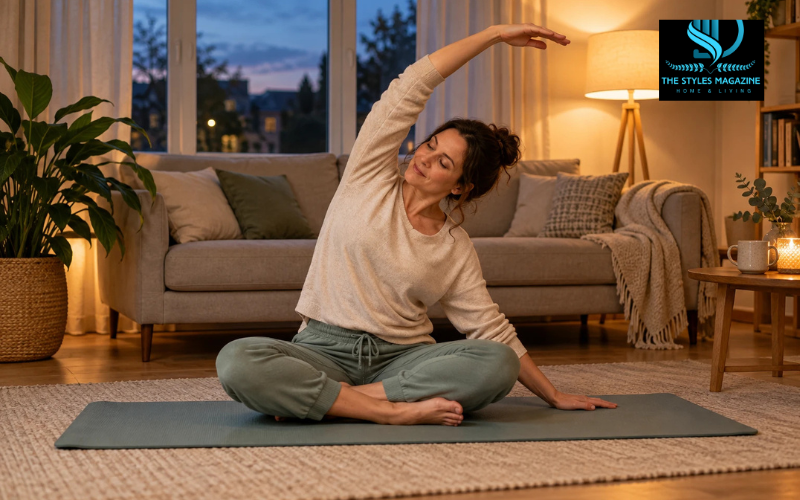
Evenings often disappear faster than expected. One minute you are finishing work or clearing away dinner, and the next you are sitting on the sofa scrolling through your phone. Rest is important, but spending the entire evening in one position may leave you feeling stiff, restless, or strangely unprepared for sleep.
Gentle movement offers a simple way to create a transition between the demands of the day and the quieter hours before bed. It does not have to involve an intense workout, complicated equipment, or an hour-long yoga session. A few comfortable movements can help you change pace, notice where you are holding tension, and end the day more intentionally.
This can be particularly helpful for people who sit for long periods or notice recurring tightness around the hips and buttocks. Anyone experiencing persistent deep buttock pain may eventually search for information about how to treat piriformis syndrome at home. However, an evening movement routine does not need to begin with a diagnosis. It can simply be a practical habit that encourages regular movement and helps you pay attention to how your body feels.
Evening Movement Is Different From an Evening Workout
The word exercise can make an evening routine sound more demanding than it needs to be. After a full day, the idea of changing clothes, tracking repetitions, or trying to improve your performance may feel like another task on an already crowded list.
Gentle movement has a different purpose. You are not trying to set a personal record or burn a certain number of calories. The goal is to move comfortably, break up a long period of sitting, and give your mind a clear signal that the busiest part of the day is over.
This might include walking around the block, moving through a few mobility exercises, stretching areas that feel comfortable to stretch, or simply standing up and moving around your home. The routine can last ten minutes or less and still become a meaningful part of your evening.
The most useful routine is not necessarily the most impressive one. It is the one you can repeat without dreading it.
It Creates a Boundary Between Work and Rest
Working from home has made the boundary between professional and personal time less obvious. Even when you work outside the home, emails, messages, and unfinished tasks can follow you into the evening.
A short movement ritual can act as a physical stopping point. Closing your laptop does not always make your mind feel finished with work, but changing your environment and moving for a few minutes can help create that separation.
You could take a short walk immediately after work, gently move your shoulders and hips, or put on one song and continue moving until it ends. The activity itself does not need to be complicated. Its value comes partly from repetition.
When the same small ritual happens each evening, it can become a familiar signal that work is finished and personal time has begun.
It Helps Break Up Long Periods of Sitting
Many everyday routines involve more sitting than people realize. You may sit during work, while traveling, at dinner, and again while watching television. Even if your posture looks perfect, remaining in one position for several hours can become uncomfortable.
Rather than searching for one ideal sitting position, try changing positions more often. An evening movement break gives your hips, legs, shoulders, and back an opportunity to move after a relatively still day.
This does not mean that sitting is inherently bad. It simply means that the body generally appreciates variety. Standing, walking, reaching, and moving gently through comfortable ranges can make an evening feel less physically stagnant.
If you normally move straight from your desk to the sofa, place a short activity between the two. Walk to a nearby shop, tidy one room, water your plants, or spend a few minutes moving on a mat. Everyday activities count.
Gentle Movement Can Be Part of Your Wind-Down Ritual
A relaxing evening routine is often built around sensory cues. Softer lighting, quieter music, comfortable clothing, and a warm drink can all help change the mood of a room.
Movement can fit naturally into this atmosphere. It does not need to feel like a separate health obligation. Roll out a mat near a lamp, play something calming, and keep the pace unhurried. You might follow the routine with a shower or a caffeine-free drink.
The Styles Magazine’s guide to preparing mint tea offers ideas for fresh, dried, and iced versions. Pure mint infusions are naturally caffeine-free, although blends containing green or black tea may still contain caffeine, so checking the ingredients matters when choosing an evening drink.
Creating a pleasant setting makes the routine easier to look forward to. When something feels comforting rather than corrective, it is more likely to become a lasting habit.
You Do Not Need a Complicated Sequence
An effective evening routine can be surprisingly simple. Start with five to ten minutes and choose movements that feel comfortable rather than forcing your body into difficult positions.
Begin by walking slowly around your home or marching gently on the spot. This gives you a little time to warm up before stretching. You can then try shoulder rolls, easy upper-body turns, ankle circles, or gentle hip movements.
If stretching feels pleasant, keep it slow and controlled. Avoid bouncing or pulling until a movement becomes painful. Harvard Health explains that regular stretching can support flexibility and joint movement, but it also recommends warming the muscles with light activity first.
You might create a basic sequence such as:
- Two minutes of comfortable walking
- Five slow shoulder rolls in each direction
- Gentle side-to-side upper-body turns
- Controlled hip circles while holding a chair
- A comfortable seated or standing leg stretch
- One minute of slow breathing
Treat this as a starting point, not a fixed prescription. Remove anything that does not feel right and adjust the length to suit your evening.
Keep the Intensity Appropriate for the Time of Day
Gentle movement and vigorous exercise are not the same thing. A demanding late-night workout may leave some people feeling more alert rather than ready for bed. An evening wind-down routine should usually feel calming and manageable.
You should be able to breathe comfortably and finish feeling settled rather than exhausted. If a movement causes sharp pain, numbness, tingling, weakness, or discomfort that travels into an arm or leg, stop and seek appropriate advice instead of pushing through it.
There is also no need to stretch every area of the body every evening. Pay attention to what feels useful that day. Someone who has spent hours typing may prefer shoulder and wrist movements, while someone who has been driving may appreciate walking and comfortable hip mobility.
Make the Routine Easy to Repeat
Habits become easier when they have an obvious time and place. “Move more in the evening” is vague. “Move for ten minutes after clearing dinner” is much easier to remember.
Attach your routine to something that already happens every day. You might move after shutting down your computer, before taking a shower, or while waiting for the kettle to boil. Keep any mat or equipment visible so that starting requires very little preparation.
It also helps to remove the expectation that every session must look identical. On energetic days, you may take a longer walk. On busy evenings, five minutes of movement in the living room may be enough.
Consistency does not require perfection. Missing one evening does not undo the habit. Simply return to it the following day.
Let Your Morning and Evening Routines Work Together
A calm evening can make the following morning feel less rushed, especially when both routines are simple enough to maintain. Preparing clothes, reducing late-night screen time, moving gently, and keeping a regular bedtime can all make it easier to begin the next day with intention.
If your mornings currently feel chaotic, this guide to creating a healthy morning routine offers practical ideas for building habits around hydration, breakfast, movement, and daily planning.
The two routines do not need to be elaborate. Your evening can focus on slowing down, while your morning helps you gradually become more alert. Together, they create useful boundaries around the day.
A More Comfortable Way to End the Day
Gentle movement will not solve every ache, guarantee perfect sleep, or replace professional care when something is wrong. What it can do is give you a regular opportunity to step away from screens, change position, and reconnect with how you feel.
Start with a few minutes, keep the movements comfortable, and choose a time that fits naturally into your life. Your evening routine does not need to become another performance. It can simply be a quiet daily practice that helps you leave the day behind and move into the night with greater ease.
Enjoyed it? Find more exclusive content on The Styles Magazine.