Paint spills on carpet can quickly turn into a frustrating problem, especially when the stain begins to dry into the fibers. Unlike smooth floors, carpet absorbs liquid paint deeply, making it much harder to clean without leaving marks or damaging the texture. Many people make the mistake of scrubbing the stain immediately, but this often spreads the paint further and pushes it deeper into the carpet.
Learning how to get paint out of carpet properly starts with understanding the type of paint involved and whether the stain is wet or already dry. Water-based paints usually respond well to mild cleaning methods, while oil-based paints often require stronger solutions. Acrylic paint, black paint stains, and paint spills inside car carpets may also need different cleaning approaches.
The good news is that most paint stains can be reduced or removed completely when treated correctly. In this guide, you will learn safe and practical methods for removing paint from carpet without damaging the fibers, fading the color, or making the stain worse.
Quick Guide Table
| Paint Type | Best Cleaning Method | Safe Cleaner | Difficulty Level |
| Wet Latex Paint | Blot and clean quickly | Dish soap + warm water | Easy |
| Dry Latex Paint | Soften before blotting | Warm water + soap | Medium |
| Wet Acrylic Paint | Blot immediately | Mild soap or rubbing alcohol | Medium |
| Dried Acrylic Paint | Scrape and soften slowly | Rubbing alcohol | Hard |
| Oil-Based Paint | Use solvent carefully | Paint thinner or white spirit | Hard |
| Black Paint Stains | Lift gradually without scrubbing | Carpet-safe cleaner | Medium |
Identify the Paint Type Before Cleaning
Before using any cleaner, it is important to identify the type of paint on the carpet. Different paints react differently to water, soap, alcohol, and chemical solvents. Using the wrong cleaning method can permanently set the stain or damage the carpet material.
Water-based paints, such as latex and acrylic paint, are the most common types used in homes. These paints usually dissolve in water when still wet, making them easier to clean. Oil-based paints, often used for glossy finishes and durable coatings, are thicker and more difficult to remove because they do not dissolve in water.
A simple way to identify paint type is by checking the paint container if it is available. If not, place a small amount of warm water on the stain and blot gently. If the paint softens or transfers onto the cloth, it is likely water-based. If nothing changes, it may be oil-based paint.
Understanding the paint type helps you choose safer cleaning products and avoid unnecessary damage to carpet fibers.
Important Things to Do Before Removing Paint
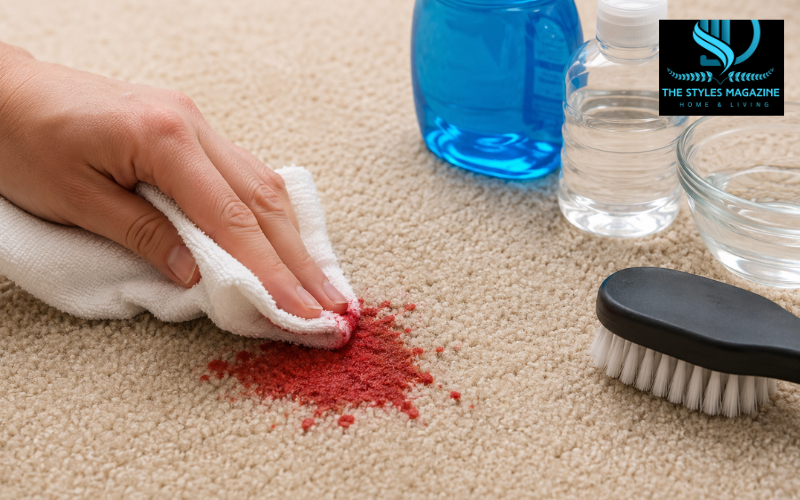
One of the biggest mistakes people make is scrubbing paint aggressively. Scrubbing spreads wet paint outward and forces it deeper into the carpet backing. Instead, always blot the stain gently using a clean white cloth or paper towel.
Before applying any cleaner, test it on a hidden section of the carpet. Some chemicals can discolor or weaken delicate fibers, especially on wool or light-colored carpets. Testing first helps prevent larger problems later.
It also helps to gather your supplies before starting. Mild dish soap, warm water, clean towels, rubbing alcohol, a dull knife, and a vacuum are often enough for most paint stains. Having everything ready allows you to clean the area quickly before the paint hardens further.
If there is excess paint sitting on the surface, carefully lift it away using a spoon or dull edge. Avoid pressing downward because this can spread the stain deeper into the carpet.
How to Get Wet Paint Out of Carpet
Fresh paint is much easier to remove than dried paint, so acting quickly is important. If the spill is water-based latex paint, begin by blotting as much paint as possible with a dry cloth. Always work from the outside of the stain toward the center to stop it from spreading.
Once excess paint is removed, mix a small amount of dish soap with warm water. Dampen a clean cloth with the solution and continue blotting gently. Avoid soaking the carpet because too much moisture can damage the backing underneath.
Wet acrylic paint can usually be cleaned using the same method. Acrylic paint dries quickly, so repeated blotting may be necessary. If some paint remains after cleaning with soap and water, rubbing alcohol can help loosen the remaining pigment. Apply a small amount to a cloth rather than directly onto the carpet and blot carefully.
Continue alternating between blotting with the cleaning solution and drying the area with a clean towel until the stain fades. Patience is important during this process because rushing can damage the carpet fibers.
How to Get Paint Out of Carpet Once Dried
Dried paint stains are more difficult because the paint hardens around the carpet fibers. However, it is still possible to improve or remove the stain with careful treatment.
Start by gently scraping away loose paint using a dull knife or spoon. Avoid using sharp tools because they can cut or pull the carpet fibers. If large paint chunks are stuck, breaking them apart slowly can make removal easier.
After vacuuming the loose debris, soften the dried paint before cleaning. A mixture of warm water and dish soap can help loosen water-based paint stains. Apply the solution lightly and let it sit for several minutes before blotting.
For stubborn stains, repeated softening and blotting may be necessary. Some people searching for how to get paint out of carpet once dried expect immediate results, but older stains often require patience and multiple cleaning attempts.
Using gentle motions is important throughout the process because aggressive scrubbing can permanently damage the carpet texture.
How to Remove Dry Paint From Carpet With Home Remedies
Many household products can help loosen paint stains without requiring harsh chemicals. Vinegar is one common home remedy because its mild acidity can soften certain dried paints. Warm the vinegar slightly, apply it carefully to the stain, and blot after a few minutes.
Dish soap mixed with warm water is another safe method for treating dry paint stains. Although simple, this solution works well for many water-based paints and is less likely to damage carpet fibers.
Some people also use baking soda to help lift loosened paint particles from the carpet. When combined with gentle blotting, it may improve stain removal while helping absorb leftover moisture.
Rubbing alcohol is another useful option, especially for acrylic paint. However, it should always be used carefully and tested first because excessive use can affect carpet color.
Home remedies are often effective for smaller stains, but very old or thick paint spills may still require commercial cleaners or professional treatment.
How to Get Dried Acrylic Paint Out of Carpet
Acrylic paint can be particularly challenging because it dries into a tough, plastic-like layer. Once hardened, it bonds tightly to carpet fibers and becomes difficult to remove completely.
The best approach is to first loosen the dried paint slowly. Begin by scraping away brittle paint pieces gently. After removing the loose layer, dampen the stain with warm soapy water or rubbing alcohol to soften the remaining paint.
Blotting repeatedly helps lift softened paint from the fibers. Some carpet-safe paint removers designed for acrylic stains may also help when household methods are not strong enough.
It is important not to oversaturate the carpet or scrub forcefully during this process. Acrylic paint stains often improve gradually rather than disappearing instantly. Careful cleaning protects the carpet while increasing the chance of successful removal.
How to Get Black Paint Out of Carpet
Black paint stains are especially noticeable because dark pigments can leave visible marks even after cleaning. In some cases, the stain may appear faded but still leave a shadow behind.
The safest method is to remove the paint slowly without damaging the carpet color. Blotting and lifting the stain gradually usually works better than aggressive scrubbing. Harsh cleaners may remove the paint but can also bleach the surrounding carpet area.
If a faint shadow remains after cleaning, repeating the process gently may improve the appearance over time. Deep black paint stains sometimes require professional carpet treatment, especially on light-colored carpets.
Patience is important because rushing the cleaning process often spreads the dark pigment further.
Choosing the Best Paint Remover for Carpet
Some paint stains require stronger products than soap or home remedies can provide. Carpet-safe commercial paint removers are designed to break down stubborn paint while reducing the risk of fiber damage.
When choosing a paint remover for carpet, look for products specifically labeled as safe for carpets or upholstery. Avoid harsh industrial solvents unless absolutely necessary because they may weaken the fibers or leave discoloration behind.
Stronger removers are usually needed for oil-based paints or thick dried stains. However, they should always be used carefully in a ventilated area. Applying too much product can damage the carpet backing and create strong chemical odors.
Following product instructions carefully and testing the cleaner first can help reduce the risk of damage.
How to Remove Paint From Carpet Without Damaging It
Protecting the carpet is just as important as removing the stain itself. Some cleaning methods remove paint effectively but leave the fibers rough, faded, or weakened.
Gentle blotting, limited moisture, and mild cleaning solutions are usually the safest approach. Delicate carpets, especially wool carpets, can react badly to harsh chemicals and aggressive scrubbing.
Too much water can also create problems beneath the carpet, including mold or unpleasant odors. Using only the amount of moisture necessary helps protect both the fibers and the carpet padding underneath.
Allowing the carpet to dry fully after cleaning is another important step. Once dry, vacuuming the area lightly can help restore the carpet texture and fluff flattened fibers.
How to Get Paint Out of Carpet in Car Interiors
Car carpets are different from household carpets because they are often thinner and attached firmly to the vehicle floor. Paint spills inside a car can also spread into tight corners and beneath floor mats.
To clean paint from car carpet, begin by removing as much excess paint as possible. Blotting carefully is important because vehicle carpets can absorb liquid quickly.
Mild dish soap and warm water are usually safe for most car interiors. For tougher stains, small amounts of rubbing alcohol may help loosen dried paint. However, excessive liquid should be avoided because moisture trapped inside a car can lead to odors or mildew.
After cleaning, leave the car doors open or use airflow to help the carpet dry completely.
Common Mistakes That Make Paint Stains Worse
Many carpet stains become permanent because of incorrect cleaning methods. Scrubbing wet paint is one of the most common mistakes because it spreads the stain into a larger area.
Using the wrong solvent can also damage the carpet or lock the stain deeper into the fibers. Strong chemicals that are not designed for carpets may remove color along with the paint.
Applying too much water is another problem. Oversaturated carpets take longer to dry and may develop odors or hidden moisture damage underneath.
Waiting too long before cleaning is often the biggest mistake of all. Paint becomes much harder to remove once fully dry, especially thick acrylic or oil-based paint.
When Professional Carpet Cleaning Is the Better Option
Some paint stains are too severe for home cleaning methods alone. Large spills, thick oil-based paint, or stains that have been left untreated for a long time may require professional equipment.
Repeated DIY attempts can sometimes worsen the damage by weakening the carpet fibers or spreading the stain further. Professional cleaners use specialized tools and carpet-safe solvents designed for difficult stains.
If the paint covers a large section of carpet or continues to leave visible marks after several cleaning attempts, professional treatment may save the carpet from permanent damage.
Conclusion
Learning how to get paint out of carpet safely can help prevent long-term stains and protect your carpet fibers from damage. The best cleaning method always depends on the type of paint and whether the stain is wet or dry. Water-based paints are usually easier to remove, while oil-based and dried acrylic paints often need stronger treatment and extra patience.
Using gentle blotting techniques, safe cleaning products, and the correct amount of moisture can improve the chances of successful stain removal without harming the carpet. Acting quickly is also one of the most important factors because fresh paint is much easier to clean than hardened stains.
With the right approach, many paint stains can be reduced or removed completely, helping your carpet stay clean, soft, and in good condition for years to come.
FAQs
Can Dried Paint Be Removed From Carpet?
Yes, dried paint can often be removed by softening the stain first and then lifting it slowly with safe cleaning products and gentle blotting methods.
What Is The Safest Paint Remover For Carpet?
Carpet-safe paint removers designed for upholstery or fabric surfaces are usually the safest option. Always test the product on a hidden carpet area first.
Does Vinegar Remove Paint From Carpet?
Vinegar may help soften some water-based paint stains, especially dried spots, but it may not work well on oil-based paint or thick acrylic stains.
Can Rubbing Alcohol Damage Carpet?
Rubbing alcohol is generally safe in small amounts, but excessive use may fade certain carpet colors. Always test it on a hidden section first.
Why Should You Avoid Scrubbing Paint Stains?
Scrubbing pushes paint deeper into carpet fibers and spreads the stain outward, making it harder to remove and increasing the risk of fiber damage.
Enjoyed it? Find more exclusive content on The Styles Magazine.
Disclaimer: This article is for informational purposes only. Cleaning results may vary depending on carpet material, paint type, and stain condition. Always test cleaning products on a hidden area first and follow manufacturer instructions before using any chemical cleaners.