Learning how to clean microfiber couch fabric the right way is important because microfiber can look beautiful, soft, and modern, but it can also be sensitive to the wrong cleaning method. Many people make the mistake of spraying water or household cleaner directly onto the couch without checking the care label first. This can leave water rings, stiff patches, faded areas, or marks that are harder to remove than the original dirt.
Before cleaning any microfiber couch, the first step is to check the manufacturer’s cleaning code. This small tag is usually found under the seat cushions, underneath the couch, or along the frame. The code may show S, W, S-W, or X, and each letter tells you what type of cleaner is safe to use. Some microfiber couches can handle water-based cleaning, while others need a solvent like rubbing alcohol. A few should only be vacuumed and brushed.
The safest method depends on that tag. Rubbing alcohol is often used for microfiber couches with an S code or no visible tag. Water and mild soap may work for W-code couches. Vinegar can sometimes help with light odor and surface cleaning, while baking soda is useful for smells and mild oil absorption. This guide explains how to clean a microfiber couch without a machine, remove common stains, freshen pet smells, and keep the fabric soft after cleaning.
Quick Guide Table: Best Way to Clean a Microfiber Couch
| Couch Code / Problem | Best Cleaning Method | What to Avoid |
| S Code | Use rubbing alcohol lightly with a white cloth | Water-based cleaners |
| W Code | Use mild dish soap suds and water | Soaking the fabric |
| S-W Code | Use rubbing alcohol or light water-based cleaning | Harsh chemicals |
| X Code | Vacuum and dry brush only | Any liquid cleaner |
| Pet Smell | Sprinkle baking soda, wait, then vacuum | Perfumed sprays |
| Grease Stain | Use baking soda or cornstarch first | Heavy scrubbing |
| Ink Stain | Blot gently with rubbing alcohol | Rubbing outward |
Simple Step-by-Step Guide
- Check the microfiber couch cleaning code first.
- Vacuum the couch to remove dust, crumbs, and pet hair.
- Choose the cleaner based on the care tag.
- Spot test on a hidden area before cleaning the full couch.
- Clean small sections using light moisture only.
- Let the fabric dry completely.
- Brush the microfiber gently to restore softness.
Understanding Microfiber Couch Cleaning Codes First
The cleaning code is the most important detail to check before you clean a microfiber couch. It tells you what the fabric can safely handle. If you ignore it, even a small stain can turn into a larger mark.
An S code means the couch should be cleaned with a solvent, not water. For many microfiber couches, rubbing alcohol is a common solvent choice because it dries quickly and is less likely to leave water rings. A W code means the couch can be cleaned with a water-based solution, such as mild dish soap mixed with water. An S-W code means either a solvent or a water-based cleaner may be used, but you should still spot test first. An X code means the couch should not be cleaned with liquid at all. It should only be vacuumed and brushed.
If your couch has no cleaning tag, it is safest to treat it like an S-code couch and avoid water. You should also test your cleaner on a hidden area before cleaning a visible part of the couch. This simple step can help prevent damage, fading, or water stains.
What Is the Best Cleaner for Microfiber Couches?
The best cleaner for microfiber couches depends on the cleaning code. There is no single cleaner that is perfect for every couch. For an S-code microfiber couch, rubbing alcohol is often the best option because it evaporates fast and does not soak the fabric like water can. This makes it helpful for removing everyday dirt, light stains, and marks without leaving the fabric wet for too long.
For a W-code couch, a small amount of mild dish soap mixed with water can work well. The key is to use the foam or suds, not a soaking wet cloth. Too much water can create rings or make the couch dry unevenly. For odor control, baking soda is often a safe dry option because it can absorb smells without adding moisture. Vinegar may be useful on some water-safe microfiber couches, but it should be diluted and tested first.
Avoid bleach, harsh stain removers, ammonia-heavy products, strong carpet cleaners, and colored cleaning cloths. These can damage the fabric, change its color, or leave residue behind. A gentle cleaner used carefully is better than a strong cleaner used quickly.
Supplies You Need Before Cleaning a Microfiber Couch
Before you start cleaning, gather everything you need so you do not have to stop halfway through the process. Cleaning microfiber works best when you move slowly and carefully.
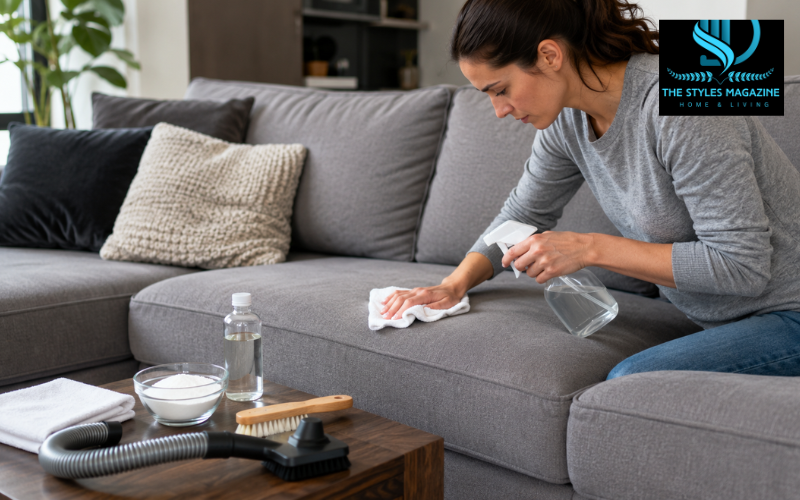
You will need a vacuum with an upholstery attachment to remove crumbs, dust, pet hair, and loose dirt. This step matters because loose dirt can turn into muddy streaks if liquid touches it. You should also use white cloths or light-colored sponges because rubbing alcohol or cleaner can cause dye from darker cloths to transfer onto the couch.
A clean spray bottle is helpful for applying rubbing alcohol or a light cleaning solution evenly. You will also need a soft-bristled brush to restore the fabric texture after cleaning. Depending on the cleaning code, you may use rubbing alcohol, mild dish soap, baking soda, or diluted vinegar. Keep paper towels or extra clean cloths nearby so you can blot spills quickly.
How to Clean a Microfiber Couch Without a Machine
You do not need a cleaning machine to clean a microfiber couch safely. In many cases, careful hand cleaning works better because you can control the amount of moisture. Start by removing the cushions if possible. Vacuum the entire couch, including seams, corners, cushion edges, and the space under the cushions. Take your time with this step because it removes the dirt that could spread during cleaning.
Next, work in small sections instead of spraying the whole couch at once. Lightly apply the correct cleaner based on the cleaning code. If you are using rubbing alcohol, mist the area lightly. If you are using soap suds on a W-code couch, apply only the foam with a sponge or soft cloth. Never soak the fabric.
After cleaning each section, blot or gently rub the area with a white cloth or sponge. Let the couch dry completely. Once dry, microfiber may feel stiff or rough. This is normal. Use a soft-bristled brush and move it in gentle circles to lift the fibers and bring back the soft feel.
Rubbing Alcohol to Clean Microfiber Couch Safely
Using rubbing alcohol to clean microfiber couch fabric is one of the most popular methods for S-code couches or couches with no visible care tag. Rubbing alcohol works well because it evaporates quickly. This lowers the chance of water rings and helps the fabric dry faster.
Pour rubbing alcohol into a clean spray bottle and lightly mist one small area at a time. The fabric should feel damp, not soaked. Use a white sponge or clean white cloth to blot and gently rub the area in small circular motions. As the dirt lifts, you may see it transfer to the sponge. Replace or rinse the sponge as needed so you are not rubbing dirt back into the couch.
White cloths are important because colored cloths may bleed dye, especially when used with alcohol. After the fabric dries, it may feel a little crunchy. Brush it gently with a clean soft-bristled brush to restore the texture. Always keep the room ventilated while using rubbing alcohol and avoid open flames.
How to Clean Microfiber Couch With Water
Cleaning microfiber with water is safe only if the couch has a W or S-W cleaning code. If the couch has an S or X code, water can leave marks or damage the fabric. Even when water is allowed, you still need to use it carefully.
Mix a small amount of mild dish soap with warm water and stir until suds form. The suds are what you should use, not the water underneath. Dip a sponge or cloth into the foam and gently clean the fabric in small sections. Avoid pressing too hard or soaking the couch.
After cleaning, use a barely damp clean cloth to remove any soap residue. Do not rinse the area with lots of water. Too much moisture can cause uneven drying and visible rings. Let the couch air dry fully, then brush the fabric to soften it. This method is good for light dirt and general cleaning, but it should still be tested on a hidden area first.
How to Clean Microfiber Couch With Vinegar
Vinegar can be useful for light odors and mild surface cleaning, but it is not right for every microfiber couch. It should only be considered if the couch has a W or S-W code. If the couch is marked S or X, avoid vinegar because it is water-based and may leave marks.
To use vinegar safely, dilute it with water rather than applying it directly. A small amount of white vinegar mixed with water can help freshen the fabric and reduce light smells. Spray it very lightly on a hidden test area first and let it dry. If the fabric looks normal and does not feel damaged, you can use it carefully on small sections.
Vinegar should not be used on deep stains, delicate microfiber, unknown fabric codes, or couches with strong color concerns. It also has a strong smell at first, although it usually fades as it dries. For many microfiber couches, baking soda or rubbing alcohol may be safer choices depending on the cleaning code.
How to Clean Microfiber Couch With Baking Soda
Baking soda is one of the safest options for odor control because it can be used dry. This makes it helpful for microfiber couches that are sensitive to moisture. It works especially well for pet smells, mild musty odors, and light oil absorption.
Sprinkle a thin, even layer of baking soda over the dry couch. Let it sit for at least 15 to 30 minutes. For stronger odors, you can leave it longer, even overnight if the couch is dry and the area is not being used. After it has had time to absorb odors, vacuum it thoroughly with an upholstery attachment.
Do not mix baking soda with too much water on sensitive microfiber unless the cleaning code allows it. A wet paste can be harder to remove and may leave residue. Used dry, baking soda is a simple way to freshen a microfiber couch without a machine or harsh cleaner.
How to Clean Microfiber Couch Stains
Different stains need different cleaning methods, so it is important not to treat every mark the same way. Food and drink stains should be blotted first with a clean cloth. Do not rub aggressively, because this can spread the stain deeper into the fibers. Use the correct cleaner based on the couch’s code after removing any loose residue.
Grease and oil spots often respond well to baking soda or cornstarch because they can absorb oil before you clean the area. Let the powder sit on the stain, then vacuum it away. If the couch allows water-based cleaning, a small amount of mild dish soap may help break down grease.
Ink marks are often treated with rubbing alcohol, especially on S-code microfiber. Apply alcohol to a white cloth and blot from the outside of the stain toward the center so the ink does not spread. For dirt and mud, let the mud dry first, brush off the dry particles, vacuum, and then clean the remaining mark. The main rule is to match the stain treatment to both the stain type and the fabric code.
How to Clean Microfiber Couch Pet Smell
Pet smell can settle into microfiber over time, especially if pets sleep on the couch often. Start by vacuuming slowly and thoroughly. Remove pet hair, dander, crumbs, and dust from the cushions, seams, and corners. A lint roller or pet hair brush can also help before vacuuming.
After the surface is clean, sprinkle dry baking soda over the couch. Let it sit for at least 30 minutes, or longer for stronger smells. Vacuum it up completely so no powder remains in the fabric. If the couch has a W or S-W code, a lightly diluted vinegar solution may help with mild odors, but it must be tested first.
For strong pet urine smells, smoke odors, or deep smells that return after cleaning, professional cleaning may be needed. Odors can sink below the surface, and too much home cleaning can make the fabric too wet or leave residue.
Common Mistakes That Can Damage a Microfiber Couch
One of the biggest mistakes is using too much water. Even a couch with a W code should not be soaked. Microfiber dries best when moisture is light and controlled. Another common mistake is ignoring the cleaning code. A cleaner that works on one microfiber couch may damage another.
Scrubbing too hard can also harm the fabric. It may push stains deeper, roughen the surface, or create uneven texture. Gentle blotting and light circular rubbing are safer. Using dark-colored cloths is another risk because dye can transfer to the couch, especially when alcohol is involved.
Many people also skip the final brushing step. After cleaning, microfiber may dry stiff or flat. Brushing restores the nap, evens out the surface, and helps the couch feel soft again. This step can make a big difference in how the couch looks after cleaning.
Drying and Brushing Microfiber After Cleaning
Drying is just as important as cleaning. If microfiber dries unevenly, it may show rings or stiff patches. After cleaning, let the couch air dry fully before sitting on it. You can open windows or use a fan to help the fabric dry faster, but avoid using high heat.
Once dry, the fabric may feel rough. This does not always mean you damaged it. Microfiber fibers can become stiff when they dry after cleaning. A soft-bristled brush can help lift them back into place. Brush gently in circular motions or in the same direction across each cushion.
Use a clean nylon brush, upholstery brush, or soft scrub brush. Avoid wire brushes or anything too stiff. To keep the couch looking even, brush the whole cleaned area rather than only one small spot. This helps the texture blend naturally.
When to Call a Professional Upholstery Cleaner
Some microfiber couch problems are better handled by a professional. If the stain is large, old, or has already been treated many times, more home cleaning may not help. It can sometimes make the stain spread or damage the fabric.
You should also consider professional help if the couch has no cleaning tag and is expensive, delicate, or heavily worn. A professional can test the fabric and choose a safer method. Strong pet odors, smoke smells, urine stains, or deep grease stains may also need special equipment and cleaning products.
If the fabric is already faded, thin, or damaged, avoid aggressive cleaning. In these cases, gentle vacuuming and brushing may be safer until you get expert advice. Calling a professional can cost more, but it may prevent permanent damage to a valuable couch.
Conclusion
Knowing how to clean microfiber couch fabric safely starts with one simple rule: check the care tag first. The cleaning code tells you whether to use rubbing alcohol, water-based soap, either method, or no liquid at all. This step helps protect the couch from water rings, color changes, and stiff fabric.
For many S-code or no-tag microfiber couches, rubbing alcohol is a safe and effective option when used lightly. For W-code couches, mild soap suds and careful drying can work well. Baking soda is helpful for odors and pet smells, while vinegar may be useful only on water-safe microfiber after a spot test.
Always use light moisture, clean white cloths, and gentle pressure. Let the couch dry fully, then brush the fibers to restore softness. With the right method, you can clean a microfiber couch without a machine and keep it looking fresh, comfortable, and ready for everyday use.
FAQs
Can I Use Rubbing Alcohol To Clean A Microfiber Couch?
Yes, rubbing alcohol is often safe for S-code microfiber couches because it dries quickly and helps prevent water rings. Always spot test first and use a white cloth.
How Do I Clean Microfiber Couch Stains Safely?
Blot fresh stains first, then clean according to the couch code. Use rubbing alcohol for S-code fabric and mild soap suds for W-code fabric.
Can I Clean A Microfiber Couch With Water?
You can use water only if the tag says W or S-W. Use very little water and avoid soaking the couch to prevent water rings.
How Do I Remove Pet Smell From A Microfiber Couch?
Vacuum the couch first, then sprinkle dry baking soda over the fabric. Let it sit for 30 minutes or longer, then vacuum it completely.
What Should I Avoid When Cleaning Microfiber Couch Fabric?
Avoid bleach, too much water, dark cloths, harsh scrubbing, and strong chemical cleaners. These can damage microfiber or leave stains and stiff patches.
Enjoyed it? Find more exclusive content on The Styles Magazine.
Disclaimer: This article is for general home-cleaning information only. Always check your couch’s manufacturer care tag and test any cleaner on a hidden area first. For expensive, delicate, or badly stained furniture, contact a professional upholstery cleaner.