Mulch does more than cover bare soil. It can help the ground hold moisture, reduce weed growth, soften temperature changes, and give planting beds a neat finish. The color you choose also affects how the house, lawn, flowers, shrubs, and walkways appear together. USDA guidance notes that mulch can conserve water, reduce erosion, suppress weeds, and moderate temperature extremes, although too much mulch can harm plants.
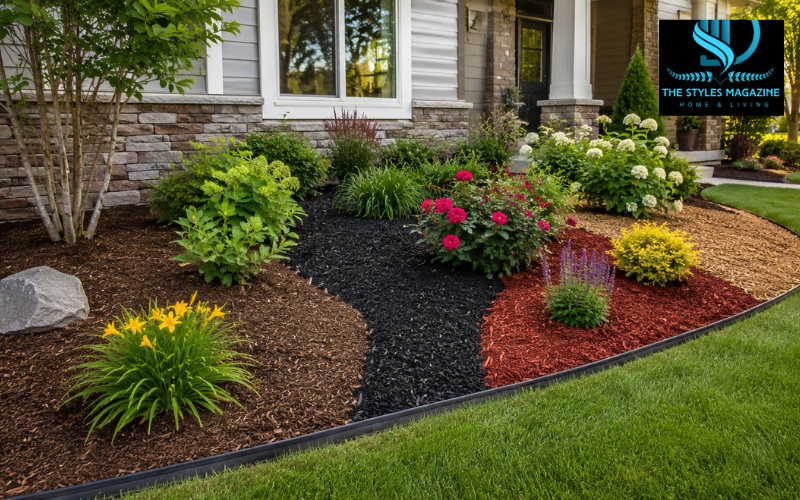
The most common mulch colors are brown, black, red, and natural wood tones. Brown feels warm and familiar. Black creates strong contrast. Red adds a bold accent. Natural mulch provides an earthy appearance that changes as the wood ages.
The best choice depends on your siding or brick, plant colors, sunlight, climate, and how often you are willing to refresh the beds. This guide explains how each option looks, where it works best, how it fades, and what to check before buying.
Mulch Colors at a Glance
There is no single best color for every yard. A shade that looks polished beside a white modern home may feel too strong beside warm brick.
Color-treated mulch usually keeps a more even appearance for longer than untreated wood, while natural organic mulch changes as it weathers. Lowe’s describes brown as traditional, black as high contrast, and red as a strong accent.
Quick Guide to Mulch Colors
| Mulch Color | Best For | Overall Look | Main Consideration |
| Brown | Brick, stone, traditional homes, colorful flowers | Warm, natural, and balanced | Fades gently and works with most landscapes |
| Black | White, gray, beige, and modern homes | Clean, bold, and high contrast | May become warmer in strong sunlight |
| Red | Light siding, evergreens, and rock gardens | Bright, energetic, and noticeable | Can clash with red brick and fade visibly |
| Natural | Cottage, rustic, woodland, native, and edible gardens | Earthy, soft, and organic | Weathers naturally to gray or muted brown |
Quick Tips for Choosing the Right Mulch Color
- Match warm brick and stone exteriors with brown or natural mulch.
- Choose black mulch to create contrast around white, yellow, or pink flowers.
- Use red mulch carefully when the house already has strong red or orange tones.
- Compare mulch samples beside the house before buying a large amount.
- Consider heat, sunlight, fading, and plant needs—not appearance alone.
Brown Mulch Colors for a Classic, Balanced Landscape
Brown is one of the easiest mulch colors to use because it resembles soil, bark, and the forest floor. It settles into the landscape instead of becoming the main feature. This makes it a reliable choice for homeowners who want tidy beds without a dramatic statement.
Light brown has a dry, casual appearance and works well in cottage gardens or sunny spaces. Medium brown is highly versatile because it looks natural beside green foliage, lawns, and many exteriors. Dark brown gives beds more definition while still feeling softer than black.
Brown mulch colors are especially attractive beside red or orange brick because they repeat the warm tones already present in the walls. They also suit tan stone, wood siding, and traditional homes. In beds filled with purple, yellow, pink, red, or white flowers, brown creates a calm background that allows the plants to remain the focus.
Black Mulch for Modern Contrast and Definition
Black mulch gives beds crisp edges and makes bright plants look more vivid. It works well around white flowers, pale pink blooms, yellow flowers, lime-green foliage, and glossy evergreen shrubs. The dark surface creates clear separation between plants and lawn.
This color suits white, gray, beige, and cool-toned siding. It also supports the straight lines of modern architecture. Home Depot’s 2026 color guide recommends black mulch for gray and contemporary homes and notes that it can make green foliage stand out.
Black may feel heavy in a small bed or a yard that already contains many dark surfaces. It can also show pale leaves, dust, grass clippings, and faded patches more clearly than brown.
Dark surfaces absorb more solar heat than lighter ones. Lowe’s notes that black mulch absorbs more heat, which may help or hinder depending on the climate and plants. In very hot, sunny regions, monitor soil moisture and use extra care around shallow-rooted or heat-sensitive plants.
Red Mulch for a Bold and Noticeable Landscape
Red mulch is warm, bright, and highly visible. It creates strong contrast around deep green shrubs, blue-green conifers, ornamental grasses, and nonflowering plants. It can also look attractive with white or yellow blooms.
This color often suits cream, pale blue, or white siding. It can also be effective in rock gardens, commercial landscapes, or large open beds. Home Depot suggests red mulch for light-toned siding and warm, gold-based palettes.
Red mulch needs more careful coordination than brown or natural wood. Beside red brick, red pavers, or terracotta walls, it may create too many competing warm tones. It may also clash with purple flowers or burgundy foliage.
Fading is more noticeable when the starting color is bright. Strong sunlight, irrigation, and heavy rain can leave red mulch looking uneven, so it may need more frequent raking, recoloring, or refreshing.
Natural Mulch Colors for an Earthy, Organic Look
Natural mulch includes undyed wood chips, shredded bark, pine bark, cedar pieces, leaves, and similar plant-based materials. Its color may range from pale tan to reddish brown or deep bark brown.
These natural mulch colors suit rustic homes, cottage gardens, woodland edges, native plant beds, and informal landscapes. They blend easily with tree trunks, stone paths, weathered fencing, and mixed plantings.
Natural mulch is also practical for vegetable beds and edible landscapes when the source material is clearly identified and suitable for garden use. The USDA lists bark chips, straw, grass clippings, and similar organic materials among common mulch choices.
Undyed wood does not stay freshly cut in appearance. Sun, rain, and age gradually turn it into softer brown, gray-brown, or silvery-gray shades. That weathered look is part of its appeal, but it may not suit someone who wants a strong, even color all season.
Best Color Mulch for Curb Appeal by House Exterior
The best color mulch for curb appeal usually supports the home rather than competing with it. Start by deciding whether the exterior has warm or cool tones.
White and light beige homes can handle nearly any option. Black creates a sharp, modern contrast, brown feels softer and more traditional, and red adds warmth. Gray homes often look polished with black or dark brown mulch.
Red brick and warm stone usually pair well with brown or natural mulch. These colors repeat earthy tones without creating a close but imperfect red match. Dark charcoal, navy, or deep green homes often benefit from medium brown or natural wood because black may make the front view feel too dark.
Architecture also matters. Modern homes tend to suit black mulch and simple planting schemes. Traditional houses work easily with medium or dark brown. Farmhouse, cottage, and rustic styles often look most natural with brown, cedar, pine bark, or undyed wood chips.
Mulch Colors for Front Yard Flowers and Plants
When choosing mulch colors for front yard beds, consider which part of the landscape should attract attention first. Mulch should normally frame the plants, not overpower them.
Black mulch highlights white, cream, pale pink, light yellow, and bright green plants. It can make hostas, boxwood, white hydrangeas, and silver foliage look more defined. Dark brown provides similar depth with a softer transition.
Brown and natural mulch are useful when a bed contains many flower colors. They work with mixed annuals, roses, ornamental grasses, and flowering shrubs without favoring one shade too strongly. Red mulch is most effective when plants are mainly green, blue-green, white, or yellow.
A balanced palette often uses three main color groups: the house exterior, the plants, and the mulch. When every part is bold, the result can feel crowded. When one element is strong and the others are quieter, the yard appears more organized.
Climate, Sunlight, and Plant Health Considerations
Mulch color is mainly a design choice. Material, depth, moisture, and placement have a greater effect on plant health. Organic mulch can reduce water loss, limit weeds, protect soil from erosion, and moderate temperature changes.
In a hot, sunny climate, black mulch may become warmer than brown or natural wood. This does not automatically make it harmful, but it is a reason to check soil moisture and avoid letting delicate plants dry out. Lighter natural materials may feel more suitable around plants that prefer cooler roots.
In rainy areas, choose a texture that drains well and does not stay pressed against stems. On slopes, shredded wood often stays in place better than large nuggets. In shade, color may last longer because the mulch receives less direct sunlight.
Many landscape beds use about two to four inches of mulch. Keep it away from plant crowns, shrub stems, and tree trunks. Lowe’s warns that mulch touching stems or trunks may encourage rot and pests, while the USDA advises against “volcano mulching.”
How Mulch Colors Fade and Change Over Time
All wood mulch changes with exposure. Sunlight breaks down surface color, rain moves fine particles, irrigation repeatedly wets the wood, and foot traffic turns pieces over. The upper layer often fades before the material underneath.
Natural mulch shows the most expected change because weathering is part of its appearance. Fresh tan or brown wood slowly becomes muted gray-brown. Brown dyed mulch tends to fade gently. Black may shift toward charcoal or dull brown. Red can show a stronger difference between sunny and shaded areas.
Some bagged products advertise color performance for up to a year, but results depend on weather, storage, application, and product quality. Retailers also note that actual wood species, color, and size may vary by region.
Before adding more mulch, rake the existing layer. Turning the pieces may reveal stronger color underneath. Add only enough new material to restore a suitable depth instead of making the layer thicker every year.
Mulch Color Spray: Refreshing Faded Mulch Without Replacing It
Mulch color spray is a liquid colorant used to darken faded wood mulch. It can be useful when the material is still loose, clean, and deep enough to protect the soil, but the visible surface has lost its color.
Recoloring does not replace decomposed wood or increase coverage. Before spraying, remove weeds, leaves, sticks, and debris. Rake the surface evenly and allow it to dry if the product directions require it.
Protect nearby walls, concrete, pavers, edging, furniture, and plants from overspray. Use a suitable sprayer, apply an even coat, and follow the label for mixing, protective equipment, weather, and drying time. Avoid watering or walking through the area until it has fully dried.
Replace or renew mulch that has become thin, heavily decomposed, sour-smelling, compacted, contaminated, or unable to cover the soil properly. Color can improve appearance, but it cannot restore worn-out material.
Comparing Mulch Colors at Home Depot and Lowe’s
Mulch colors at Home Depot, Lowe’s, and local suppliers may have similar names but different shades. One brand’s brown may look like dark chocolate, while another appears reddish or tan. Black can range from deep black to charcoal, and red may lean toward rust, copper, or bright red.
Both major retailers currently describe black, brown, and red as common options. Lowe’s presents brown as natural, black as contrasting, and red as bright. Home Depot carries multiple bagged wood products in these shades, while some listings note that color, wood species, and size can vary by region.
Do not compare products by color name alone. Check whether the material is hardwood, bark, cedar, pine, recycled wood, or rubber. Look at particle size, bag volume, recommended depth, square-foot coverage, color treatment, local availability, and consistency between bags.
For a large yard, compare bagged mulch with bulk delivery. Bagged products are convenient for small projects and touch-ups, while bulk mulch may be more practical for wide beds.
Using Mulch Color Images and Samples Before Buying
Mulch color images are useful for collecting ideas, but cameras, editing, screen brightness, wet wood, and outdoor lighting can all change how a shade appears.
A dark brown product may look nearly black when wet and much lighter after several dry days. Red mulch photographed in warm evening light may look richer than it does at midday. Shade also makes most colors appear deeper.
For a reliable comparison, place a small sample beside the house and view it in morning sun, midday light, shade, and cloudy conditions. Check it from the street as well as close up.
When possible, buy one bag or request a supplier sample before ordering a large amount. Spread a small patch in the actual bed, let it dry, and observe it for several days. This gives a more accurate result than online mulch colors images alone.
Conclusion: Choosing a Mulch Color That Feels Right at Home
The right mulch color brings the house and garden together without drawing attention away from healthy plants. Brown and natural shades are flexible choices for brick, stone, cottage gardens, and mixed flowers. Black creates clean definition around pale blooms and modern homes. Red adds warmth and energy but needs more careful matching.
Appearance is only one part of the decision. Consider sunlight, climate, fading, plant sensitivity, material quality, and how often you want to refresh the beds. A color that looks good on installation day should also suit the way the landscape will age.
Before buying, compare real samples against the exterior and plants, read the product details, and choose a material suited to the garden. When mulch is selected and applied with both design and plant care in mind, it can improve curb appeal while keeping the landscape practical.
Frequently Asked Questions
What Is The Most Popular Mulch Color?
Brown is one of the most popular mulch colors because it looks natural, complements most house exteriors, and creates a calm background for flowers, shrubs, and green foliage.
Which Mulch Color Is Best For Curb Appeal?
The best color depends on the house. Black suits white, gray, and modern homes, while brown or natural mulch usually works better with brick, stone, cottage, and traditional exteriors.
Does Black Mulch Make The Soil Hotter?
Black mulch can absorb more heat in strong sunlight than lighter options. In hot climates, monitor moisture carefully and avoid placing it too close to delicate or heat-sensitive plants.
How Long Do Colored Mulch Shades Last?
Color life depends on sunlight, rain, irrigation, and product quality. Brown and black often fade gradually, while bright red fading may become noticeable sooner in exposed garden beds.
Is Natural Mulch Better Than Colored Mulch?
Natural mulch is a good choice for rustic, native, vegetable, and informal gardens. Colored mulch may provide a longer-lasting, more even appearance, but material quality and correct application matter most.
Enjoyed it? Find more exclusive content on The Styles Magazine.
Disclaimer: This article provides general landscaping and gardening information for educational purposes. Mulch appearance, material quality, heat levels, and fading can vary by product, location, weather, and application. Always read the product label and consider advice from a qualified local gardening or landscaping professional when plant health or site conditions are uncertain.