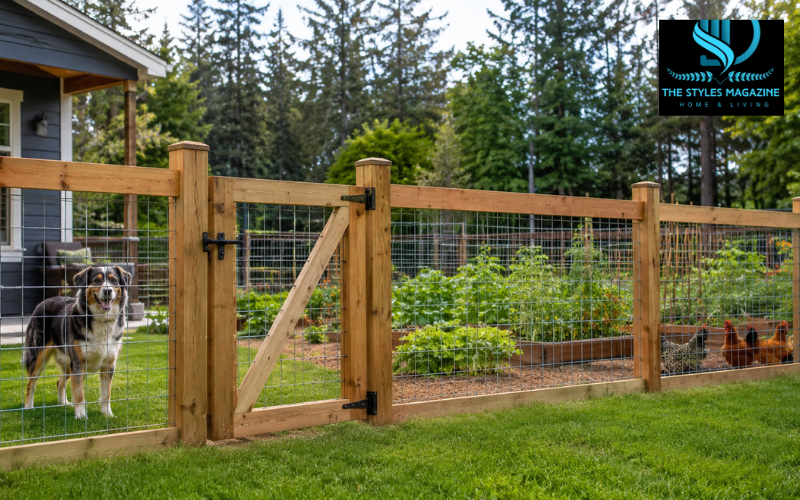
A hog wire fence is a strong, open-style fence made with welded steel wire panels. The wire is usually arranged in square or rectangular grids, then fitted inside a wood or metal frame. It was first used mostly on farms to hold animals safely, but today it is also very popular in backyards, gardens, patios, and modern outdoor spaces.
The biggest reason people like a hog wire fence is that it gives security without making the yard feel closed in. A solid privacy fence can block light and views, but hog wire keeps the space open. You can still see your garden, trees, pets, and landscape while having a clear boundary around the area.
This type of fence also works well with many design styles. A wood-framed hog wire fence can look warm, rustic, and natural. A black hog wire fence with a metal frame can look clean, modern, and bold. Homeowners also use hog wire fence panels for garden protection, pet areas, deck railing, and small livestock spaces. Because the design is simple and flexible, it can fit both country homes and modern residential yards.
Quick Guide Table: Hog Wire Fence at a Glance
| Feature | Quick Details |
| Best For | Backyards, gardens, pets, livestock areas, decks, and patios |
| Main Material | Heavy-gauge welded steel wire mesh |
| Common Frames | Wood, cedar, redwood, pressure-treated lumber, steel, or aluminum |
| Popular Style | Black hog wire fence with wood or metal framing |
| Panel Type | Rigid hog wire fence panels or premade panels |
| Roll Option | Hog wire fence roll works better for large or practical fencing areas |
| Common Height | 3 ft, 4 ft, 5 ft, and 6 ft tall options |
| Cost Factors | Panel gauge, height, frame material, labor, gates, and coatings |
| Main Benefit | Strong boundary without blocking views or natural light |
What Makes a Hog Wire Fence Different
A hog wire fence is different from loose wire fencing because it usually uses rigid welded wire mesh. The wires are joined together at each crossing point, which helps the panel stay firm and flat. This gives the fence a cleaner appearance and helps prevent sagging when the panels are installed correctly.
The grid pattern is another clear feature. Most hog wire fence panels have square or rectangular openings. These openings are large enough to keep the view open but strong enough to create a secure barrier. This makes the fence useful when you want safety without completely hiding the yard.
Compared with a full wood privacy fence, a hog wire fence feels lighter and more open. It can mark a property line, protect a garden, or hold pets inside while still allowing sunlight and airflow. The frame also matters. Wood posts and rails give the fence strength and style, while metal posts or tracking systems can create a sharper, more modern look.
Common Materials Used in Hog Wire Fencing
The main material in a hog wire fence is welded steel mesh. The wire can come in different thicknesses, often called gauges. A lower gauge number usually means thicker wire. Heavy-gauge panels are stronger and better for long-term outdoor use, especially where the fence may face pressure from pets, animals, or weather.
Wood is one of the most common framing materials. Cedar and redwood are popular because they look attractive and naturally handle outdoor conditions better than many soft woods. Pressure-treated lumber is another practical choice, especially when budget is important. A wood frame can make the fence look warmer and more natural.
Metal frames are also common. Steel and aluminum can create a strong, clean design with less visual weight. Some systems use metal channels or tracks to hold the wire panels firmly in place. Coated panels are also popular because they can help reduce rust and improve appearance. Black finishes are especially common for a modern backyard look. For example, some current black hog wire fence panels are sold as 6-gauge welded steel with a dip-coated finish, showing how heavy-duty and finished options are now available for residential projects.
Hog Wire Fence Panels Explained
Hog wire fence panels are the flat sections of welded wire used between posts or inside frames. These panels are usually more rigid than wire from a roll, which makes them easier to install neatly. They are often used in straight fence runs, garden enclosures, deck railings, and animal pens.
Standard panels can be cut or framed to match the layout of a yard. Premade hog wire fence panels are also available for people who want a faster and cleaner installation. These may already include a frame or be designed to fit into a specific fence system. Premade options can save time, but they may cost more than building each section from basic materials.
Panel spacing is important. A panel needs enough support around the edges so it does not bend or rattle. Strong posts, top rails, bottom rails, and side framing help keep the fence stable. If the panel is too large without proper support, it may not look as clean over time. For a finished appearance, the panel should sit straight, tight, and centered inside the frame.
Hog Wire Fence Roll vs Rigid Panels
A hog wire fence roll is flexible wire that comes rolled up, while rigid panels are flat and firm. Both can be useful, but they are not always best for the same purpose. Rolls are often used for longer runs, farm fencing, temporary animal areas, or budget-friendly garden fencing. They can cover a large area, but they may need more stretching and support to look neat.
Rigid hog wire fence panels usually look better in residential settings because they stay flat and square. They are easier to frame inside wood or metal, which gives the fence a more polished look. This is why many homeowners choose panels for backyards, patios, and visible garden areas.
A roll can be a good choice when function matters more than appearance. For example, a 6-foot by 100-foot welded wire roll is commonly sold for uses such as animal enclosures, garden fencing, and plant support. But when the goal is a clean backyard fence, rigid panels are often the better option. The best choice depends on the look you want, your budget, and how much support the fence needs.
Best Uses for a Hog Wire Fence
A hog wire fence is useful in many outdoor spaces because it is strong but not visually heavy. In a backyard, it can create a clear property boundary without making the area feel boxed in. This is helpful when homeowners want to keep a friendly, open view with neighbors or surrounding land.
It is also a good choice for pets. A properly framed hog wire fence can help keep dogs inside the yard while still allowing them to see outside. For small pets, the grid size must be chosen carefully so they cannot slip through the openings.
Garden protection is another common use. A hog wire fence can help keep rabbits, deer, and other animals away from vegetables, flowers, and young plants. For deer, height matters a lot, so a taller fence may be needed. On small farms, hog wire can also be used for livestock areas, chicken runs, and animal separation.
Some homeowners also use hog wire fence panels for decks and patios. In these spaces, the open grid keeps views clear while acting as a guard or railing. However, railing use may need to meet local building codes, so it is important to check rules before installation.
Hog Wire Fence Height Options
Hog wire fencing can be built in several heights. Shorter fences may work well for garden borders, decorative spaces, or small pet areas. Medium-height fences are common for backyards and property lines. Taller fences are used when more containment or garden protection is needed.
A hog wire fence 6 ft tall makes sense when the goal is to keep larger pets inside, protect a garden from deer, or create a stronger boundary. It still will not provide full privacy because the wire is open, but the extra height can improve security and make the fence feel more complete.
For gardens, height should match the animals you are trying to keep out. Rabbits may need lower openings or smaller mesh near the bottom. Deer usually require taller fencing. For deck and patio use, height should not be guessed. Local codes may set minimum railing heights and spacing rules, especially when the fence is used as a safety barrier.
Black Hog Wire Fence Designs
A black hog wire fence is popular because it looks clean and modern while blending well with outdoor spaces. The dark color often makes the wire less noticeable from a distance, which helps the garden, lawn, or landscape stand out. It also pairs well with both natural wood and metal frames.
In modern backyards, black panels can create a sharp contrast against cedar or redwood. The result is warm but updated. With metal posts, the same black panels can look more minimal and contemporary. This makes black hog wire fencing a strong choice for patios, pool areas, garden boundaries, and side yards.
The finish is not only about appearance. A coated panel may also help protect the wire from moisture and wear. BarrierBoss notes that black hog wire fences are popular for their sleek look and that some powder-coated panels are available in sizes such as 6 feet high by 8 feet wide. Still, any coated fence should be checked over time for scratches or exposed metal, because damaged areas may rust if ignored.
Wood-Framed Hog Wire Fence Ideas
A wood-framed hog wire fence is one of the most popular styles because it feels natural and welcoming. The wood softens the look of the metal grid and helps the fence blend into gardens, yards, and rural spaces. Cedar is a favorite option because of its color and outdoor performance, while redwood gives a richer appearance.
A rustic cedar frame can look beautiful around a vegetable garden or backyard path. For a more modern style, the frame can use clean straight lines, smooth boards, and darker stained wood. Some homeowners also choose horizontal rails to match modern deck or patio designs.
Garden enclosures often look best when the gate, posts, and rails match the rest of the fence. A matching frame makes the whole project feel planned instead of temporary. The wood should be sealed, stained, or maintained based on the local climate. Without care, wood can crack, fade, or absorb moisture over time.
Metal-Framed Hog Wire Fence Ideas
A metal-framed hog wire fence is a good option when strength and low maintenance are important. Steel frames can feel very solid and are often used where durability matters. Aluminum frames are lighter and can resist corrosion well, depending on the finish and environment.
Metal frames give the fence a simple, sharp appearance. They work well for modern homes, commercial-looking garden spaces, and areas where a wood frame may not match the design. A black metal frame with black hog wire panels can create a smooth, unified look.
Metal framing can also be helpful in harsh weather areas. Unlike wood, metal will not rot. However, it can still rust or corrode if the coating is damaged or if the wrong type of metal is used in a wet or coastal location. Proper installation, good coatings, and occasional inspection are still important.
Hog Wire Fence Gate Planning
A hog wire fence gate should match the style and strength of the main fence. If the fence has a wood frame, the gate usually looks best with the same wood and panel style. If the fence uses metal posts or black panels, the gate should follow the same design so it does not look out of place.
The size of the gate depends on how the space will be used. A small walking gate may be enough for a garden or side yard. A wider gate is better if you need to move a wheelbarrow, lawn mower, trash bin, or garden cart through the opening. For larger access, double gates may be more practical.
Hardware is just as important as the panel. Hinges should be strong enough to hold the gate without sagging. The latch should be easy to use but secure enough for pets and children. A weak gate can make even a strong hog wire fence less useful, so this part of the project should not be treated as an afterthought.
Hog Wire Fence Cost Factors
Hog wire fence cost can vary widely because every project is different. The final price depends on the type of panel, wire gauge, fence height, total length, frame material, gates, finish, labor, and site conditions. A simple unframed farm-style fence may cost much less than a framed residential fence with cedar posts and black coated panels.
Current 2026 cost estimates vary by source. HomeGuide reports that hog wire fencing can range from about $6 to $13 per linear foot installed for frameless fencing and about $15 to $38 per linear foot for framed hog fence panels. Angi lists a different average range for framed hog wire fencing, around $6.50 to $15.50 per linear foot, depending on wire thickness and coatings. Because prices can differ by region and project type, homeowners should use these numbers as rough planning ranges, not fixed quotes.
DIY installation may reduce labor costs, but it still requires posts, panels, fasteners, tools, concrete, gates, and finishing materials. Professional installation can cost more, but it may be worth it for long fence lines, sloped yards, deck railing, or custom gate work.
Maintenance and Longevity Tips
A hog wire fence is generally easy to maintain, but it should not be ignored. The panels, posts, rails, and fasteners should be checked from time to time. Loose screws, bent panels, or weak posts are easier to fix early than after the fence becomes unstable.
Rust prevention is one of the most important parts of care. Galvanized, coated, or powder-coated panels usually last longer than untreated metal, but scratches can expose the steel underneath. If you notice rust starting, clean the area and use a suitable outdoor metal coating or touch-up product.
Wood frames need their own care. Depending on the type of wood and local weather, the frame may need staining, sealing, or occasional repairs. Areas near the ground are more likely to hold moisture, so they should be inspected closely. Black or coated panels can usually be cleaned with mild soap and water. Avoid harsh tools that may scratch the finish.
If a panel is badly bent, rusted, or loose, replacement may be better than a small repair. A fence lasts longer when each part stays strong and properly supported.
Conclusion: Is a Hog Wire Fence a Good Choice?
A hog wire fence is a good choice for many homeowners because it offers strength, visibility, and style in one simple design. It can protect a garden, mark a property line, contain pets, support small farm needs, or add a clean open-view barrier around outdoor spaces.
It works especially well when you want a fence that feels secure but not closed off. Wood frames create a warm and natural look, while metal frames and black hog wire fence panels create a more modern style. Rigid hog wire fence panels are often best for a clean residential finish, while rolls may work better for larger or more practical farm-style areas.
Before building, it is important to choose the right height, panel type, frame material, gate design, and finish. A hog wire fence 6 ft tall may be useful for gardens, deer control, or larger pets, while shorter fences may be enough for simple boundaries. With the right planning and basic maintenance, a hog wire fence can be a strong, attractive, and practical addition to a backyard, garden, patio, or animal space.
FAQs
What Is A Hog Wire Fence Used For?
A hog wire fence is used for backyards, gardens, pet areas, livestock spaces, decks, and patios. It creates a strong boundary while keeping the view open and allowing light and airflow.
Is A Hog Wire Fence Good For Dogs?
Yes, a hog wire fence can work well for dogs if the panels are strong, the height is suitable, and the grid openings are small enough to prevent pets from escaping.
How Tall Should A Hog Wire Fence Be?
The right height depends on its purpose. A 3–4 ft fence may work for gardens or small areas, while a hog wire fence 6 ft tall is better for deer, larger pets, or stronger boundaries.
Are Hog Wire Fence Panels Better Than Rolls?
Rigid hog wire fence panels usually look cleaner and stay flatter, making them better for residential yards. Rolls can be more budget-friendly for large farms, gardens, or practical fencing areas.
How Much Does A Hog Wire Fence Cost?
Hog wire fence cost depends on panel type, wire gauge, height, frame material, gates, coating, and labor. A simple DIY fence usually costs less than a custom framed installation.
Enjoyed it? Find more exclusive content on The Styles Magazine.
Disclaimer: This article is for general informational purposes only. Fence costs, building codes, railing rules, and material availability may vary by location. Always check local regulations and consult a qualified fencing professional before starting a project.