White shoes look fresh, clean, and stylish, but they also show dirt faster than almost any other footwear. Dust, mud, grass stains, sweat, road grime, and daily scuffs can quickly make them look dull. Over time, white shoes may also turn yellow because of leftover cleaner, too much water, sunlight, heat, or natural oxidation on rubber soles.
Learning how to clean white shoes the right way is important because not every shoe should be cleaned the same way. White leather shoes need a gentle wipe, while canvas and fabric shoes can handle more scrubbing. Mesh and knit shoes need extra care because their soft weave can stretch or fray if scrubbed too hard.
In this guide, you will learn how to clean white shoes at home safely, including canvas, leather, fabric, mesh, laces, insoles, and rubber soles. You will also learn how to dry them properly so they do not lose their shape or turn yellow.
Quick Guide Table: How to Clean White Shoes
| Shoe Part / Material | Best Cleaning Method | What to Avoid |
| White canvas shoes | Baking soda paste or mild detergent with gentle scrubbing | Too much water or leftover paste |
| White leather shoes | Barely damp microfiber cloth with mild soap | Soaking, harsh bleach, or rough brushing |
| White mesh/knit shoes | Mild detergent and soft circular brushing | Hard scrubbing or hot machine wash |
| Rubber soles | Magic Eraser or baking soda + hydrogen peroxide paste | Spreading strong cleaners onto fabric |
| Shoelaces | Warm soapy water or oxygen-based whitener | Reattaching before fully dry |
| Insoles | Light wipe with mild soap and damp cloth | Deep soaking foam insoles |
| Drying white shoes | Air-dry in shade with white paper towels inside | Direct sunlight, dryer, heater, or newspaper |
Why White Shoes Need Material-Specific Cleaning
The safest way to clean white shoes is to first understand the material. Canvas is absorbent, so it can hold stains deep in the fabric. Leather is smoother and easier to wipe, but it can crack or become stiff if it gets too wet. Mesh and knit shoes trap dirt inside the weave, but they can also get damaged if you scrub them with too much force.
Rubber soles need a different approach because they often collect black marks and yellow stains. A cleaner that works well on rubber may be too strong for fabric or leather. That is why using one method for every pair of white shoes can lead to problems like yellowing, fading, peeling, cracking, or glue damage.
Before cleaning, always check the care label or the brand’s cleaning instructions. If your shoes have mixed materials, clean each part separately instead of soaking the whole shoe.
What You Need Before Cleaning White Shoes at Home
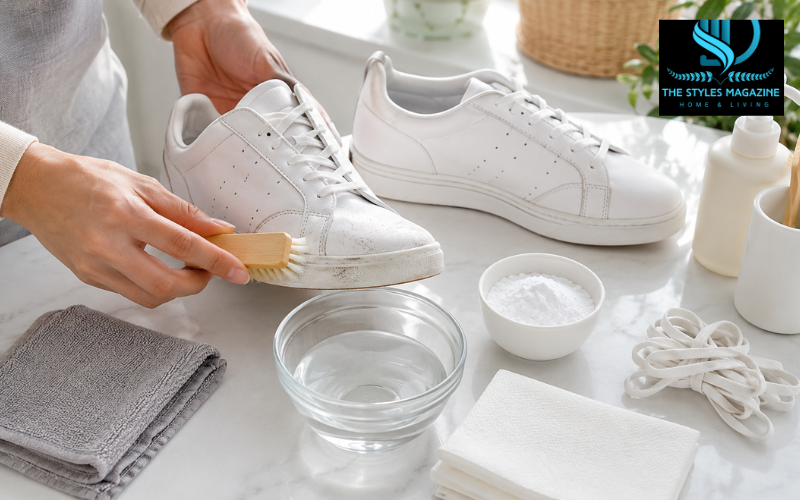
You do not need expensive tools to clean most white shoes at home. A few simple supplies are enough for regular cleaning. Keep a soft-bristle brush or old toothbrush, a microfiber cloth, mild dish soap, gentle laundry detergent, baking soda, white vinegar, hydrogen peroxide, and a bowl of warm water nearby.
For the soles, a Magic Eraser or melamine sponge can help remove dark scuffs. For drying, use white paper towels or brown packing paper to hold the shoe shape and absorb moisture. Avoid colored towels or newspaper because the dye or ink may transfer to wet shoes.
A store-bought white shoe cleaner can also be useful if you want a ready-made option, but it should still be safe for your shoe material. Always read the product label before using it.
First Steps Before Washing or Scrubbing
Before adding water or cleaner, remove the shoelaces and insoles if they come out easily. This makes it easier to clean the tongue, eyelets, and inside edges. It also helps the shoes dry more evenly.
Next, knock the soles together outside to loosen dry mud and dirt. Use a dry soft brush to remove dust from the upper part of the shoe. This step matters because if you start cleaning while loose dirt is still on the surface, you may push it deeper into the fabric.
Avoid soaking the shoes right away. Too much water can weaken glue, stain fabric, or make leather stiff. If you are using any cleaner for the first time, test it on a small hidden area first. Wait a few minutes to make sure it does not discolor or damage the material.
How to Clean White Shoes With Baking Soda
Baking soda is one of the most popular home methods for cleaning white shoes, especially canvas, fabric, and rubber areas. It helps lift dirt and can make white shoes look brighter when used correctly.
To make a simple paste, mix baking soda with a small amount of warm water until it becomes thick enough to spread. For canvas or fabric shoes, you can add a little white vinegar to help lift stains. For rubber soles, baking soda can also be mixed with a small amount of hydrogen peroxide for deeper whitening.
Apply the paste with an old toothbrush and scrub gently in small circles. Focus on stained areas, but do not press too hard. After cleaning, wipe away the paste with a damp cloth. If the paste dries on canvas, brush off the dry residue and then wipe the shoe again.
Do not leave baking soda paste on delicate materials for too long. It can dry out some surfaces or leave a chalky residue if not removed properly.
How to Clean White Fabric Shoes Safely
White fabric shoes and canvas sneakers are usually easier to scrub than leather or knit shoes, but they also absorb dirt quickly. The best method is to clean them slowly with a mild solution instead of soaking them in water.
Mix a small amount of gentle laundry detergent or mild dish soap with warm water. Dip a soft brush into the solution and scrub the fabric in circular motions. Work section by section so the shoe does not become too wet. For stubborn stains, use a baking soda paste and let it sit briefly before brushing again.
After scrubbing, wipe the surface with a clean damp cloth to remove leftover soap or paste. This is important because cleaner residue can dry into the fabric and cause yellow marks. Once the shoes are clean, stuff them with white paper towels and let them air-dry in a shaded, well-ventilated place.
How to Clean White Leather Shoes Without Cracking Them
If you are searching for how to clean white shoes leather, the most important rule is to avoid overwetting them. Leather does not need heavy soaking. In fact, too much water can dry it out, make it stiff, or cause cracking.
Start with a dry microfiber cloth to remove surface dust. Then mix a few drops of mild dish soap with warm water. Dip the cloth into the solution and wring it out well. The cloth should be barely damp, not dripping wet. Gently wipe the leather surface, paying attention to scuffed areas.
For small marks, non-gel white toothpaste can help. Apply a tiny amount to the scuff and rub gently in circles with a soft cloth or toothbrush. Wipe it away with a clean damp cloth and dry the shoe with a towel.
After cleaning, let the shoes air-dry away from direct heat. If the leather feels dry, use a small amount of leather conditioner that is safe for white leather.
How to Clean White Mesh and Knit Shoes
White mesh and knit shoes are common in running shoes and modern sneakers. They are lightweight and breathable, but the soft weave can trap dirt and become damaged if cleaned roughly.
Use a mild detergent mixed with warm water. Dip a soft-bristle brush into the solution and clean the mesh gently using circular movements. Do not scrub aggressively because this can stretch the material or make the fibers look fuzzy. For tight areas, use an old toothbrush and light pressure.
If the care label allows machine washing, place the shoes in a mesh laundry bag and wash them on a cold delicate cycle. Add a few white towels to reduce banging inside the machine. Avoid hot water, bleach, and strong spin cycles. If the label does not clearly say machine washing is safe, hand cleaning is the better choice.
How to Clean White Shoes Without Washing Them
Sometimes you may need to clean white shoes without washing them fully. This is useful for leather shoes, delicate sneakers, lightly dirty shoes, or pairs that should not be soaked.
Start with dry brushing to remove surface dust. Use a damp microfiber cloth to spot-clean stains. For rubber edges and soles, a Magic Eraser can remove dark marks quickly. Lightly dampen the sponge and rub the rubber areas until the scuffs fade.
A white shoe cleaner can also work well for quick touch-ups, especially if it is made for sneakers. Apply only a small amount and wipe away any extra product. This method is best when your shoes are not heavily stained and only need a fresh, clean look.
How to Clean White Shoe Laces and Insoles
Shoelaces often hold more dirt than the shoes themselves, so cleaning them separately makes a big difference. Remove the laces and soak them in warm water with mild dish soap or laundry detergent. If they are very dirty, an oxygen-based whitener can help brighten them without using harsh bleach.
After soaking, rub the laces together or scrub them gently with a small brush. Rinse well and hang them to air-dry. Do not put wet laces back into the shoes until both are fully dry.
For removable insoles, wipe them with a damp cloth and a small amount of mild soap. Avoid soaking foam insoles because they can hold water and take a long time to dry. Let them air-dry completely before placing them back inside the shoes.
How to Whiten Yellow Soles and Remove Scuff Marks
Rubber soles and midsoles collect the most dirt because they touch the ground all day. For black scuff marks, a damp Magic Eraser is often the easiest solution. Rub the rubber edges gently until the marks lift away.
If the soles have turned yellow, the cause is often oxidation from age, sunlight, or heat exposure. A paste made from baking soda and hydrogen peroxide can help brighten yellowed rubber. Apply it to the rubber only, let it sit for a short time, and then wipe it away fully with a damp cloth.
Be careful not to spread this paste onto leather, suede, or delicate fabric. Also, avoid using harsh bleach on the whole shoe. Bleach can weaken materials and may leave white shoes looking yellow instead of clean.
How to Clean White Shoes Without Turning Them Yellow
Many people clean their shoes and then notice yellow stains after drying. This usually happens because of too much water, leftover soap, direct sunlight, or heat. To clean white shoes without turning them yellow, the drying step is just as important as the cleaning step.
Use only enough water to clean the surface. After scrubbing, wipe away all soap, baking soda, vinegar, or hydrogen peroxide residue. Any leftover cleaner can dry into the material and leave stains.
Stuff the shoes with white paper towels or brown packing paper to absorb moisture and keep the shape. Do not use newspaper because the ink can transfer. Always air-dry shoes in a cool, shaded, well-ventilated area. Never place them in a dryer, near a heater, or under direct sunlight. Heat can weaken glue, shrink materials, and speed up yellowing.
Special Tips for Popular White Sneakers Like Nike Shoes
If you want to know how to clean white shoes Nike, start by checking the shoe material first. Nike sneakers often use a mix of leather, mesh, knit fabric, foam, and rubber. Because of this, one cleaning method may not be right for the whole shoe.
Clean leather panels with a barely damp cloth and mild soap. Clean mesh or knit areas with a soft brush and gentle detergent. Use a Magic Eraser only on the rubber sole or midsole, not on soft fabric. Avoid strong bleach because it can damage the upper, weaken stitching, or affect glued areas.
Machine washing Nike shoes is not always recommended unless the care instructions say it is safe. Hand cleaning gives you more control and reduces the risk of damaging the shoe’s shape.
Best White Shoe Cleaner Options: Homemade vs Store-Bought
Both homemade cleaners and store-bought white shoe cleaner products can work well. The best choice depends on the shoe material, the type of stain, and how dirty the shoes are.
Homemade cleaners like mild soap, baking soda, white vinegar, and hydrogen peroxide are affordable and easy to use. They are good for regular cleaning, light stains, and rubber soles. However, they must be used carefully because too much vinegar or peroxide can be harsh on some materials.
Store-bought cleaners are useful when you want a ready-made solution designed for sneakers. Many come with a brush and are made to clean safely without guessing the mixture. Still, you should choose a cleaner that matches your shoe material. Avoid harsh chemicals on suede, knit, leather, and glued areas unless the product clearly says it is safe.
Common Mistakes That Can Damage White Shoes
The biggest mistake people make is using one strong cleaner on every part of the shoe. Direct bleach, too much water, and heavy scrubbing can do more harm than good. Bleach may seem like an easy way to whiten shoes, but it can weaken fabric and sometimes cause yellow stains.
Another common mistake is putting shoes in a hot dryer or leaving them in direct sunlight. Heat can melt glue, warp the shoe shape, and make rubber turn yellow faster. Scrubbing mesh too hard can damage the weave, while soaking leather can make it crack or stiffen.
Using colored towels or newspaper inside wet shoes can also leave unwanted stains. Skipping the care label is another problem because some shoes have special materials that need gentle handling. A careful, material-based method is always safer than rushing the process.
Conclusion: Keeping White Shoes Clean for Longer
Knowing how to clean white shoes properly helps keep them bright, fresh, and comfortable for longer. The key is to match the cleaning method to the material. Canvas and fabric can handle gentle scrubbing, leather needs a light damp wipe, mesh and knit require soft cleaning, and rubber soles need focused treatment for scuffs and yellowing.
Safe drying is just as important as cleaning. Always air-dry white shoes away from sunlight, heaters, and dryers. Remove all cleaner residue, stuff the shoes to protect their shape, and let them dry fully before wearing them again.
For best results, clean small marks as soon as they appear instead of waiting for deep stains to build up. With regular light care and the right method, your white shoes can stay clean, bright, and ready to wear without losing their color, shape, or material quality.
FAQs
How Do I Clean White Shoes At Home Quickly?
For a quick clean, dry brush loose dirt, wipe stains with mild soapy water, use a Magic Eraser on rubber soles, and let the shoes air-dry in shade.
Can I Use Baking Soda To Clean White Shoes?
Yes, baking soda works well on white canvas, fabric, and rubber soles. Mix it with water into a paste, scrub gently, then remove all residue with a damp cloth.
How Do I Clean White Shoes Without Turning Them Yellow?
Use less water, remove all cleaner residue, avoid bleach on delicate materials, and never dry white shoes in direct sunlight, a dryer, or near a heater.
What Is The Best Way To Clean White Leather Shoes?
Clean white leather shoes with a barely damp microfiber cloth and mild soap. Avoid soaking them, scrub lightly, dry naturally, and condition the leather if it feels dry.
Can I Put White Shoes In The Washing Machine?
Only wash white shoes in a machine if the care label allows it. Use cold water, a delicate cycle, a mesh laundry bag, and avoid heat drying afterward.
Enjoyed it? Find more exclusive content on The Styles Magazine.
Disclaimer: This article is for general shoe-cleaning guidance only. Always check your shoe’s care label or brand instructions before using any cleaner, especially on leather, suede, knit, delicate fabric, or expensive sneakers.