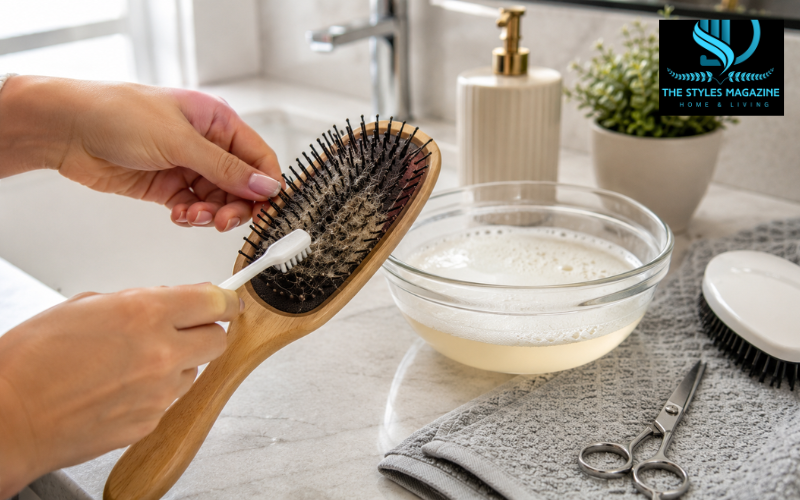
Learning how to clean a hairbrush is a simple but important part of keeping your hair care routine fresh and hygienic. A hairbrush touches your scalp, hair strands, styling products, natural oils, dust, and loose hair every time you use it. Over time, all of that buildup collects between the bristles and around the base of the brush.
That soft grey fuzz you may notice inside your brush is usually a mix of lint, dust, dead skin, old product, and scalp oil. If the brush is not cleaned, that buildup can go right back onto your clean hair. This can make your hair look dull, greasy, or weighed down even after washing.
The best way to clean a hairbrush depends on what type of brush you have. Plastic and metal brushes can usually handle more water, while wooden brushes, cushioned brushes, and natural bristle brushes need gentler care. In this guide, you will learn how to clean a hairbrush at home, how to deep clean hair brushes, how to deal with lint, and how to safely clean wooden, plastic, metal, and bristle brushes without damaging them.
Quick Guide Table
| Brush Type | Best Cleaning Method | What to Avoid |
| Plastic brush | Soak in warm soapy water for 10–15 minutes, scrub, rinse, and air-dry | Very hot water |
| Metal brush | Wash with mild shampoo or dish soap, scrub the base, and rinse well | Leaving water trapped inside |
| Wooden brush | Dip only the bristles, wipe the handle with a damp cloth, and dry quickly | Soaking the wooden handle |
| Boar-bristle brush | Lightly dip or spray the bristles with mild soapy water | Harsh soaking or strong cleaners |
| Brush with lint/grey fuzz | Remove hair first, then loosen fuzz with a toothbrush, cloth, or cotton swab | Scrubbing too hard |
Why Cleaning Your Hairbrush Matters
A dirty hairbrush does more than look unpleasant. Each time you brush your hair, the bristles collect loose strands, oil from your scalp, flakes of dead skin, dust from the air, and leftover styling products such as hairspray, dry shampoo, mousse, gel, or leave-in conditioner. When these materials build up, your brush stops working as cleanly as it should.
If you use a dirty brush after washing your hair, it can transfer old oils and product residue back onto fresh hair. This may make your roots look oily faster, flatten your hairstyle, or leave your hair feeling less clean than expected. For people who use styling products often, buildup can appear even faster.
Cleaning your hairbrush also helps keep your styling tools more hygienic. A clean brush glides through hair more easily, removes loose strands better, and feels nicer against the scalp. It also helps your brush last longer because buildup is not sitting around the bristles and base for weeks or months.
What You Need to Clean a Hairbrush at Home
You do not need expensive tools to clean a hairbrush at home. Most items are already available in a bathroom, kitchen, or cleaning drawer. The main goal is to remove trapped hair first, then loosen oil, lint, and product buildup with a gentle cleaning solution.
You may need a rat-tail comb, the end of a regular comb, a pen, or a brush rake to lift trapped hair from the base. A small pair of scissors can help cut through thick clumps of tangled hair. For washing, warm water and mild shampoo or dish soap are usually enough. Baking soda can be useful when the brush has heavy oily buildup, while diluted vinegar can help with odor or occasional deep cleaning.
For scrubbing, use a clean toothbrush, cotton swab, soft cloth, small nail brush, or another small cleaning brush. You will also need a clean towel for drying. The most important thing is to choose the right method for your brush material so you clean it well without soaking or damaging parts that should stay dry.
Step 1: Remove Trapped Hair First
Before using water or soap, always remove the trapped hair from the brush. Hair creates a physical barrier, which means soap and water cannot reach the base properly. If you skip this step, the brush may still look dirty after washing because lint and buildup remain stuck underneath the hair.
Start by sliding the end of a rat-tail comb, pen, or brush rake under the trapped hair near the base of the bristles. Lift the hair upward slowly to loosen it. If the hair is wrapped tightly around the bristles, carefully slide small scissors down the center of the brush and cut through the clump. Be careful not to cut the bristles or the cushion.
Once the hair is lifted or cut, pull it out with your fingers. Throw it away instead of rinsing it down the sink, because hair can clog drains. After the trapped hair is gone, you will be able to see the base of the brush clearly and clean away lint, oil, and grey fuzz much more easily.
Step 2: Wash Plastic and Metal Hairbrushes
Plastic and metal hairbrushes are usually the easiest to wash because they can handle more water than wooden or natural brushes. To clean them, fill a sink or bowl with warm water. Add a few drops of mild shampoo or dish soap and mix until the water becomes slightly soapy.
Place the plastic or metal brush into the water and let it soak for about 10 to 15 minutes. This helps loosen oil, dust, and product buildup around the bristles. If the brush has heavy buildup, add 1 to 2 teaspoons of baking soda to the water. Baking soda can help break down oily residue and make the brush easier to scrub.
Avoid very hot water because it may weaken glue, soften rubber parts, or damage the cushion of some brushes. After soaking, gently scrub around the bristles and base, then rinse the brush under warm running water until all soap is gone. Shake off extra water before moving to the drying step.
Step 3: Clean Wooden Hairbrushes Safely
When people search for how to clean hair brush wooden or how to clean a hairbrush with wooden handle, the most important rule is simple: do not soak it. Wood can swell, crack, split, or lose its finish if it absorbs too much water. A wooden handle or wooden base should stay as dry as possible.
To clean a wooden hairbrush, mix warm water with a small amount of mild shampoo. Instead of placing the whole brush in water, dip only the bristles into the soapy solution. Keep the wooden base and handle above the water. You can also use a damp cloth to wipe the wooden handle gently.
If the bristles need more cleaning, lightly scrub between them with a soft brush or cloth. Do not leave the brush wet for long. After cleaning, wipe away moisture and place the brush bristle-side down on a towel. Let it dry fully in a well-ventilated area. Proper drying helps prevent swelling, cracking, and hidden moisture damage.
Step 4: Clean Boar-Bristle and Natural Bristle Brushes
Boar-bristle and other natural bristle brushes need gentle cleaning because harsh soaking can damage the bristles, cushion, or handle. These brushes are often used to spread natural oils through the hair, so they can collect oil and lint quickly. However, they should not be treated like a simple plastic brush.
Mix warm water with a small amount of mild shampoo. Dip only the bristles into the soapy water, or lightly spray the cleaning solution onto the bristles. Avoid soaking the cushion, wooden parts, or handle. Use your fingers, a soft cloth, or a small cleaning brush to gently clean between the bristles.
Rinse carefully by dipping the bristles into clean water or wiping them with a damp cloth. Make sure no shampoo stays trapped between the bristles. After rinsing, shake off extra water and dry the brush bristle-side down on a towel. This keeps water from collecting inside the base.
How to Deep Clean Hair Brushes
If you are wondering how do you deep clean hair brushes, the answer depends on the brush type and how much buildup is present. A deep clean is useful when your brush has heavy oil, lint, grey fuzz, or sticky styling product residue. It is also helpful if you use dry shampoo, hairspray, hair oils, or thick leave-in products often.
For plastic and metal brushes, start by removing all trapped hair. Then soak the brush in warm soapy water for 10 to 15 minutes. Add a small amount of baking soda if the buildup is stubborn. After soaking, scrub the base and each row of bristles carefully. Rinse the brush until the water runs clear and no soap remains.
For wooden or natural bristle brushes, deep cleaning should be gentler. Do not soak the whole brush. Clean the bristles with a mild solution and wipe the base carefully. For regular use, deep cleaning once a month is usually enough. If your brush looks dirty sooner, clean it sooner.
How to Clean Hair Brushes With Baking Soda
Baking soda is useful when a brush has oily buildup, product residue, or a slightly sticky feel. It can help loosen grime so the brush is easier to scrub. This method is best for sturdy plastic or metal brushes, not delicate wooden or natural bristle brushes.
To clean hair brushes baking soda style, fill a bowl or sink with warm water and add a few drops of shampoo or dish soap. Then mix in 1 to 2 teaspoons of baking soda. After removing trapped hair, place the plastic or metal brush in the solution and let it soak for a short time. Scrub the base and bristles gently, especially where buildup is visible.
Do not use too much baking soda, and do not leave delicate brushes soaking in it. Baking soda can leave a powdery residue if not rinsed well. After cleaning, rinse the brush thoroughly under warm water until it feels completely clean.
How to Clean Hair Brushes With Vinegar and Baking Soda
Some people use vinegar and baking soda for deep cleaning, but they should be used carefully. Both can be helpful in the right situation, but they are not suitable for every brush. Vinegar is often used diluted with water to help with odor and light buildup. Baking soda can help loosen oily residue. However, delicate materials may not react well to strong cleaning mixtures.
For sturdy plastic or metal brushes, you can use warm water with a small amount of shampoo and baking soda. If you want to use vinegar, dilute it well with water and use it only occasionally. Avoid pouring strong vinegar directly onto rubber cushions, wooden handles, or natural bristles.
It is also better not to rely on a strong vinegar and baking soda reaction directly on the brush. A gentle cleaning solution is usually enough. The goal is to remove buildup without damaging the brush. Always rinse well and dry completely after using either ingredient.
How to Clean a Hairbrush With Lint or Grey Fuzz
Lint or grey fuzz in a hairbrush is very common. It usually forms from a mix of dust, dead skin, product buildup, fabric lint, and natural scalp oil. It often collects around the base of the bristles and can be hard to remove if loose hair is still trapped in the brush.
To clean a hairbrush with lint, start by removing every loose strand of hair. Once the hair is gone, use a toothbrush, cotton swab, cloth, or comb to loosen the grey fuzz from the base. Focus on the areas where the bristles meet the brush pad, because this is where buildup usually sticks the most.
If the brush is plastic or metal, a short soak in warm soapy water can help loosen the lint. For wooden or natural brushes, use a damp cloth or lightly dip only the bristles. After cleaning, rinse or wipe away any remaining residue and dry the brush properly so the lint does not return quickly.
How to Clean a Hairbrush Without a Toothbrush
A toothbrush is helpful, but it is not the only tool you can use. If you need to know how to clean a hairbrush without a toothbrush, there are several simple options. A cotton swab works well for small spaces near the base of the bristles. It is especially useful for cleaning corners and tight areas.
You can also wrap a clean cloth around the end of a comb and move it between the bristle rows. A small nail brush, bottle brush, or brush-cleaning rake can also work. If the buildup is soft, even your fingers and a damp cloth may be enough after soaking the brush safely.
The best tool depends on your brush shape. The main idea is to loosen buildup gently without pulling out bristles, scratching the base, or forcing water into areas that should stay dry.
How to Dry a Hairbrush the Right Way
Drying is just as important as washing. If water stays trapped inside a cushioned brush, handle, or wooden base, it can lead to odor, damage, or mold. After rinsing, shake the brush gently to remove extra water. You can also tap it lightly against your hand or the side of the sink to release water stuck behind the cushion.
Place the brush bristle-side down on a clean towel. This allows water to drain away instead of pooling inside the brush. Let it air-dry overnight, or until it is fully dry. Avoid placing the brush upright immediately after washing because water can settle inside the base or handle.
Do not use the brush again while it is still damp, especially if it has a cushion, wooden parts, or natural bristles. A fully dry brush is safer, cleaner, and less likely to develop a musty smell.
How Often Should You Clean Your Hairbrush?
How often you clean your brush depends on how often you use it and what products you apply to your hair. A good habit is to remove loose hair every few uses. This keeps hair from building up and makes deep cleaning much easier later.
If you notice lint, grey fuzz, or oily residue, wipe it away as soon as possible. Most hairbrushes should be deep cleaned about once a month. However, you may need to clean yours more often if you use dry shampoo, hair oils, hairspray, gel, mousse, or other styling products regularly.
You should also check the condition of your brush. If the bristles are bent, the cushion is cracked, the handle is damaged, or there is trapped mold or a bad smell that does not go away after cleaning, it may be time to replace the brush.
Conclusion
Knowing how to clean a hairbrush properly can make a real difference in your daily hair care routine. The process is simple when you follow the right order: remove trapped hair first, wash the brush according to its material, scrub away lint and buildup, rinse carefully, and dry it completely.
Plastic and metal brushes can usually handle a short soak, while wooden brushes and natural bristle brushes need gentler cleaning. Avoid soaking wooden handles, rubber cushions, and delicate bristles because too much water can cause damage. Baking soda and diluted vinegar can be useful for occasional deep cleaning, but they should be used carefully.
A clean hairbrush helps keep old oil, dust, lint, and product residue away from freshly washed hair. By removing loose hair regularly and deep cleaning your brush about once a month, you can keep your brush fresher, more hygienic, and better for everyday styling.
FAQs
How Often Should I Clean My Hairbrush?
You should remove loose hair every few uses and deep clean your hairbrush about once a month. Clean it more often if you use oils, dry shampoo, hairspray, or styling products.
Can I Clean A Hairbrush With Baking Soda?
Yes, baking soda can help remove oily buildup from plastic or metal brushes. Add 1–2 teaspoons to warm soapy water, scrub gently, rinse well, and dry completely.
How Do I Clean Lint Or Grey Fuzz From A Hairbrush?
Remove all trapped hair first, then scrub around the bristle base with a toothbrush, cotton swab, cloth, or small cleaning brush. Warm soapy water helps loosen stubborn lint.
Can I Soak A Wooden Hairbrush?
No, you should not soak a wooden hairbrush. Water can cause wood to swell, crack, or lose its finish. Dip only the bristles and wipe the handle gently.
What Is The Easiest Way To Clean A Hairbrush At Home?
The easiest method is to remove hair first, wash the brush with warm soapy water if safe, scrub the base, rinse well, and let it dry bristle-side down overnight.
Enjoyed it? Find more exclusive content on The Styles Magazine.
Disclaimer: This article is for general home cleaning and hair care guidance only. Always check your hairbrush material before washing, and follow the manufacturer’s care instructions when available, especially for wooden, cushioned, or natural bristle brushes.