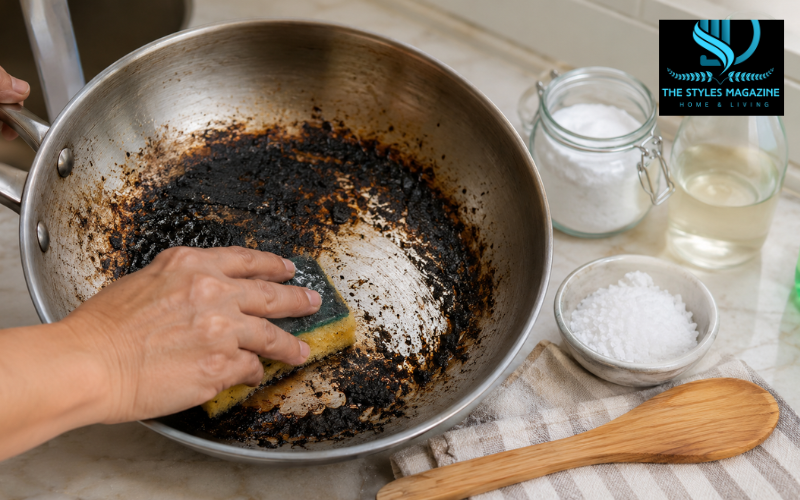
Almost everyone has burned a pan at some point. Food sticks to the bottom, oil overheats, sauce dries out, or rice and milk scorch before you notice. The good news is that most burnt pans can be cleaned without throwing them away. The important thing is knowing how to clean burnt pan stains the right way for the type of cookware you have.
Not all burnt marks are the same. Fresh burnt food may come off with hot water and dish soap, while dark carbon stains or baked-on grease may need baking soda, vinegar, salt, or a longer soak. Some pans can handle boiling vinegar, but others can be damaged by acid, harsh scrubbers, or metal tools.
The safest method depends on the pan material. Stainless steel, enamel, glass, non-stick, ceramic, and cast iron all need slightly different care. A method that works well on stainless steel may scratch a non-stick pan or strip the seasoning from cast iron. In this guide, you will learn simple, safe ways to clean burnt pans using everyday items like baking soda, white vinegar, coarse salt, dish soap, boiling water, and gentle scrubbing.
Quick Guide Table: Best Way to Clean a Burnt Pan
| Pan Type | Best Cleaning Method | Avoid |
| Stainless steel | Boil water and vinegar, then use baking soda and a soft scrubber | Bleach, oven cleaner, sharp metal scraping |
| Non-stick pan | Baking soda paste and soft sponge | Steel wool, metal tools, harsh powders |
| Ceramic pan | Warm soapy soak, soft sponge, light baking soda paste | Abrasive pads and rough scrubbing |
| Enamel pan | Vinegar-water simmer and gentle sponge cleaning | Sudden temperature changes and hard scraping |
| Glass cookware | Soak with hot water, vinegar, and dish soap | Rough metal scrubbers |
| Cast iron | Coarse salt scrub, dry fully, apply light oil | Vinegar, lemon, long soaking |
Quick Answer: The Best Way to Clean a Burnt Pan
The easiest general method for most burnt pans is to loosen the burnt food first, then scrub gently. For stainless steel, enamel, and glass cookware, add water and white vinegar to the pan, simmer it for a few minutes, remove it from the heat, then add baking soda. The fizzing reaction helps soften stuck-on food so it can be wiped away with a soft sponge.
Baking soda and vinegar work best on burnt food, light carbon marks, and greasy stains inside pans that can safely handle heat and mild acid. This method is especially useful when food has stuck to the bottom but the pan surface is still in good condition.
However, you should avoid vinegar on cast iron because it can weaken the seasoning and may lead to rust if used carelessly. You should also avoid steel wool, metal scrapers, and abrasive pads on non-stick or ceramic pans because they can damage the coating.
For quick results, fresh burns are easier to clean than old stains. If the pan is still warm but not hot, soaking it right away with hot water and dish soap can save you a lot of scrubbing later.
Identify Your Pan Material First
Before choosing a cleaning method, check what type of pan you are dealing with. This step matters because different materials react differently to heat, acid, and scrubbing.
Stainless steel pans are strong and can usually handle baking soda, vinegar, boiling water, and slightly stronger cookware cleaners. They are one of the easiest materials to restore after burning food.
Non-stick pans need much gentler care. Their coating can peel, scratch, or lose its smooth surface if you use steel wool, harsh powders, or sharp tools. Ceramic pans are also delicate and should be cleaned with soft sponges and mild pastes.
Enamel-coated pans and glass cookware can usually handle soaking and gentle boiling, but they can chip, crack, or scratch if treated roughly. Cast iron skillets are different because they have a seasoned oil layer that protects the metal. Acidic cleaners like vinegar and lemon can damage that layer if used too much.
Using the wrong method can make a burnt pan worse. It may remove the stain but leave scratches, dull spots, rust, or peeling coating behind.
Basic Supplies You Can Use to Clean a Burnt Pan
You do not need many special products to clean a burnt pan. Most of the best options are already in the kitchen. Baking soda is one of the most useful cleaners because it is mildly gritty and helps lift burnt stains without being too harsh for many surfaces. It is often the first choice when using baking soda to clean burnt pan marks.
White vinegar is helpful for loosening burnt food, grease, and stains on suitable pans. It works especially well when heated with water. Coarse salt can be used as a gentle scrub, especially for cast iron and stainless steel. Dish soap and hot water help soften food residue and remove oily buildup.
A soft sponge or non-abrasive scrubber is usually the safest tool. A wooden spatula or silicone scraper can help lift softened food without scratching the surface. For stainless steel only, a cleaner like Bar Keepers Friend may help remove stubborn brown stains, but it should not be used on non-stick or delicate coatings unless the product label clearly says it is safe.
Baking Soda and Vinegar Method for Burnt Pans
The baking soda and vinegar method is one of the most popular ways to clean burnt pans because it is simple, affordable, and effective. It works best on stainless steel, enamel, and glass cookware. It can also help with some ceramic pans, but you should scrub very gently and avoid rough tools.
To use this method, pour equal parts water and white vinegar into the pan until the burnt area is covered. Place the pan on the stove and bring the liquid to a gentle boil. Let it simmer for about five to ten minutes. As the liquid heats, it helps loosen burnt food from the bottom.
Remove the pan from the heat before adding baking soda. This is important because baking soda and vinegar will fizz strongly when mixed. Add about two tablespoons of baking soda and let the reaction work for a few minutes. Once the pan cools slightly, pour out the liquid and wipe the surface with a soft sponge.
Avoid adding too much baking soda while the pan is still boiling, and do not scrub aggressively. The goal is to soften the burnt layer, not force it off with pressure.
How to Clean Stainless Steel Pan When Burnt
If you want to know how to clean stainless steel pan when burnt, the vinegar and baking soda method is usually the best place to start. Stainless steel can handle heat, soaking, and gentle scrubbing better than many other materials. Fill the pan with enough water and vinegar to cover the burnt area, simmer it, add baking soda after removing it from heat, then clean it with a non-abrasive sponge.
If some brown or rainbow-like stains remain after the burnt food is gone, they may be heat stains or oxidized grease. These marks are usually not dangerous, but they can make the pan look dirty. A stainless steel cookware cleaner can help restore the surface. Use it according to the instructions and rinse the pan well afterward.
Do not use bleach, oven cleaner, or very harsh chemicals on stainless steel cookware. Also avoid deep scratching with sharp metal tools, because scratches can make future food stick more easily. For daily care, clean the pan soon after cooking and dry it fully to prevent water spots.
How to Clean Burnt Pan Bottoms
Burnt pan bottoms are common because the outside of the pan touches direct heat, spills, oil splatters, and stove residue. Over time, grease can bake onto the bottom and turn into dark brown or black marks. Learning how to clean burnt pan bottoms can help your cookware look better and heat more evenly.
For suitable pans, vinegar can help loosen the burnt buildup. To clean burnt pan bottoms with vinegar, place the pan upside down in a sink or large tray. Apply white vinegar to the stained area and let it sit for several minutes. Then sprinkle baking soda over it to make a paste. Let the paste work before scrubbing gently with a sponge or non-scratch pad.
For heavy stains, repeat the process instead of using too much force. Some marks on pan bottoms are cosmetic and do not affect cooking. However, thick greasy buildup should be removed because it can smoke, smell bad, or transfer residue to your stovetop. Always check whether the outside of your pan has a special coating before using any abrasive cleaner.
How to Clean a Burnt Pan With Salt
Salt is a simple and useful option when you want to clean a burnt pan without relying on strong cleaners. It works because coarse salt adds gentle scrubbing power. It can help lift stuck-on residue without dissolving instantly like fine table salt.
The salt method works especially well on cast iron and stainless steel. For cast iron, let the pan cool, then add a handful of coarse kosher salt. Use a damp sponge, cloth, or paper towel to scrub the burnt area. The salt helps break up food bits while protecting the pan better than soap-heavy soaking or acidic cleaners.
For stainless steel, salt can also help remove light burnt residue after a hot water soak. However, avoid heavy salt scrubbing on delicate non-stick or ceramic coatings because even mild abrasion can wear them down over time.
After using salt, rinse the pan well and dry it completely. This is especially important for cast iron, which should be dried right away and coated with a thin layer of oil to protect the surface.
How to Clean a Burnt Pan Without Baking Soda
If you do not have baking soda, there are still safe ways to clean a burnt pan. Hot water and dish soap are the simplest starting point. Add hot water and a few drops of dish soap to the pan, let it soak, then use a wooden spatula or soft sponge to loosen the burnt food.
For stainless steel, enamel, or glass cookware, a vinegar-only simmer can also help. Add water and vinegar, heat the mixture for several minutes, and let it cool before wiping the pan. This can loosen many burnt stains even without baking soda.
A salt scrub is another option for cast iron and stainless steel. It is useful when you need some scrubbing power but want to avoid harsh chemicals. Some people also use a dryer sheet soak for burnt pans. This may help loosen residue, but it should be used carefully, followed by a very thorough wash with dish soap and hot water.
If the stain is extremely stubborn, a commercial cookware cleaner may be safer than forcing the stain off with sharp tools, but only use cleaners that match your pan material.
How to Clean a Burnt Pan in 5 Minutes
If the burn is light and fresh, you may be able to clean a burnt pan in 5 minutes. The fastest method is to add hot water to the pan while the residue is still soft. Let it sit briefly, then use a wooden spatula or silicone scraper to lift the stuck food. Add dish soap and wipe with a sponge.
For fresh scorch marks, baking soda paste can work quickly. Mix baking soda with a small amount of water until it forms a paste. Spread it over the burnt area, wait a few minutes, then scrub gently. This method is best for light stains, not thick black carbon.
Another quick trick is boiling water in the pan for a few minutes. The heat helps loosen food from the surface. After that, allow the pan to cool slightly before cleaning.
It is important to be realistic. A 5-minute method works well for fresh, mild burns. If the pan has heavy burnt grease or old black stains, a longer soak or repeated cleaning may be necessary.
Safe Cleaning Methods for Non-Stick, Ceramic, Enamel, and Glass Pans
Non-stick, ceramic, enamel, and glass pans need a softer approach than stainless steel. For non-stick pans, avoid steel wool, metal scrapers, abrasive powders, and harsh cleaning pads. A gentle baking soda paste is usually safer. Spread the paste over the burnt area, let it sit for 20 to 30 minutes, then wipe it away with a soft sponge.
Ceramic cookware should also be cleaned gently. Soaking with warm water and dish soap can soften stuck food, while a soft sponge can remove residue without scratching the surface. Do not scrub hard just because a stain is not lifting right away. Let time and moisture do more of the work.
Enamel-coated pans and glass cookware can often handle soaking and mild vinegar methods, but sudden temperature changes should be avoided. Do not pour cold water into a very hot pan, because it may cause stress or cracking.
To protect coatings from peeling, scratching, or dulling, always use soft tools and avoid stacking pans without protection between them.
Special Care for Cast Iron Burnt Pans
Cast iron is strong, but it needs special care because of its seasoning. Seasoning is the thin layer of oil that protects the pan and gives it a smoother cooking surface. Vinegar, lemon juice, and long soaking can weaken this layer and may cause rust if the pan is not dried quickly.
To clean burnt cast iron, let the pan cool, then add coarse salt. Scrub with a damp sponge, cloth, or crumpled paper towel. For stuck food, you can add a small amount of warm water and gently scrape with a wooden spatula. Avoid soaking the pan for a long time.
After cleaning, rinse only if needed, then dry the pan completely. You can place it on low heat for a few minutes to remove hidden moisture. Once dry, rub a very thin layer of vegetable oil over the surface. This helps protect the metal and keeps the seasoning in good shape.
If your cast iron has rust or damaged seasoning, it may need deeper restoration, but normal burnt food can usually be handled with salt, water, and oil.
Is It Dangerous to Cook in a Burnt Pan?
Cooking in a pan with loose burnt residue is not a good idea. Burnt food can affect the taste and smell of your next meal. Small black flakes may also mix into food, which is unpleasant and should be avoided. Before cooking again, remove any loose carbon, stuck food, or greasy burnt buildup.
Surface stains on stainless steel or enamel are usually different from loose burnt residue. A pan may have brown marks but still be safe to use if the surface is smooth, clean, and not peeling. The bigger concern is damaged cookware.
A scratched or peeling non-stick pan should not be used the same way as a stained stainless steel pan. If the coating is flaking, peeling, or deeply scratched, it may be time to replace it. Also replace pans that are warped, cracked, rusted beyond repair, or giving off a bad smell even after cleaning.
The safest rule is simple: clean away burnt residue, check the surface, and avoid cooking on damaged coatings.
Conclusion: The Safest Way to Clean a Burnt Pan
Knowing how to clean burnt pan stains properly can save your cookware and make kitchen cleanup much easier. The best method depends on what the pan is made of. Stainless steel, enamel, and glass cookware can often be cleaned with boiling water, vinegar, and baking soda. Non-stick and ceramic pans need softer sponges and gentle pastes. Cast iron should be cleaned with salt, dried fully, and lightly oiled afterward.
Baking soda and vinegar are useful for many burnt pans, but they are not right for every surface. The safest approach is to loosen the burnt food first, scrub gently, and avoid harsh tools that can scratch or damage the pan.
To prevent future burnt stains, cook with the right heat level, stir food when needed, and clean spills before they bake onto the surface. A burnt pan may look ruined at first, but with the right method, most stains can be removed without damaging your cookware.
FAQs
Can I Use Baking Soda To Clean Burnt Pan Stains?
Yes, baking soda is one of the safest options for many burnt pans. It helps loosen stuck food and light stains without being too harsh when used with water and a soft sponge.
How Do I Clean A Burnt Pan Without Baking Soda?
You can use hot water, dish soap, white vinegar, or coarse salt, depending on the pan material. Soaking first helps soften burnt food and makes gentle scrubbing easier.
Is Vinegar Safe For Every Burnt Pan?
No, vinegar is not safe for every pan. It works well on stainless steel, glass, and enamel, but it should usually be avoided on cast iron because it can damage the seasoning.
How Do I Clean Burnt Pan Bottoms?
To clean burnt pan bottoms, apply vinegar and baking soda paste to the outside stains, let it sit, then scrub gently. Avoid harsh tools if the pan has a coated exterior.
Is It Dangerous To Cook In A Burnt Pan?
Cooking in a pan with loose burnt residue is not recommended because it can affect taste, smell, and cleanliness. If a non-stick coating is peeling or damaged, replace the pan.
Enjoyed it? Find more exclusive content on The Styles Magazine.
Disclaimer: This article is for general home-cleaning guidance only. Always check your cookware manufacturer’s care instructions before using vinegar, baking soda, salt, commercial cleaners, or scrubbing tools, especially on non-stick, ceramic, enamel, and cast iron pans.