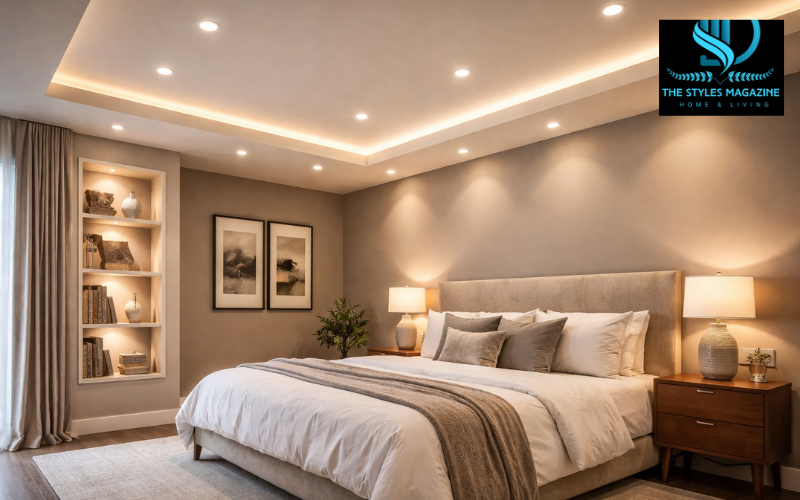
Recessed lighting in bedroom spaces has become one of the most popular choices in modern homes. These lights are installed inside the ceiling, so they sit flat and don’t hang down like traditional fixtures. This simple design creates a clean, neat look that many homeowners prefer today.
People are choosing recessed lighting in bedroom setups because it offers both style and function. It provides even light across the room while keeping the ceiling uncluttered. This is especially helpful in smaller bedrooms where bulky lights can make the space feel crowded.
Another reason for its popularity is flexibility. You can use recessed lights for general lighting, soft mood lighting, or even to highlight certain areas like a bed or artwork. With the right setup, recessed lighting can completely change how a bedroom feels—making it brighter during the day and more relaxing at night.
Recessed Lighting in Bedroom Setup
| Aspect | Recommendation | Why It Matters |
| Spacing | 4–6 feet apart | Ensures even light distribution |
| Distance from Wall | 1.5–3 feet | Prevents dark corners and shadows |
| Color Temperature | 2700K–3000K | Creates warm, relaxing feel |
| Dimmers | Must-have | Adjust brightness for day/night |
| Ceiling Fan Distance | At least 24 inches | Avoids flicker/strobe effect |
| Type of Lights | LED recessed lights | Energy-efficient and long-lasting |
Recessed Lighting in Bedroom: Yes or No? What You Should Know First
Before installing recessed lighting in bedroom ceilings, it’s important to understand whether it’s the right choice for your space. For many people, the answer is yes. It works well in rooms where you want a modern, clean look and evenly spread light.
Recessed lighting is a great option if your bedroom has a low ceiling, limited space, or a simple design theme. It also works well if you want to combine lighting with other features like ceiling fans or layered lighting.
However, it may not always be the best choice. If used alone without proper planning, recessed lighting can make a bedroom feel too bright or flat. Some people also prefer decorative fixtures like chandeliers or pendant lights for added personality.
The main advantage is its ability to provide balanced lighting without taking up space. On the other hand, a possible drawback is that poor placement or wrong brightness can lead to harsh lighting. With thoughtful planning, though, these issues can be easily avoided.
Why Recessed Lighting Works So Well in Modern Bedrooms
One of the biggest reasons recessed lighting in bedroom designs is so popular today is its clean appearance. Since the lights are built into the ceiling, they don’t draw attention to themselves. This creates a smooth and modern finish that suits almost any interior style.
Another benefit is how it changes the way a room feels. Properly placed recessed lights can make a bedroom appear larger and more open. Instead of one central light creating shadows, multiple small lights spread brightness evenly across the space.
This type of lighting fits perfectly with modern recessed lighting in bedroom trends, where simplicity and comfort are key. Many homeowners now prefer soft, layered lighting instead of a single bright source. Recessed lighting allows you to create that balance easily.
Best Recessed Lighting in Bedroom: Types and Features That Matter
Choosing the best recessed lighting in bedroom setups depends on understanding the different types available. Standard recessed lights provide general lighting and are ideal for overall brightness. Adjustable or gimbal lights, on the other hand, can be tilted to focus light on specific areas like artwork or reading spots.
One of the most important features to look for is dimmability. Dimmable lights allow you to adjust brightness depending on the time of day. You can keep the room bright in the morning and create a soft, cozy atmosphere in the evening.
Smart recessed lighting is also becoming more common. These lights can be controlled using a phone or remote, and some even allow you to change the color temperature. This adds convenience and helps you customize your bedroom lighting experience.
The trim and size of the lights also matter. Smaller trims create a subtle look, while larger ones provide stronger light. Choosing the right combination ensures both style and function work together.
Recessed Lighting in Bedroom Ceiling: Layout and Placement Basics
When installing recessed lighting in bedroom ceilings, layout plays a major role in the final result. A common guideline is to space lights about four to six feet apart. This helps create even lighting without leaving dark spots.
The distance from walls is also important. Placing lights too close to walls can create harsh shadows, while placing them too far may leave corners dim. A balanced approach helps maintain soft and even brightness throughout the room.
Proper placement ensures that the light feels natural and comfortable. Instead of focusing all lights in the center, spreading them evenly across the ceiling gives better coverage. This approach improves both the look and the functionality of the bedroom.
Recessed Lighting in Bedroom with Ceiling Fan: Safe and Smart Placement
Many bedrooms include ceiling fans, so combining them with recessed lighting in bedroom designs requires careful planning. The key is to maintain enough distance between the lights and the fan blades.
If lights are placed too close to the fan, they can create a flicker or strobing effect when the fan is moving. This can be distracting and uncomfortable. Keeping lights at a safe distance helps avoid this issue.
For smaller rooms, fewer lights placed strategically around the fan can provide enough brightness. In larger rooms, a wider layout works better. The goal is to keep the lighting smooth and consistent without interfering with the fan’s movement.
Recessed Lighting in Bedroom Ideas for a Cozy and Functional Space
There are many creative ways to use recessed lighting in bedroom setups to make the space both comfortable and practical. One popular idea is perimeter lighting, where lights are placed along the edges of the ceiling. This creates a soft glow that reflects off the walls and makes the room feel larger.
Another useful approach is placing lights above the bed. This provides gentle lighting for reading or relaxing without being too harsh. When connected to separate switches, each side of the bed can be controlled individually, adding convenience.
Accent lighting is another great option. Adjustable recessed lights can highlight artwork, shelves, or decorative features. This adds depth and personality to the room.
Combining recessed lighting with other light sources, such as lamps or wall lights, creates a layered effect. This helps balance brightness and adds warmth to the space.
Choosing the Right Brightness and Color Temperature for Bedrooms
The brightness and color temperature of recessed lighting in bedroom spaces play a big role in comfort. Warm light, usually between 2700K and 3000K, is considered ideal for bedrooms. It creates a calm and relaxing environment that supports rest.
Using lights that are too bright or too cool in color can make the room feel harsh and less inviting. A balanced level of brightness ensures the room is well-lit without being overwhelming.
Dimmers are especially useful here. They allow you to adjust the light based on your needs, whether you are getting ready in the morning or winding down at night. This flexibility makes recessed lighting more practical and enjoyable.
Common Mistakes to Avoid with Recessed Lighting in Bedroom
While recessed lighting in bedroom setups offers many benefits, certain mistakes can affect the final outcome. One common issue is installing too many lights. This can make the room overly bright and uncomfortable.
Poor spacing is another problem. Lights that are unevenly placed can create shadows or bright spots, making the lighting feel unbalanced. Careful planning helps avoid this.
Ignoring dimmers is also a missed opportunity. Without dimmers, you lose the ability to control the mood of the room. Similarly, choosing the wrong color temperature can affect how the space feels.
Avoiding these mistakes ensures that the lighting works as intended and enhances the bedroom’s overall comfort.
Modern Recessed Lighting in Bedroom Trends to Consider
Modern recessed lighting in bedroom designs continues to evolve with new trends. One major trend is smart lighting integration. Many homeowners now prefer lights that can be controlled through apps or voice commands.
Adjustable color temperature lighting is also becoming popular. This allows users to switch between warm and cool tones depending on the time of day.
Minimalist ceiling designs remain a strong trend. Recessed lighting fits perfectly into this style by keeping the ceiling clean and simple.
Energy-efficient LED lighting is another important development. It consumes less power and lasts longer, making it a practical and eco-friendly choice.
Quick Layout Guide: How to Plan Recessed Lighting in Your Bedroom
Planning recessed lighting in bedroom spaces doesn’t have to be complicated. It starts with understanding the size of the room and how much light is needed. Larger rooms may require more lights, while smaller rooms need fewer but well-placed fixtures.
Next, think about how the room is used. Areas like the bed, wardrobe, or seating space may need focused lighting. Dividing the room into zones helps create a better lighting plan.
Finally, consider how the lights will be controlled. Using separate switches or dimmers allows you to adjust different areas independently. This adds both convenience and flexibility to your setup.
Conclusion: Creating a Comfortable Bedroom with the Right Recessed Lighting
Recessed lighting in bedroom design is all about balance. The right layout, brightness, and placement can turn a simple room into a comfortable and inviting space. From choosing warm light to planning proper spacing, every detail plays a role.
A well-designed lighting setup improves not only how the room looks but also how it feels. It supports daily activities while creating a calm environment for rest.
In the end, the goal is simplicity and comfort. With thoughtful planning, recessed lighting can help you create a bedroom that feels both modern and cozy at the same time.
FAQs
Is Recessed Lighting In Bedroom A Good Idea?
Yes, recessed lighting in bedroom works well for modern spaces. It provides clean, even light and saves ceiling space, especially when combined with dimmers for better comfort and flexibility.
How Many Recessed Lights Do I Need In A Bedroom?
It depends on room size, but usually lights are spaced 4–6 feet apart. A small bedroom may need 4–6 lights, while larger rooms require more for even coverage.
What Color Temperature Is Best For Bedroom Recessed Lighting?
Warm light between 2700K and 3000K is ideal. It creates a relaxing environment and is more comfortable for eyes compared to cooler, harsh lighting.
Can I Install Recessed Lighting With A Ceiling Fan?
Yes, but keep at least 24 inches distance from fan blades. This prevents flickering or shadow effects and ensures smooth, comfortable lighting.
Are Recessed Lights Alone Enough For A Bedroom?
They can be enough for general lighting, but combining them with lamps or wall lights creates a more cozy and layered lighting setup.
Enjoyed it? Find more exclusive content on The Styles Magazine.
Disclaimer: This content is for informational purposes only. Lighting needs may vary based on room size, layout, and personal preference. For electrical installation, always consult a qualified professional to ensure safety and proper setup.