Spotting an earwig in the bathroom or finding ragged holes in a favourite flower can be unsettling. Yet seeing one or two does not mean your home is infested or your garden is in trouble. Earwigs usually live outdoors, where they shelter in cool, damp places and come out after dark.
Effective earwig control starts with finding what is attracting them. Removing excess moisture, clearing hiding places near the house, closing small entry gaps and setting simple traps often work better than reaching straight for a spray. In the garden, the aim is to protect plants that are actually being damaged, not eliminate every earwig.
Here is how to deal with the problem sensibly and help stop it returning.
Quick Answer:
Earwig control involves removing moisture, clearing hiding places, sealing entry points, and using simple traps to reduce unwanted earwigs. Most problems can be managed without chemicals, while persistent infestations may require additional treatment.
Earwig Control Quick Guide Table
| Control Method | Best For | How It Helps |
| Moisture reduction | Homes and gardens | Makes damp hiding places less attractive |
| Sealing gaps | Indoor prevention | Stops earwigs entering through doors and cracks |
| Homemade traps | Gardens and flowerbeds | Collects earwigs hiding during the day |
| Removing debris | Outdoor areas | Reduces shelter near plants and foundations |
| Earwig control sprays | Persistent problems | Provides targeted treatment where approved and necessary |
| Professional pest control | Repeated indoor problems | Helps identify entry points and suitable treatments |
Step-by-Step Guide: How to Control Earwigs Effectively
- Find their hiding places: Check damp corners, garden mulch, flowerpots, leaf piles, and spaces around doors.
- Remove excess moisture: Fix leaks, improve drainage, and keep indoor surfaces dry.
- Seal entry points: Close cracks around windows, doors, pipes, and exterior walls.
- Set homemade traps: Place rolled newspaper or straw-filled flowerpots near affected plants and check them each morning.
- Monitor the results: Look for fewer earwigs and less fresh plant damage before considering further treatment.
Understanding Earwigs and When They Become a Problem
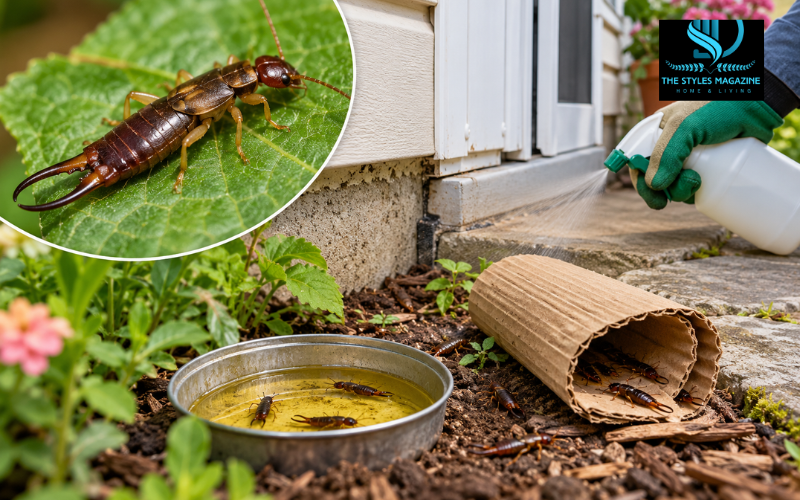
Earwigs are slender, mostly brown insects with a pair of noticeable pincers at the back of their bodies. Common earwigs have six legs and short wing covers, although they are more often seen running than flying. They usually hide during the day and search for food at night. Young earwigs resemble smaller, paler adults.
Those pincers look alarming, but earwigs are not venomous and do not normally pose a danger to people. They can give a small pinch if handled or trapped against skin. They are not known for spreading diseases or damaging timber, wiring or household fabrics. A pet that investigates one is generally unlikely to be harmed, although it is best to prevent pets from eating insects or pest-control products.
Outdoors, earwigs eat both plant material and small insects. They can help reduce aphids, particularly on fruit trees. Control becomes worthwhile when they repeatedly damage flowers or young plants, or when large numbers keep entering living spaces. A lone earwig near an open door usually calls for removal, not treatment.
Why Earwigs Are Attracted to Your Home and Garden
Earwigs need shelter from drying conditions, so damp and shaded spots are especially appealing. Mulch, leaf litter, compost, stacked pots, boards and stones provide places to hide through the day. Irrigated beds and dense plants beside a house can create a sheltered route towards the walls.
Indoors, an earwig may turn up beside a sink, in a bathroom, utility room, cellar or near a ground-floor doorway. That does not always mean it is breeding there. Many simply wander in from outside through an opening or arrive with plant pots, washing or other objects brought indoors. Persistent dampness can make a room more inviting, but ordinary homes are not their preferred habitat.
Their activity also changes with the weather. Warm months often bring more sightings as earwigs feed and move around after dusk. Very dry, hot or wet conditions may drive them to seek different shelter. Understanding these patterns helps you focus on likely hiding places rather than treating every room or flowerbed.
How to Get Rid of Earwigs in Your House Fast
If you need to know how to get rid of earwigs in your house fast, start with a vacuum cleaner or dustpan. Remove the insects you can see, then empty the vacuum contents into a sealed bag and dispose of it outdoors. There is rarely a reason to spray an entire room for a few occasional visitors.
Next, check behind bins and plant pots, beneath sinks, around washing machines and along skirting boards near exterior doors. Look for leaking pipes, damp mats, condensation or poorly ventilated corners. Repair leaks promptly, dry wet surfaces and improve ventilation where possible. A dehumidifier may help in a persistently damp room, but it cannot replace fixing the source of water.
If earwigs appear repeatedly, note where and when you find them. Several near the same back door suggest an entry gap or outdoor hiding place. Indoor earwig control is most successful when you remove those conditions outside as well as the insects already inside.
Sealing Entry Points to Keep Earwigs Outside
An earwig can slip through surprisingly narrow gaps. Examine the bottoms of exterior doors, window frames, cracks around the foundation and openings where pipes or cables pass through walls. Give extra attention to doors that lead directly to patios, sheds and damp garden beds.
Use suitable exterior caulk to close small cracks, replace worn weatherstripping and fit a door sweep where light shows beneath a closed door. Check that window screens sit properly and are not torn. Where ventilation openings need protection, use suitable insect-resistant mesh without blocking essential airflow.
Sealing works best alongside outdoor tidying. If wet leaves and pots remain piled against the house, earwigs may continue gathering at its edges and finding new ways inside. Check seals again after harsh weather or building repairs, when small gaps can reopen.
Removing Moisture and Hiding Places Around Your Property
A dry, clear strip beside the house makes the area less welcoming to earwigs. Start by fixing dripping outdoor taps and leaky hose connections. Keep gutters free of debris and make sure downpipes carry rainwater away from the building rather than letting it pool at the base of a wall. Deal with blocked drains or persistently waterlogged patches.
Move unused flowerpots, timber, boards and leaf piles away from doorways and foundations. Store firewood off the ground and away from exterior walls where practical. Trim crowded growth that presses against the house so air can move and surfaces have a chance to dry.
You do not need to strip every bed of mulch or remove useful wildlife habitat across the garden. Instead, avoid deep, constantly wet mulch directly against the building. Water plants according to their needs, preferably at the soil rather than soaking walls and paved edges.
These modest changes make indoor entry less likely without turning a healthy garden into bare ground.
Earwig Control in the Garden: Recognising and Managing Plant Damage
Earwig feeding may leave uneven holes in young leaves, notches along their edges or damaged flower petals. Dahlias, chrysanthemums and other soft-flowered plants can be particularly vulnerable, especially when earwigs shelter close to the blooms. Tender seedlings may also suffer when several insects feed in one spot.
However, holes alone are not proof. Slugs and caterpillars can leave similar marks. Visit affected plants after dusk with a torch and inspect the flowers, leaves and nearby hiding places. A slime trail may point towards slugs, while caterpillars or their droppings may suggest a different cause. Confirming the culprit saves effort and prevents unnecessary treatments.
Good earwig control in the garden means weighing damage against benefits. Earwigs also feed on aphids and other small creatures, making them useful around fruit trees. If the damage is slight, leaving them alone is often sensible. Where blooms are repeatedly spoiled, concentrate traps and inspections around those plants rather than treating the whole garden.
Homemade Earwig Control: Simple Traps That Work
Homemade earwig control can be inexpensive because it uses the insects’ habit of hiding in narrow spaces. Roll up a sheet of newspaper or corrugated cardboard, or lay a short section of garden hose near an affected plant in the evening. Earwigs may shelter inside by morning.
Check early, then shake any insects into a container of soapy water. Repeat the process over several nights and move the traps if catches are low.
An alternative is an oil trap. Set a shallow, smooth-sided tin into the soil so its rim is close to ground level. Add a small amount of vegetable oil and a little fish oil as an attractant. Earwigs that climb in may become trapped.
Place the container where it cannot be knocked over by children or pets, and consider a raised cover to keep out rain and reduce catches of other wildlife.
In flowerbeds, an upside-down pot loosely filled with straw, balanced on a cane, can also collect earwigs during the day. Empty it in the morning when you are trying to protect flowers.
Traps need regular attention; leaving them untouched merely provides another comfortable hiding place.
Protecting Flowers and Vegetables Without Unnecessary Chemicals
Start with the plants most affected rather than treating the entire plot. Inspect them regularly from spring onwards, especially as flower buds develop or seedlings emerge. Clear unnecessary boards, empty pots and thick debris immediately beside vulnerable plants, while keeping sensible ground cover elsewhere for soil health.
Place shelter traps close to damaged flowers or along the edge of a vegetable bed. Check and empty them each morning until you see fewer insects and less fresh feeding. Where possible, keep irrigation directed at roots and avoid leaving planting areas constantly soaked. Healthy plants also cope better with minor loss of foliage than stressed ones.
Remember that an earwig on a plant may be hunting aphids rather than eating leaves. Look for fresh damage and observe its behaviour before acting. This targeted approach protects the garden’s useful insects and avoids harming pollinators or other wildlife with unnecessary broad insecticide applications.
Choosing the Right Earwig Control Products
The best earwig control is not necessarily a product in a bottle. For a few insects indoors, a vacuum and repairs to entry points are usually enough. For repeated damage to flowers, inexpensive shelter traps are a practical first choice.
These methods are easy to monitor because you can see whether fewer earwigs are being caught and whether new damage is slowing.
Commercial earwig control products may include ready-made traps, insecticidal dusts, baits and contact sprays. Their suitability varies. Some dusts become less effective when wet and can irritate eyes or lungs if inhaled; baits and insecticides require care around children, pets and wildlife. A product described as natural is not automatically harmless.
For UK households, check that the product is authorised for its intended use and that its label permits use in the exact location, such as indoors or around particular garden plants. Do not assume a treatment promoted on an overseas website is approved in Britain. Avoid professional-use pesticides unless you have the required training.
Earwig Control Sprays: Effective Use and Safety Precautions
An earwig control spray may be considered when repeated entry or confirmed plant damage continues despite trapping and prevention. Even then, a spray is unlikely to solve the cause if a foundation stays damp or large numbers keep sheltering beside the door.
Indoor spraying is generally unnecessary for occasional earwigs and does not reliably stop more arriving.
Choose only a product specifically labelled for the relevant site and purpose. An earwig spray for house use is not automatically suitable for vegetables or flowers, and a garden treatment should not be brought indoors unless the label allows it. Follow directions for application, ventilation, protective clothing, storage and any restrictions on access after treatment.
Never spray food surfaces, drains, flowering plants visited by pollinators or other areas that the label excludes. Keep children and pets away as directed, and do not assume a treatment becomes safe at a particular time without checking the instructions.
If a product is not clearly suitable, ask a qualified pest-control professional instead of improvising a stronger mixture.
Common Earwig Control Mistakes That Can Make the Problem Worse
A common mistake is dealing only with the earwigs you can see. Spraying insects by a back door may offer temporary relief, but the next group can arrive from a damp pile of leaves outside. If the source stays in place, the sightings may continue.
Another problem is treating every damaged leaf as evidence of earwigs. Slugs, caterpillars and other garden pests may be responsible, and the wrong treatment wastes time. Inspect at night before deciding what needs controlling.
Equally, avoid relying on strong vinegar mixtures, essential oils or homemade chemical sprays simply because they are promoted online. Their results are uncertain, and some can harm plants or irritate skin and eyes.
More pesticide is not better pest control. Incorrect doses, treating unapproved areas and scattering powders where people or animals can disturb them add risk without correcting the conditions that attracted the insects.
Keep the plan simple: identify, remove, prevent and reassess.
Long-Term Earwig Prevention and When to Seek Professional Help
A short routine is usually enough to keep earwigs from becoming a recurring nuisance. Check exterior door seals and damp indoor corners, especially after heavy rain. Clear gutters when needed, move fresh piles of garden debris away from walls and look beneath pots or boards near entrances.
During warmer months, inspect vulnerable flowers and empty traps regularly if damage appears.
You do not have to continue trapping forever. Once catches fall and fresh plant damage stops, reduce the checks and see whether the problem stays manageable. Some earwigs will always be present outdoors, which is normal and often beneficial.
Professional help is worth considering if large numbers repeatedly enter despite moisture repairs and sealing, if you cannot locate the entry route, or if a wider dampness issue needs investigating.
A responsible pest professional should inspect first, explain the likely source and discuss prevention before suggesting chemical treatment. That gives you a longer-lasting plan than repeated indoor sprays.
Conclusion
Effective earwig control depends on where the insects are causing trouble. Indoors, remove visitors, dry damp spots and seal their way in. Outside, clear hiding places close to the building and use simple traps where earwigs are damaging plants. Sprays should be a carefully considered last option, not an automatic response.
Most gardens do not need to be free of earwigs. By checking what they are actually doing and using the lightest practical method, you can protect your home and favourite plants while leaving helpful garden wildlife in place.
Frequently Asked Questions
What Is The Fastest Way To Get Rid Of Earwigs In Your House?
Vacuum visible earwigs, dispose of them outdoors, and check nearby entry points. Dry damp areas, repair leaks, and seal gaps around doors and windows to help prevent more earwigs from entering.
What Is The Best Homemade Earwig Control Method?
Rolled newspaper, corrugated cardboard, and straw-filled flowerpots make useful homemade traps. Place them near affected plants overnight and check them in the morning, removing any earwigs collected inside.
Can Earwigs Damage Plants In The Garden?
Yes, earwigs sometimes eat young leaves, flower petals, and tender plant growth, particularly on dahlias and chrysanthemums. However, they also eat aphids, so control is usually necessary only when damage becomes troublesome.
Are Earwig Control Sprays Safe Around Children And Pets?
Safety depends on the product and how it is used. Choose a UK-authorised treatment suitable for the location, follow every label instruction, and keep children and pets away from treated areas as directed.
How Can I Prevent Earwigs From Coming Back?
Reduce damp conditions, remove unnecessary garden debris, repair leaks, and seal exterior gaps. Regularly inspect vulnerable plants and use traps when needed. These steps discourage earwigs without requiring routine chemical treatments.
Enjoyed it? Find more exclusive content on The Styles Magazine.
Disclaimer: This article provides general information about earwig control for homes and gardens. Results may vary depending on local conditions and the severity of the problem. Always follow product labels and UK pesticide regulations before using chemical treatments. Keep pest-control products away from children, pets, and wildlife as directed. For persistent problems, consult a qualified pest-control professional.