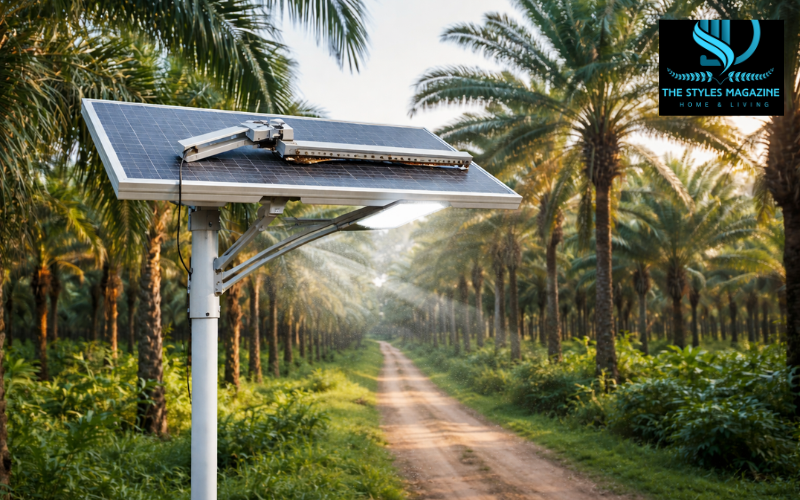
Self cleaning street light palm oil systems are a modern type of solar lighting designed for use in palm oil plantations and similar agricultural environments. These lights use solar panels to generate energy during the day and provide lighting at night, but what makes them special is their built-in cleaning system that keeps the panels free from dirt and oil residue.
In palm oil regions, the environment is quite challenging. During harvesting and processing, tiny oil particles, dust, and organic materials spread through the air and settle on solar panels. Over time, this layer blocks sunlight and reduces the panel’s ability to charge properly. As a result, traditional solar street lights can lose a large portion of their efficiency within a short period.
This is why self cleaning street light palm oil solutions are becoming more popular. They offer a simple yet effective answer to this problem by automatically cleaning the panel surface. This ensures that the lights continue to work efficiently without the need for regular manual cleaning, which can be difficult and costly in large plantations.
Quick Comparison
| Feature | Standard Solar Street Light | Self Cleaning Street Light Palm Oil |
| Cleaning | Manual cleaning required | Automatic cleaning system |
| Efficiency | Drops over time due to dirt | Maintains consistent efficiency |
| Maintenance Cost | High (labor + travel) | Low (minimal manual work) |
| Suitability | Urban/clean areas | Palm oil plantations & dusty areas |
| Lifespan | Moderate | Longer due to regular cleaning |
| Performance Stability | Can fluctuate | Stable and reliable |
Understanding Self Cleaning Street Light Systems in Palm Oil Environments
Self cleaning street light systems are different from standard solar street lights in one important way: they are designed to maintain their own performance. While regular solar lights depend on clean panel surfaces to work properly, these advanced systems include built-in features that remove dirt and residue automatically.
Palm oil plantations require this kind of specialized solution because the environment is not clean or dry. Instead, it is humid, filled with organic particles, and often covered in sticky oil mist. This combination creates a surface layer on solar panels that is much harder to remove than simple dust. Standard lights are not built to handle this, which is why their performance drops quickly.
A typical self cleaning system includes a solar panel, a battery, LED lighting, and a cleaning mechanism. The cleaning part may involve brushes or wipers that move across the panel surface. There is also a control unit that manages when and how the cleaning happens. Together, these components create a system that works reliably even in harsh conditions.
Why Palm Oil Plantations Need Self Cleaning Street Lights
Palm oil plantations present a unique set of challenges that make self cleaning street lights almost necessary rather than optional. One of the biggest issues is airborne oil mist. During processing, small oil particles are released into the air and eventually settle on surfaces, including solar panels. This creates a sticky layer that traps more dust over time.
In addition to oil mist, there is also dust, pollen, and other organic materials. These particles build up quickly and reduce the amount of sunlight that reaches the solar panel. Even a thin layer can have a noticeable effect on energy production.
Another important factor is the size and location of plantations. Many palm oil farms cover large areas and are located far from urban centers. Cleaning hundreds of solar lights manually is not only time-consuming but also expensive. It requires labor, transportation, and regular maintenance schedules, which are difficult to manage consistently.
All of these issues directly affect energy efficiency and lighting reliability. When panels cannot charge properly, the lights may become dim or stop working at night. This can create safety risks and reduce productivity. Self cleaning street light palm oil systems help solve these problems by keeping panels clean and maintaining stable performance.
How Self Cleaning Solar Street Lights Work
Self cleaning solar street lights use a combination of mechanical and smart technology to keep their panels clean. The most visible part of the system is the cleaning mechanism itself. This usually involves a small robotic arm, brush, or wiper that moves across the panel surface.
The cleaning process is often scheduled to run at specific times, such as early morning and evening. These times are chosen because they do not interfere with energy generation and help remove any buildup before it becomes too thick. The movement is gentle but effective, removing oil residue, dust, and other particles without damaging the panel.
Automation plays a key role in how these systems operate. A built-in controller manages the cleaning schedule and ensures that the system runs smoothly. Some models also use sensors to detect when the panel is dirty and adjust the cleaning frequency accordingly.
Energy efficiency is also carefully considered. The cleaning system uses only a small portion of the energy generated by the solar panel, usually less than a few percent. This means that the system can maintain itself without significantly reducing the energy available for lighting.
Sensors and microprocessors help manage the entire process. They control the movement of the cleaning mechanism, monitor battery levels, and ensure that everything works as expected. This makes the system reliable and easy to use without requiring constant human attention.
Key Technologies Behind Modern Self Cleaning Street Lights
Modern self cleaning street light palm oil systems use several technologies to improve performance and durability. One of the most important is the use of special coatings on the solar panel. These coatings are designed to resist dust and oil, making it harder for particles to stick to the surface.
Some systems also include smart monitoring features. With the help of IoT technology, users can track the performance of each light remotely. This includes information about battery status, cleaning cycles, and overall system health. Communication methods such as 4G or LoRa make it possible to manage large networks of lights from a central location.
Battery management is another key area. These systems are designed to store energy efficiently and provide consistent lighting even during cloudy days. Advanced control systems ensure that the battery is charged and used in the best possible way.
Weather resistance is also very important. Palm oil plantations often experience high temperatures, humidity, and heavy rainfall. Self cleaning street lights are built to handle these conditions, using strong materials and protective designs that prevent damage over time.
Benefits of Using Self Cleaning Street Light Palm Oil Solutions
The main benefit of using self cleaning street light palm oil solutions is the reduction in maintenance costs. Since the system cleans itself, there is no need for frequent manual cleaning. This saves time, labor, and transportation costs, especially in large plantations.
Another advantage is consistent performance. Clean panels can absorb more sunlight, which means better energy generation and more reliable lighting at night. This is important for plantation operations that depend on good visibility for safety and productivity.
Improved safety is also a key benefit. Well-lit roads and working areas help reduce accidents and improve security. Workers can move around more easily, and the risk of theft or damage is also lower.
These systems also tend to last longer. Regular cleaning prevents long-term damage to the solar panel and helps maintain battery health. As a result, the overall lifespan of the system is extended, making it a more sustainable investment.
Self Cleaning Street Light Palm Oil Price: What Affects the Cost
The price of self cleaning street light palm oil systems can vary depending on several factors. One of the main factors is the size and power of the system. Larger lights with higher wattage typically cost more because they are designed to cover bigger areas.
The type of cleaning mechanism also plays a role. Basic systems may use simple brushes, while more advanced models include robotic arms and smart controls. These additional features increase the cost but also improve performance.
Smart features such as IoT monitoring can also affect the price. Systems that allow remote tracking and control are usually more expensive, but they offer better management and convenience.
Installation and project size are also important. Large-scale projects may require more planning and infrastructure, which can increase the overall cost. However, they may also benefit from lower costs per unit due to bulk installation.
In the long run, these systems can offer cost savings. Although the initial investment is higher, the reduction in maintenance and improved efficiency can make them more economical over time.
Popular Models and Brands Used in Palm Oil Projects
Several manufacturers offer self cleaning street light solutions designed for palm oil environments. These companies focus on durability, performance, and ease of use in challenging conditions.
Some brands are known for their strong build quality and reliable performance in industrial settings. They design their products to handle high temperatures, humidity, and heavy dust without losing efficiency.
The JSD solar street light is one example of a system that includes smart control features. It allows users to monitor and manage lighting performance remotely, which is useful for large plantations.
There is also a clear difference between basic and premium models. Basic models offer simple cleaning and lighting functions, while premium models include advanced features such as smart monitoring, improved battery systems, and more efficient cleaning mechanisms. The choice depends on the specific needs and budget of the project.
Installation and Maintenance Considerations for Plantation Projects
Proper installation is important for getting the best performance from self cleaning street lights. The lights should be placed in areas where they can receive maximum sunlight during the day. This ensures that the battery is fully charged and ready to provide lighting at night.
Spacing is also important. Lights should be installed at the right distance from each other to provide even coverage along plantation roads and working areas. This helps improve visibility and safety.
One of the advantages of these systems is their low maintenance requirement. Since they clean themselves, there is less need for regular servicing. However, occasional checks are still recommended to ensure that all components are working properly.
Environmental factors should also be considered. The system should be able to withstand local weather conditions, including heat, humidity, and rain. Choosing a durable and well-designed product can help avoid problems in the future.
Challenges and Limitations to Be Aware Of
While self cleaning street light palm oil systems offer many benefits, there are also some challenges to consider. The most noticeable is the higher initial cost compared to standard solar street lights. This can be a concern for projects with limited budgets.
Another challenge is the reliance on technology. Since these systems include moving parts and smart controls, they require proper setup and calibration. If something goes wrong, it may need technical support to fix.
Access to spare parts and service can also be an issue in remote areas. It is important to choose a reliable supplier that can provide support when needed. Planning ahead can help reduce these risks.
Future Trends in Self Cleaning Solar Lighting for Agriculture
The future of self cleaning solar lighting looks promising, especially in agricultural industries like palm oil. New technologies are being developed to make these systems even more efficient and easier to use.
One area of improvement is the use of advanced automation. Future systems may use more intelligent cleaning methods that adjust based on environmental conditions. This can further improve efficiency and reduce energy use.
Energy storage is also improving. Better batteries can store more energy and provide longer lighting hours, even during periods of low sunlight. This makes the systems more reliable.
There is also growing interest in integrating these lights into smart plantation systems. This means that lighting, monitoring, and other functions can be managed together, creating a more connected and efficient operation.
As more industries adopt these solutions, self cleaning street light palm oil systems are likely to become more common and more affordable over time.
Conclusion
Self cleaning street light palm oil systems offer a practical solution to the unique challenges of palm oil plantations. By combining solar energy with automated cleaning technology, they help maintain efficiency even in environments filled with dust and oil residue.
These systems reduce maintenance costs, improve lighting reliability, and support safer working conditions. While they may require a higher initial investment, their long-term benefits make them a valuable option for large-scale agricultural projects.
As technology continues to improve, these solutions are expected to play an even bigger role in creating efficient and sustainable plantation operations.
FAQs
What Is A Self Cleaning Street Light Palm Oil System?
It is a solar street light with an automatic cleaning feature designed for palm oil plantations, helping remove dust and oil buildup so the panel continues to generate energy efficiently without manual cleaning.
Why Are These Lights Used In Palm Oil Plantations?
Palm oil environments create sticky residue and heavy dust, which reduces solar efficiency. These lights solve the problem by cleaning themselves regularly, ensuring reliable performance without frequent maintenance.
How Much Does A Self Cleaning Street Light Palm Oil System Cost?
The price depends on size, features, and technology. While the initial cost is higher than standard lights, long-term savings on maintenance and better efficiency make it cost-effective over time.
Do Self Cleaning Solar Lights Use Extra Energy?
Yes, but only a small amount. The cleaning system uses minimal energy from the solar panel, so it does not significantly affect the overall performance or lighting output.
Are These Systems Suitable For Other Industries?
Yes, they can also be used in dusty, industrial, or agricultural environments where regular cleaning is difficult, making them a versatile solution beyond palm oil plantations.
Enjoyed it? Find more exclusive content on The Styles Magazine.
Disclaimer: This content is for informational purposes only. Product features, prices, and performance may vary by manufacturer and project conditions. Always consult with a professional supplier before making installation or investment decisions.