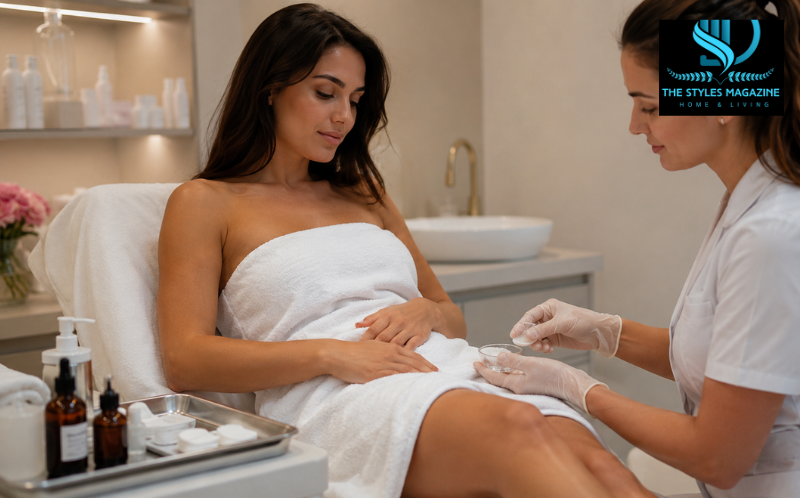
Would you be surprised to learn that one of the fastest growing categories in aesthetic treatments this year has nothing to do with faces at all? Intimate area skincare has quietly moved from a niche request to a mainstream conversation, and 2026 seems to be the year it fully stepped into the open.
For a long time, this was a topic women simply didn’t discuss with friends, doctors, or even their aestheticians. That’s changing fast, and the shift says a lot about how comfortable people have become talking openly about skin concerns that used to feel too personal to mention.
What’s Driving the Growing Interest
Skin in intimate areas ages and changes just like skin anywhere else on the body, but it’s affected by a slightly different set of factors: friction, hair removal methods, hormonal shifts, and pigmentation changes that build up gradually over the years. For a long time, there simply weren’t many targeted options to address this, so most women either lived with it or didn’t realize there was anything to be done.
That’s no longer the case. Aesthetic clinics have expanded their offerings well beyond facial treatments, and demand for cosmetic procedures generally continues to climb. According to the American Society of Plastic Surgeons, women accounted for 87% of all cosmetic surgical procedures performed in 2023, underlining just how much of the aesthetic industry is shaped by women’s preferences and priorities. Intimate area treatments are simply the newest category to benefit from that broader demand.
What Chemical Peels for Intimate Areas Actually Do
These treatments use a mild, targeted chemical solution designed specifically for more sensitive skin, applied to help with tone, texture, and pigmentation in the intimate area. They’re gentler than peels formulated for the face or body, since the skin here is thinner and more reactive.
Common goals include:
- Evening out discoloration that builds up over years
- Softening rough or thickened texture, often related to friction or shaving
- Improving overall skin tone and smoothness in the area
- Supporting confidence around intimate skin without surgery or downtime
The appeal is largely about subtlety. These are non-surgical treatments with minimal recovery time, which makes them accessible for people who want results without a major procedure.
Why 2026 Feels Like a Turning Point
A few things have converged this year. Conversations about intimate wellness are far less taboo than they were even five years ago, partly thanks to more open dialogue on social media and in women’s health spaces generally. Clinics have also responded by training providers specifically in this niche, rather than treating it as an afterthought tacked onto general aesthetic services.
There’s also a practical piece: more women are researching options independently before ever mentioning it to a provider, which means by the time they book a consultation, they already have a clear idea of what they’re looking for. That shift in patient awareness has pushed clinics to be more transparent about what these treatments involve and what results are realistic.
For anyone exploring this category, doing some homework first matters. Looking into chemical peels for intimate areas before booking a consultation helps set realistic expectations about what the treatment can and can’t do, since results vary based on skin type and the specific concern being addressed. It’s worth mentioning that Fountain of You MD is among the providers that treat this as a dedicated specialty area rather than a generic add-on, which tends to matter for a treatment this sensitive.
What to Expect During a Consultation
A good first consultation should feel more like a conversation than a sales pitch. A provider should ask about your specific concerns, review your skin and medical history, and explain realistic outcomes rather than overpromising dramatic change from a single session. Most people need more than one treatment spaced a few weeks apart to see meaningful results, and providers should be upfront about that timeline rather than glossing over it.
Questions worth asking during a consultation:
- How many sessions are typically needed to see results
- What the recovery and sensitivity timeline looks like
- Whether the provider has specific training in intimate area treatments, not just general chemical peels
Setting Realistic Expectations
Like most non-surgical treatments, chemical peels for intimate areas work gradually rather than instantly. Skin tone and texture improvements build over a series of sessions, and maintenance treatments are often part of a long-term plan rather than a one-time fix. Providers who are transparent about this timeline tend to deliver a better overall experience, since expectations are aligned with what the treatment can realistically achieve.
Conclusion
The rise in interest around intimate area chemical peels in 2026 reflects something bigger than a trend. It reflects women feeling more comfortable addressing concerns that used to go unspoken, and clinics finally catching up with targeted, appropriately gentle options. If this is something you’ve been curious about, a straightforward conversation with a qualified provider is really the best place to start.
Enjoyed it? Find more exclusive content on The Styles Magazine.