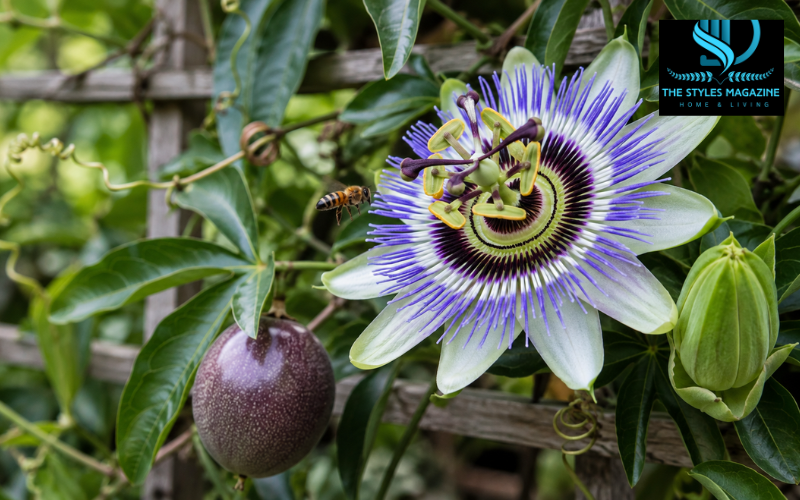
Passion flower is an unusual flowering vine with layered petals, fine filaments, and raised central parts that create a dramatic, exotic bloom. It belongs to the genus Passiflora, which contains roughly 570 species, most of them climbers from tropical or subtropical regions.
Gardeners value passion flower for fast cover, pollinator support, butterfly habitat, and, in selected species, edible fruit. Some types tolerate cooler gardens, while others need year-round warmth. Passiflora incarnata is also used in herbal products, although its possible benefits and safety limits require care.
The right passion flower plant can cover a bare fence, brighten a patio, support local wildlife, or produce flavorful fruit. Success depends on choosing a suitable species and understanding its sunlight, soil, watering, pruning, and winter-care needs.
Passion Flower Quick Guide
| Feature | Quick Information |
| Botanical genus | Passiflora |
| Plant type | Fast-growing climbing vine |
| Sunlight | Full sun to partial shade |
| Soil | Fertile, moist, and well-draining |
| Watering | Water regularly without making the soil soggy |
| Flowering season | Usually summer through early autumn |
| Support | Strong trellis, fence, arbor, or wires |
| Popular ornamental type | Passiflora caerulea |
| Hardy variety | Passiflora incarnata, also called maypop |
| Main fruiting species | Passiflora edulis |
| Propagation | Seeds, cuttings, or layering |
| Main uses | Ornamental display, pollinator support, fruit, and herbal products |
Simple Steps for Growing Passion Flower
- Select a passion flower species suitable for your climate and purpose.
- Plant it in a sunny location with fertile, well-draining soil.
- Install a strong support before the vine begins spreading.
- Water regularly during active growth, but avoid waterlogged soil.
- Train young stems across the support for balanced coverage.
- Prune damaged, tangled, or overcrowded growth in early spring.
- Protect tropical varieties from frost and severe winter cold.
Understanding the Passion Flower Plant
Most passion flowers are fast-growing vines that climb with curling tendrils. These tendrils wrap around wires, trellises, fences, and nearby stems. The leaves may be oval or divided into three or more lobes, and many species remain evergreen in warm climates. In colder areas, hardy types may die back to the ground and return from their roots in spring.
The flowers are the plant’s main attraction. Although their shape varies, many have a circle of petals and sepals around a crown of thread-like filaments. Above this crown sit the flower’s reproductive parts, which create its famous architectural look. Individual flowers may last only a short time, but a healthy vine can produce new blooms over many weeks from early summer into autumn.
Different species serve different purposes. Passiflora caerulea is mainly ornamental, P. edulis is the leading commercial fruit species, and P. incarnata, or maypop, has flowers, edible fruit, wildlife value, and traditional herbal use. The scientific name matters because appearance alone cannot confirm safe food or medicinal use.
Passion Flower Meaning and Symbolism
The name “passion flower” does not originally refer to romantic passion. It comes from the Passion of Jesus Christ. Early Christian interpreters saw parts of the unusual flower as symbols of the Crucifixion. The filament ring was linked with the crown of thorns, while other flower parts were associated with the nails, wounds, and apostles.
The botanical name reflects this history. Passiflora comes from Latin words connected with “passion” and “flower.” The symbolic interpretation helped make the plant widely known after it was introduced to European gardeners.
Today, the bloom may represent faith, peace, endurance, beauty, resilience, or renewal. These meanings are cultural rather than scientific, but they help explain the flower’s lasting place in gardens, art, and gifts.
Popular Passion Flower Species and Varieties
Purple passion flower, or maypop (Passiflora incarnata), is one of the best choices for gardeners in cooler parts of North America. It has white petals, a purple-pink filament crown, fragrant summer flowers, and egg-shaped fruits that turn yellowish as they mature. It can spread through underground suckers, so it needs room or regular control.
Blue crown passion flower (Passiflora caerulea) is a vigorous ornamental with white flowers and striking blue, white, and purple filaments. It is widely sold because it tolerates cooler conditions better than many tropical species. Its orange-yellow fruit is technically edible when fully ripe, but it is generally less flavorful than true passion fruit.
For fruit, Passiflora edulis is the most important species. It produces the familiar purple or yellow passion fruit filled with aromatic pulp and seeds. It needs a long, warm growing season and protection from low winter temperatures.
Red passion flower may refer to several red-flowering species. Passiflora vitifolia is a notable example, producing large, bright-red flowers from early summer into autumn. It is a tropical vine that needs a warm, sheltered position or protected indoor growing space in colder regions.
A white passion flower may be a pale species, hybrid, or cultivar, including P. incarnata ‘Alba’, P. caerulea ‘Constance Eliott’, and ‘White Wedding’. Check the full botanical name because flower color does not reveal hardiness, fruit quality, or safety.
Choosing the Right Passion Flower for Your Garden
Start with your climate. In a mild, sheltered area, blue passion flower may grow outside against a warm wall. Maypop is better suited to colder winter regions, although even this hardy species can suffer during unusually severe conditions.
Tropical plants such as P. edulis and P. vitifolia need steady warmth. Where frost is common, they are usually better grown in a greenhouse, conservatory, or large movable container.
Next, decide what you want from the plant. Choose P. edulis for quality passion flower fruit, a hardy ornamental variety for covering a fence, or a manageable cultivar for a large patio pot. A container does not make the vine naturally small, so regular training and pruning will still be needed.
Consider the available space as well. Some passion flower vines remain fairly manageable, while others can cover large walls, climb into nearby shrubs, or send up new growth from their roots.
Before buying, check local guidance. Some introduced passion flowers can escape gardens or become difficult to control in warm climates, so regional extension or invasive-species advice may be more useful than a general label.
Growing Passion Flower from Seeds, Cuttings, or Young Plants
Passion flower seeds may germinate slowly, and seedlings may differ from the parent. Soak seeds in lukewarm water for 24 hours, sow them in free-draining seed compost, and keep them warm. Choose fresh seed with a clear species name.
Do not allow the compost to become waterlogged while waiting for germination. It should remain lightly moist, with enough drainage and airflow to reduce the risk of rot. Patience is important because not every seed will sprout at the same time.
Cuttings are faster when you want a new plant that closely matches the parent. Soft young shoots can be taken in spring or early summer, while semi-ripe cuttings are suitable later in summer.
Layering is another simple method. Bend a flexible stem toward the soil, secure a section in place, and cover that section lightly. It can form roots while still receiving water and nutrients from the parent vine.
A nursery-grown passion flower plant gives the quickest start. Plant hardy types in spring after the final frost, set them at their previous pot depth, water thoroughly, and provide support immediately.
Essential Passion Flower Growing Conditions
Most passion flowers bloom best in full sun, especially beside a warm, sheltered wall. Light shade is acceptable, but deep shade often produces plenty of leaves and few flowers.
In very hot climates or under greenhouse glass, some protection from intense afternoon sunlight may help prevent scorched leaves.
The ideal soil is fertile, moist but well drained. Passion flower dislikes standing water, particularly during cool weather, because constantly wet roots can begin to rot.
Garden plants normally need deep watering during dry spells. Container-grown vines dry out more quickly and should be watered when the surface of the compost begins to feel dry. Water less often during winter when the plant is not growing actively.
Feed only when growth or flowering is weak. A balanced garden fertilizer applied in spring is usually enough for established plants in the ground.
Container vines may need a diluted liquid feed during active growth. Avoid heavy, frequent feeding with high-nitrogen products, which can encourage long leafy stems at the expense of flowers.
Supporting, Training, and Pruning the Vine
A mature passion flower can become heavy, so use a strong trellis, arbor, fence, or system of horizontal wires. Tendrils need narrow supports they can wrap around; a smooth, flat wall alone is not enough.
Guide new stems gently and spread them across the support instead of allowing all the growth to bunch in one area. This provides better coverage, improves airflow, and makes future pruning easier.
Prune established plants in early spring when needed. Passion flowers bloom on new growth, so remove old flowered stems while keeping a healthy framework of strong main branches.
Begin by cutting out dead, weak, damaged, tangled, or badly placed shoots. Shorten side growth to keep the plant within its space, but avoid removing all healthy stems at once.
Very overgrown vines can be renovated through harder pruning. However, severe cutting can weaken the plant and delay flowering, so it should not become an annual routine.
Maypop and some other vigorous species can spread beyond their intended space. Pull or cut unwanted suckers while they are young, watch for stems rooting where they touch the soil, and prevent vines from climbing into gutters, roofs, or weak trees.
Passion Flower Blooms and Pollinator Benefits
The exact flowering period depends on the species and local climate, but many garden passion flowers bloom from early summer into autumn. Individual flowers may be brief, yet healthy vines often open new blooms in succession.
Warmth, strong light, steady moisture, and healthy new growth support better flowering. A plant growing in deep shade may produce long stems and attractive leaves without developing many flower buds.
Passion flowers can provide nectar and pollen for bees and other insects. Native species such as Passiflora incarnata are especially valuable within their natural range because they also act as larval host plants for several butterflies.
Some chewed leaves may therefore indicate that butterfly caterpillars are using the plant. Limited feeding damage is not necessarily a disease or a reason to apply insecticide.
A vine that refuses to bloom may be too young, too shaded, overfed, recently hard-pruned, drought-stressed, or damaged by cold. Correct the likely cause gradually rather than adding more fertilizer automatically.
Passion Flower Fruit: Growth, Ripening, and Harvesting
The best-known edible passion flower fruit comes from Passiflora edulis. Purple and yellow forms produce round or egg-shaped fruits with a firm rind and juicy, seed-filled pulp.
Maypop fruit from P. incarnata is also edible when fully ripe, although its flavor and texture differ from commercial passion fruit. Never assume that fruit from an unknown ornamental vine is suitable for eating.
Fruit follows successful pollination. Some cultivars are self-fertile, while others crop better with pollen from a compatible plant. Bees may pollinate outdoor flowers; under cover, pollen can be transferred with a soft brush.
Color, softness, fragrance, and natural dropping can signal ripeness, but the exact signs depend on the species and cultivar. Commercial passion fruit is often at its sweetest when the skin begins to wrinkle slightly.
To use the fruit, wash the outside, cut it open, and scoop out the pulp and seeds. The pulp can be eaten fresh or added to drinks, desserts, yogurt, sauces, and fruit dishes.
Store ripe passion fruit in the refrigerator when it will not be eaten soon. Discard fruit that is moldy, leaking, badly damaged, or has an unpleasant fermented smell.
Seasonal Care and Common Growing Problems
Hardy passion flowers benefit from a sheltered planting position and a layer of mulch over the root area. In cold regions, the top growth may die back even when the underground roots survive and produce new shoots in spring.
Tender vines should be moved indoors before frost. Keep them in bright conditions, reduce watering, and avoid leaving the compost cold and wet during winter. Tropical fruiting species need warmer winter temperatures than hardy ornamental types.
Yellow leaves can result from poor drainage, drought, cold, exhausted potting mix, root damage, or nutrient problems. Sudden flower-bud drop commonly follows severe drying or a sharp change in growing conditions.
Indoor and greenhouse plants may attract spider mites, whiteflies, scale insects, or mealybugs. Check underneath leaves and along stems for fine webbing, sticky deposits, white insects, or small raised bumps.
Root rot is most likely in waterlogged soil. Viral diseases can cause mottled leaves, distorted growth, and reduced plant strength, although similar symptoms may have other causes.
Good airflow, clean cutting tools, sensible watering, and healthy planting material reduce many avoidable problems.
Passion Flower Tea, Benefits, and Safety
Herbal passion flower tea and supplements are usually made from Passiflora incarnata, not from any passion flower found in a garden. Commercial products normally use the plant’s above-ground parts.
Because species can differ chemically, identifying a plant only by its flower color is not safe. A correctly labelled tea or supplement is a more responsible choice than using leaves from an unknown ornamental vine.
Passion flower is commonly promoted for relaxation, anxiety, and sleep. However, the current evidence remains limited.
The U.S. National Center for Complementary and Integrative Health states that a small amount of research suggests oral passionflower may reduce certain anxiety symptoms. It may also improve total sleep time in some adults with insomnia, but findings are not definite, and results relating to falling asleep or remaining asleep are mixed.
There is not enough evidence to claim that passion flower treats most other medical conditions. It should not be described as a proven cure for anxiety, insomnia, stress, or another health problem.
Tea strength and supplement doses vary, so there is no single homemade recipe that is suitable for everyone. Follow the directions on a reputable product rather than preparing highly concentrated extracts from a garden plant.
Possible side effects include drowsiness, dizziness, and confusion. Passion flower may interact with medicines and can add to the effects of anesthesia or other substances that slow the nervous system. People preparing for surgery should discuss its use with a healthcare professional.
Passion flower should not be used during pregnancy because it may cause uterine contractions. Its safety during breastfeeding is unclear.
Anyone taking medication, managing a health condition, preparing for surgery, or considering an herbal product for a child should speak with a qualified medical professional first. Passion flower tea should not replace proper treatment for continuing anxiety, sleep problems, or another medical concern.
Finding a Passion Flower Plant Near You
When searching online for a “passion flower near me,” begin with established local nurseries, native-plant growers, tropical-fruit specialists, and botanic garden plant sales.
Local sellers are more likely to carry varieties suited to the area’s winter temperatures, summer heat, and rainfall. They may also explain whether a particular passion flower plant needs frost protection or can become difficult to control locally.
Online nurseries often provide a wider selection. However, the product listing should include the full botanical name, expected hardiness, mature size, flower color, and whether the plant is intended mainly for decoration or fruit production.
Choose firm growth and an undamaged stem, with no sticky leaves, webbing, scale bumps, cotton-like insects, or badly circling roots. Ask whether a sparse-looking plant is dormant or unhealthy.
Before purchasing, ask whether the variety is self-fertile, how cold-hardy it is, whether its fruit is considered edible and worthwhile, and how large the vine may eventually become.
For passion flower seeds, look for a harvest or packing date and a clear species name. Avoid unlabelled mixtures and sellers that make unsupported medicinal promises or describe every type of passion flower fruit as edible.
Conclusion: Growing and Enjoying Passion Flower Responsibly
Passion flower combines striking blooms, fast climbing growth, wildlife value, and, in selected species, edible fruit. The best results begin with choosing the right plant for the intended purpose and local climate.
A hardy maypop may suit a cooler wildlife garden, while blue passion flower can provide ornamental cover in a mild, sheltered position. Passiflora edulis is the better choice when flavorful passion flower fruit is the main goal and the climate provides enough warmth.
Give the vine strong support, good light, well-drained soil, regular summer water, and thoughtful spring pruning. Watch its spread and adjust winter care according to the species rather than treating every Passiflora in the same way.
Most importantly, confirm the botanical identity before eating fruit, preparing passion flower tea, or using any part of the plant medicinally. With the correct species and realistic expectations, passion flower can become a beautiful, useful, and memorable feature in the garden.
Frequently Asked Questions
Is Passion Flower Easy To Grow?
Passion flower is generally easy to grow when it receives enough sunlight, regular water, well-draining soil, and sturdy support. Some vigorous species may require frequent pruning and spread control.
Does Passion Flower Produce Edible Fruit?
Some species produce edible fruit, especially Passiflora edulis and Passiflora incarnata. However, fruit from an unidentified ornamental variety should not be eaten without confirming its botanical species and safety.
How Long Does A Passion Flower Take To Bloom?
A healthy nursery-grown vine may bloom during its first or second growing season. Plants started from passion flower seeds usually take longer, depending on the species, climate, light, and care.
What Are The Main Passion Flower Benefits?
Passion flower provides ornamental beauty, nectar for pollinators, and edible fruit in selected species. Passiflora incarnata is also traditionally used for relaxation and sleep, although medical evidence remains limited.
Can Passion Flower Be Grown In A Container?
Yes, passion flower can grow in a large container with drainage holes, fertile compost, and strong support. Container plants need regular watering, feeding, pruning, and winter protection in colder climates.
Enjoyed it? Find more exclusive content on The Styles Magazine.
Disclaimer: This article is for general gardening and educational purposes. Confirm the passion flower species before eating or using it medicinally, and consult a qualified healthcare professional before taking passion flower tea or supplements.