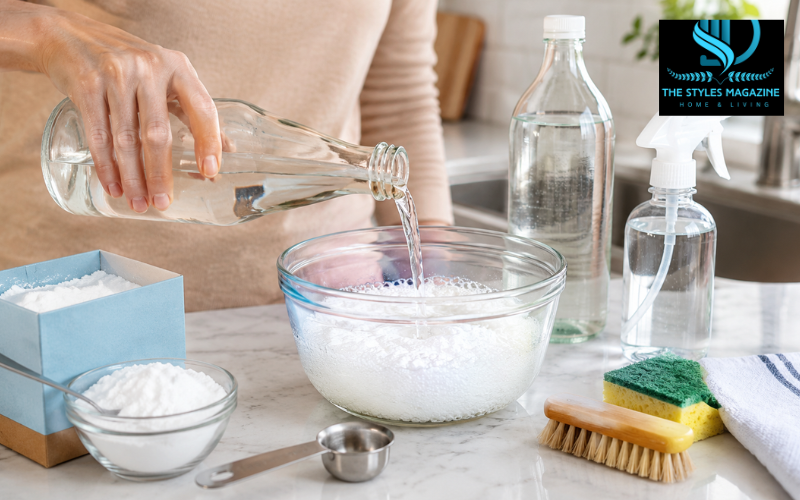
Vinegar and baking soda are two of the most common household items people use for cleaning, deodorizing, freshening drains, and simple science experiments. They are affordable, easy to find, and often seen as natural alternatives to stronger chemical cleaners. Because of this, many people believe that mixing vinegar and baking soda creates a powerful cleaning solution for almost every job around the home.
In simple words, vinegar is a mild acid, and baking soda is a mild base. When they come together, they react quickly and create fizzing bubbles. This bubbling reaction is the reason the mixture is so popular for volcano experiments, drain-cleaning hacks, and home cleaning videos. It looks active and powerful, so it is easy to assume it must be cleaning deeply.
However, the truth is a little different. Vinegar and baking soda can both be useful, but they are often more effective when used separately or in the right sequence. When mixed at the same time, they can neutralize each other, which means they may lose some of their individual cleaning strength. This article explains what really happens when vinegar and baking soda mix, how to use them safely, where they work well, where they do not, and what to avoid.
Quick Guide Table: Vinegar and Baking Soda Uses
| Purpose | Best Option | Why It Works | Quick Tip |
| Scrubbing stains | Baking soda | It acts as a gentle abrasive | Mix with water to make a paste |
| Removing hard water spots | Vinegar | Its mild acid breaks down minerals | Do not use on natural stone |
| Deodorizing | Baking soda | It helps absorb odors | Leave it dry for best results |
| Freshening drains | Baking soda + vinegar | The fizz may loosen light debris | Use one after another, not mixed first |
| Washing machine freshness | Use separately | Each works better at different stages | Avoid mixing with bleach |
| Kids’ experiments | Baking soda + vinegar | Creates visible fizz and gas | Use small amounts and adult supervision |
What Happens When Vinegar and Baking Soda Mix
When vinegar and baking soda mix, they create a fast acid-base reaction. Vinegar is acidic, while baking soda is basic. When an acid and a base meet, they try to balance each other out. This balancing process creates carbon dioxide gas, which forms bubbles and foam.
That fizzing reaction is the part most people notice. The mixture may bubble up quickly, rise in a container, or create a small eruption if used in a science experiment. This is why vinegar and baking soda are often used in school projects, especially homemade volcanoes.
After the reaction stops, the mixture is no longer the same as it was before. Most of the acid and base have reacted with each other. What remains is mostly water and a mild salt-like compound called sodium acetate. In everyday terms, the liquid left behind is much weaker than vinegar alone or baking soda alone. This is why the fizz may look impressive, but it does not always mean the mixture is a strong cleaner.
The Science Behind the Vinegar and Baking Soda Reaction
The science behind vinegar and baking soda is simple when explained in plain English. Vinegar contains acetic acid, which gives it its sour smell and acidic cleaning power. Baking soda is sodium bicarbonate, a gentle alkaline powder often used for baking, deodorizing, and scrubbing.
When these two ingredients touch, they react and produce carbon dioxide gas. That gas escapes as bubbles, creating the fizz that people associate with cleaning power. The reaction also produces water and sodium acetate.
The important thing to understand is that the bubbling is mostly gas escaping, not dirt being dissolved. The fizz can help move loose debris in some cases, especially in a drain or narrow space. But once the reaction is finished, the cleaning strength of both ingredients is reduced. Vinegar is no longer as acidic, and baking soda is no longer as alkaline.
This does not mean vinegar and baking soda are useless together. It means they should be used with a clear purpose. If you need acid power, use vinegar. If you need gentle scrubbing or odor control, use baking soda. If you want fizz for movement or a simple experiment, then mixing them makes sense.
Vinegar and Baking Soda Uses Around the Home
Vinegar and baking soda have many household uses, but the best method depends on the task. Baking soda is useful for scrubbing sinks, freshening carpets, reducing odors, and cleaning stuck-on food. Vinegar is useful for removing mineral buildup, hard water spots, light soap scum, and some odors.
The combination makes sense when you want the bubbling action to loosen light debris. For example, some people use baking soda followed by vinegar in drains to freshen smells or move minor buildup. The fizz can help disturb loose material, but it should not be treated as a solution for serious clogs.
Using them separately often works better. A baking soda paste can help scrub a greasy stovetop or stained sink. Vinegar can help dissolve cloudy mineral marks around faucets or glass surfaces. When each ingredient is used for its own strength, the result is usually better than mixing them into one paste too early.
Vinegar and Baking Soda Cleaning: Myth vs Reality
One of the biggest myths about vinegar and baking soda cleaning is that the fizz itself means deep cleaning is happening. In reality, the fizz is simply a chemical reaction. It may help lift or move light dirt, but it is not always removing grease, stains, germs, or mineral buildup in the best way.
Baking soda works well because it is a gentle abrasive. Its powdery texture helps scrub surfaces without being too harsh for many common household materials. It can also help absorb and reduce certain odors, which is why people place it in refrigerators, trash cans, closets, and carpets.
Vinegar works differently. Because it is acidic, it can help break down mineral deposits, hard water stains, and soap residue. It is often useful on glass, faucets, showerheads, and some kitchen surfaces. However, vinegar should not be used on everything. Natural stone, some wood finishes, and certain delicate surfaces can be damaged by acids.
Timing matters because when vinegar and baking soda are mixed too soon, they cancel out much of what makes each ingredient useful. For cleaning, it is often smarter to scrub with baking soda first, wipe it away, and then use vinegar only if the surface can handle acid.
Best Ways to Use Vinegar and Baking Soda Separately
The best way to use vinegar and baking soda is to let each one do the job it is naturally good at. Baking soda is best when you need mild scrubbing or odor control. You can sprinkle it on a damp sponge to clean sinks, use it as a paste for light stains, or leave it in an open container to absorb odors.
Vinegar is best when you need to deal with mineral buildup or cloudy residue. It can help loosen hard water stains on glass, reduce limescale around faucets, and refresh certain washable surfaces. It is usually used diluted with water for general cleaning, especially when the full strength is not needed.
To avoid wasting both ingredients, do not mix a large amount of vinegar and baking soda in a bowl and expect it to become a stronger cleaner. Most of the useful reaction will happen in the bowl before it reaches the surface you want to clean. If you need both, use them one after the other. This gives each ingredient a better chance to work before the reaction finishes.
What Is the Ratio of Vinegar and Baking Soda for Cleaning?
There is no perfect ratio of vinegar and baking soda for every cleaning job because different tasks need different methods. A small amount is usually enough. For light fizzing, many people use about half a cup of baking soda followed by one cup of vinegar, especially for drains or small cleaning jobs. For surface cleaning, it is often better to use baking soda as a paste with water rather than mixing it directly with vinegar.
Use more baking soda when you need scrubbing power. For example, a thick paste made from baking soda and a little water can help clean a sink, stovetop, or food-stained container. The texture helps lift grime without relying on a chemical reaction.
Use more vinegar when you need to dissolve mineral buildup. A vinegar and water solution can help clean hard water marks, soap scum, or cloudy residue. Letting vinegar sit for a short time often works better than mixing it with baking soda immediately.
Large amounts are usually unnecessary. Too much vinegar can create a strong smell, and too much baking soda can leave a powdery residue. For most home tasks, small amounts used correctly are safer, cleaner, and less wasteful.
Vinegar and Baking Soda for Drains
Vinegar and baking soda are often used for drains because the fizz can help loosen light debris and reduce mild odors. The safest method is to pour baking soda into the drain first, then slowly add vinegar. The bubbling reaction happens inside the drain, where it may help move loose buildup along the pipe.
After the fizzing slows down, flush the drain with hot water. This can help rinse away loosened residue. This method may be useful for freshening a drain or dealing with very minor buildup, but it should not be expected to clear a serious clog.
If water is not draining at all, vinegar and baking soda may not be enough. A heavy clog caused by hair, grease, food, or a blocked pipe may need a plunger, drain snake, or professional help. It is also important not to use vinegar and baking soda right after using a chemical drain cleaner. Mixing different cleaning products can create unsafe reactions or splashing.
Avoid using this method in a fully blocked drain where pressure could build up. Also, never seal the drain tightly during the reaction. The gas needs room to escape safely.
Vinegar and Baking Soda in the Washing Machine
Vinegar and baking soda are sometimes used in washing machines to reduce odors and freshen laundry. They can be helpful in certain ways, but they should not always be added together at the same time. When they mix too early in the wash, they react and lose much of their separate cleaning value.
Vinegar may help reduce musty smells and soften some residue in the washing machine. It is commonly used in small amounts during a rinse cycle, but it should be used carefully. Too much vinegar used too often may not be ideal for rubber seals or some machine parts.
Baking soda may help with odor control and mild freshness. It can be added to a wash load to help reduce smells from towels, workout clothes, or other washable fabrics. It is not a replacement for detergent, but it can support freshness.
For washing machine safety, always check the machine manual when possible. Avoid using large amounts of vinegar or baking soda, and do not mix them with bleach. Vinegar and bleach should never be combined because the mixture can create dangerous fumes.
Vinegar and Baking Soda Experiment Ideas
Vinegar and baking soda are excellent for simple home experiments because the reaction is quick, visible, and easy to understand. One of the most popular ideas is the classic volcano experiment. You place baking soda inside a small bottle or cup, build a volcano shape around it, then pour in vinegar. The carbon dioxide gas creates bubbles that push the liquid upward like an eruption.
Another fun experiment is the self-inflating balloon. Add vinegar to a bottle, place baking soda inside a balloon, and carefully stretch the balloon over the bottle opening. When the baking soda falls into the vinegar, carbon dioxide gas forms and inflates the balloon.
These experiments are useful because they show children how a simple chemical reaction can create gas. They can learn that the bubbles are not magic; they are carbon dioxide escaping.
For safety, use small amounts, keep the experiment away from eyes and faces, and do not seal the mixture inside a hard container. Adult supervision is important for children, especially when bottles, balloons, or food coloring are involved.
Is Vinegar and Baking Soda Dangerous?
For normal household use, vinegar and baking soda are generally safe when used in small amounts and in open containers. The reaction itself is not usually dangerous, but certain mistakes can create problems.
The biggest safety concern is pressure buildup. When vinegar and baking soda react, they produce carbon dioxide gas. If the reaction happens inside a closed bottle, sealed jar, or tightly capped container, pressure can build quickly. This may cause the container to pop, leak, or burst.
Surface damage is another concern. Vinegar is acidic and can damage natural stone, marble, granite, some tiles, waxed wood, and delicate finishes. Baking soda is gentle, but it is still mildly abrasive, so it may scratch soft or glossy surfaces if rubbed too hard.
Another important rule is to avoid mixing vinegar with other cleaners, especially bleach. Vinegar and bleach together can create dangerous fumes. You should also avoid mixing cleaning products unless the label clearly says it is safe.
Is Vinegar and Baking Soda Safe to Drink?
Vinegar and baking soda should not be treated as a casual drink or health hack. Some people talk about drinking them for digestion, weight loss, or home remedies, but this is not something to do without proper medical guidance.
When vinegar and baking soda react in liquid, they create gas. If someone drinks the mixture, it may cause bloating, burping, stomach discomfort, or gas pressure. Vinegar is acidic and can bother the throat, teeth, or stomach if used too often or in strong amounts. Baking soda also contains sodium, which may be a concern for people who need to watch salt intake or who have certain health conditions.
This article is not medical advice. If you are considering vinegar and baking soda for health reasons, it is better to speak with a doctor or qualified health professional. Household cleaning ingredients should be used for household purposes unless a health professional gives clear guidance.
Vinegar and Baking Soda on Skin
Using vinegar and baking soda on skin needs caution. Both ingredients may seem mild because they are common in homes, but the skin has a natural balance that can be disturbed by strong acids or bases.
Vinegar can irritate skin, especially if it is used undiluted. It may cause burning, redness, dryness, or discomfort on sensitive skin. Baking soda can also affect the skin’s natural pH and may leave the skin feeling dry or irritated.
Some home remedy tips suggest using vinegar and baking soda for acne, itching, or skin odor, but this can be risky. Skin problems can have many causes, and harsh home treatments may make irritation worse.
If someone still wants to try a skin-related use, patch testing is important. Apply a very small amount to a small area first and stop immediately if there is burning, redness, or itching. For ongoing skin concerns, safer skincare products or advice from a dermatologist is a better choice.
Conclusion: The Smart Way to Use Vinegar and Baking Soda
Vinegar and baking soda are useful household ingredients, but they work best when you understand what they actually do. The fizzing reaction is real and interesting, but it does not always mean stronger cleaning. In many cases, mixing them together too early reduces the power of both ingredients.
For the best results, use baking soda when you need gentle scrubbing or odor control. Use vinegar when you need mild acid power for mineral buildup, soap scum, or hard water spots. Use them together only when the fizz itself is helpful, such as for simple experiments or light drain freshening.
The smart way to use vinegar and baking soda is to match the ingredient to the job, use small amounts, avoid unsafe mixtures, and protect delicate surfaces. When used safely and correctly, they can be practical, affordable tools for everyday home care.
FAQs
What Happens When Vinegar And Baking Soda Mix?
When vinegar and baking soda mix, they create a quick fizzing reaction. This produces carbon dioxide gas, water, and sodium acetate. The bubbles look powerful, but the final mixture is usually weak for cleaning.
Is Vinegar And Baking Soda Good For Cleaning?
Vinegar and baking soda can help with some cleaning tasks, but they often work better separately. Baking soda is better for scrubbing and odors, while vinegar is better for mineral buildup and soap scum.
What Is The Best Ratio Of Vinegar And Baking Soda For Cleaning?
A common ratio is about 1/2 cup baking soda followed by 1 cup vinegar for drains. For surfaces, baking soda with water or vinegar with water often works better than mixing both together.
Is Vinegar And Baking Soda Dangerous?
For normal household use, vinegar and baking soda are usually safe in small amounts. The main danger is sealing them in a closed container, because carbon dioxide gas can build pressure.
Is Vinegar And Baking Soda Safe To Drink?
Drinking vinegar and baking soda is not recommended as a casual health hack. It may cause gas, bloating, stomach discomfort, or sodium-related concerns. Speak with a health professional before using it for health purposes.
Enjoyed it? Find more exclusive content on The Styles Magazine.
Disclaimer: This article is for general informational and household guidance only. It is not medical, skin-care, plumbing, or professional cleaning advice. Always test surfaces first, follow product labels, avoid unsafe cleaner combinations, and contact a qualified professional for serious health, skin, plumbing, or cleaning concerns.