A landscaper is a professional who helps shape, improve, and care for outdoor spaces. The job can involve much more than mowing grass or trimming plants. Depending on the project, a landscaper may prepare the ground, install paths and patios, plant trees and lawns, improve drainage, set up irrigation, or maintain a finished yard throughout the year.
Landscapers work on private homes, commercial properties, parks, schools, offices, and other outdoor areas. Their goal is usually to make the space practical, attractive, safe, and easier to maintain. Some focus mostly on plant care, while others handle construction-heavy work such as paving, retaining walls, or grading.
This guide explains what a landscaper does, how landscaping differs from gardening and landscape architecture, what affects project costs, how to choose a local professional, and what to expect from landscaper jobs as a career.
Quick Guide: Landscaper at a Glance
| Area | What a Landscaper Does |
| Landscape Design | Plans practical and attractive outdoor layouts |
| Hardscaping | Installs patios, paths, paving, edging, and selected structures |
| Softscaping | Plants lawns, trees, shrubs, flowers, and ground covers |
| Drainage | Helps control runoff, standing water, and site levels |
| Irrigation | Installs or maintains suitable watering systems |
| Maintenance | Mows, trims, prunes, mulches, weeds, and maintains landscapes |
| Work Areas | Homes, businesses, parks, schools, and public spaces |
| Skills | Plant care, soil preparation, measuring, construction, and equipment use |
Quick Steps for Choosing a Landscaper
- Define your project – Decide whether you need maintenance, planting, hardscaping, drainage, or a complete landscape renovation.
- Search locally – Look for an experienced landscaper who regularly handles projects similar to yours.
- Check previous work – Review project photos, experience, references, and genuine customer feedback.
- Verify requirements – Check insurance, licences, permits, and specialist qualifications where your local rules require them.
- Request written quotes – Compare materials, labour, project scope, timelines, cleanup, warranties, and payment terms.
- Choose by overall value – Consider experience and quality rather than selecting a landscaper only because they offer the lowest price.
What Is a Landscaper?
In simple terms, a landscaper is someone who installs, changes, or maintains outdoor features. The work often combines plant knowledge with practical construction skills. A landscaper may lay turf in one part of a property, build a walkway in another, and then adjust soil levels so rainwater moves away from problem areas.
The exact role is not the same everywhere. A small residential company may have one team handling planting, lawn work, paving, and maintenance. A larger commercial business may divide those tasks among designers, installation crews, irrigation specialists, and maintenance workers. O*NET describes landscaping and groundskeeping work as including tasks such as sod laying, mowing, trimming, planting, watering, digging, sprinkler installation, and installing certain mortarless masonry wall units.
Because the scope varies, homeowners should ask what services a landscaper actually provides rather than assuming every company performs the same work.
Landscaper vs Gardener vs Landscape Architect
A gardener usually concentrates on the living parts of a garden. Typical work may include planting, weeding, pruning, feeding plants, mowing, and general upkeep. A landscaper can perform many of those tasks, but landscaping often goes further by changing the layout or structure of the outdoor space.
For example, a landscaper may remove old turf, reshape a slope, prepare a patio base, install edging, build a path, improve drainage, and then add plants. That makes landscaping a mix of practical site work and horticultural care.
A landscape architect is a different professional role. Landscape architects plan and design larger or more complex outdoor environments and may work with detailed site plans, drainage, grading, public spaces, environmental issues, and construction coordination. In the United States, the Bureau of Labor Statistics states that all states require landscape architects to be licensed, although exact requirements vary.
Titles and legal limits differ by country, state, and municipality, so it is important to check local rules before hiring someone for regulated work.
Core Responsibilities of a Landscaper
A landscaper often begins by looking at the site as a whole. This means checking how people use the space, where sunlight falls, how water moves, what the soil is like, and which existing features should stay or be removed. Good planning helps prevent expensive changes later.
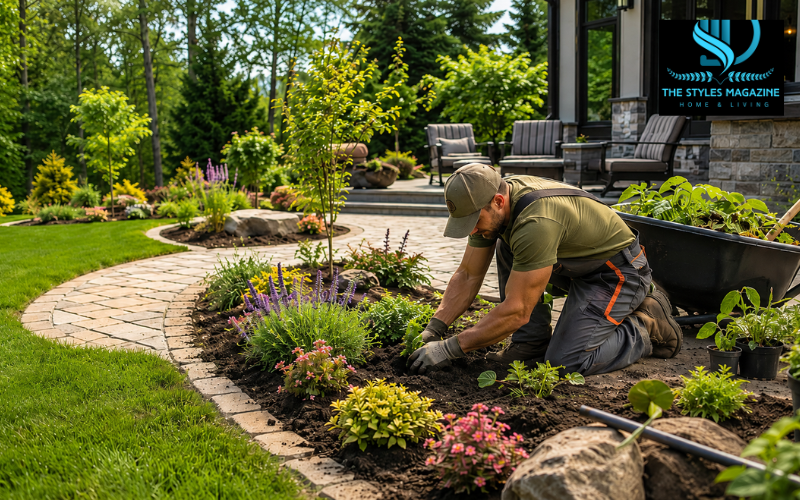
Site preparation is another major part of the job. It can include digging, clearing, leveling, adding or improving soil, moving materials, and preparing bases for lawns or hard surfaces. Plant installation may involve turf, trees, shrubs, flowers, hedges, or ground-cover plants selected for the local conditions.
Many landscapers also install practical features such as paths, edging, simple walls, irrigation components, or outdoor structures. After installation, they may provide ongoing maintenance or explain how the owner should care for the new landscape. BLS notes that grounds maintenance workers commonly plant, water, mulch, mow, trim, and monitor plant health.
Hardscaping and Structural Landscape Work
Hardscaping refers to the non-living, built parts of a landscape. These can include patios, paved areas, paths, steps, edging, gravel surfaces, retaining walls, and some types of decks or pergolas. Hardscape features often make an outdoor area easier to walk through, use, and organize.
Successful hardscaping depends heavily on what happens below the visible surface. A patio may look simple, but the base must usually be prepared and compacted properly so it stays level and drains correctly. Retaining structures also need appropriate design, materials, and drainage because they hold back soil and may be exposed to significant pressure.
Not every landscaper is qualified to build every structure. Large retaining walls, raised decks, electrical work, major plumbing, or structural features may need permits or licensed trades. A professional landscaper should be clear about what their team can legally and safely complete and when another specialist is needed.
Softscaping: Plants, Lawns, and Living Features
Softscaping covers the living side of the landscape, including lawns, trees, shrubs, flowers, hedges, and ground covers. Good plant selection is not only about choosing what looks attractive on installation day. Plants should suit the climate, sunlight, soil, drainage, available room, and amount of maintenance the owner is willing to provide.
Before planting, a landscaper may loosen compacted ground, improve soil, remove weeds, adjust levels, or add suitable organic material. Preparing the soil properly can make it easier for roots to establish and can reduce avoidable problems later.
A thoughtful planting plan also considers mature plant size. Small shrubs placed too close to a walkway or building may become a maintenance problem once they grow. Landscapers can use different heights, textures, flowering periods, and evergreen plants to create a balanced space that changes naturally through the seasons.
After installation, new plants usually need careful watering and monitoring while their root systems become established.
Drainage, Irrigation, Grading, and Water Management
Water management is one of the most practical parts of landscaping. A beautiful yard can quickly become difficult to use if rainwater collects beside a house, washes soil away, or leaves planting areas constantly wet.
Grading means shaping the ground to create suitable levels and slopes. Landscapers may use grading to direct surface water toward an appropriate drainage point and away from places where it could cause problems. Depending on the site, drainage work may also involve channels, drains, permeable surfaces, or underground components.
Irrigation systems help deliver water to lawns and plants in a controlled way. A system may use sprinklers for turf and drip irrigation for planting beds, depending on local needs. Correct scheduling matters as much as installation; excessive watering wastes water and can harm some plants.
Complex drainage, stormwater connections, plumbing, or work close to foundations may require specialist design, permits, or licensed contractors. A landscaper should identify those limits before construction begins.
Landscaping Maintenance and Seasonal Care
Landscaping does not end when the installation crew leaves. Lawns grow, plants mature, weeds appear, mulch breaks down, and weather can affect both planted and built areas. Regular maintenance protects the work already completed.
Common care includes mowing, edging, pruning, trimming, weeding, mulching, watering, and checking the health of plants. Seasonal cleanups may involve removing leaves and debris, cutting back suitable plants, refreshing beds, or replacing short-lived seasonal planting.
Pest and weed treatment should be based on the actual problem rather than routine overuse of chemicals. Local rules may also control who can apply certain products. In the United States, BLS notes that states may require licensing for workers who apply pesticides and fertilizers.
Hardscape needs attention too. Settling, blocked drains, damaged edging, loose pavers, or worn timber can become larger problems when ignored. Periodic inspection makes repairs easier to manage.
Tools, Machinery, and Technical Skills Landscapers Use
Landscapers use tools ranging from basic shovels, rakes, pruners, wheelbarrows, and measuring equipment to powered mowers, trimmers, saws, compactors, and digging machinery. BLS also notes that grounds maintenance workers may use equipment such as lawnmowers, chainsaws, tractors, and backhoes, depending on their role.
Using equipment safely is only one part of the skill set. Landscapers need to measure accurately, understand levels, prepare soil, handle plants carefully, estimate materials, follow plans, and recognize drainage or site problems. Some roles also require experience with irrigation, paving, masonry, timber work, or turf installation.
People skills matter as well. Landscapers often need to understand what a client wants, explain practical limitations, coordinate with coworkers, and adapt when site conditions are different from expected. BLS identifies communication, physical stamina, coordination, independence, and the ability to visualize how a landscape will look as useful qualities in this work.
How a Landscaping Project Typically Works
Most well-managed landscaping projects start with a conversation about the property and the client’s goals. The landscaper may ask how the space is used, what problems need solving, which features are important, what level of maintenance is acceptable, and what budget is available.
The next step is usually a site assessment. Soil, sunlight, slopes, drainage, access, existing plants, utilities, and structures can all affect the plan. For larger projects, the landscaper may then prepare a concept, measurements, material choices, a scope of work, and a quotation.
Once the plan is approved, work typically moves into site preparation and construction. Hardscape and drainage are often handled before final planting so new plants are not damaged by heavy work. Turf, shrubs, trees, mulch, and finishing details are usually added later.
A final inspection should confirm that the agreed work has been completed. The landscaper may also provide watering, maintenance, warranty, or plant-care instructions.
What Affects the Cost of Hiring a Landscaper?
There is no single useful price for hiring a landscaper because “landscaping” can mean anything from a small maintenance visit to a complete yard rebuild. In U.S. consumer cost data updated in 2026, HomeAdvisor reports an average professional landscaping project cost of about $3,516, with a broad range of roughly $200 to $14,800. That wide range shows why the scope of the project matters more than a national average.
Size is important, but condition and complexity can matter just as much. A level, accessible garden that needs turf and planting is usually simpler than a steep site requiring excavation, retaining work, drainage, irrigation, and large quantities of imported material. Labour rates, disposal costs, plant choices, stone, timber, paving, machinery access, and local permit requirements can also change the total.
Instead of choosing the cheapest figure, compare written quotations based on the same scope. Check what materials, quantities, preparation, cleanup, warranties, taxes, and exclusions are included. A lower quote may not actually be cheaper if important preparation work has been left out.
How to Find and Choose a Landscaper Near Me
Searching for a landscaper near me is a useful starting point, but distance should not be the only factor. Look for professionals who regularly complete the type of work you need. A company known mainly for lawn maintenance may not be the best fit for a drainage-heavy renovation, while an experienced hardscape contractor may not specialize in detailed planting design.
Review recent project photos and customer feedback, but also ask practical questions. Find out who will supervise the job, whether subcontractors will be used, what insurance the business carries, and whether licences or permits are needed locally. For larger projects, ask for references from work similar in size and scope.
A detailed written quote should describe the work, materials, payment schedule, estimated timing, cleanup, and major exclusions. Avoid relying only on a short verbal price.
Comparing two or three suitable professionals can help you understand whether the proposed solution and cost are reasonable. The best choice is usually the landscaper who clearly understands the site, explains how problems will be handled, and provides a realistic scope of work.
Landscaper Jobs, Career Skills, and Finding Work Near You
Landscaper jobs can range from entry-level grounds work to skilled installation, irrigation, machine operation, crew leadership, and supervision. A new worker may begin with mowing, planting, mulching, loading materials, cleanup, and basic hand tools. With experience, the role can expand into paving, grading, irrigation, equipment operation, estimating, site coordination, or team management.
Formal education is not always required for entry-level grounds maintenance work in the United States. BLS says workers typically learn on the job, although licences may be required for activities such as pesticide application. The work is mainly outdoors and can be physically demanding, with frequent bending, lifting, digging, and exposure to changing weather.
For current U.S. career context, BLS reports a May 2024 median hourly wage of $18.31 specifically for landscaping and groundskeeping workers. It projects employment in that occupation to rise 4% from 2024 to 2034, from about 1.19 million to 1.24 million jobs. Actual pay can differ considerably by location, experience, employer, and specialty.
People searching for landscaper jobs near me can check local landscaping companies, grounds-maintenance contractors, municipalities, schools, parks, property-management firms, resorts, and general job platforms. Local wage data is more useful than a national figure when comparing real opportunities because pay and demand can vary greatly between areas.
Conclusion
A landscaper can do far more than keep a lawn tidy. Depending on their skills and the project, landscapers may reshape outdoor areas, improve drainage, install hardscape, establish lawns and planting, set up irrigation, and provide ongoing care. Their work combines practical outdoor construction with an understanding of how plants and outdoor spaces change over time.
For homeowners, the right professional is the one whose experience matches the job. Check the proposed scope, previous work, safety practices, insurance, local requirements, materials, and long-term maintenance needs before agreeing to a project. A clear plan and detailed quote are usually more useful than choosing on price alone.
For people considering landscaping as a career, the field offers a practical route into outdoor work with room to develop specialist and supervisory skills. Whether you are hiring a landscaper or looking for landscaper jobs, understanding the role makes it easier to make a confident and informed decision.
Frequently Asked Questions
What Does A Landscaper Do?
A landscaper creates, improves, and maintains outdoor areas. Their work may include planting, lawn installation, paving, drainage, irrigation, soil preparation, pruning, and construction of suitable outdoor landscape features.
What Is The Difference Between A Gardener And A Landscaper?
A gardener mainly cares for existing plants and gardens, while a landscaper may also reshape land, install lawns, build paths or patios, improve drainage, and create complete outdoor spaces.
How Much Does It Cost To Hire A Landscaper?
Landscaping costs vary widely depending on property size, labour, materials, site condition, drainage, planting, and construction requirements. Getting several detailed local quotations provides a more useful estimate than relying on national averages.
How Do I Find A Good Landscaper Near Me?
Search local landscaping companies, review their previous projects, check customer feedback, verify relevant insurance or licences, and request detailed written quotes from several professionals before choosing one.
Do Landscaper Jobs Require Formal Qualifications?
Many entry-level landscaper jobs provide on-the-job training, although specialist work may require licences, certifications, or additional training. Practical skills, physical fitness, equipment safety, plant knowledge, and reliability are especially valuable.
Enjoyed it? Find more exclusive content on The Styles Magazine.
Disclaimer: This article provides general informational guidance about landscapers, landscaping services, costs, and careers. Prices, licensing rules, permits, insurance requirements, job qualifications, and permitted work can vary by country, state, and local authority. Always verify current local regulations and obtain advice from a qualified professional before starting major structural, drainage, electrical, irrigation, or excavation work.