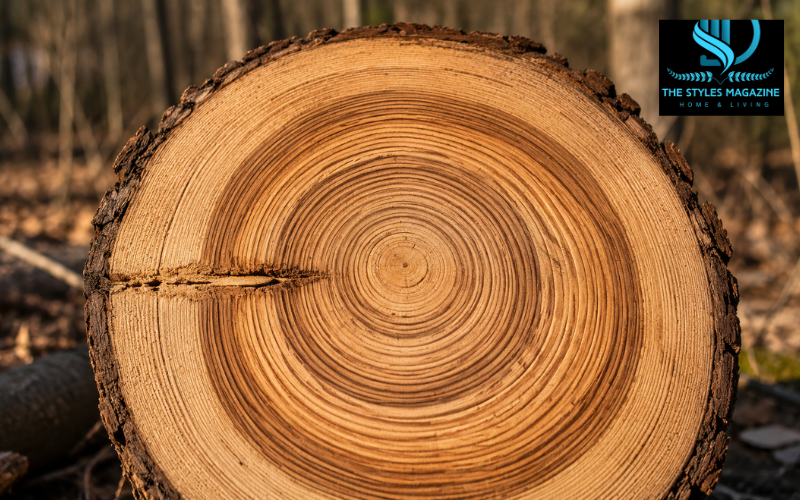
A tree ring is a layer of wood that forms inside a tree as it grows. These rings are usually seen clearly when a tree trunk is cut across, showing circular lines that move outward from the center of the wood. Tree rings are also called growth rings or annual rings because, in many trees, each ring represents one growing season.
Tree rings are more than just natural patterns in wood. They can tell us how old a tree is, how healthy its growing years were, and what kind of environment it lived in. Some rings show years of strong growth, while others show stress from drought, cold weather, insects, fire, or poor soil. Because of this, tree rings are often used by scientists to study past climate and environmental history.
This article focuses mainly on natural tree rings found inside trees. Some people also search for terms like tree ring jewelry, tree ring edging, Christmas tree ring, or tree ring concrete, but those meanings are different from natural growth rings. Here, the main focus is the real tree ring that forms as part of a tree’s life.
Quick Guide Table
| Tree Ring Feature | What It Means |
| Wide ring | A strong growing year with good water, sunlight, and temperature |
| Narrow ring | Stress from drought, cold, poor soil, insects, or disease |
| Light-colored part | Earlywood, formed during faster spring growth |
| Dark-colored part | Latewood, formed during slower late-season growth |
| Fire scar | A sign that the tree survived a past fire |
| Uneven rings | Growth affected by leaning, damage, slope, or environmental stress |
What Is a Tree Ring?
A tree ring is a circular layer of wood that forms as a tree grows wider. Trees do not only grow taller; they also increase in thickness over time. Each new layer is added around the older wood, which is why the rings look like circles or uneven circles when you look at a stump or wood slice.
Tree rings appear mostly in the trunk, but they can also form in branches and roots. The trunk usually gives the clearest record because it contains the main growth history of the tree. When a tree is young, the center of the trunk forms first. As the tree gets older, new wood is added around the outside, just under the bark.
Some tree rings are easy to see because they have clear color changes. Others are harder to notice because the tree grew in a place where seasons were not very different. In some species, the lines between rings are sharp and dark. In others, the rings may be faint, uneven, or difficult to count without proper tools.
How Tree Rings Form Each Year
Tree rings form because a tree’s growth changes through the seasons. In many temperate regions, trees grow faster during spring and early summer when sunlight, warmth, and water are more available. Later in the season, growth slows down as conditions become drier, cooler, or less favorable. This change creates a visible difference in the wood.
In places with clear seasons, many trees form one tree ring each year. That is why annual rings are often used to estimate tree age. However, this is not always perfect in every climate or every species. Some trees may form unclear rings, extra growth lines, or missing rings when conditions are unusual.
Sunlight, water, temperature, soil quality, and nutrients all affect how a tree grows. A year with enough rain and mild temperatures may produce a wider ring. A year with drought, extreme cold, disease, or poor soil may produce a narrow ring. This is one reason tree rings are useful for understanding the conditions a tree experienced during its life.
Earlywood and Latewood in a Tree Ring
Each tree ring usually has two main parts: earlywood and latewood. Earlywood forms early in the growing season, often in spring. During this time, the tree grows quickly, so the wood cells are usually larger and lighter in color. This part of the ring may look pale, soft, or wider than the darker part.
Latewood forms later in the growing season when growth slows down. The cells are usually smaller, denser, and darker. This darker band often marks the end of one growing season. When people count tree rings, they often look carefully for these dark latewood bands because they help separate one year from the next.
The contrast between earlywood and latewood is what makes many tree rings visible. A wide area of earlywood may show that the tree had a good start to the growing season. A strong latewood band may show how growth slowed as the season ended. Together, these two parts create one annual ring in many trees.
How Tree Rings Show a Tree’s Age
One of the most common uses of tree rings is finding a tree’s age. In a simple stump or wood cross-section, you can estimate the age by counting the rings from the center outward to the bark. Each full ring usually represents one year of growth in trees that form annual rings clearly.
The dark latewood bands are often used as markers because they show the end of each growing season. By counting these bands carefully, you can get a rough or sometimes very accurate idea of how old the tree was when it was cut. This is why people often connect tree rings age with simple ring counting.
However, counting rings by eye is not always exact. Some rings may be very narrow, damaged, missing, or hard to separate. In some cases, a tree may form a false ring if weather changes suddenly during the growing season. Because of this, scientists often use special tools and samples instead of relying only on a quick look at a stump.
Scientists do not always need to cut a tree down to study its rings. They can use a small tool called an increment borer to take a thin core sample from the trunk. This allows them to study the tree ring pattern while leaving the tree alive.
What Wide and Narrow Tree Rings Mean
The width of a tree ring can reveal a lot about the tree’s growing conditions. A wide ring usually means the tree had a good year for growth. It may have received enough rain, sunlight, nutrients, and suitable temperatures. In simple terms, the tree had the resources it needed to grow more wood.
A narrow tree ring often suggests stress. This stress may come from drought, extreme cold, insect attacks, disease, overcrowding, or poor soil. If a tree does not get enough water or energy, it cannot grow as much during that season, so the ring may be thinner.
Still, one ring should not be judged alone. A narrow ring does not always mean there was a major disaster, and a wide ring does not always mean everything was perfect. Tree growth depends on many factors at the same time. Scientists usually study long patterns across many rings and compare them with other trees from the same area before making conclusions.
This is why tree rings are useful but must be read carefully. They are natural records, but like all records, they need proper interpretation.
Tree Rings and Climate History
Tree rings are valuable because they can record past climate conditions. Since trees respond to weather and environmental stress, their rings can show patterns of wet years, dry years, warm seasons, and difficult growing periods. A long-lived tree can hold hundreds of years of climate information inside its trunk.
For example, a group of narrow rings may suggest several years of drought or poor growing conditions. Wider rings may suggest years with more rainfall or better temperatures. When scientists compare tree ring patterns from many trees in one region, they can build a clearer picture of past climate.
Tree rings are especially useful because they can show climate history before modern weather records existed. Weather stations only go back a limited time in many areas, but old trees, dead wood, and historic timber can extend the record much further. This helps researchers understand long-term climate patterns, including drought cycles and changes in rainfall.
Tree rings also help scientists study climate change. By comparing older growth patterns with modern ones, researchers can see how trees respond to changing temperatures, longer growing seasons, or increased environmental stress.
Dendrochronology: The Science of Studying Tree Rings
Dendrochronology is the scientific study of tree rings. The word may sound difficult, but the idea is simple: scientists study ring patterns to date wood and understand past events. Each tree ring can act like a small timestamp inside the wood.
One important method in dendrochronology is cross-dating. This means scientists compare ring patterns from different trees in the same area. If several trees show the same pattern of wide and narrow rings, researchers can match those patterns and identify exact years. This helps them date old wood, even if the tree is no longer alive.
Dendrochronology is useful in many fields. In forests, it helps researchers understand tree growth and environmental stress. In archaeology, it can help date old wooden buildings, tools, or structures. In climate research, it helps rebuild past weather patterns. In geology and environmental studies, it can even help identify years of landslides, floods, or fires.
Today, scientists may also use scanners, microscopes, image analysis, and software to measure tree rings more accurately. These tools help reduce mistakes and make it easier to study large numbers of samples.
Environmental Events Recorded in Tree Rings
Tree rings can record more than age and climate. They can also show signs of specific environmental events. If a forest fire damages part of a tree but does not kill it, the tree may continue growing around the wound. That fire scar can become trapped inside the rings and may show the year the fire happened.
Insect damage can also leave marks in growth rings. Some insects weaken trees by feeding on leaves, bark, or wood. During those years, the tree may grow less, creating narrow or unusual rings. Disease can leave similar signs by slowing growth or changing the wood structure.
Cold weather can create frost rings, which form when freezing damages growing cells. Storms, heavy snow, flooding, landslides, and physical injuries can also affect growth. A tree leaning after a landslide or storm may produce uneven rings as it tries to support itself.
These marks turn a tree into a natural record of its surroundings. By reading these signs carefully, scientists can learn not only about the tree but also about the history of the place where it grew.
Tree Rings in Different Types of Trees
Tree rings do not look the same in every tree. In temperate regions, where seasons are clearly different, many trees form visible annual rings. This is common in places with cold winters and warm growing seasons. The stop-and-start rhythm of growth makes the rings easier to see.
In tropical regions, tree rings may be less predictable. Some tropical trees grow throughout much of the year because the climate stays warm. Instead of winter and summer, their growth may depend more on wet and dry seasons. Some tropical trees still form rings, but they may not always be as clear or as simple to count.
Hardwood and softwood trees can also show rings differently. Softwoods, such as pine, often have clear earlywood and latewood differences. Hardwoods may show more complex patterns because their vessels and fibers can vary in size and arrangement.
This is why species matters when reading a tree ring. A ring pattern that is clear in one tree may be confusing in another. For accurate results, scientists consider the tree species, local climate, and growing conditions together.
Common Misunderstandings About Tree Rings
A common misunderstanding is that every visible line in wood is always one full year. In many trees this is true, but not always. Some trees may form false rings because of sudden weather changes, such as a dry period followed by rain. Other trees may have missing or very faint rings during stressful years.
Another misunderstanding is that ring width depends only on age. In reality, ring width depends on growing conditions. A young tree may grow wide rings when it has plenty of space and resources. An older tree may grow narrow rings because growth naturally slows, or because it faces stress from drought, competition, or disease.
People may also assume tree rings look the same everywhere. They do not. Climate, species, soil, slope, water supply, and damage can all change the appearance of rings. Even two trees growing near each other may have slightly different ring patterns.
A stump can give useful clues, but it is not always enough for exact scientific dating. For serious research, experts use careful sampling, measurement, and comparison with other trees.
Other Meanings People Search for Around “Tree Ring”
The phrase tree ring can mean different things depending on what someone is searching for. In this article, the main meaning is the natural growth ring inside a tree. This is the meaning connected with tree rings age, annual growth, climate records, and dendrochronology.
However, some searches use the same words in different ways. Tree ring jewelry usually refers to rings made from wood or designed to look like natural wood grain. These pieces may use the beauty of growth ring patterns, but they are not the same as scientific tree rings.
Tree ring edging, tree ring metal, tree ring concrete, and tree ring Lowe’s usually refer to landscaping products placed around the base of a tree. These can be decorative or practical borders for gardens and yards. They are related to trees, but not to growth rings inside the trunk.
A Christmas tree ring usually means a decorative collar or base ring placed around an artificial or real Christmas tree. Tree ring yearbook is also a separate search term and should not be confused with natural growth rings. Understanding these differences helps readers find the information they actually need.
How to Read Tree Rings Safely and Accurately
If you want to read tree rings, the easiest place to start is a clean stump or a smooth wood cross-section. The surface should be clear enough to see the center and the outer edge. If the wood is rough, dirty, or cracked, the rings may be harder to count.
Start near the center of the wood and count outward toward the bark. Look for the darker latewood bands because they often mark the end of each growing season. Try to follow one line from the center to the outside, because rings may be wider on one side than another.
It is important not to damage living trees just to count their rings. Cutting bark or drilling into a tree without the right tools can harm it. Scientists use proper sampling methods when they need accurate information from a living tree.
For casual learning, a stump or fallen branch can be enough. For exact age, climate study, or environmental history, it is better to rely on trained experts and proper methods. Tree rings can tell a powerful story, but the story is clearest when the rings are read carefully.
Conclusion: Why Tree Rings Matter
A tree ring is much more than a circular mark in wood. It is a natural record of time, growth, and environmental change. Each ring can hold clues about a tree’s age, the weather it experienced, and the challenges it survived.
Tree rings help us understand strong growing years, droughts, fires, insect damage, frost, and long-term climate patterns. They also connect everyday observations, like counting rings on a stump, with serious scientific research such as dendrochronology.
Whether you are looking at a tree stump in a backyard or reading about climate history, tree rings offer a simple but meaningful way to understand nature. They remind us that trees do not just grow through time; they record time in the wood they leave behind.
FAQs
What Is A Tree Ring?
A tree ring is a circular layer of wood formed as a tree grows. In many trees, one ring represents one year and helps show the tree’s age and growing conditions.
Do Tree Rings Always Show One Year?
In many temperate trees, one ring usually shows one year. However, false rings, missing rings, or unclear rings can happen because of drought, unusual weather, or tree species differences.
How Do Tree Rings Show Climate History?
Tree rings record growth changes caused by weather. Wide rings often show good growing years, while narrow rings may suggest drought, cold, low rainfall, or other stressful climate conditions.
Can You Tell A Tree’s Age By Counting Rings?
Yes, you can often estimate a tree’s age by counting rings from the center to the bark. For exact results, scientists use careful samples and compare ring patterns.
What Is Dendrochronology?
Dendrochronology is the science of studying tree rings. It helps researchers date wood, understand past climates, study old buildings, and identify events like fires, droughts, or insect damage.
Enjoyed it? Find more exclusive content on The Styles Magazine.
Disclaimer: This article is for general educational purposes only. Tree ring patterns can vary by species, climate, and growing conditions. For scientific dating, forest research, or tree health decisions, consult a qualified expert.