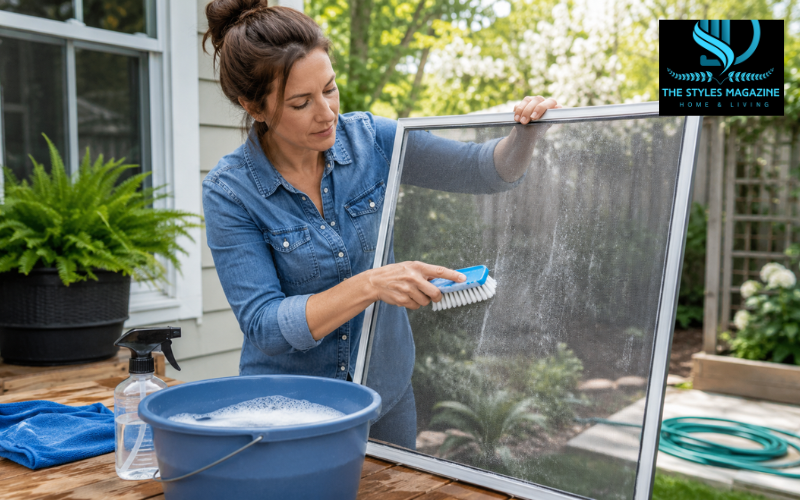
Window screens do a simple job, but they collect a surprising amount of dirt over time. Dust, pollen, cobwebs, pet hair, dead bugs, outdoor grime, and fine debris can settle into the mesh without you noticing right away. When this buildup becomes heavy, your screens can start to look dull, block fresh air, and even make nearby window glass and frames dirty faster.
Learning how to clean window screens properly helps keep your windows looking fresh and your home feeling cleaner. Clean screens allow better airflow, improve the appearance of your windows, and reduce the amount of dirt that can blow inside when windows are open. The good news is that you do not need expensive tools or strong chemicals to get the job done.
Most window screens can be cleaned at home with simple supplies like a vacuum, mild dish soap, white vinegar, a soft brush, a microfiber cloth, and a garden hose or showerhead. The safest cleaning method depends on your window style and whether the screens can be removed. Removable screens are easier to deep clean outdoors, while fixed or hard-to-reach screens can still be refreshed from inside the house with a careful, gentle approach.
Quick Guide Table: How to Clean Window Screens
| Cleaning Method | Best For | What to Use | Quick Tip |
| Remove and wash | Deep cleaning dirty screens | Vacuum, mild soap, brush, hose | Label each screen before removing it. |
| Vinegar cleaning | Light dirt and odor | 50/50 vinegar and water | Do not mix vinegar with bleach. |
| Hose method | Outdoor cleaning | Garden hose with gentle spray | Avoid pressure washers. |
| Without removing | Fixed or hard-to-remove screens | Vacuum, spray bottle, microfiber cloth | Wipe gently to avoid pushing the mesh out. |
| Without a hose | Apartments or indoor cleaning | Bathtub, showerhead, spray bottle | Dry screens fully before reinstalling. |
Why Clean Window Screens Regularly
Cleaning window screens regularly is important because screens are exposed to both indoor and outdoor dirt. Outside, they catch pollen, dust, leaves, insects, and pollution. Inside, they can collect pet hair, lint, and household dust. Over time, this buildup can make the mesh look gray or stained.
A clean screen also helps air move more freely through the window. When the mesh is packed with dust and debris, airflow becomes weaker, and fresh air may not come through as easily. This is especially noticeable during spring and summer when windows are opened more often.
Clean screens also improve the look of your windows. Even if the glass is spotless, dirty screens can make the whole window area look neglected. Dirt from the screen can also transfer onto window tracks, sills, frames, and glass, which means you may need to clean those areas more often. A simple screen-cleaning routine helps prevent this and keeps your windows looking brighter for longer.
Tools and Supplies Needed to Clean Window Screens at Home
Before you start, gather the right supplies so the process is smooth and safe. You do not need anything complicated. A vacuum with a soft brush attachment is useful for removing dry dust before washing. A soft-bristle brush, sponge, or microfiber cloth can help clean the mesh without tearing or stretching it.
For the cleaning solution, mild dish soap mixed with warm water is usually enough. White vinegar is also helpful for light grime and odor, especially when you want a simple household cleaner. You may also need a bucket, spray bottle, garden hose, showerhead, towels, and a tarp if you are cleaning outside.
Avoid rough brushes, harsh cleaners, bleach, and abrasive pads. Window screen mesh is delicate, especially if it is made from fiberglass. Using the wrong tool can damage the screen, loosen the mesh from the frame, or bend the frame. Gentle cleaning is always the safest choice.
How to Remove Window Screens Safely Before Cleaning
If your window screens are removable, taking them out before cleaning is usually the best option. Start by opening the window fully so you can reach the screen frame easily. Look for small tabs, pins, clips, or lift handles on the screen. These are usually found near the bottom or sides of the frame.
Hold the screen firmly but gently. Release the tabs or clips, then carefully move the screen out of its track. Avoid pulling too hard because the frame may bend. If the screen feels stuck, check again for hidden clips or dirt in the track before forcing it.
Once removed, label each screen with masking tape or painter’s tape. Write the room name or window location on the tape. This step may seem small, but it saves time when reinstalling the screens, especially if several screens look similar.
Place the screens on a clean, flat surface outdoors, such as a tarp on the lawn or driveway. If you do not have outdoor space, you can clean them in a bathtub or shower. Just make sure the area is safe, clean, and large enough to support the screen without bending it.
How to Clean Window Screens Step by Step
The best way to clean window screens is to remove loose dirt before adding water. If you wet a dusty screen right away, the dust can turn into muddy residue and become harder to remove. Use a vacuum with a soft brush attachment and gently run it over both sides of the mesh. This helps remove pollen, cobwebs, pet hair, and loose debris.
Next, prepare a mild cleaning solution. Mix warm water with a small amount of mild dish soap in a bucket. You only need a few drops of soap because too much can leave residue behind. Dip a soft brush, sponge, or microfiber cloth into the solution and gently scrub the screen.
Use light pressure and smooth motions. Do not push hard into the mesh, as this can stretch or loosen it. Clean both sides of the screen and pay attention to the frame edges, corners, and tracks where dirt often collects.
After scrubbing, rinse the screen thoroughly with low-pressure water. A garden hose, showerhead, or gentle stream of water works well. Rinse until the water runs clear and no soap remains. Finally, let the screens dry completely before putting them back. Stand them upright in a shaded area so air can circulate around both sides.
How to Clean Window Screens with Vinegar
White vinegar is a useful option when you want a simple, natural cleaner for light dirt and buildup. To clean window screens with vinegar, mix equal parts white vinegar and warm water in a spray bottle or bucket. A 50/50 mixture is usually strong enough for most household screen cleaning.
Vinegar works best for light grime, dust, and mild odors. It can also help freshen screens that have been exposed to pollen or musty air. Spray the vinegar mixture lightly onto the screen or apply it with a microfiber cloth. Let it sit for a few minutes, then wipe gently.
If the screen is very dirty, vacuum it first and then clean with vinegar water. For deeper cleaning, you can use vinegar water after a mild soap wash, but make sure to rinse well afterward. Do not mix vinegar with bleach or strong chemical cleaners. This can create harmful fumes and is not safe for home cleaning.
Vinegar is helpful, but it is not always the best choice for heavy grease or sticky residue. In that case, mild dish soap and warm water may work better. Always keep the cleaning gentle so the mesh stays in good condition.
How to Clean Window Screens with a Hose
Using a hose is one of the easiest ways to rinse removable window screens. After vacuuming and scrubbing the screens, place them upright or flat on a clean surface. Use a low-pressure spray setting and rinse from top to bottom so dirt flows downward.
Do not use a pressure washer. Strong pressure can tear the mesh, loosen the spline that holds the screen in place, or bend the frame. A gentle garden hose spray is enough to remove soap and loosened dirt.
Make sure you rinse both sides of the screen. Soap left behind can attract more dust and make the screen dirty again faster. After rinsing, gently shake off extra water. You can lightly tap the screen frame against a towel or soft surface, but avoid hitting it against concrete or hard ground.
Let the screen air dry fully before reinstalling it. If water stays trapped in the frame or mesh, it may drip onto the window area or encourage mildew in damp conditions.
How to Clean Window Screens Without Removing Them
Sometimes screens cannot be removed easily, or you may not feel comfortable taking them out. In that case, you can still clean window screens without removing them. This method is best for light cleaning or regular maintenance.
Start by placing thick towels on the windowsill and floor area below the window. This helps catch dust, water, and drips. Use a vacuum with a soft brush attachment and gently clean the screen from inside the house. Work from top to bottom so loose dirt falls downward.
Next, lightly mist the screen with a vinegar and water solution or a very mild soap solution. Do not soak the screen, especially if you are cleaning indoors. Use a damp microfiber cloth to wipe the mesh gently in circular motions. Keep your hand light and avoid pressing too hard because the screen may pop out of the frame.
After wiping, use a clean damp cloth to remove any leftover cleaner. Then dry the sill and frame. This method will not be as deep as removing and washing the screen, but it is a safe and useful way to freshen screens between deep cleanings.
How to Clean Window Screens Without a Hose
You can still clean window screens at home even if you do not have a garden hose. A bathtub, shower, large sink, or spray bottle can work well. This is helpful for apartments, condos, or homes without outdoor space.
If the screen can be removed, place it in the bathtub or shower. Vacuum it first if possible, then wash it with warm water and mild dish soap. Use a soft sponge or microfiber cloth to clean the mesh and frame. Rinse with a low-pressure showerhead until the water runs clear.
For smaller screens, a large sink may be enough. If the screen is fixed in place, use a spray bottle filled with vinegar water or a mild soap solution. Mist lightly, wipe with a damp cloth, and follow with a clean cloth to remove residue.
Drying is especially important when cleaning indoors. Let removable screens stand upright on towels until they are completely dry. Do not reinstall wet screens, because moisture can drip into the frame or create musty smells.
How to Clean Window Screens Without Streaks
Streaks usually happen when dust is not removed first, too much soap is used, or cleaning residue is left on the mesh. To clean window screens without streaks, begin with dry cleaning. Vacuum both sides of the screen or use a soft brush to remove loose dust.
When washing, use only a small amount of mild soap. More soap does not mean better cleaning. In fact, too much soap can leave a film that attracts dirt and makes the screen look cloudy. After scrubbing, rinse carefully until there are no bubbles or slippery areas left.
Dry the screens upright in a shaded area. Direct sunlight can dry soap or mineral residue too quickly and may leave marks. If you are cleaning screens from inside, use a clean microfiber cloth and wipe gently until the screen looks even.
The key is to keep the process simple: remove dust, use a gentle cleaner, rinse well, and dry fully. This helps the screen look cleaner without streaks or leftover residue.
Cleaning Window Screens from Inside the House
Cleaning window screens from inside the house is useful for apartments, upper-floor windows, or screens that are difficult to remove. This method should be done carefully because too much pressure can push the screen out of its frame.
Start by protecting the area around the window. Place towels on the sill and floor to catch drips. Close nearby curtains or move them away so they do not get wet. Vacuum the screen gently from top to bottom using a soft brush attachment.
Once loose dust is removed, lightly mist the screen with a vinegar-water solution. Use a microfiber cloth that is damp, not dripping wet. Wipe the mesh gently with one hand while supporting the screen frame with the other if possible. Avoid heavy scrubbing.
Inside cleaning is best for light dirt and maintenance. If the screen has thick grime, moldy buildup, or heavy pollen, removing it for a deeper wash is usually better. Still, inside cleaning can keep screens looking fresh when full removal is not practical.
Should You Use WD-40 on Window Screens?
WD-40 is not a proper cleaner for window screen mesh. It is an oil-based product, and spraying it directly on the screen can leave residue. That residue may attract dust, make the mesh sticky, and create stains that are harder to clean later.
There may be times when WD-40 or a similar lubricant is useful around a window, such as loosening a stuck metal part, stiff track, or rusty screw. But it should not be used as a general screen cleaner. If you need to use it near the window frame, apply it carefully to the specific metal part only, not the mesh.
For the screen itself, safer options include mild dish soap, warm water, white vinegar, a soft brush, and a microfiber cloth. These clean the mesh without leaving oily residue behind. When in doubt, keep oil-based sprays away from the screen fabric.
Common Mistakes to Avoid When Cleaning Window Screens
One of the most common mistakes is scrubbing too hard. Window screens may look sturdy, but the mesh can stretch, tear, or pull away from the frame if handled roughly. Always use light pressure and soft cleaning tools.
Another mistake is using harsh chemicals. Strong cleaners can damage the mesh, discolor the frame, or leave fumes around the window area. Mild soap and vinegar are usually enough for regular cleaning.
High-pressure water is also risky. Pressure washers and strong hose settings can damage the mesh quickly. A gentle rinse is safer and still effective. Reinstalling screens while they are wet is another mistake to avoid. Wet screens can drip into the window frame and may lead to musty smells or moisture problems.
Finally, do not forget to label your screens before removing them. Many screens look alike, but small size differences can make reinstallation frustrating. A simple tape label can save you time and prevent mix-ups.
How Often Should Window Screens Be Cleaned?
How often you clean your window screens depends on your home, weather, and surroundings. For most homes, a light cleaning every few months is helpful. This can include vacuuming the screens and wiping away visible dust.
A deeper cleaning once or twice a year is usually enough for many households. Spring is a good time because pollen and dust often build up during that season. Fall can also be a good time to remove dirt before windows stay closed during colder months.
You may need to clean more often if you live near a busy road, dusty area, construction zone, or place with heavy pollen. Homes with pets may also need more frequent screen cleaning because pet hair and dander can stick to the mesh.
After storms, strong winds, or long dry periods, check your screens for extra dirt. Cleaning them when buildup is still light makes the job easier and helps prevent stains from settling into the mesh.
Conclusion
Knowing how to clean window screens the right way helps you keep your windows cleaner, your home fresher, and your screens in better condition. The safest method is simple: remove loose dust first, wash gently with mild soap or vinegar water, rinse with low pressure, and let the screens dry completely before reinstalling them.
If your screens can be removed, a full wash outdoors or in a bathtub gives the best results. If they cannot be removed, you can still clean them from inside with a vacuum, light mist, and microfiber cloth. The most important thing is to avoid rough scrubbing, harsh chemicals, pressure washers, and oily products like WD-40 on the mesh.
With the right method, cleaning window screens at home is easy and does not take special equipment. Choose the approach that fits your window style, clean gently, and your screens will look clearer, allow better airflow, and stay in good shape for longer.
FAQs
How Do You Clean Window Screens Without Removing Them?
You can clean window screens without removing them by vacuuming the mesh first, lightly spraying vinegar water, and wiping gently with a damp microfiber cloth. Place towels below to catch drips.
What Is The Best Cleaner For Window Screens?
Mild dish soap mixed with warm water is usually the best cleaner for window screens. White vinegar and water also work well for light dirt, dust, pollen, and mild odors.
Can I Clean Window Screens With A Hose?
Yes, you can clean window screens with a hose, but use low water pressure only. Strong pressure or pressure washers can tear the mesh, loosen the spline, or bend the frame.
How Do I Clean Window Screens Without Streaks?
To clean window screens without streaks, vacuum loose dust first, use very little soap, rinse thoroughly, and dry the screens upright in shade before putting them back.
Should I Use WD-40 To Clean Window Screens?
No, WD-40 should not be used to clean window screen mesh. It can leave oily residue that attracts dust. Use mild soap, vinegar water, or a microfiber cloth instead.
Enjoyed it? Find more exclusive content on The Styles Magazine.
Disclaimer: This article is for general home-cleaning information only. Always check your window screen type and manufacturer instructions before cleaning. Test any cleaning solution on a small area first, and avoid harsh chemicals or high-pressure water.