A painted basement ceiling is an exposed ceiling in which the floor joists, subfloor, pipes, ducts, wiring, and other overhead parts are coated in one coordinated color. Instead of covering these features, the paint brings them together visually so the ceiling looks intentional rather than unfinished.
This approach is different from installing drywall or a suspended drop ceiling. Drywall creates a smooth, fully finished surface, while a drop ceiling hides utilities behind removable tiles. Both options can improve sound control and conceal clutter, but they also lower the visible ceiling height and require more materials and labor. An exposed painted ceiling keeps nearly all available headroom and leaves pipes, cables, and mechanical systems easier to reach.
For these reasons, this finish is often chosen for recreation rooms, gyms, workshops, offices, and laundry areas. The final cost depends on cleaning, repairs, masking, primer, paint, and labor.
The sections below explain painted basement ceiling ideas, color choices, surface preparation, spraying, brush-and-roller methods, and the kind of before-and-after result homeowners can realistically expect.
Quick Guide: Painted Basement Ceiling Colors
| Color | Best For | Main Benefit | Possible Drawback |
| Black | Theaters, game rooms, industrial spaces | Hides pipes, wires, and shadows | Can make a dark basement feel smaller |
| White | Offices, gyms, laundry rooms, family rooms | Reflects light and creates an open feel | Shows dust, stains, and uneven details |
| Gray | Modern multipurpose basements | Balances brightness and visual concealment | May appear dull without good lighting |
| Soft Cream | Warm and comfortable interiors | Adds brightness without looking harsh | May require extra coats over dark surfaces |
Quick Steps for Painting an Exposed Basement Ceiling
- Repair leaks, moisture problems, damaged wiring, and loose materials.
- Remove furniture and cover floors, walls, windows, and equipment.
- Vacuum dust, cobwebs, and debris from joists, ducts, and pipes.
- Secure loose low-voltage cables without blocking valves or access points.
- Mask alarms, electrical panels, meters, shut-off valves, and labels.
- Apply a compatible primer where bare wood, stains, or metal require it.
- Spray or hand-paint the ceiling in thin, even coats.
- Allow proper drying time before removing coverings and replacing furniture.
Why Homeowners Choose a Painted Basement Ceiling
The strongest advantage is that paint changes the appearance of the ceiling without building a new one below it. This can be especially useful in an older basement where every inch of headroom matters. Joists remain exposed, so the ceiling does not feel as low as it might with drywall, framing, or suspended tiles.
Access is another practical benefit. A plumber, electrician, or heating professional can still see and reach many pipes, wires, junction boxes, ducts, and shutoff points. Future repairs may also be less disruptive. Important controls, labels, panels, valves, and service points must remain visible and usable.
A single color also reduces visual noise by unifying wood, metal, cable, and pipe surfaces. Dark shades feel industrial, white feels brighter, and gray offers a quieter middle ground.
The Pros and Cons Before You Start
A painted exposed ceiling can preserve height, improve visual order, maintain utility access, and use fewer building materials than a covered ceiling. It also works well in rooms where a relaxed industrial look suits the purpose. Once the ceiling is properly prepared, the result can feel surprisingly finished even though the structure remains visible.
Paint does not hide uneven joists, patched wood, crooked pipes, or poorly routed cables. White may make some details more noticeable. Preparation is time-consuming, and overspray can reach nearby rooms without careful containment.
An open ceiling normally provides less separation from footsteps, voices, plumbing noise, and heating equipment than a properly built drywall ceiling with insulation. It is therefore less suitable beneath bedrooms, nurseries, or quiet work areas when noise control is a high priority.
Drywall may also be the better choice when a smooth, traditional appearance is important. Before changing a basement that will be used as living space, check local permit, fire-safety, insulation, and electrical requirements.
Painted Basement Ceiling Ideas for Different Styles
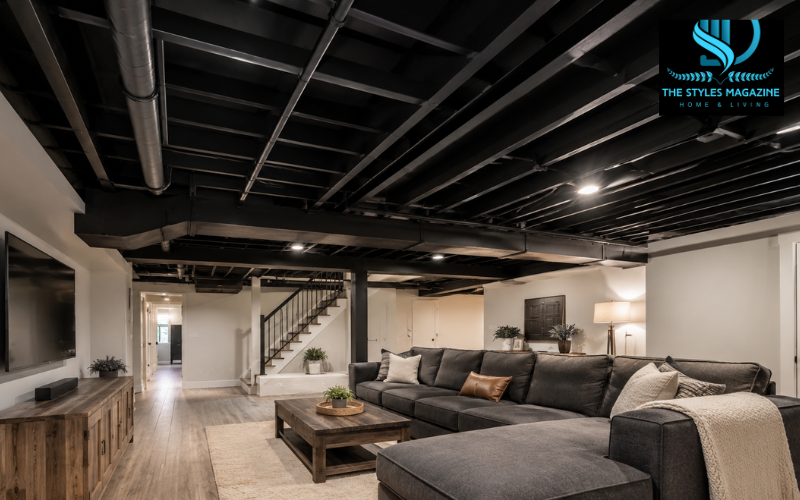
Industrial painted basement ceiling ideas usually combine a black or charcoal ceiling with warm wood, brick, concrete-look flooring, and simple metal lighting. The dark ceiling becomes a background, allowing the furniture and activity areas to receive more attention. This approach is popular for media rooms, bars, workshops, and home gyms.
For a modern, brighter basement, a white painted ceiling can be paired with pale walls, light flooring, and evenly spaced recessed or surface-mounted lights. The exposed construction remains visible, but the room feels cleaner and more open. Soft cream can be less harsh than bright white when the basement uses warm bulbs, beige flooring, or natural wood furniture.
A gray ceiling works well in a minimal or contemporary space. Medium gray softens the contrast between black ducts, silver metal, wood joists, and white walls. Test the final color beside the actual lights, floor, and walls because basement lighting can change its appearance.
You can also use the ceiling color to define different areas. For example, a dark ceiling can create a comfortable television zone, while lighter walls and flooring prevent the whole room from feeling too heavy. Consistent lighting and neatly arranged utilities will make any exposed basement ceiling idea look more intentional.
Painted Basement Ceiling Black
A painted basement ceiling black is popular because it makes many overhead details visually recede. Black does not literally hide pipes and wires, but it reduces the color changes that cause the eye to notice each item separately. A flat or matte surface also limits reflections, helping the ceiling appear as one deep background.
Black suits theaters, gaming rooms, bars, gyms, and modern lounges where a dramatic mood is welcome. It can also make a large basement feel more comfortable and defined.
The risk is that a dark ceiling can absorb light and make a small basement feel closed in. This effect is stronger when the walls, floors, and furniture are also dark. Good results usually come from balancing the ceiling with lighter walls, multiple light sources, and warm materials.
Lighting should be planned before the ceiling is painted. A single central fixture may not provide enough brightness under a black ceiling. Several well-positioned fixtures, lamps, or track lights can spread light more evenly throughout the room.
Charcoal is another useful option. It provides a similar industrial effect with slightly less visual weight than pure black. It may also coordinate more easily with gray flooring, stainless-steel appliances, or concrete walls.
White Painted Basement Ceiling
A white painted basement ceiling reflects more available light around the room and can make a low basement feel fresher and more open. It suits family rooms, offices, playrooms, laundry areas, craft rooms, and gyms where brightness matters.
White does not make the ceiling disappear in the same way as black. Instead, it makes the structure clearer. Joist edges, pipe shapes, nail marks, stains, and rough wood may remain visible, so cleaning, stain blocking, and careful coverage become especially important.
Dust and future repairs may also be easier to notice against a white surface. If a plumber replaces a pipe or an electrician installs a new cable later, the new material may need to be painted to match the surrounding ceiling.
A softer white or cream may look more comfortable under warm lighting than a very bright blue-white. Sherwin-Williams describes Pure White SW 7005 as a bright white with a slight yellow undertone, which may help it feel less stark. However, any color should be sampled inside the basement before a final decision is made.
Paint Basement Ceiling White or Black
The decision to paint a basement ceiling white or black depends mainly on light, ceiling height, room use, and the mood you want. White usually supports a brighter and more open appearance. It is often the safer choice in a basement with small windows, a low ceiling, or activities that require clear visibility.
Black creates depth and a stronger design statement. It can make mixed utilities less noticeable, but it usually needs more artificial light to keep the room comfortable. It may be the better choice when the basement is used for movies, entertaining, exercise, or an industrial-style retreat.
Consider the other finishes in the room as well. A black ceiling with dark flooring and dark walls may feel too enclosed. A white ceiling combined with bright white walls may look cold or make an unfinished basement feel overly plain.
Neither color is automatically best. Industrial gray, soft greige, and charcoal are useful alternatives when black feels heavy and white feels too revealing. A medium gray can reduce the contrast among wooden joists, metal ducts, pipes, and cables while maintaining a balanced amount of brightness.
Choosing the Best Paint, Finish, and Color Match
For most painted basement ceilings, a water-based acrylic or latex coating intended for interior surfaces is easier to work with than a strong solvent-based product. The correct system depends on what is overhead. Bare wood, previously painted wood, galvanized metal, steel, ducts, stains, and masonry may not all accept the same coating without cleaning or primer.
Follow the paint manufacturer’s current product data sheet and ask for surface-specific advice when several materials are being coated together. Some bare metal may require a suitable bonding or rust-inhibiting primer. Knots, water marks, and old stains may need stain-blocking primer before a light topcoat is applied.
Flat and matte finishes are common because they reduce glare and make rough surfaces look more uniform. Sherwin-Williams likewise notes that ceiling paint is typically flat because it reduces glare and minimizes the appearance of imperfections. A higher sheen may be easier to wipe, but it can highlight dents and uneven spray patterns.
For a Sherwin Williams painted basement ceiling, possible color directions include Tricorn Black SW 6258, Iron Ore SW 7069, Pure White SW 7005, and Repose Gray SW 7015. These are color references rather than automatic product recommendations. The selected coating must still be suitable for the surfaces and painting method.
Test a large sample overhead rather than relying only on a small color card. Examine it with the basement’s normal lights switched on and off. A color that appears neutral in daylight may look warmer, cooler, or darker under artificial lighting.
Do not paint over active moisture or mold. The U.S. Environmental Protection Agency advises correcting the water problem, cleaning mold, and drying surfaces before painting because paint applied over moldy material is likely to peel.
How to Prepare an Exposed Basement Ceiling for Painting
Preparation often takes longer than painting. Start by removing furniture, stored items, curtains, and anything else that can collect dust or overspray. Cover the entire floor, seal doorways, protect stairs, and mask walls if they are already finished.
Turn off heating or cooling equipment when appropriate so airborne paint is not pulled through the house. Follow the equipment manufacturer’s instructions, and do not block equipment that must continue operating for safety.
Vacuum cobwebs and dust from joists, subflooring, ducts, pipes, and corners. Clean greasy surfaces and let them dry. Repair leaks, treat rust correctly, and prime water marks, knots, or discoloration that could bleed through.
Loose internet, television, and other low-voltage cables may be organized neatly along the sides of joists. However, electrical, gas, plumbing, fire-safety, and HVAC systems should not be casually moved or changed. Have a qualified professional correct unsafe, damaged, or confusing installations.
Mask electrical panels, junction-box covers that require access, shutoff valves, appliance labels, light sockets, smoke alarms, carbon-monoxide alarms, and any item that should remain readable, movable, or serviceable. Avoid covering identification labels that a future contractor may need.
Older basements require extra caution. Work that disturbs painted surfaces in a pre-1978 U.S. home may create hazardous lead dust, and the EPA recommends lead-safe practices or a certified contractor. Suspicious old pipe wrap, duct insulation, ceiling material, or vermiculite should also be assessed before it is brushed, scraped, vacuumed, or sprayed.
The Best Way to Paint an Exposed Basement Ceiling
An airless sprayer is usually the fastest way to coat an exposed ceiling because it reaches joist sides, narrow corners, pipes, and irregular shapes more evenly than a roller.
A typical workflow is to prime surfaces that require it, spray the deepest gaps and angles first, and then apply controlled passes across the larger ceiling area. Follow the product instructions for tip size, pressure, recoat time, and coverage.
Avoid trying to cover everything with one very heavy coat. Excess paint can run along pipes, drip from joist edges, or collect around fasteners. Several controlled passes generally create a more even appearance, provided the manufacturer’s application instructions are followed.
Spraying creates a large amount of airborne material, so containment and ventilation are essential. Wear eye protection, protective clothing, and the respiratory protection specified by the coating and equipment instructions. OSHA guidance for spray operations emphasizes ventilation and respiratory protection where workers may be exposed to spray hazards.
Keep sparks, flames, heaters, and other ignition sources away from the work area. Read the paint label and safety data sheet before starting, even when using a water-based product.
Dryfall paint can be useful on open overhead areas, but it is often misunderstood. Sherwin-Williams states that its Pro Industrial Waterborne Acrylic Dryfall is intended for professional airless spray application and that the overspray becomes removable dust only when the required height and clearance conditions are met.
A low residential basement may not provide enough falling distance for that benefit. Therefore, floors, walls, windows, appliances, and adjoining rooms still need complete protection. Dryfall paint should never be treated as a replacement for proper masking.
Painting Basement Ceiling Without Sprayer
Painting a basement ceiling without a sprayer is possible when the room is small, spraying is not allowed, or the homeowner wants to avoid widespread overspray. A brush can reach corners, while small rollers can cover joist faces and accessible flat areas.
The method is slower because every side of each joist must be reached separately. Rounded pipes, wire runs, fasteners, and tight spaces are difficult to coat evenly. Drips are also more likely when a roller or brush is overloaded.
Work in small sections, use an angled brush for edges, and choose rollers that fit between joists. Begin with difficult corners and upper surfaces before coating the easier joist faces. Keep checking the floor and nearby surfaces for drips.
Expect the project to take much longer than an ordinary flat ceiling. Two thin coats often look more even than one heavy coat, although the approved coverage and recoat instructions for the selected product must be followed.
Brush-and-roller application can still produce a good result, especially in a small utility area or workshop. However, it may show more texture and minor lap marks than a carefully sprayed finish.
Painted Basement Ceiling Before and After: What to Expect
The most noticeable change in a painted basement ceiling before and after comparison is visual unity. Before painting, the eye sees separate pieces of pale wood, dark cable, silver ductwork, copper pipe, white plastic, labels, and old repairs. After painting, most approved surfaces share one color, so the ceiling feels calmer and more deliberate.
Black usually creates the strongest disappearing effect and gives the room a dramatic edge. Pipes, joists, and wires remain present, but they attract less attention because there is less color contrast between them.
White brightens the ceiling and may make the entire basement feel cleaner. However, it can reveal shapes, stains, gaps, and surface defects that were less noticeable before painting. Thorough preparation and even coverage are especially important with a light color.
Gray creates a softer transformation that connects industrial materials without making the ceiling extremely dark or bright. It can be a practical option when homeowners want an updated appearance without committing to a bold black-and-white look.
Paint will not create a smooth ceiling. Joists, knots, patches, pipes, ducts, and cables remain visible. The goal is a cleaner, more consistent version of the existing structure, supported by good lighting and tidy utility routing.
Common Mistakes to Avoid
The most common mistake is treating the project as a quick coat of paint. Dust, mold, rust, stains, grease, and loose material can weaken adhesion or show through the finish. Moisture problems should be fixed before any coating is applied.
Another mistake is selecting a color from a small sample without testing it overhead. Black can become heavier than expected, while white can look cold or expose every irregularity. Paint a sample on several ceiling areas and view it during daytime and nighttime lighting.
Poor masking is especially costly when spraying. Overspray can settle on floors, walls, windows, appliances, tools, and stored belongings. Seal nearby doors, cover air returns where appropriate, and protect the full room rather than only the area directly below the sprayer.
Do not assume dryfall paint removes the need for protection. It performs as intended only under the height, temperature, airflow, and application conditions stated by the manufacturer.
Using one paint on every material without checking compatibility can also cause problems. Bare wood, metal, plastic, old coatings, and rusty surfaces may need different preparation or primer. Ask the paint supplier about the complete coating system rather than choosing only a topcoat color.
Do not coat items that must operate, display information, detect hazards, or remain accessible. Keep valves, panels, labels, covers, and key connections usable, and follow the label’s drying and curing instructions.
Conclusion
A painted basement ceiling can be a practical way to improve an unfinished space while preserving headroom and access to utilities. It works especially well when the exposed structure is reasonably tidy and the room does not require the smooth appearance or sound separation of a fully covered ceiling.
The best result depends on four decisions: choosing a color that suits the light and room use, selecting compatible paint and primer, preparing every surface carefully, and using an application method that matches the project. Black offers depth, white supports brightness, and gray provides a balanced alternative.
When moisture, safety, masking, and future maintenance are handled properly, a painted basement ceiling can make the entire basement feel more planned, comfortable, and complete without hiding the character of its exposed construction.
Frequently Asked Questions
Is Painting A Basement Ceiling A Good Idea?
Painting an exposed basement ceiling can be a practical choice when you want to preserve headroom, maintain easy utility access, and improve the appearance without installing drywall or suspended tiles.
Should I Paint My Basement Ceiling Black Or White?
Choose black to make pipes and wires visually recede. Choose white to reflect more light and make a low or dark basement feel brighter and more open.
Can I Paint A Basement Ceiling Without A Sprayer?
Yes. You can use brushes and small rollers, but the work usually takes longer because joists, pipes, corners, and narrow spaces must be coated individually.
What Paint Finish Is Best For An Exposed Basement Ceiling?
Flat or matte paint is commonly preferred because it reduces glare and makes rough wood, ducts, pipes, and other uneven surfaces less noticeable than glossy finishes.
Do I Need To Prime A Basement Ceiling Before Painting?
Primer may be needed on bare wood, metal, stains, knots, rust-prone areas, or glossy surfaces. Choose a primer that is compatible with each ceiling material.
Enjoyed it? Find more exclusive content on The Styles Magazine.
Disclaimer: This article provides general home-improvement information. Check local building and fire-safety rules, follow product instructions, and consult qualified professionals for electrical, structural, moisture, mold, or ventilation concerns.