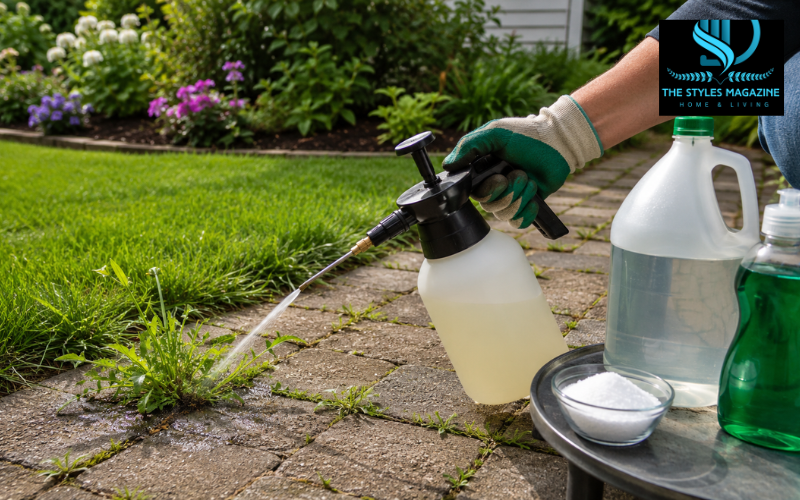
A natural weed killer is a weed control method made from simple ingredients or non-synthetic methods instead of harsh chemical herbicides. Many homeowners choose natural weed control because they want a safer-looking option for driveways, patios, garden paths, lawns, and areas where children or pets may pass through. It can also feel easier to use common household items like vinegar, boiling water, mulch, or hand pulling instead of buying strong chemical sprays.
However, natural does not always mean harmless. A natural weed killer can still damage grass, flowers, vegetables, and healthy soil if it is used in the wrong place. Some homemade mixtures are excellent for gravel driveways and patio cracks, but they are too harsh for lawns and garden beds.
The results also depend on the type of weed, the location, the weather, and your goal. Some methods only burn the leaves, while others help weaken or remove the roots. Young weeds are usually easier to control, while deep-rooted weeds may need repeated treatment or manual removal.
Quick Guide Table
| Area | Best Natural Weed Killer Method | Important Tip |
| Gravel driveway | Vinegar, salt, and dish soap spray | Best where no plants should grow |
| Patio cracks | Boiling water or vinegar spray | Apply carefully to avoid nearby plants |
| Lawn weeds | Hand pulling or lawn-safe spot treatment | Avoid vinegar and salt on grass |
| Garden beds | Mulch and manual pulling | Do not use salt in healthy soil |
| Deep-rooted weeds | Pulling roots plus repeat treatment | One spray may not kill roots fully |
hat Is a Natural Weed Killer?
A natural weed killer is any weed control method that uses household ingredients, plant-based products, heat, mulch, or physical removal instead of a traditional synthetic herbicide. Common examples include vinegar sprays, boiling water, corn gluten meal, flame weeders, hand pulling, and heavy mulch.
The main difference between a natural weed killer and a synthetic herbicide is how it works and what it is made from. Synthetic herbicides are often designed to target certain weeds or move through the plant system. Many natural options work on contact, which means they damage the part of the weed they touch, especially the leaves.
Natural weed killers are best used in areas where you do not want any plant growth, such as driveways, gravel paths, sidewalk cracks, patios, and walkways. These are places where a strong homemade weed killer can be useful because nearby grass or flowers are not usually part of the area.
Extra care is needed around lawns, flower beds, vegetable gardens, shrubs, and trees. A vinegar and salt mixture may kill weeds, but it can also harm the plants you want to keep.
How Natural Weed Killers Work
Most natural weed killers work by burning, drying out, blocking, or physically removing weeds. Vinegar dries and burns the leaves. Boiling water damages plant tissue with heat. Salt pulls moisture out of plants and soil. Mulch blocks sunlight so weed seeds cannot grow easily.
These methods usually work best on small, young weeds. A tiny weed growing in a patio crack may die quickly after one treatment. A large dandelion with a deep taproot may lose its leaves but grow back later from the root.
This is why it is important to understand the difference between top-kill and root control. Top-kill means the leaves and stems die back. Root control means the weed is weakened or removed below the soil. Many natural weed killer methods are fast on leaves but slower on roots.
For deep-rooted or mature weeds, repeated applications are often needed. In many cases, the most reliable natural method is still pulling the weed out with the root after the soil is wet.
Best Natural Weed Killer Recipe for Driveways and Gravel
The most common natural weed killer recipe for driveways and gravel uses vinegar, salt, and dish soap. This mixture is popular because it is simple, affordable, and works quickly on small weeds growing in hard surfaces.
A basic recipe is:
- 1 gallon white vinegar
- 1 cup table salt
- 1 tablespoon liquid dish soap
Mix the ingredients in a pump sprayer and shake gently until the salt dissolves. Spray the mixture directly on the weeds, covering the leaves well. Use it on a warm, sunny day when no rain is expected.
This strong homemade weed killer is useful for gravel driveways, walkway cracks, patio edges, and places where you do not want plants to grow. The vinegar burns the leaves, the salt helps dry out the plant, and the dish soap helps the liquid stick to the weed surface.
Do not use this mixture near flowers, vegetables, shrubs, or healthy lawn grass. It is not selective, which means it can damage any plant it touches. Salt is also a major concern because it can stay in the soil and make it harder for future plants to grow. For that reason, salt-based weed killer is best kept away from garden soil.
Natural Weed Killer with Vinegar
A natural weed killer with vinegar works because vinegar contains acetic acid, which dries and burns plant leaves. Regular white vinegar from the grocery store usually contains about 5% acetic acid. This can work on very small weeds, especially when the leaves are fully coated.
Vinegar works best in direct sun and warm weather. Sunlight helps speed up the drying effect, so weeds may start to wilt within a few hours. For best results, apply vinegar when the weather is dry and no rain is expected for at least a day.
The main limitation is that vinegar often affects the leaves more than the roots. This means a weed may look dead on top but return later if the root is still alive. Deep-rooted weeds like dandelions, thistle, and bindweed may need repeat treatments or physical removal.
Some people use stronger horticultural vinegar, but it must be handled very carefully. Strong vinegar can irritate or burn skin and eyes, so gloves and eye protection are important. For most home users, regular white vinegar is safer to handle, but it may need repeated use.
Natural Weed Killer That Kills Roots
A natural weed killer that kills roots is harder to find than one that burns leaves. Many natural sprays work on contact, so they damage the visible part of the weed first. The root may survive if it is large, deep, or well established.
The best root-level control usually comes from combining methods. For example, you can spray young weeds with vinegar, wait for the top to weaken, and then remove the root by hand. For weeds in loose or wet soil, pulling the full root is often more effective than spraying alone.
Boiling water can help damage shallow roots in cracks, but it may not reach deep roots in soil. Flame weeders can wilt weeds quickly, but they usually do not burn the entire root. Salt can damage roots, but it can also damage the soil, so it should not be used where you plan to grow plants later.
For mature weeds, repeat treatment is often necessary. Spray or treat the weed when it is actively growing, wait for it to weaken, and then remove as much of the root as possible. This approach is slower, but it is safer for the surrounding area.
Natural Weed Killer for Lawns
Finding a natural weed killer for lawns is more difficult because grass is also a plant. A mixture that kills weeds may also damage your lawn. This is why vinegar, salt, and dish soap are risky for grass. They do not know the difference between a weed and your lawn.
If your goal is a natural weed killer not grass, the safest approach is targeted control. Instead of spraying a large area, treat only the weed. Use a small brush, sponge, or narrow spray setting to apply the solution directly to the weed leaves. Even then, some nearby grass may turn brown if the mixture spreads.
Better natural lawn methods include hand pulling, proper mowing, overseeding thin spots, watering deeply but less often, and keeping grass thick enough to crowd out weeds. A healthy lawn is one of the best natural weed control systems because weeds have less open space to grow.
For single weeds like dandelions, use a weeding tool after rain or watering. The soil will be softer, and the root will come out more easily. For large lawn weed problems, improving the health of the lawn is usually more effective than spraying homemade mixtures.
Natural Weed Killer for Garden Beds
Garden beds need a gentler approach because flowers, vegetables, herbs, and shrubs can be easily damaged. A natural weed killer that works well on a driveway may be a bad choice inside a garden bed.
The safest method is hand pulling, especially after rain or deep watering. Wet soil makes it easier to remove the weed with the root. For small weeds, a hand hoe can also work well before the roots become strong.
Mulch is one of the best natural weed control methods for garden beds. A layer of wood chips, straw, shredded leaves, or composted mulch can block sunlight from reaching weed seeds. Without light, many weed seeds cannot grow well.
Boiling water can be used in careful areas, such as between stones or along bed edges, but it should not be poured near the roots of wanted plants. Salt should be avoided in healthy garden soil because it can harm soil quality and make it harder for plants to grow later.
Other Natural Weed Killer Methods That Work
Vinegar is popular, but it is not the only natural weed killer option. Boiling water is one of the simplest methods for cracks, pavers, and hard surfaces. It works quickly by cooking the plant tissue, but it should be poured carefully because it can also damage nearby plants and burn skin.
Corn gluten meal is used as a natural pre-emergent option. It does not kill existing weeds, but it may help stop some weed seeds from sprouting. Timing matters because it must be applied before weeds germinate. It should not be used where you are trying to grow new grass seed, vegetables, or flowers from seed.
Flame weeders use heat to wilt weeds, especially in gravel or open areas. They do not need to burn the weed to ash. The goal is to heat the plant enough that it wilts and cannot continue growing normally. Flame weeders should never be used in dry, windy, or fire-risk areas.
Mulch, cardboard, and landscape fabric can also prevent weeds by blocking light. Manual removal is still one of the most dependable choices for deep-rooted weeds because it removes the plant instead of only damaging the leaves.
Store-Bought Natural Weed Killer Options
If you do not want to mix your own spray, store-bought natural weed killer products are available in many garden centers and home improvement stores. When people search for natural weed killer Home Depot options, they often find products made with ingredients such as vinegar, citric acid, clove oil, fatty acids, or other plant-based active ingredients.
Buying a ready-made product can be easier when you want clear instructions, measured ingredients, and a labeled use area. Some products are designed for patios and driveways, while others may be labeled for garden or lawn use. The label matters more than the front of the bottle.
Before buying, read the product label carefully. Check whether it is safe for lawns, whether pets and children should stay away until dry, and whether it can harm nearby plants. Many natural products are still non-selective, which means they can kill or damage grass, flowers, and weeds alike.
If you need weed control in a lawn, look for a product specifically labeled for lawn use. If the label says “weed and grass killer,” it should not be sprayed on a lawn you want to keep.
Safety Tips Before Applying Natural Weed Killer
Even a homemade natural weed killer should be used with care. Wear gloves and eye protection, especially when using vinegar sprays or stronger store-bought products. Avoid breathing in spray mist, and wash your hands after handling any weed control mixture.
Spray only the target weeds. A windy day can carry the spray onto nearby plants, grass, or vegetables. It is better to apply weed killer when the air is calm and the weather is dry.
Keep pets and children away from the treated area until it is dry. This is a simple safety step for both homemade and store-bought products. Also avoid spraying near ponds, drains, or water sources unless the product label says it is safe for that use.
Never overuse salt-based mixtures. Salt may help dry out weeds, but it can also build up in the soil and make the area unhealthy for future planting. Use salt only in places like gravel or cracks where you do not want plants to grow again.
Common Mistakes That Make Natural Weed Killers Less Effective
One common mistake is spraying right before rain. Rain can wash the spray off the leaves before it has time to work. For better results, choose a dry day and give the treatment time to stay on the weed.
Another mistake is using a natural weed killer once on large mature weeds and expecting permanent results. Many natural sprays burn the top growth but do not fully kill the root. If the weed has a strong root system, it may return.
Applying salt in garden soil is also a mistake. While salt can damage weeds, it can also damage the soil around them. This can create problems for flowers, vegetables, shrubs, and future planting.
Some people also spray vinegar mixtures across their lawn and then wonder why the grass turns brown. Most vinegar and salt sprays are not lawn-safe. They should be used as spot treatments only, and even then with care.
What People Often Ask About Natural Weed Killer
Does vinegar really kill weeds?
Yes, vinegar can kill or burn the visible leaves of weeds, especially small young weeds. However, it may not fully kill deep roots in one treatment.
Is salt safe for soil?
Salt is not a good choice for healthy soil. It can stay in the ground and make it harder for plants to grow. Use salt-based mixtures only in places where you do not want plant growth.
Can natural weed killer kill grass?
Yes. Many natural weed killers can kill grass because they are non-selective. Vinegar, salt, and dish soap can damage lawn grass if sprayed carelessly.
What is the strongest homemade weed killer?
A vinegar, salt, and dish soap mixture is often considered a strong homemade weed killer for hard surfaces. It is best for gravel, patios, and cracks, not lawns or garden beds.
How long does it take to work?
Some weeds may wilt within a few hours, especially in warm sun. Larger weeds may take longer and may need repeat treatments.
These are the same types of concerns people often discuss in natural weed killer Reddit conversations: whether vinegar works, whether salt ruins soil, and how to kill weeds without damaging grass. The honest answer is that the best method depends on where the weed is growing.
Best Natural Weed Killer Choice by Area
For a gravel driveway, a vinegar-based spray or flame weeder can work well because you usually do not want plants growing there. A salt-based recipe may also be used carefully, but only if you are comfortable with long-term soil impact in that area.
For patio cracks, boiling water or vinegar spray is often enough for small weeds. These methods are simple and direct, and they avoid spreading treatment across healthy soil.
For lawn weeds, hand pulling, proper mowing, overseeding, and lawn-safe spot control are better choices. A natural weed killer for lawns should protect the grass while targeting weeds, so avoid broad spraying with vinegar or salt.
For garden beds, mulch and hand pulling are the safest options. Boiling water may be used only in very controlled spots away from plant roots. Avoid salt in garden beds.
For large weed patches, repeated treatment and prevention work best. Kill or remove the current weeds, cover bare soil, and stop new seeds from getting light. Long-term prevention is usually easier than fighting the same weeds again and again.
Conclusion
The best natural weed killer depends on where the weeds are growing and what you want to protect nearby. Vinegar, salt, and dish soap can be a strong homemade option for hard surfaces like gravel driveways, patios, and walkway cracks. It works quickly on small weeds, especially on sunny days, but it should be used carefully because it can damage any plant it touches.
For lawns and garden beds, safer methods are usually better. Hand pulling, mulching, proper mowing, boiling water in careful spots, and repeated control can help manage weeds without harming the plants you want to keep.
A natural weed killer is most effective when you match the method to the area. Use stronger mixtures only where no plant growth is wanted, and use gentle prevention methods where soil health matters. For long-term weed control, remove weeds early, keep soil covered, maintain a healthy lawn, and treat small weeds before they become deep-rooted problems.
FAQs
What Is The Best Natural Weed Killer?
The best natural weed killer depends on the area. Vinegar, salt, and dish soap work well on gravel and cracks, while hand pulling and mulch are safer for lawns and garden beds.
Does Vinegar Kill Weeds Permanently?
Vinegar can burn and dry weed leaves quickly, but it may not always kill deep roots. Strong or mature weeds often need repeat treatment or manual root removal.
Can Natural Weed Killer Kill Grass?
Yes, many natural weed killers can kill grass. Vinegar, salt, and dish soap are non-selective, so they can damage lawn grass if sprayed directly or carried by wind.
What Natural Weed Killer Kills Roots?
Manual pulling is usually the most reliable natural way to remove roots. Vinegar or boiling water may weaken small weeds, but deep-rooted weeds often need repeated treatment.
Is Salt Safe To Use As A Weed Killer?
Salt can help dry out weeds, but it can also damage soil long-term. It should only be used in gravel, cracks, or areas where you do not want plants to grow again.
Enjoyed it? Find more exclusive content on The Styles Magazine.
Disclaimer: This article is for general home and garden information only. Natural weed killers can still harm plants, grass, soil, pets, or people if used incorrectly. Always test carefully, follow product labels, and use protective gear when needed.