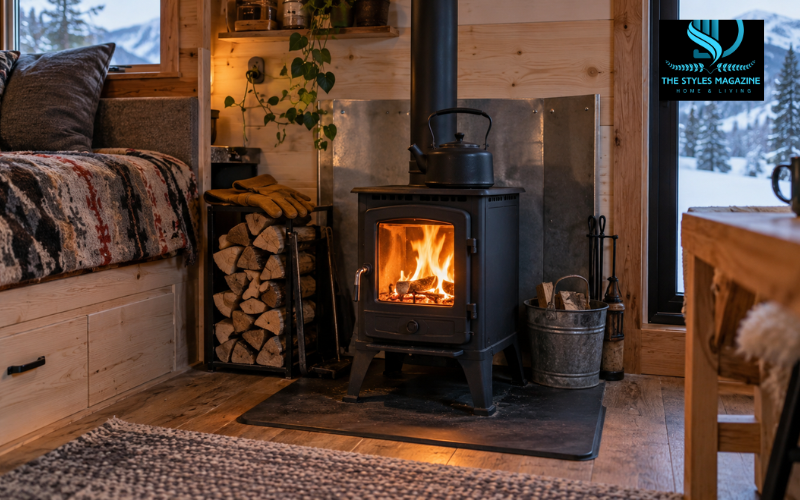
A mini wood stove is a compact wood-burning heater made for places where a full-size stove would be too large. Depending on the model, it can heat a tiny house, cabin, van, RV, boat, workshop, yurt, or other small space. Portable versions are also made for hot tents and camping.
The appeal is simple. A small stove can provide direct heat without relying on electricity, and many models have a flat top that can warm water or handle basic cooking. Still, the smallest stove is not automatically the best choice. Heat output, insulation, chimney design, clearances, ventilation, fuel size, local rules, and the way the space is used all matter.
Most mini wood stoves fall into two groups: installed or semi-permanent stoves for small living spaces, and lightweight portable stoves for camping or hot tents. Choosing safely starts with knowing which type fits the job.
Quick Guide: Mini Wood Stove Comparison
| Use Case | Best Stove Type | Common Material | Main Priority |
| Tiny house | Fixed compact stove | Steel or cast iron | Safe, steady heating |
| Van or RV | Mobile-space stove | Steel | Low weight and safe clearances |
| Cabin | Compact room heater | Steel or cast iron | Longer burn time |
| Hot tent | Portable tent stove | Titanium or stainless steel | Low weight and portability |
| Backpacking | Folding wood stove | Titanium or stainless steel | Small packed size |
Quick Checklist Before Choosing a Mini Wood Stove
- Measure the space and consider insulation quality.
- Check the stove’s heat output in BTU or kW.
- Confirm the recommended log and firebox size.
- Review chimney and flue requirements.
- Check wall and floor clearance requirements.
- Make sure the stove is suitable for your intended setting.
- Confirm local building, fire, and insurance requirements.
- Use properly seasoned firewood.
- Install smoke and carbon-monoxide alarms where required.
What a Mini Wood Stove Is and How It Produces Heat
A wood stove is a controlled fire inside a metal firebox. Air enters through vents, the wood burns, and hot gases leave through a flue or chimney. The stove body then releases heat into the room.
Primary combustion is the first stage, when air supports the burning wood. Many compact stoves also use secondary combustion. In simple terms, extra air enters higher in the firebox so some remaining gases burn before they leave the chimney. When the stove is used correctly, this can improve heat use and reduce visible smoke.
Because the firebox is small, a mini wood stove usually needs shorter logs and more frequent refueling than a larger heater. It may warm a small area quickly, but it normally cannot hold enough fuel for the same long burn times as a full-size stove.
A flat stove top can also be useful for a kettle or saucepan. For most compact heaters, however, cooking is an extra function rather than the main purpose.
The Two Main Types of Mini Wood Stoves
Fixed or semi-permanent small-space stoves are made for tiny houses, cabins, vans, RVs, boats, workshops, yurts, and similar settings. They are generally built from thicker steel, cast iron, or both. They are heavier than camping models and usually use a more substantial flue system, but they are better suited to repeated heating.
Portable wood stoves are designed around mobility. Hot-tent models may use thin stainless steel or titanium, folding legs, flat-pack panels, or roll-up chimney pipes. Their low weight makes them easier to carry, but it does not make them a substitute for an installed room heater.
A camping stove may work very well in a compatible hot tent while lacking the testing, clearances, chimney system, or certification required for a building or vehicle. Always check the maker’s stated use before treating a portable stove as an indoor heating appliance.
Benefits and Limitations to Understand Before Buying
The main benefit of a mini wood stove is useful heat from a small footprint. It can suit off-grid living, provide an alternative heat source where permitted, and reduce dependence on electricity. If dry firewood is readily available, fuel can also be stored locally. Some models add the convenience of warming water or preparing a simple meal.
The limitations are important too. Small fireboxes need shorter logs and often require more frequent attention. A strong stove in a well-insulated tiny room can make the space uncomfortably hot. The stove may look compact, but the safe installation area becomes larger once wall clearances, floor protection, heat shields, and the chimney are included.
The stove price is also only part of the project. Chimney parts, flashing, shields, hearth materials, alarms, permits, inspection, and professional installation can add considerably to the total cost.
How to Choose the Best Mini Wood Stove for Your Space
The best mini wood stove is the one that matches the heat demand of the space and can be installed safely. Look beyond floor area. Ceiling height, insulation, local winter temperatures, window area, air leakage, and how often the space is occupied can all change heating needs.
Compare heat output in BTU or kilowatts rather than relying only on a broad square-foot rating. Two rooms of the same size may need very different heat if one is a tight modern tiny home and the other is a drafty cabin.
Check firebox size, recommended log length, stove weight, and the room needed to open the door and load fuel. In a van or RV, floor strength and vehicle payload matter as well.
Finally, review flue diameter, chimney requirements, heat-shield options, clearances, certification status, and local-code compatibility. These details often determine whether a stove is practical long before appearance does.
Mini Wood Stove for Tiny House Heating
A mini wood stove for tiny house use needs careful sizing because a small, well-insulated interior can heat up fast. Oversizing is not helpful if it forces the owner to run weak, smoky fires just to avoid overheating.
Plan the stove location before furniture and storage are finalized. The layout must leave space for wall and floor protection, a safe chimney route, and normal movement around the room. An overly complicated flue path can also make installation harder.
Very airtight homes may need extra attention to combustion air. Some systems offer direct-air connections that bring combustion air from outside. Tiny Wood Stove, for example, currently sells direct-air accessories for several Dwarf models and notes that outside air may be useful in very airtight spaces.
Smoke and carbon-monoxide alarms are essential, but they do not replace correct installation. The stove manual, tested clearances, local building rules, and permit requirements should always take priority over general online advice.
Mini Wood Stove for Van and Tiny Wood Stove for RV Use
A mini wood stove in a van or a tiny wood stove for RV use has special challenges. Space is tight, nearby surfaces may contain wood, foam, fabric, plastics, or wiring, and the vehicle moves and vibrates. The stove, hearth, chimney, and supports therefore need to stay secure both on the road and during use.
Roof penetration must be weather-resistant and stable while maintaining the clearances required by the specific flue system. Weight also matters once the stove, hearth, shields, chimney, and stored firewood are added.
Choose equipment whose maker clearly documents the intended application. Tiny Wood Stove currently markets its Dwarf range for mobile and off-grid spaces and provides manuals and planning resources. Its Dwarf 3 kW page names RVs, trailers, vans, and skoolies among intended uses while also stating the model’s certification status and limits.
Because rules for movable dwellings vary, check local requirements and insurance conditions before installation.
Small Wood Stoves for Cabins and Off-Grid Spaces
Small wood stoves for cabins often need to provide more sustained heat than an ultralight camping stove. A weekend cabin may only need quick evening warmth, while an off-grid cabin used through winter may depend on the stove as its main heat source.
Cold weather, poor insulation, high ceilings, and frequent door opening can increase heat demand. In those conditions, choosing the smallest model may lead to constant refueling. A slightly larger compact stove may be more practical if it is still properly matched to the building.
Useful cabin features include a larger firebox, ash pan, cooking surface, and a choice of top or rear flue. The current Dwarf range, for example, includes 3 kW, 4 kW, and 5 kW models, giving buyers several output levels. The manufacturer also lists top or rear flue options and cooking surfaces among the range’s features.
The goal is not maximum heat, but steady and controllable heat that suits the cabin.
Portable Mini Wood Stoves for Camping and Hot Tents
A portable mini wood stove is designed to be carried, assembled, used, cooled, and packed again. Stainless steel is common because it balances durability and cost. Titanium is popular when low weight matters most.
Current titanium hot-tent stoves can be very light. POMOLY’s T1 Mini 3, for example, is listed at about 2.4 kg and uses Grade 1 titanium with a roll-up chimney, spark arrestor, viewing glass, and folding design. Those features show how different a backpacking stove is from a heavy fixed heater.
A hot-tent stove should also be distinguished from a small twig-burning cooker. A cooker may support a pot outdoors but may not include a chimney or be designed to heat a shelter.
Use tent stoves only with shelters designed for stove use and a suitable stove jack. Follow both stove and tent instructions, especially for floor protection, chimney stability, spark control, ventilation, and separation from fabric.
Materials, Firebox Design, and Features That Affect Everyday Use
Steel heats quickly and is common in compact fixed stoves. Cast iron is heavier but can hold and release heat steadily. Some small stoves combine a steel body with cast-iron doors or internal parts.
Titanium is much lighter, which makes it attractive for backpacking and hot tents, although thin titanium can change shape slightly after repeated heating and cooling. Stainless steel is also widely used for portable stoves because it is durable and resists corrosion.
Useful features include separate air controls, secondary combustion, viewing glass, an airwash system, an ash pan, a removable grate, and a usable top surface. A rear flue can leave more of the top free for cooking, while a top flue may suit a narrower installation.
Heat shields and direct-air connections can be valuable in tight spaces, but their effect on safe clearances must come from the manufacturer’s tested instructions rather than guesswork.
Cubic Mini Wood Stove and Other Compact Models Worth Understanding
Cubic Mini Wood Stoves offers the Cub and the larger Grizzly. Current manufacturer specifications list the non-certified Cub CB-1008 at about 6,000 to 14,000 BTU and the non-certified Grizzly CB-1210 at about 8,000 to 18,000 BTU. The Grizzly also has a larger body and firebox.
Certification needs careful checking because similarly named configurations are not always identical. Cubic currently sells a certified Cub CB-1008 that it says meets UL 1482-2022 in the United States and ULC S627-2023 in Canada. Its FAQ also says the company offers both certified and non-certified models with different flue requirements. Buyers should therefore verify the exact product page rather than assume every Cub or Grizzly has the same status.
The Hobbit Stove takes another approach. Salamander Stoves currently lists it as a compact cast-iron multi-fuel stove with a nominal 4.1 kW output and top or optional rear flue arrangement.
The Dwarf line offers several output sizes, while POMOLY titanium stoves are aimed at hot-tent use. If searching for “cubic mini wood stove Amazon,” compare the exact model number, included flue parts, seller, warranty, and certification with the manufacturer’s current information before purchasing.
Installation and Safety: Clearances, Heat Shields, Chimneys, and Carbon Monoxide
Safe installation matters more than saving a few inches of space. A stove and its pipe must stay far enough from combustible walls, ceilings, furniture, and building materials. The floor also needs suitable protection from heat and embers.
There is no universal clearance figure for every mini wood stove. Required distances vary with the appliance, pipe type, heat shields, mounting method, and tested installation. Cubic, for example, publishes different information for certified and non-certified systems.
The chimney also affects how well the stove works. Its size, height, route, and temperature influence draft. EPA installation guidance emphasizes correct clearances, floor protection, vent assembly, and chimney configuration, and it recommends annual inspection of the appliance, chimney, and venting system.
Install working smoke and carbon-monoxide alarms according to local requirements. Permits, building codes, fire rules, and insurance conditions vary by location, so check them before starting. When chimney design, roof penetration, or clearances are uncertain, use a qualified installer or inspector.
Fuel, Efficient Burning, Maintenance, and Mini Wood Stove DIY Considerations
Dry fuel makes a major difference. EPA guidance says properly dried firewood should be around 20% moisture or less because wet wood creates more smoke and wastes heat. A moisture meter is a simple way to check split firewood before use.
Fuel also has to fit the firebox. Mini stoves often require much shorter logs than household stoves, so expect extra cutting and splitting. Use only fuels allowed by the manufacturer; a multi-fuel stove may accept materials that a wood-only stove does not.
Start with dry kindling and enough airflow to establish a clean fire. Avoid long periods of smoky smoldering. EPA safety guidance also advises against burning garbage, plastics, pressure-treated wood, or other unsuitable material.
Routine care includes removing cooled ash, checking door seals and glass, inspecting pipe joints, and watching for creosote in the chimney.
A mini wood stove DIY project can be useful for outdoor metalworking, but a homemade stove should not automatically be treated as safe for an occupied structure. Poor welds, uncertain clearances, an untested flue, and uncontrolled combustion can create fire and carbon-monoxide hazards. For tiny homes, cabins, vans, and RVs, tested equipment and compatible venting parts are the safer starting point.
Conclusion
A mini wood stove can be a practical heat source when its size, construction, and intended use match the space. The right choice for a tiny house may be very different from the right stove for a winter tent, van, RV, or remote cabin.
Before buying, consider heat output, insulation, firebox size, fuel length, stove weight, materials, chimney design, clearances, heat-shield options, certification, and local rules. Look at the complete installation rather than the stove alone, because the flue, hearth, shielding, alarms, and inspection are all part of a safe system.
For living spaces, compare the latest manufacturer manual and installation requirements for the exact model you plan to use. For camping, choose equipment intended for the shelter and conditions you expect. A well-matched mini wood stove should provide useful, controllable heat without compromising ventilation or fire safety.
Frequently Asked Questions
What Is A Mini Wood Stove Used For?
A mini wood stove is commonly used to heat tiny homes, cabins, vans, RVs, boats, workshops, and hot tents where a full-size wood stove would take up too much space.
Can A Mini Wood Stove Heat A Tiny House?
Yes. A properly sized mini wood stove can heat many tiny homes effectively, but the correct output depends on insulation, climate, ceiling height, windows, and the overall heat loss of the space.
Are Mini Wood Stoves Safe For Vans And RVs?
They can be used safely only when the stove and installation are suitable for mobile spaces. Proper clearances, ventilation, heat protection, chimney support, and carbon-monoxide detection are especially important.
What Type Of Wood Should I Burn In A Mini Wood Stove?
Use clean, properly seasoned firewood that fits the stove’s firebox. Dry wood burns more efficiently and produces less smoke than wet or freshly cut wood.
Can I Cook On A Mini Wood Stove?
Some models have a flat top suitable for boiling water or simple cooking. Cooking ability varies by stove, so always check the manufacturer’s instructions before using the top surface.
Enjoyed it? Find more exclusive content on The Styles Magazine.
Disclaimer: This article is provided for general informational and educational purposes only. Mini wood stove installation, ventilation, clearances, chimney requirements, and permitted uses can vary by stove model, building type, vehicle, and location. Always follow the current manufacturer’s manual, local building and fire regulations, and applicable insurance requirements. For permanent or complex installations, consult a qualified professional. The information in this article is not a substitute for professional installation, inspection, or safety advice.