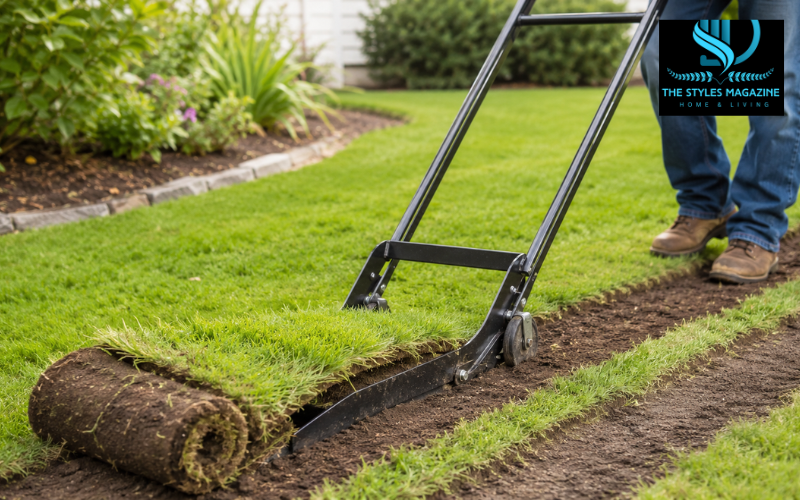
A manual sod cutter is a simple hand tool used to remove grass from the ground in clean sections. Instead of only trimming the top of the grass, it cuts underneath the root layer so the turf can be lifted, rolled, or removed in strips. This makes it useful when you want to clear a small lawn area without renting a heavy machine.
Many homeowners use a manual sod cutter for small landscaping projects, garden bed preparation, edging, patch repair, and DIY lawn removal. It can help you remove grass from areas where you want to plant flowers, install a pathway, fix damaged turf, or reshape the edge of a yard.
A motorized sod cutter is faster and easier for large areas, but it can be expensive, heavy, and unnecessary for smaller jobs. A manual sod cutter takes more physical effort, but it is quiet, affordable, easy to store, and practical for smaller spaces. For people who only need to remove a small section of grass, it can be the most sensible option.
Quick Guide Table
| Need | Best Choice | Why It Helps |
| Small lawn removal | Manual sod cutter | Affordable and easy to control |
| Clean turf strips | Kick-style sod cutter | Cuts under roots more evenly |
| Tight edges or borders | Half-moon edger | Better for corners and narrow spaces |
| One-time project | Manual sod cutter rental | Saves money if you do not need long-term use |
| Large lawn area | Motorized sod cutter | Faster and less tiring for big jobs |
| Buying locally | Search manual sod cutter nearby | Helps compare local stock and pickup options |
What Is a Manual Sod Cutter?
A manual sod cutter is a non-powered tool designed to separate grass and roots from the soil below. It usually has a sharp blade that slides under the turf. As the blade moves forward, it cuts through roots and loosens the sod so you can lift it from the ground.
The main purpose of a manual sod cutter is not just to cut grass. Cutting grass means trimming the green blades above the soil, like a lawn mower does. Removing sod means taking away the grass, roots, and a thin layer of attached soil. This is why sod removal is useful when you want to completely clear an area instead of simply mowing it.
Homeowners often choose a manual sod cutter because it gives them more control on small projects. For example, if you want to remove grass around a tree, along a driveway, beside a patio, or inside a narrow garden border, a large machine may be difficult to use. A hand tool allows you to work slowly and carefully without damaging nearby plants, hardscaping, or irrigation parts.
How a Manual Sod Cutter Works
A manual sod cutter works by sliding a blade under the turf. The blade moves just below the grass roots and separates the sod from the soil underneath. Once the roots are cut, the turf becomes loose enough to lift in sections.
The best results usually come from cutting the sod into narrow strips. Wide strips can become heavy, especially when the soil is damp. Smaller strips are easier to roll, carry, and dispose of. They are also easier to reuse if the sod is still healthy and you want to move it to another part of the yard.
Soil moisture plays an important role. If the ground is too dry, the blade may bounce, drag, or fail to slide smoothly under the grass. If the soil is too wet, the sod can become muddy and heavy. The ideal condition is slightly moist soil that is soft enough to cut but firm enough to hold together.
Blade angle also matters. The blade should stay low and nearly parallel to the ground. If you push too deeply, you may remove too much topsoil and make the job harder. If you cut too shallow, the roots may stay attached and the sod will tear instead of lifting cleanly.
Main Types of Manual Sod Cutters
There are a few common types of manual sod cutters, and each one is better for a different kind of job.
A kick-style manual sod cutter is one of the most recognized options. It usually has a flat cutting blade, a long handle, and a foot area that allows you to push the tool forward with your leg or foot. This type is helpful when you want to remove sod in straighter, cleaner strips. It still requires effort, but it can be more efficient than using a regular shovel.
A sod lifter or shovel-style cutter looks more like a wide, flat spade. It is often used after the lawn has been scored into sections. You slide the blade under the turf and lift the sod from below. This type is easier to store and often works well for smaller jobs, patch repair, or removing strips near garden beds.
A half-moon edger-style cutter is more useful for edges, tight spaces, and small cuts. It may not be the fastest tool for removing a full lawn section, but it can work well around sidewalks, patios, borders, and curved areas. Some homeowners use it to score the sod first, then lift the grass with a flat shovel or sod lifter.
For very small areas, a shovel-style or half-moon tool may be enough. For larger but still manageable DIY projects, a kick-style manual sod cutter is usually a better choice.
When a Manual Sod Cutter Is the Right Choice
A manual sod cutter is a good choice when the project is small enough to complete by hand. It works well for removing grass from a small garden bed, creating a new border, repairing a damaged patch of lawn, or clearing a strip for a walkway.
It is also useful for edging around paths, patios, fences, driveways, and flower beds. In these areas, precision matters more than speed. A large machine may remove too much material or be difficult to control, while a manual tool lets you cut carefully.
A manual sod cutter also makes sense when renting a machine is not worth the cost. If you only need to remove a few square feet of grass, renting a powered sod cutter may feel excessive. A simple hand tool can finish the work without transportation, fuel, rental deposits, or machine handling.
However, the tool is best for realistic DIY jobs. If you are removing hundreds of square feet of thick grass, especially in hard or rocky soil, the work can become tiring quickly. In that case, renting equipment or hiring help may save time and effort.
Manual Sod Cutter vs Motorized Sod Cutter
The biggest difference between a manual sod cutter and a motorized sod cutter is effort. A manual sod cutter depends on your body strength. You push, kick, slice, and lift the sod yourself. A motorized sod cutter uses an engine to move the blade and cut through turf faster.
Cost is another major difference. Manual tools are usually cheaper to buy and do not need fuel or much maintenance. Motorized cutters are more expensive to buy, and even rental costs can add up if you need the machine for more than a few hours or a full day.
Project size is where the decision becomes clearer. For a small flower bed, garden border, or patch repair, a manual sod cutter can be a smart choice. For large lawn removal, a powered cutter is usually more practical. A motorized machine can cut wider strips and cover more ground in less time.
Soil and root conditions should also guide your decision. Soft, moist soil is easier to cut by hand. Dense clay, thick thatch, deep roots, and rocky ground can make manual cutting much harder. If the blade keeps stopping or the turf will not lift cleanly, the job may be better suited for a powered tool.
Best Manual Sod Cutter Features to Look For
The best manual sod cutter for your project should feel strong, stable, and comfortable to use. A sharp steel blade is one of the most important features. The blade needs to cut through roots and soil without bending. High-carbon steel, thick steel, or powder-coated steel can be helpful for durability.
A comfortable handle also matters because sod cutting is physical work. Look for a handle that gives you good grip and control. T-shaped handles, D-grip handles, dual handles, and ergonomic grips can reduce strain and help you guide the tool more easily.
Good leverage and foot support are also useful, especially on kick-style tools. A strong foot platform allows you to use your body weight instead of only your arms and back. This makes cutting smoother and helps the blade move under the turf.
Adjustable cutting depth is helpful when available. Cutting too deep removes extra soil and makes the sod heavier. Cutting too shallow leaves roots behind. A tool that allows you to control the depth can help you remove sod more evenly.
Durable construction is important if your soil is firm or full of roots. A weak blade or handle can bend under pressure. For tougher yards, it is usually better to choose a heavier-duty tool instead of the cheapest option.
Best Manual Sod Cutter Options for Homeowners
The best manual sod cutter depends on the size of your project and how much effort you are willing to use. For cleaner sod strips, a kick-style sod cutter is usually the strongest option. It is designed specifically to cut beneath the turf and can help create more even sections.
For smaller jobs, a sod lifter or flat shovel-style cutter may be easier to handle. It is useful when you only need to remove a few strips of grass or lift sod after scoring the area. This option is often simpler, lighter, and easier to store.
For edges and tight spaces, a half-moon cutter or root-cutting edger can be useful. It is not always a true sod cutter for large turf removal, but it can help define borders, cut roots, and separate sod along hard edges.
Budget-friendly tools may be fine for light use, but heavy-duty options are better if you expect repeated use or tougher soil. A homeowner working on one small garden bed may not need the same tool as someone clearing several areas around the yard. The best manual sod cutter is the one that matches your lawn size, soil condition, and physical comfort.
Manual Sod Cutter Rental: When It Makes Sense
Manual sod cutter rental can make sense if you only need the tool once and do not want to store it afterward. Some rental companies offer manual kick-style sod cutters, while many others focus more on powered walk-behind models. Availability depends on your area, so it is worth checking before planning your project.
Renting is useful for small one-time projects where buying a tool feels unnecessary. It can also be a good way to test whether a manual sod cutter works well for your soil before spending money on one.
Before renting, check the blade width, rental period, condition of the blade, deposit requirements, and pickup location. A dull or damaged blade can make the job much harder. It is also smart to ask whether the tool is truly manual or powered, because rental listings can sometimes show different types of sod cutters.
If you search for manual sod cutter rental near me, compare local rental shops, garden centers, and equipment rental companies. Some stores may only carry motorized sod cutters, while others may have manual options available in certain locations.
Where to Buy a Manual Sod Cutter
A manual sod cutter for sale can be found through several types of sellers. Local garden centers may carry sod lifters, edging tools, and other hand tools that can help with small sod removal jobs. Hardware stores may also stock flat spades, half-moon edgers, and sometimes more specialized lawn tools.
Online marketplaces often provide a wider selection. This can be useful if you want to compare kick-style tools, sod lifters, and edger-style cutters in one place. When buying online, pay attention to blade width, handle length, weight, return policy, and customer reviews that mention real yard use.
Local tool suppliers can also be helpful, especially if you want a stronger landscaping tool instead of a light garden tool. These suppliers may carry more durable options designed for repeated work.
Some people also search manual sod cutter Harbor Freight when looking for affordable lawn and garden tools. Harbor Freight is known for budget-friendly tools, but exact product availability can change by location and time. It is better to check the current store listing or call your local store instead of assuming a specific manual sod cutter is always available.
How to Find a Manual Sod Cutter Nearby
To find a manual sod cutter nearby, start with local hardware stores and garden centers. These places often carry the basic tools needed for sod removal, even if they do not always label them as sod cutters.
Rental shops are another good place to check. Search for manual sod cutter nearby or manual sod cutter rental near me, then compare the results carefully. Some listings may show powered sod cutters, while others may offer a manual kick-style cutter.
Garden equipment suppliers may have better-quality options than general stores. They often understand landscaping tools and can help you choose between a sod lifter, edger, or true kick-style manual sod cutter.
When comparing local pickup and delivery, think about the tool size and urgency. A simple sod lifter may be easy to buy and carry home, while a larger kick-style cutter may be heavier and less common. Availability can vary widely by city, season, and store inventory, so checking ahead can save time.
How to Use a Manual Sod Cutter Properly
Using a manual sod cutter properly starts before you make the first cut. Water the lawn about a day before the project if the soil is dry. The goal is to soften the ground, not turn it muddy. Slightly moist soil helps the blade slide under the turf more smoothly.
Next, mark the area you want to remove. Straight lines are easier to cut and lift. Use a garden hose, string, marking paint, or a simple edger to outline the space. Then score the sod into manageable strips. Narrow strips are easier to roll and carry than wide ones.
When cutting, keep the blade low and level. Try to slide it just under the root layer. Move slowly and let the blade do the cutting instead of forcing it too deeply into the soil. If you feel heavy resistance, the soil may be too dry, the blade may be dull, or the strip may be too wide.
After the sod is cut, lift one end and roll or fold the strip carefully. If you plan to reuse the sod, keep the roots moist and move it quickly. If you are disposing of it, smaller sections will be much easier to handle.
Beginners may find it helpful to watch a manual sod cutter video before starting. Seeing the cutting angle and body movement can make the process easier to understand than reading instructions alone.
Common Mistakes to Avoid
One common mistake is cutting when the soil is too dry. Dry ground makes the blade harder to push and can cause the sod to break apart. On the other hand, soil that is too wet becomes heavy, sticky, and messy. The best condition is moist but not muddy.
Another mistake is making strips too wide. Wide sod strips may look efficient at first, but they quickly become heavy. Smaller strips take a little more planning but are much easier to lift and move.
Digging too deep is also a problem. A manual sod cutter should remove the turf and root layer, not a thick layer of good topsoil. Removing too much soil makes the job harder and may leave the ground uneven.
Using a dull blade can turn a simple project into frustrating work. If the tool is not cutting roots cleanly, sharpen the blade if possible or choose a better tool. A sharp blade saves time and reduces strain.
The biggest mistake is trying to handle a large lawn manually when the job is better suited for equipment. Manual tools are useful, but they have limits. If the area is large, the grass is thick, or the soil is difficult, renting a powered cutter may be the smarter choice.
Is a Manual Sod Cutter Worth It?
A manual sod cutter is worth it for many small DIY landscaping projects. It is useful when you want to remove grass without heavy equipment, noise, fuel, or high rental costs. It gives you control and works well for garden beds, borders, patch repair, and smaller lawn changes.
It can also save money on simple jobs. If the area is small, buying or renting a manual tool may cost less than renting a motorized machine or hiring a landscaper. It is also easier to store and maintain than powered equipment.
However, it is not ideal for every project. Large yards, very tough soil, rocky areas, and deep-rooted turf can make manual cutting slow and tiring. In those cases, the money saved may not be worth the physical effort.
The best decision depends on your lawn size, soil type, budget, and energy level. For a small project, a manual sod cutter can be a practical and affordable tool. For a bigger job, it may be better to rent a powered sod cutter or get professional help.
Conclusion
A manual sod cutter is a simple, useful tool for removing grass from small areas without using heavy equipment. It cuts beneath the root layer so the sod can be lifted in strips, making it helpful for garden beds, edging, patch repair, and small DIY landscaping projects.
The right tool depends on the job. A kick-style manual sod cutter is better for cleaner strips, a sod lifter works well for small sections, and a half-moon edger is useful around borders and tight spaces. Soil condition, blade quality, handle comfort, and project size all affect how easy the work will be.
Before deciding, compare your options carefully. Check whether manual sod cutter rental makes sense, search for a manual sod cutter nearby, and look at current manual sod cutter for sale listings if you expect to use the tool again. With the right tool and proper preparation, removing sod by hand can be simple, affordable, and effective for the right size project.
FAQs
What Is A Manual Sod Cutter Used For?
A manual sod cutter is used to remove grass and roots from the soil in strips. It is best for small lawn removal, garden beds, edging, and patch repair.
Is A Manual Sod Cutter Hard To Use?
It can take physical effort, especially in dry, clay, or rocky soil. However, it is manageable for small areas if the soil is slightly moist and the blade is sharp.
Can I Rent A Manual Sod Cutter?
Yes, manual sod cutter rental may be available at some tool rental shops or garden equipment suppliers. Availability varies, so search manual sod cutter rental near me before planning.
Is A Manual Sod Cutter Better Than A Shovel?
For clean sod removal, a manual sod cutter is usually better than a regular shovel. It cuts under the roots more evenly and helps lift turf in cleaner sections.
Should I Buy Or Rent A Manual Sod Cutter?
Buy one if you expect repeated lawn projects. Rent one if you only need it once. For large areas, a powered sod cutter may be more practical.
Enjoyed it? Find more exclusive content on The Styles Magazine.
Disclaimer: This article is for general informational purposes only. Tool availability, rental prices, and product options may vary by location and time. Always follow manufacturer instructions and use proper safety care when working with lawn tools.