A leather couch can make any room feel warm, elegant, and comfortable, but it also needs the right kind of care. Leather is strong, but it is not the same as fabric. If you clean it with too much water, harsh sprays, or rough scrubbing, it can become dry, stained, faded, or cracked. That is why learning how to clean leather couch surfaces safely is important if you want your sofa to stay soft and beautiful for years.
The safest cleaning method depends on the type of leather, the kind of stain, and the products you use. A finished leather couch can usually handle gentle cleaning better than unfinished leather, while faux leather may need a slightly different approach. Some stains also need special care, especially ink, grease, pet accidents, and water marks.
In this guide, you will learn how to clean a leather couch at home using simple and safe steps. You will also learn how to clean leather couch stains, how to clean leather couch naturally, how to deal with smells, how to deep clean leather gently, and when it is better to call a professional. The goal is simple: clean the couch without drying, staining, or damaging the leather.
Quick Guide Table: How to Clean Leather Couch
| Cleaning Need | Best Method | What to Avoid |
| Regular dust and dirt | Vacuum with a soft brush, then wipe with a dry or slightly damp microfiber cloth | Rough towels, hard brushes, and too much water |
| Light surface grime | Use mild soap mixed with warm water on a damp cloth | Spraying cleaner directly on the couch |
| Grease or oil stains | Use a small amount of cornstarch or baking soda to absorb oil, then wipe gently | Rubbing the stain or adding water first |
| Odors | Air out the couch, vacuum well, and wipe gently with mild soap and water | Perfume sprays, strong deodorizers, or soaking |
| Deep cleaning | Clean small sections gently, dry each area, then condition the leather | Bleach, ammonia, alcohol-heavy cleaners, and heat drying |
| After cleaning | Apply leather conditioner with a soft cloth | Overusing conditioner or leaving greasy residue |
Understanding Your Leather Couch Before Cleaning
Before you start cleaning, it is important to know what kind of leather you have. Most leather couches are made with finished leather, which has a protective coating on the surface. This type is usually easier to clean because spills and dirt stay closer to the top instead of soaking in quickly.
Unfinished leather, sometimes called aniline or natural leather, is more delicate. It does not have the same strong protective layer, so water and cleaners can leave marks more easily. Distressed leather can also be sensitive because it is designed to have a natural, aged look. Faux leather is different again because it is not real animal leather, but it can still crack or peel if cleaned with harsh products.
The easiest way to check is to look for the care label or manufacturer’s instructions. Some couches have a tag under the cushions or along the frame. If the label gives cleaning codes or product warnings, follow those first.
A hidden spot test is also very important. Before applying any cleaner to the full couch, test it on a small area that is not easy to see, such as the back or under a cushion. Let it dry fully. If the leather changes color, feels sticky, or looks dull, do not use that cleaner on the rest of the couch.
Tools and Materials You Need at Home
You do not need many complicated products to clean a leather couch safely. In most cases, simple tools work best. A vacuum with a soft brush attachment helps remove dust, crumbs, pet hair, and dirt from seams and corners. Soft microfiber cloths are better than rough towels because they clean gently without scratching the surface.
You will also need distilled or warm water. Distilled water is helpful because it has fewer minerals, which may reduce the chance of water marks. A small amount of mild soap, such as gentle dish soap or Castile soap, can help remove light dirt and body oils. For real leather, a good leather conditioner is useful after cleaning because it helps replace moisture and keeps the leather flexible.
Some natural items, such as diluted vinegar or baking soda, may be used carefully for certain problems, but they should never be applied without testing first. Leather is sensitive, and even natural products can cause damage when used the wrong way.
Safety Rules Before Cleaning a Leather Couch
The most important rule is to avoid soaking the leather. Leather does not like heavy moisture. Too much water can leave stains, weaken the material, or cause hidden damage under the surface. Your cloth should be damp, not wet. If water drips from the cloth, it is too wet.
You should also avoid bleach, ammonia, strong alcohol-based cleaners, multi-purpose sprays, and rough scrubbers. These can strip away the leather’s natural oils or protective finish. Once leather becomes dry, it may start to crack, wrinkle, or lose its smooth look.
When wiping the couch, use gentle circular motions instead of rubbing hard. Never pour or spray cleaner directly onto the leather. Always apply the cleaning solution to a cloth first, then wipe the couch lightly. After cleaning, dry the surface immediately with a clean microfiber cloth. Do not use a hair dryer, heater, or direct sunlight to speed up drying because heat can make leather dry and stiff.
How to Clean a Leather Couch at Home Step by Step
Start by removing cushions, throws, and anything sitting on the couch. Check between the cushions for crumbs, coins, pet hair, and small debris. Use a vacuum with a soft brush attachment to clean the full couch, including seams, cracks, corners, and under the cushions. This step matters because loose dirt can scratch the leather when you start wiping.
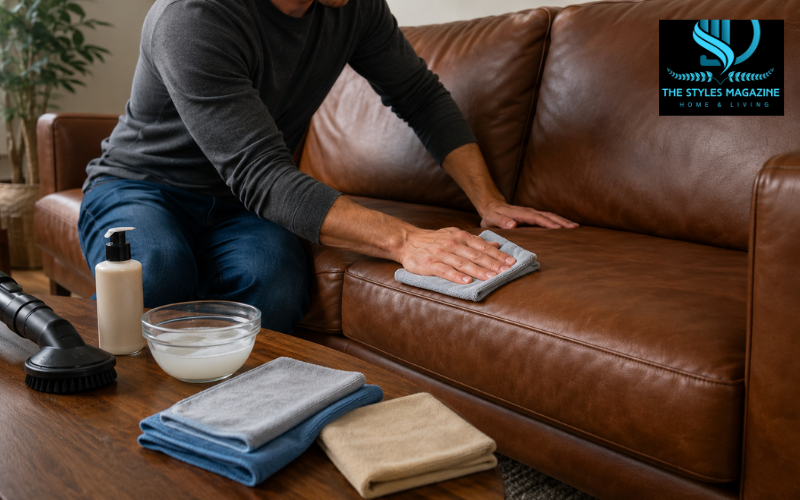
Next, dampen a microfiber cloth with plain distilled or warm water. Wring it out very well so it is only slightly damp. Wipe the couch gently to remove light dust and surface dirt. For many couches, this may be enough for regular cleaning.
If the couch still looks dirty, mix a few drops of mild soap into a bowl of warm water. Dip a clean cloth into the mixture and wring it out until it is barely damp. Wipe one small section at a time using gentle circular motions. Do not scrub or press too hard. Pay extra attention to armrests, headrests, and seats because these areas collect body oils and daily dirt.
After cleaning with soap, use another cloth dampened with plain water to remove any leftover soap residue. Then dry the leather right away with a clean, dry microfiber cloth. Buff the surface gently until it feels dry and smooth. This basic method is one of the safest ways to clean a leather couch at home without damaging it.
How to Clean Leather Couch Naturally
Many people want to know how to clean leather couch naturally because they prefer to avoid strong chemical cleaners. The safest natural method is usually mild soap and water. A very small amount of gentle soap mixed with warm water can remove everyday dirt without being too harsh.
Natural cleaning works best when the couch only has light dust, mild dirt, or small surface marks. It is also useful for regular maintenance. However, natural does not always mean safe for leather. Lemon juice, undiluted vinegar, baking soda paste, and strong oils can damage the finish or change the color if used incorrectly.
If you want a natural approach, keep it simple. Use a soft cloth, a small amount of mild soap, and very little water. Always test first and avoid soaking the leather. After cleaning, dry the couch completely and apply leather conditioner if the couch is real leather. This helps keep the material soft and reduces the risk of dryness.
How to Clean Leather Couch With Vinegar Safely
Vinegar is often suggested as a natural cleaner, but it must be used carefully on leather. It may help with light odors or mild surface dirt, but it is acidic, so using too much can dry out the leather or dull the finish. Never use vinegar straight from the bottle on a leather couch.
If you decide to use vinegar, dilute it well. A safe starting point is one part white vinegar mixed with one part water, but even this should be tested on a hidden area first. Dampen a microfiber cloth with the mixture, wring it out completely, and wipe lightly. Do not let the solution sit on the leather.
Avoid using vinegar on unfinished, cracked, very dry, or delicate leather. It is also better to avoid vinegar on dark or dyed leather unless the spot test shows no color change. After using vinegar, wipe again with a cloth dampened with plain water, dry the couch fully, and apply conditioner. Conditioning is especially important because vinegar can make leather feel dry if used too often.
How to Clean Leather Couch Stains
Stains should be treated before cleaning the entire couch. This prevents the stain from spreading and gives you a better chance of removing it safely. The right method depends on the type of stain.
For food and drink stains, blot the area gently with a dry microfiber cloth. Do not rub, because rubbing can push the stain deeper. If needed, use a lightly damp cloth with mild soap and water, then dry the area immediately.
Grease and oil stains need a different approach. Do not add water at first. Sprinkle a small amount of cornstarch or baking soda over the stain and leave it for several hours or overnight. These powders may help absorb the oil. Afterward, brush the powder away gently with a soft cloth. Test this method first, especially on darker or delicate leather.
Ink stains are more difficult. Some people use a tiny amount of rubbing alcohol on a cotton swab, but this can also remove color or damage the finish. If the ink mark is large, fresh, or on expensive leather, professional help is safer.
Water spots can sometimes be reduced by lightly wiping the full panel with a barely damp cloth, then drying evenly. Pet stains should be cleaned quickly, especially if there is odor. Blot the area, clean gently with mild soap and water, and dry well. If the smell remains, the moisture may have gone deeper than the surface.
How to Deep Clean Leather Couch
A leather couch does not need deep cleaning every week. In most homes, deep cleaning every six to twelve months is enough, depending on use. If you have pets, children, heavy daily use, or a light-colored couch, you may need to deep clean more often.
Deep cleaning does not mean soaking or scrubbing. It means cleaning more carefully and paying attention to areas that collect built-up dirt and body oils. Armrests, seat cushions, headrests, and the front edges of the couch usually need the most attention.
Start with a full vacuuming. Then clean small sections with a mild soap solution and a barely damp cloth. Wipe slowly and evenly. Follow with a clean damp cloth to remove residue, then dry each section before moving to the next. If the leather still looks dull after cleaning, conditioning can help restore softness and a healthier appearance.
The key is to stay gentle. Leather can look dirty because of oils and daily use, but strong cleaning can cause more harm than good. A careful deep clean should refresh the couch without stripping or drying the surface.
How to Clean Leather Couch That Smells
Leather couches can develop smells from pets, food, sweat, smoke, spills, or moisture. The first step is to air out the room and the couch. Open windows if possible and let fresh air move around the furniture. Remove cushions if they are removable so air can reach hidden areas.
Vacuum the couch well, especially seams and under cushions where crumbs and pet hair can collect. Then wipe the surface with a lightly damp microfiber cloth. For mild odors, a gentle soap and water cleaning may help. Make sure the leather dries completely because trapped moisture can make smells worse.
For pet or food smells, clean the affected area gently and dry it well. Do not spray perfume, air freshener, or strong deodorizer directly onto leather. These products can leave residue or damage the finish.
If the couch smells musty, there may be mildew or hidden moisture. In that case, avoid soaking the leather and inspect the area carefully. A strong musty smell, visible mold, or repeated odor after cleaning may require professional cleaning. Mold and deep moisture problems should not be ignored because they can spread and damage the couch further.
How to Clean Leather Couch Without Leather Cleaner
If you do not have a commercial leather cleaner, you can still clean a leather couch safely in many cases. A simple wipe-down with distilled water and a microfiber cloth is often enough for dust and light dirt. For slightly heavier dirt, use a small amount of mild soap mixed with warm water.
The cloth should always be wrung out well before touching the leather. Clean gently, rinse with a separate damp cloth, and dry right away. This method is useful for regular home cleaning and small messes.
However, do not replace leather cleaner with random household products. Window cleaner, disinfecting sprays, laundry detergent, bleach, furniture polish, and strong kitchen cleaners are not safe choices for leather. They may leave sticky residue, remove color, or dry the material.
A proper leather cleaner becomes necessary when the couch has heavy dirt, old stains, sticky buildup, or delicate leather that needs special care. If your couch is expensive or you are unsure about the material, it is better to use a product made specifically for leather.
Conditioning and Protecting Leather After Cleaning
Cleaning removes dirt, but it can also remove some natural moisture from the leather surface. That is why conditioning is an important step after cleaning a real leather couch. A good leather conditioner helps keep the material soft, flexible, and less likely to crack.
Apply conditioner only after the couch is clean and dry. Put a small amount on a soft cloth, not directly on the couch. Massage it gently into the leather using circular motions. Use a thin, even layer. Too much conditioner can leave the surface sticky, greasy, or shiny in an uneven way.
Let the conditioner absorb according to the product instructions, then buff away any extra with a clean dry cloth. Most leather couches only need conditioning every six to twelve months, but dry climates, sunlight, and heavy use may make conditioning necessary more often.
Conditioning does not fix every problem, but it can help protect leather from dryness and everyday wear. It is one of the best habits to include after you clean a leather couch.
How to Clean Leather Sofa Professionally
Professional leather cleaning is different from basic home cleaning. A trained cleaner can identify the type of leather, choose the right products, remove deeper dirt, and treat stains more safely. Professionals may also condition, protect, or repair certain areas depending on the couch’s condition.
Professional cleaning is a better choice when the couch has serious stains, large ink marks, deep odor, discoloration, cracking, sticky residue, or mold concerns. It is also a smart option for expensive leather furniture or delicate unfinished leather.
When choosing a service, ask whether they have experience with leather furniture, not just fabric upholstery. You can also ask what type of products they use and whether they test the leather before cleaning. A good professional should be careful, clear, and honest about what results are possible.
Home cleaning is useful for regular care, but professional cleaning can be safer when the problem is beyond simple surface dirt.
Common Mistakes That Can Damage a Leather Couch
One of the biggest mistakes is using too much water. A wet cloth may seem harmless, but leather can absorb moisture and develop stains or stiffness. Always use a barely damp cloth and dry the surface quickly.
Another common mistake is scrubbing too hard. Leather should be wiped gently, not treated like tile or fabric. Rough scrubbing can remove color, damage the finish, or make stains spread.
Skipping the spot test is also risky. A cleaner may look safe but still change the color or texture of your couch. Always test first in a hidden area.
Household sprays are another problem. Many multi-purpose cleaners contain ingredients that are too harsh for leather. Heat drying is also damaging. A hair dryer or heater can dry out the leather and cause wrinkles or cracks.
Finally, many people forget to condition after cleaning. If the couch is real leather, conditioning helps restore softness and protection. Cleaning and conditioning work best together when you want the leather to stay clean and long-lasting.
Conclusion
Knowing how to clean leather couch surfaces safely can help you protect your furniture and keep it looking fresh for years. The safest method is simple: vacuum first, wipe gently with a barely damp microfiber cloth, use mild soap only when needed, rinse away residue, dry the leather immediately, and condition it after cleaning.
For stains, treat the problem carefully before cleaning the full couch. For smells, focus on fresh air, gentle cleaning, and complete drying. For deep stains, mold, strong odors, or delicate leather, professional cleaning may be the safest choice.
A leather couch does not need harsh products to look good. With gentle care, quick stain treatment, and regular conditioning, your couch can stay clean, soft, comfortable, and beautiful for a long time.
FAQs
Can I Clean A Leather Couch With Soap And Water?
Yes, you can clean most finished leather couches with mild soap and water. Use only a barely damp microfiber cloth, avoid soaking the leather, and dry the surface immediately after wiping.
How Do I Clean Leather Couch Stains Safely?
Treat stains before cleaning the whole couch. Blot food or drink stains, absorb grease with cornstarch or baking soda, and avoid rubbing. For ink or deep stains, professional help is safer.
Can I Use Vinegar To Clean A Leather Couch?
Diluted vinegar may help with light dirt or odor, but it should be used carefully. Always test first, use a very small amount, and condition the leather afterward to prevent dryness.
How Often Should I Clean A Leather Couch?
Light cleaning can be done weekly with vacuuming and dusting. A deeper clean is usually enough every six to twelve months, depending on pets, children, spills, and daily use.
What Should I Not Use On A Leather Couch?
Avoid bleach, ammonia, strong alcohol cleaners, multi-purpose sprays, rough scrubbers, and too much water. These can dry, fade, crack, or permanently damage the leather surface.
Enjoyed it? Find more exclusive content on The Styles Magazine.
Disclaimer: This article is for general home-cleaning information only. Leather types and finishes can vary, so always check your couch’s care label and test any cleaning method on a hidden area before applying it widely.