Knowing how to measure for curtains correctly is one of the most important steps in creating a well-designed and comfortable space. Curtains are not just decorative; they control light, provide privacy, and influence how large or small a room feels. Even the most beautiful fabric can look awkward if the measurements are off.
Many people make simple mistakes when measuring for curtains. Some measure only the window instead of the curtain rod, while others forget to account for fullness or proper length. These small errors often lead to curtains that look too short, too narrow, or uneven.
This guide is designed to make the process simple and clear. By following a step-by-step approach, you will learn exactly how to measure for curtains so they fit properly, look balanced, and enhance your space. Whether you are decorating a new room or updating your current one, accurate measurements will help you get it right the first time.
Table (Curtain Fullness Guide)
| Style Type | Fullness Ratio | Look & Feel | Best For |
| Minimal / Modern | 1.5x | Clean, simple, less fabric | Small rooms, grommet tops |
| Standard | 2x | Balanced, most common look | Living rooms, bedrooms |
| Luxe / Formal | 2.5x – 3x | Rich, heavy, dramatic folds | Sheers, formal spaces |
Understanding Why Curtain Measurements Matter
Curtain measurements play a key role in how your room looks and functions. Well-measured curtains create a polished and balanced appearance, while poorly measured ones can make a space feel unfinished or cramped.
When curtains are too short, they can make ceilings look lower than they are. If they are too narrow, they may not cover the window properly, reducing privacy and blocking less light than intended. On the other hand, curtains that are measured correctly can make windows appear larger and ceilings higher, giving the room a more open and elegant feel.
Accurate measurements also ensure that curtains operate smoothly. Proper width allows them to open and close easily, while the correct length prevents dragging or awkward gaps. In short, taking the time to measure properly improves both the appearance and functionality of your curtains.
Tools You Need Before Measuring Curtains
Before you begin measuring, it is important to have the right tools. Using proper tools ensures accuracy and helps you avoid mistakes that could affect the final result.
A metal tape measure is the best option for measuring curtains. Unlike cloth or flexible tape measures, a metal tape does not stretch over time, which means your measurements will be more reliable. It also stays straight when extended, making it easier to measure width and height accurately.
In addition to a tape measure, having a notebook or a phone to record your measurements can be helpful. This prevents confusion later, especially if you are measuring multiple windows. Taking careful notes will save time and reduce the chance of ordering the wrong size.
Deciding Where to Install Your Curtain Rod or Track
Before measuring your curtains, you need to decide where your curtain rod or track will be placed. This step is essential because curtain measurements are based on the hardware, not just the window.
The placement of the rod or track directly affects how your curtains will look. Mounting the rod higher than the window frame can make the room feel taller. A common recommendation is to place the rod about 4 to 6 inches above the window. For a more dramatic effect, some people choose to install it even higher.
The width of the rod is equally important. Extending the rod beyond the window frame by 6 to 12 inches on each side allows the curtains to be pulled back fully. This keeps the window clear and lets in more natural light.
By planning the placement carefully, you can improve both the style and practicality of your curtains.
How to Measure Curtain Width for a Full, Balanced Look
When learning how to measure for curtains, width is one of the most important factors. Instead of measuring just the window, you should measure the full width of the curtain rod or track.
Start by measuring from one end of the rod to the other, excluding any decorative finials. This measurement represents the total space your curtains need to cover.
To achieve a full and attractive look, you need to consider curtain fullness. Fullness refers to how much fabric is used compared to the width of the rod. A standard rule is to multiply the rod width by 2. This creates a balanced look that works well in most rooms.
For a more luxurious appearance, especially with lightweight fabrics like sheers, you can increase the fullness to 2.5 or even 3 times the rod width. If you prefer a more minimal and modern style, a 1.5 times ratio may be enough.
Choosing the right fullness depends on your design preference and the type of fabric you are using. Getting this step right ensures your curtains look rich and well-proportioned rather than flat or stretched.
How to Measure Curtain Length (Drop) Accurately
Curtain length, also known as the drop, determines how your curtains will hang vertically. Measuring this correctly is essential for achieving a clean and intentional look.
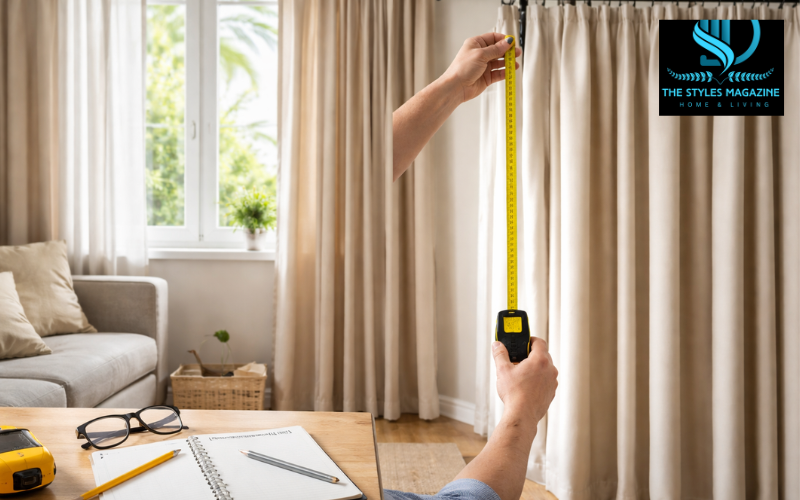
The starting point of your measurement depends on the type of curtain and hardware you are using. For eyelet or grommet curtains, you should measure from the top of the curtain rod. For pleated styles, such as pencil or pinch pleats, measure from the eye or ring where the curtain is attached.
If you are using a curtain track, measure from the top of the track to ensure it is fully covered by the fabric.
Once you have the starting point, measure down to where you want the curtains to end. This final point will depend on your preferred style. Taking accurate measurements here ensures your curtains hang evenly and look intentional.
Choosing the Right Curtain Length Style for Your Space
The length of your curtains has a strong impact on the overall style of your room. Different length options create different visual effects, so it is important to choose one that suits your space.
Sill-length curtains end just above the windowsill. This style works well in kitchens or small spaces where longer curtains may get in the way. It provides a clean and practical look.
Below-sill or apron-length curtains extend a few inches below the windowsill. This option adds a bit more softness and is suitable for casual spaces.
Floor-length curtains are one of the most popular choices. They typically end just above the floor, creating a neat and tailored appearance. This style works well in living rooms and bedrooms.
For a more dramatic and luxurious feel, some people prefer the puddle effect. In this style, extra fabric is added so the curtains rest on the floor. While this can look elegant, it requires more maintenance and is better suited for formal spaces.
Choosing the right length helps define the mood of your room and ensures your curtains complement the overall design.
Measuring for Different Curtain Header Styles
Different curtain header styles require slightly different measurement methods. Understanding these differences will help you get more accurate results.
Eyelet or grommet curtains are easy to measure because they hang directly from the rod. You simply measure from the top of the rod to your desired endpoint.
Pencil pleat and pinch pleat curtains use hooks or rings, so the measurement should start from the point where the curtain is attached, not the rod itself. This ensures the fabric covers the hardware properly.
Curtain tracks also require careful measurement. Since the track is usually hidden, you should measure from the top of the track to make sure it is fully concealed by the curtains.
By adjusting your measurements based on the header style, you can ensure a better fit and a more polished look.
Common Curtain Measuring Mistakes to Avoid
Even small mistakes can affect how your curtains look and function. Being aware of common errors can help you avoid costly problems.
One of the most frequent mistakes is measuring the window instead of the curtain rod. Curtains are designed to hang from the rod, so measuring the window alone can lead to incorrect sizing.
Another common issue is ignoring fullness. Without enough fabric, curtains can look thin and unbalanced. Adding the correct fullness ensures a richer and more attractive appearance.
Incorrect height placement is also a problem. Hanging the rod too low can make the room feel smaller, while placing it higher can create a more spacious effect.
Finally, misjudging floor clearance can result in curtains that drag too much or hang too high. Taking careful measurements helps you avoid these issues and achieve a better result.
Quick Measurement Checklist Before You Buy Curtains
Before purchasing your curtains, it is helpful to review your measurements to make sure everything is correct.
Start by confirming the placement of your curtain rod or track. Then double-check the width measurement, ensuring it reflects the full rod length. Make sure you have applied the appropriate fullness based on your desired style.
Next, review your length measurement, paying attention to the starting point and the final drop. Consider your chosen curtain style and how it will look in your space.
Taking a few extra minutes to check your measurements can prevent mistakes and ensure your curtains fit perfectly.
Conclusion
Learning how to measure for curtains properly can make a significant difference in both the look and functionality of your space. Accurate measurements ensure your curtains fit well, operate smoothly, and enhance the overall design of your room.
By carefully planning your rod placement, measuring both width and length correctly, and considering factors like fullness and style, you can avoid common mistakes and achieve a professional result.
Before making a purchase, take the time to review your measurements and make any necessary adjustments. With the right approach, you can choose curtains that not only fit perfectly but also transform your space into something more comfortable and visually appealing.
FAQs (People Also Ask)
Do I measure the window or the curtain rod?
Always measure the curtain rod or track, not just the window. Curtains hang from the rod, so its width determines the correct size.
How much wider should curtains be than the window?
Curtains should be 1.5 to 3 times wider than the rod for proper fullness and a balanced look.
Where should curtains fall in length?
Curtains can end at the sill, below the sill, just above the floor, or slightly puddle on the floor depending on your style preference.
- How high should I hang my curtain rod?
Typically 4–6 inches above the window frame, or higher to make the room appear taller. - What is the biggest mistake when measuring curtains?
The most common mistake is measuring only the window and ignoring fullness, which results in flat and poorly fitting curtains.
Disclaimer
This article is for informational purposes only. Measurements and recommendations may vary based on room layout, curtain style, and personal preference. Always double-check measurements before purchasing or installing curtains.