Frozen pipes are one of the most stressful problems homeowners can face during winter. When temperatures drop very low, the water sitting inside pipes can turn into ice. As that ice expands, it puts pressure on the pipe from the inside. This pressure can cause the pipe to crack, leak, or even burst, leading to water damage, repair costs, and a lot of unnecessary trouble.
Learning how to keep pipes from freezing is important before the cold weather becomes severe. Many frozen pipe problems can be prevented with simple steps like keeping your home warm, insulating exposed pipes, letting faucets drip during extreme cold, and protecting outdoor plumbing. These steps are especially important for pipes in outside walls, crawl spaces, basements, garages, mobile homes, and areas without regular heat.
This guide explains how to protect indoor pipes, outdoor pipes, pipes under the house, well systems, and plumbing during power outages or no-heat situations. The goal is simple: help you keep water moving safely through your home and avoid winter damage before it starts.
Quick Guide Table
| Area of Home | What to Do | Why It Helps |
| Indoor sinks | Open cabinet doors and keep heat on | Warm air reaches pipes inside outside walls |
| Outdoor faucets | Disconnect hoses and use faucet covers | Prevents trapped water from freezing near the spigot |
| Crawl spaces | Insulate exposed pipes and block cold drafts | Reduces freezing air around plumbing |
| Mobile homes | Protect skirting and insulate pipes underneath | Keeps cold wind away from water lines |
| Power outage | Drip faucets or shut off and drain water if needed | Lowers the risk of frozen or burst pipes |
| Winter travel | Keep thermostat at 55°F or shut off main valve | Protects pipes while no one is home |
Why Pipes Freeze During Cold Weather
Pipes freeze when the temperature around them gets cold enough for the water inside to turn into ice. This usually happens when pipes are exposed to freezing air for several hours, especially in areas without enough insulation or heat. Pipes in outside walls, garages, attics, crawl spaces, basements, sheds, and under mobile homes are usually at higher risk.
The biggest problem is not only that the water freezes. The real danger comes from pressure. When water freezes, it expands. As the ice grows inside the pipe, it can block the flow of water and create pressure between the frozen area and the closed faucet. If the pressure becomes too strong, the pipe can split or burst.
Metal pipes, plastic pipes, and older plumbing can all freeze if the conditions are cold enough. Even small gaps around walls, vents, windows, or foundation openings can allow cold air to reach plumbing and increase the risk.
Early Warning Signs Your Pipes May Be Starting to Freeze
A frozen pipe does not always burst right away. In many cases, there are early signs that give you time to act. One of the most common signs is weak water flow. If you turn on a faucet and only a small trickle comes out, the pipe may be starting to freeze.
Another sign is no water coming from one faucet while other faucets still work. This often means the frozen section is close to that fixture. You may also notice frost on visible pipes, especially in basements, garages, crawl spaces, or under sinks. Strange smells from drains can also happen when a pipe is blocked by ice.
If a pipe is near an outside wall and the cabinet feels very cold inside, that area may need quick attention. When you notice these signs, do not ignore them. Acting early can help you avoid a burst pipe and major water damage.
How to Keep Pipes from Freezing in the Winter
The best way to keep pipes from freezing in the winter is to combine steady heat, insulation, and water movement. A warm home helps protect plumbing inside walls and floors. Even when you are sleeping or away for a short time, the thermostat should stay at a safe temperature. Many experts recommend keeping it at least 55°F, especially during freezing weather.
During very cold nights, letting a faucet drip slightly can help. The drip does not need to be strong. A small, steady stream or light trickle is usually enough to keep water moving through the line. Moving water is less likely to freeze than still water.
It is also important to seal cold air leaks around your home. Gaps near windows, doors, dryer vents, cable holes, and foundation cracks can allow freezing air to reach pipes. Small repairs like caulking gaps, adding weatherstripping, and covering vents can make a big difference.
The Best Indoor Steps to Protect Pipes Before Temperatures Drop
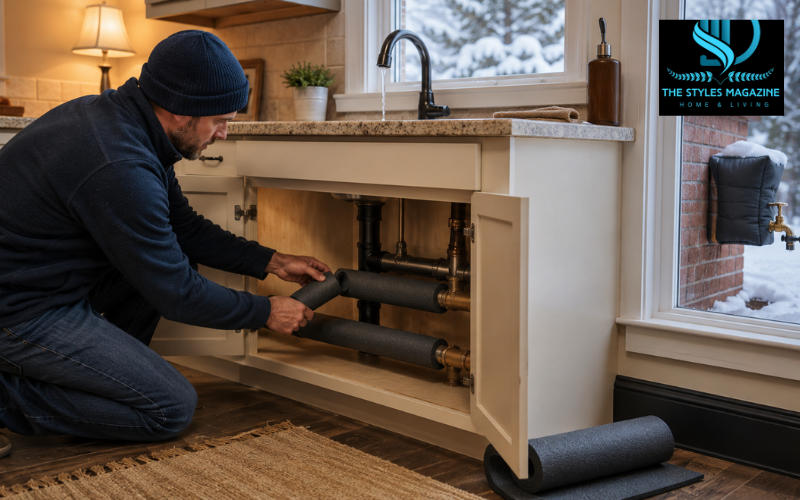
Indoor plumbing still needs protection during extreme cold, especially when pipes run through exterior walls. One simple step is to open cabinet doors under sinks in kitchens and bathrooms. This lets warm room air reach the pipes. If you have children or pets, move cleaning products and chemicals out of reach before leaving cabinets open.
Keep interior doors open so warm air can move through the house. Rooms that are closed off often become colder, and any plumbing inside those areas may be at risk. If you have a laundry room, utility room, or bathroom on an outside wall, make sure heat can reach it.
Another helpful step is to know where your main water shut-off valve is located. If a pipe bursts, shutting off the water quickly can reduce damage. Every adult in the home should know how to turn the valve off before an emergency happens.
How to Keep Pipes from Freezing on Outside Walls
Pipes on outside walls are more likely to freeze because they are closer to cold outdoor air. These pipes are often found under kitchen sinks, bathroom sinks, laundry areas, and sometimes behind showers or tubs. If the wall is poorly insulated, cold air can reach the plumbing quickly.
To protect these pipes, keep cabinet doors open during cold snaps and allow warm air to circulate. You can also use foam pipe insulation on any visible pipes. If the area feels very cold, a safe space heater may help, but it should only be used while someone is home and awake. Keep it away from water, towels, curtains, and other items that can catch fire.
Long-term protection may require better wall insulation or sealing cold air leaks. If pipes on outside walls freeze often, it may be worth asking a plumber or insulation professional to inspect the area.
Protecting Pipes Under the House, Crawl Space, and Basement
Pipes under the house need special care because these areas are often colder than the main living space. Crawl spaces, unfinished basements, and raised foundations can allow cold air to move around the pipes. If plumbing is exposed, it should be wrapped with pipe insulation before winter begins.
In crawl spaces, closing foundation vents during freezing weather can help reduce cold airflow. However, moisture control is still important, so vents should be handled carefully based on your home’s needs. Sealing large gaps and adding insulation around rim joists can also help keep the area warmer.
Basement pipes are often easier to protect because they are visible. Wrap exposed lines, seal drafts, and keep the basement warm enough during cold weather. Even if the basement is not used often, it should not be allowed to drop to freezing temperatures.
How to Keep Pipes from Freezing in a Mobile Home
Mobile homes can be more vulnerable to frozen pipes because much of the plumbing may run underneath the home. Cold air can pass below the structure and reach water lines more easily. To reduce the risk, make sure the skirting around the mobile home is in good condition. Broken or missing skirting lets freezing air blow directly under the home.
Pipes under a mobile home should be insulated properly. Heat tape can also be useful when installed safely and according to the product directions. The water supply line from the ground to the home is especially important because it is often exposed to cold air.
Inside the mobile home, keep the heat steady and open cabinet doors during freezing nights. If the home will be empty, leave the thermostat at a safe temperature and consider shutting off and draining the water system for longer trips.
Outdoor Faucets, Garden Hoses, and Exposed Plumbing Protection
Outdoor plumbing is one of the first areas to freeze because it is directly exposed to winter air. Before freezing weather arrives, disconnect garden hoses from outdoor spigots. A hose left attached can trap water, which may freeze and damage the faucet or the pipe inside the wall.
After removing hoses, cover outdoor faucets with insulated faucet covers. These are simple, low-cost covers that help protect the spigot from freezing temperatures. In an emergency, you can wrap the faucet with dry towels or rags and cover it with a plastic bag to keep moisture out, but a proper insulated cover is better for regular winter protection.
Any exposed pipes outside, in garages, or in sheds should also be insulated. Outdoor kitchens, irrigation lines, and hose bibs should be drained or winterized if they are not designed for freezing conditions.
Hot or Cold Water to Keep Pipes from Freezing
Many people wonder whether hot or cold water is better to keep pipes from freezing. In most homes, both hot and cold lines can freeze, so both may need protection. If you are letting a faucet drip during extreme cold, it is usually best to allow a small amount of both hot and cold water to move.
This is especially helpful for faucets served by pipes in outside walls or unheated areas. The goal is not to waste water, but to keep enough movement in the lines to reduce freezing risk. A very small trickle is usually enough during a cold snap.
Hot water pipes can freeze too because the water cools down when it sits inside the pipe for a long time. That is why both lines should be considered when protecting your plumbing.
How to Keep Pipes from Freezing Without Heat
Keeping pipes from freezing without heat is more difficult, but there are still steps that can reduce risk for a short time. First, shut off the main water valve if the home will not have heat for a while. Then open faucets to drain as much water from the lines as possible. Less water in the pipes means less chance of freezing and bursting.
You can also wrap exposed pipes with foam insulation, towels, or blankets as a temporary measure. Focus on pipes near outside walls, under sinks, in garages, basements, and crawl spaces. If possible, block drafts and close doors to keep remaining warmth inside.
For homes with no heat during severe weather, draining the system is often safer than trying to protect full pipes. If you are unsure how to do this, a plumber can help winterize the home properly.
How to Keep Pipes from Freezing During a Power Outage
A winter power outage can put pipes at risk because heating systems may stop working. During an outage, keep doors and windows closed as much as possible. Open cabinet doors under sinks so any remaining warm air can reach the pipes. If water pressure is still available, let vulnerable faucets drip lightly.
If the indoor temperature keeps dropping and the outage may last, consider shutting off the main water valve and draining the pipes. This is especially important if you plan to leave the home. Never use unsafe heating methods indoors, such as grills, outdoor heaters, or gas appliances not designed for indoor use.
If you have a generator, use it safely outdoors and far from windows or doors. It may help run essential heating equipment, but safety should always come first.
How to Keep Pipes from Freezing With a Well System
Homes with wells need extra winter protection because the system may include a well pump, pressure tank, supply line, and pipes in a pump house or basement. Any part of the system exposed to freezing air can become a problem.
The pressure tank and pump equipment should be kept in a protected area. If they are in a small pump house, that space should be insulated and sealed against drafts. Heat tape may be used on certain exposed lines, but it must be rated for the pipe material and installed safely.
If power goes out, well systems may stop moving water, which increases the risk of freezing. In that situation, protect the pipes as much as possible and consider draining exposed lines if the outage may last a long time.
Insulation Options That Help Prevent Frozen Pipes
Pipe insulation is one of the simplest ways to lower the risk of frozen pipes. Foam pipe sleeves are common, affordable, and easy to place around exposed pipes. They work well in basements, garages, crawl spaces, and under sinks.
Fiberglass pipe wrap can also help in colder areas, but it should be kept dry to work properly. For very cold spaces, heat tape or heat cable may be used along with insulation, depending on the pipe and location.
Insulation does not create heat by itself. It only slows heat loss. This means pipes in very cold areas may still freeze if there is no heat source for a long time. For the best protection, combine insulation with draft sealing, steady indoor heat, and safe warming methods when needed.
Safe Use of Heat Tape, Pipe Covers, and Temporary Warming Methods
Heat tape can be helpful for pipes in crawl spaces, mobile homes, garages, and other cold areas. However, it must be used carefully. Always choose heat tape that matches your pipe type and follow the manufacturer’s instructions. Do not overlap heat tape unless the product clearly says it is safe to do so.
Outdoor faucet covers are another simple tool for winter protection. They fit over spigots and help block freezing air. Pipe covers and foam sleeves are useful for exposed indoor and outdoor lines.
Temporary warming methods should be used with caution. A hair dryer can help thaw a frozen section of pipe, but open flames should never be used. Space heaters should only be used in safe, dry areas and never left unattended.
What to Do If You Think a Pipe Is Already Frozen
If you think a pipe is frozen, turn on the faucet connected to that line. Keeping the faucet open helps relieve pressure and gives melting water a place to escape. Start warming the pipe gently from the faucet side and move toward the frozen area.
Use safe heat sources such as a hair dryer, warm towels, or a portable heater placed at a safe distance. Never use a blowtorch, open flame, or anything that can damage the pipe or start a fire.
If you cannot find the frozen area, if the pipe is behind a wall, or if you see leaking, call a plumber. A frozen pipe can burst before you realize it, so it is better to act quickly.
Common Mistakes That Make Pipes Freeze Faster
One common mistake is turning the heat too low at night or while away from home. Lowering the thermostat may save a little energy, but it can also make pipes in walls and cold rooms more likely to freeze.
Another mistake is forgetting outdoor hoses. A connected hose can hold water against the faucet and cause damage inside the wall. Leaving garage doors open is also risky when water lines run through the garage.
Some people also believe only cold water pipes freeze, but hot water lines can freeze too. Others rely on insulation alone without checking for drafts. Cold air leaks can freeze a pipe even if the pipe has some insulation.
Winter Travel Tips to Prevent Frozen Pipes While Away
If you travel during winter, prepare your home before leaving. Keep the thermostat set no lower than 55°F. Ask someone you trust to check the home during extreme cold if you will be gone for more than a few days.
For longer trips, shutting off the main water valve and draining the faucets can provide extra protection. This helps reduce the chance of major flooding if a pipe freezes or breaks while you are away.
Also open cabinet doors under sinks, disconnect hoses, cover outdoor faucets, and make sure garage doors are closed. A few minutes of preparation can prevent serious damage while no one is home.
When to Call a Plumber for Frozen Pipe Prevention
A plumber can help if your pipes freeze often, if you have plumbing in hard-to-reach areas, or if you are not sure how to winterize your home. You should also call a professional if you see cracks, leaks, water stains, or signs of pipe damage.
Homes with wells, mobile homes, older plumbing, or pipes inside outside walls may need special attention. A plumber can recommend better insulation, pipe relocation, heat cable, or shut-off options.
Calling a plumber before winter can be a smart choice if your home has had frozen pipe problems in the past. Prevention is usually much easier and less expensive than emergency repairs after a burst pipe.
Conclusion
Knowing how to keep pipes from freezing can save you from expensive repairs, water damage, and winter stress. Frozen pipes usually happen when water sits still in cold areas for too long, but simple steps can lower the risk.
Keep your home warm, let water move during extreme cold, open cabinet doors, protect outdoor faucets, disconnect hoses, and insulate exposed pipes. Pay extra attention to outside walls, crawl spaces, basements, garages, mobile homes, and well systems.
Preventing frozen pipes is much easier and cheaper than fixing burst pipes. The best time to prepare is before freezing weather arrives, so your home is protected when winter temperatures drop.
FAQs
What Temperature Causes Pipes To Freeze?
Pipes can start freezing when temperatures stay below 32°F, but the risk becomes much higher during long cold spells, especially around 20°F or lower in poorly insulated areas.
Should I Drip Hot Or Cold Water To Keep Pipes From Freezing?
Both hot and cold water lines can freeze. During extreme cold, let a small trickle of both hot and cold water run from vulnerable faucets.
How Do I Keep Pipes From Freezing Without Heat?
Shut off the main water valve and open faucets to drain the lines. Then insulate exposed pipes and block drafts as much as possible.
Can Pipes Freeze Inside Walls?
Yes, pipes inside outside walls can freeze if the wall is poorly insulated or exposed to cold air leaks. Opening cabinet doors helps warm air reach them.
How Do I Protect Pipes When Traveling In Winter?
Keep the thermostat at least 55°F, open cabinet doors, disconnect hoses, and consider shutting off the main water valve for longer trips.
Enjoyed it? Find more exclusive content on The Styles Magazine.
Disclaimer: This article is for general home maintenance information only. Plumbing systems can vary by home, location, and weather conditions. For serious freezing issues, leaks, burst pipes, or well system problems, contact a licensed plumber.