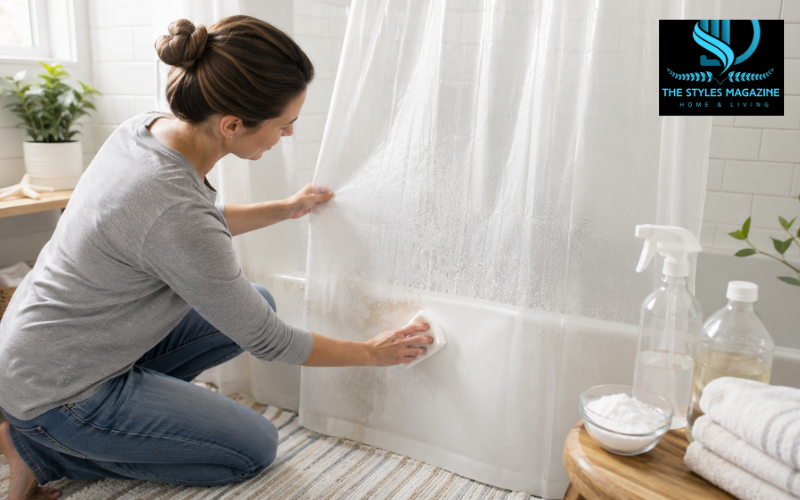
Knowing how to clean a shower curtain is one of the easiest ways to keep your bathroom looking fresh, clean, and comfortable. Shower curtains deal with water, soap, shampoo, body oils, and bathroom moisture every day. Over time, this can lead to soap scum, mildew, hard water stains, yellow buildup, and unpleasant odors, especially along the bottom edge where the curtain stays wet the longest.
The best cleaning method depends on the material. A plastic or vinyl shower curtain may need cooler water and gentle handling, while a fabric, cotton, or linen curtain may be able to handle a normal washing machine cycle. A shower curtain liner also needs attention because it sits closest to the water and often collects the most buildup.
The good news is that most shower curtains and liners can be cleaned safely at home. You can use a washing machine, hand cleaning, soaking, baking soda, white vinegar, or a mold-focused treatment depending on the condition of the curtain. With the right method, you can remove grime without damaging the material.
Quick Guide Table
| Cleaning Need | Best Method | What to Use | Important Tip |
| Regular cleaning | Washing machine | Mild detergent, baking soda, towels | Use gentle cycle and warm or cool water |
| Plastic shower curtain | Machine wash or hand wash | Detergent, baking soda, vinegar | Never place plastic or vinyl in the dryer |
| Soap scum buildup | Vinegar rinse or spray | White vinegar and water | Focus on the bottom edge and folds |
| Odor and light stains | Baking soda wash | Baking soda and mild detergent | Works well for freshening the curtain |
| Mold or mildew | Soaking method | Oxygen bleach or diluted bleach | Use bleach only when safe for the material |
Step-by-Step Guide
- Remove the shower curtain from the hooks or rings.
- Check the care label to confirm the safest cleaning method.
- Place the curtain in the washing machine with two or three towels.
- Add mild detergent and half a cup of baking soda.
- Wash on a gentle cycle using warm or cool water.
- Add white vinegar during the rinse cycle to remove soap scum and buildup.
- Hang the curtain back on the rod and spread it fully open to air dry.
Check the Shower Curtain Material First
Before cleaning, always check what your shower curtain is made of. This simple step helps you avoid shrinking fabric, melting plastic, fading colors, or damaging delicate material.
Plastic and vinyl shower curtains are common because they are affordable and water-resistant. They can often be washed in a machine, but they need gentle care. Hot water and dryer heat can damage them, so cool or warm water and air drying are usually safest.
Fabric shower curtains are often easier to wash because many can go in the washing machine with mild detergent. Cotton and linen curtains may also be washable, but they can shrink or wrinkle if washed too harshly. Always read the care label before using warm water, bleach, or a dryer.
Shower curtain liners are usually made from plastic, vinyl, polyester, or PEVA. Since liners touch the most water, they often collect soap scum, mildew, and cloudy stains faster than decorative curtains. If the liner is thin, torn, or heavily stained, cleaning may not fully restore it.
Supplies Needed to Clean a Shower Curtain
You do not need expensive products to clean a shower curtain. Most of the supplies are simple household items that are gentle but effective.
A mild laundry detergent is useful for washing fabric curtains and most washable liners. Baking soda helps lift grime, reduce odors, and loosen buildup. White vinegar is helpful for soap scum and hard water marks, especially when used during the rinse cycle or as a light cleaning spray.
Bath towels are useful when washing a shower curtain in the machine. They help scrub the surface gently and stop plastic liners from sticking together or wrinkling too much. A soft brush or sponge is helpful for hand cleaning the bottom edge, corners, and stained folds.
For tougher stains, oxygen bleach can help brighten and clean without being as harsh as chlorine bleach. Chlorine bleach should only be used when suitable, such as on white or clear curtains that can handle it. Never mix bleach with vinegar, ammonia, or other cleaners, and always work in a well-ventilated space.
How to Clean a Shower Curtain in the Washing Machine
The washing machine is usually the easiest method for cleaning most shower curtains and liners. Start by removing the curtain from the hooks or rings. If there are metal rings, take them off first so they do not damage the washer or rust during the wash.
Place the shower curtain in the washing machine with two or three bath towels. The towels add gentle friction, which helps remove soap scum and light mildew. They also help protect plastic and vinyl curtains from tearing or bunching up too much during the cycle.
Add a small amount of mild laundry detergent and about half a cup of baking soda to the drum. Choose a gentle cycle with warm water for most washable curtains. For delicate plastic or vinyl liners, cool water is safer.
During the rinse cycle, add one cup of white vinegar to the fabric softener compartment if your washer allows it. Vinegar can help loosen mineral buildup and remove leftover soap residue. Once the cycle is finished, hang the curtain back on the shower rod right away and let it air dry fully.
How to Wash a Plastic Shower Curtain in the Washing Machine
If you are wondering how to wash a plastic shower curtain in the washing machine, the key is to use gentle settings and avoid heat. Plastic and vinyl can warp, melt, or weaken if exposed to very hot water or dryer heat.
Remove the curtain from the rod and place it in the washer with a few towels. The towels help clean the surface while preventing the curtain from sticking to itself. Add mild detergent and baking soda, then choose a gentle cycle with cool or warm water.
Avoid heavy-duty cycles, strong spin settings, and hot water. These may be too rough for thinner plastic liners. If the curtain is very lightweight, stop the cycle before a harsh final spin if your machine allows it.
Once washed, never put a plastic or vinyl shower curtain in the dryer. Heat can damage the material quickly. Instead, hang it back on the shower rod, spread it out fully, and let it drip dry into the tub. This is usually the safest and simplest drying method.
How to Clean a Shower Curtain Liner
A shower curtain liner often gets dirty faster than the outer curtain because it is exposed directly to water, soap, shampoo, and body oils. Learning how to clean a shower curtain liner can help your whole bathroom feel fresher.
A decorative curtain may only need occasional washing, but a liner may need regular cleaning to prevent cloudy buildup, mildew spots, and slippery residue. If the liner is plastic, vinyl, or PEVA, check the care label first. Many liners can be washed gently in the machine using cool or warm water, detergent, baking soda, and towels.
For soap scum and cloudy buildup, vinegar can be very helpful. You can add vinegar during the rinse cycle or wipe the liner with a vinegar-water solution after showering. This helps reduce residue before it becomes harder to remove.
If the liner has deep stains, strong odors, tears, or mold that does not come off after cleaning, it may be better to replace it. Cleaning is useful, but a worn-out liner may not be worth saving.
How to Clean a Plastic Shower Curtain by Hand
If your curtain is not machine-safe, or if you prefer a gentler method, you can clean it by hand. This is also a good option for people searching for how to clean a plastic shower curtain by hand without using a washer.
Fill a bathtub or large bucket with warm water. Add a small amount of mild detergent, half a cup of baking soda, or a cup of white vinegar. Choose one cleaning approach at a time, especially if you are using stronger products. Do not mix bleach with vinegar.
Place the curtain in the water and let it soak for a short time to loosen soap scum and grime. Then use a soft sponge or brush to gently scrub the stained areas. Pay special attention to the bottom edge, corners, and folds where mildew often starts.
After scrubbing, rinse the curtain fully with clean water. Any leftover cleaner can leave a film or attract more dirt. Hang the curtain flat over the rod and spread it open so it dries evenly.
How to Clean a Shower Curtain With Baking Soda
Baking soda is a simple and gentle cleaner that works well for many shower curtains. It helps remove odors, loosen grime, and give the curtain a fresher feel without using a strong chemical smell.
To clean a shower curtain with baking soda in the washing machine, add about half a cup directly to the drum along with mild laundry detergent. Wash on a gentle cycle with towels, then rinse well. This works well for light buildup, mild odors, and general bathroom grime.
For spot cleaning, mix baking soda with a small amount of water to make a soft paste. Apply it to stained areas and gently rub with a sponge or soft brush. Do not scrub too hard, especially on thin plastic or printed fabric.
The best areas to target are the bottom edge, stained folds, and any spots that feel slippery or look cloudy. After cleaning, rinse the baking soda away completely and hang the curtain to dry.
How to Clean a Shower Curtain With Vinegar
White vinegar is useful for cleaning soap scum, hard water marks, and light bathroom buildup. If you want to know how to clean a shower curtain with vinegar, there are two easy methods: using it in the rinse cycle or applying it as a spray.
For machine washing, add vinegar during the rinse cycle instead of at the beginning of the wash. This helps rinse away soap residue and mineral buildup. If your washer has a fabric softener compartment, you can add one cup of white vinegar there.
For light cleaning, mix equal parts white vinegar and water in a spray bottle. Spray the lower part of the curtain or liner, let it sit briefly, then wipe with a sponge or cloth. Rinse with warm water from the shower if needed.
One important safety note: do not mix vinegar with chlorine bleach. This can create harmful fumes. Use vinegar as a mild cleaner on its own, and rinse the curtain well before using any other strong cleaning product.
How to Clean a Shower Curtain That Has Mold
Mold and mildew are common problems in bathrooms because moisture can stay trapped in curtain folds. If you need to clean a shower curtain that has mold, first look at how serious the stains are. Light mildew often appears as small gray, pink, or black spots on the bottom edge. Deeper mold stains may be darker, spread wider, and smell musty.
For stubborn stains, oxygen bleach is often a good choice for washable curtains. Fill a bathtub with warm water, add oxygen bleach according to the product instructions, and soak the curtain. After soaking, gently scrub problem spots, rinse thoroughly, and hang it to dry.
Chlorine bleach should only be used on suitable white or clear curtains, and only when the material can handle it. Use a diluted solution, wear gloves, keep the room ventilated, and never mix bleach with vinegar or other cleaners.
If mold keeps returning, the issue may be poor airflow or a liner that stays wet too long. If the curtain still smells bad or stains remain after cleaning, replacement may be the healthiest option.
How to Clean a Shower Curtain Without Removing It
Sometimes you may not have time for a full wash. In that case, you can clean a shower curtain without removing it for light maintenance. This method is best for fresh soap scum, mild residue, and small spots, not heavy mold or deep stains.
Mix equal parts white vinegar and water in a spray bottle. Spray the lower section of the curtain or liner, especially the area that touches the tub. This is where soap scum and moisture usually collect.
Wipe the sprayed area with a sponge or soft cloth. If you see buildup in the folds, spread the curtain out and clean each section gently. After wiping, rinse the area with warm water from the showerhead or a clean wet cloth.
This quick cleaning habit can help prevent grime from building up between deeper washes. However, if the curtain has visible mold, a strong odor, or heavy yellowing, remove it and wash or soak it properly.
Drying the Shower Curtain the Right Way
Drying is just as important as washing. A clean shower curtain can quickly develop mildew again if it stays folded, damp, or bunched up after cleaning.
After washing, hang the curtain back on the shower rod immediately. Spread it fully open so air can move across the whole surface. This helps water drip into the tub and prevents moisture from being trapped in folds.
If your bathroom has a fan, run it while the curtain dries. You can also open a window if the weather allows. Better airflow helps the curtain dry faster and reduces the chance of mildew returning.
Avoid using dryer heat on plastic and vinyl liners. Even a short time in the dryer can damage them. Fabric curtains may be dryer-safe depending on the care label, but air drying is usually the safest choice. Always make sure the bottom edge dries completely because that is where mildew usually starts.
How Often to Clean a Shower Curtain
How often you clean your shower curtain depends on how often the shower is used, how humid the bathroom is, and what type of curtain you have. For most bathrooms, a monthly wash is a good routine.
Light weekly maintenance can also make a big difference. After showering, rinse the liner if soap has splashed heavily on it. You can also spray the lower area with a vinegar-water mix a few times a week to reduce buildup.
Bathrooms with poor ventilation, frequent use, or high humidity may need more frequent cleaning. If you notice a musty smell, pink residue, black spots, cloudy patches, or yellowing, clean the curtain sooner.
Sometimes replacing the curtain or liner makes more sense than washing it again. If the material is torn, stiff, deeply stained, or still smells after cleaning, a new liner may be the better option. Regular cleaning can extend its life, but it cannot fix every problem forever.
Conclusion: Keeping Your Shower Curtain Clean Longer
Learning how to clean a shower curtain is simple once you choose the right method for the material. Most fabric curtains can be washed gently with mild detergent, baking soda, and towels. Plastic and vinyl curtains can often go in the washing machine too, but they need cool or warm water and must always be air dried. Liners may need more frequent care because they collect the most soap scum and moisture.
For everyday cleaning, vinegar and water can help reduce buildup. For odors and grime, baking soda is a gentle option. For mold or heavy stains, soaking with oxygen bleach may help, while diluted chlorine bleach should only be used carefully on suitable white or clear curtains.
The best way to keep your shower curtain clean longer is to prevent moisture from sitting in the folds. After every shower, pull the curtain fully closed, let it dry flat, and keep the bathroom well ventilated. With regular washing, quick rinsing, and proper drying, your shower curtain can stay cleaner, fresher, and better looking for much longer.
FAQs
How Often Should I Clean A Shower Curtain?
Most shower curtains should be cleaned about once a month. If your bathroom is humid or the curtain shows mildew, soap scum, or odor, clean it sooner.
Can I Wash A Plastic Shower Curtain In The Washing Machine?
Yes, many plastic shower curtains can be washed in the machine on a gentle cycle with cool or warm water. Add towels and never use the dryer.
What Is The Best Way To Clean Mold From A Shower Curtain?
For mold, soak the curtain in warm water with oxygen bleach, then scrub gently and rinse well. Use chlorine bleach only on suitable white or clear curtains.
Can I Clean A Shower Curtain Without Removing It?
Yes, for light cleaning, spray the lower part with equal parts vinegar and water, wipe with a sponge, rinse with warm water, and let it dry fully.
Is Vinegar Or Baking Soda Better For Shower Curtains?
Vinegar is better for soap scum and hard water marks, while baking soda helps with odors and grime. For deeper cleaning, both can be used safely in separate steps.
Enjoyed it? Find more exclusive content on The Styles Magazine.
Disclaimer: This article is for general home-cleaning information only. Always check your shower curtain’s care label before washing, test cleaners on a small area first, and never mix vinegar with bleach or other strong chemicals.