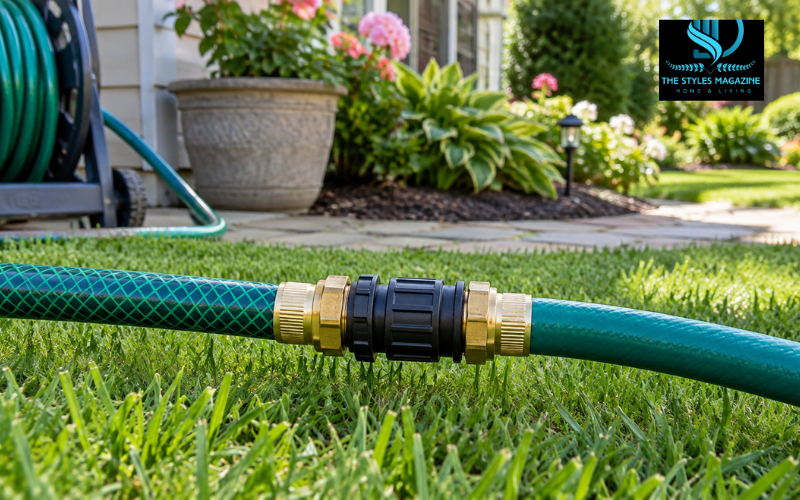
A hose-on-hose connection simply means joining one garden hose to another so water can travel through both. It is useful when your existing hose cannot reach the far end of the garden or when a hose reel needs a short supply line from the outdoor tap. With the correct fittings, the connection should be secure, easy to use and free from noticeable leaks.
The important part is knowing what is fitted to each hose. Some hoses have screw-on male and female ends, while many UK garden hoses use plastic or metal click-in connectors. Both arrangements work well, but the parts are not always interchangeable.
This guide explains how to identify your fittings, join hoses, connect a reel and deal with common problems. You do not need specialist equipment for most connections, although checking sizes before buying an adaptor can save considerable frustration.
Quick Answer:
A hose-on-hose connection joins two garden hoses to extend watering reach or connect equipment such as a hose reel. Compatible threaded fittings or quick-connect couplings create a secure connection and help prevent leaks.
Quick Guide: Garden Hose Connection Methods
| Connection Method | Best Used For | Required Fitting |
| Direct threaded connection | Joining compatible garden hoses | Matching male and female ends |
| Quick-connect joint | Frequently connecting and removing hoses | Compatible extension joiner |
| Male-to-male adaptor | Joining two female threaded ends | Matching double-male fitting |
| Female-to-female coupling | Joining two male threaded ends | Matching double-female fitting |
| Hose reel leader hose | Connecting a tap to a hose reel | Hose with suitable end connectors |
Step-by-Step Guide to Connecting Two Garden Hoses
- Turn off the water: Close the outdoor tap and release any remaining hose pressure.
- Check the connectors: Identify whether the hoses use threaded or quick-connect fittings.
- Inspect the seals: Check rubber washers and O-rings for dirt, cracks or damage.
- Join the hoses: Screw compatible threaded fittings together by hand or click matching connectors securely into place.
- Test the connection: Slowly turn on the water and inspect the joint for leaks.
- Fix any dripping: Turn off the water, release pressure and inspect or replace damaged seals before reconnecting.
Why Connect One Garden Hose to Another?
The obvious reason to join two hoses is extra reach. A hose that comfortably waters the patio may fall short of a vegetable patch, greenhouse or flowerbed at the other end of the garden. Adding a second length can be cheaper and more convenient than replacing a perfectly good hose.
A joined hose can also supply a sprinkler or other garden accessory in an awkward spot. It gives you more freedom to move equipment without relocating the outdoor tap. For a portable hose reel, a separate short connecting hose can carry water from the tap to the reel while the main hose stays neatly wound.
An extension makes most sense when you already own compatible hoses and only need the extra distance occasionally. For a permanent arrangement, one continuous hose may be tidier because it has fewer joints that could leak or catch on paving and plants.
Understanding Garden Hose Ends, Threads and Connector Sizes
Before connecting anything, look closely at both hose ends. A male threaded fitting has visible threads on the outside; a female fitting has matching threads inside. They screw together only when the thread type and size agree. A quick-connect fitting works differently: a socket clicks onto a matching plug without being twisted into place.
In the UK, common garden hose internal diameters include 12.5 mm (½ inch), 15 mm (⅝ inch) and 19 mm (¾ inch). The hose diameter determines which hose-end connector will grip it. It is not the same measurement as the thread on a tap or reel inlet.
UK threaded tap fittings often use ½-inch or ¾-inch BSP threads. Some imported hoses instead use American garden hose thread, usually called GHT. Despite similar names, ¾-inch GHT and ¾-inch BSP are different and should not be forced together.
Check the labels on the hose, reel and fittings. If they are missing, measure the hose’s internal diameter and identify the thread standard from the equipment instructions before choosing an adaptor.
How to Connect Two Garden Hoses Using Threaded Fittings
If your hoses have matching threaded ends, this is usually the most straightforward method. Turn off the tap and release any water pressure. Look for grit, cracked fittings or damaged threads, and clean the ends before joining them.
Check the rubber washer inside the female coupling. On most standard garden-hose threaded connections, that washer creates the seal; the threads mainly hold the parts together. A missing, flattened or split washer can cause dripping even if the fitting seems tight.
Hold the female end of the second hose squarely against the male end of the first. Turn it clockwise by hand, taking care not to cross the threads. If it catches or becomes difficult to turn immediately, undo it and try again rather than forcing it.
Once the joint is snug, turn the water on slowly and inspect it while the hose is running. If water escapes, switch off the tap, release the pressure and check the washer and alignment. Avoid using pliers to force a stubborn connection: excessive tightening can damage the fitting without fixing the real problem.
Joining Garden Hoses with Quick-Connect Fittings
Quick-connect fittings are especially convenient when you regularly move hoses between the patio, lawn and garden beds. Instead of unscrewing a joint each time, you release a collar or grip section and separate the connectors.
On many UK systems, each hose end carries a female-style click-in hose connector. To extend the line, these two sockets need a compatible double-male joining piece, sometimes sold as an extension joint. The name describes the click-in plugs, not necessarily the threaded fittings discussed earlier.
With the water off, push a connector onto each end of the joiner until it locks. Some models click automatically; others require you to pull back a collar first. Gently tug both hoses to confirm the parts are seated, then open the tap and check for leaks.
To disconnect, switch off the water, release pressure and operate the connector’s release collar. Use fittings from the same compatible system whenever possible, and check that a water-stop connector will allow flow in the arrangement you intend.
Connecting Hoses When Both Ends Have the Same Fitting
Two threaded female ends cannot screw directly together, and neither can two threaded male ends. The solution is a joining adaptor with the opposite connection on each side. Two female threaded ends need a male-to-male adaptor; two male threaded ends need a female-to-female coupling.
Both sides of the adaptor must match the existing thread size and standard. For example, a fitting intended for BSP connections is not automatically suitable for an imported hose with GHT threads. Each female hose connection also needs its appropriate sealing washer or other manufacturer-specified seal.
It is equally important to distinguish screw fittings from click-in fittings. Two quick-connect sockets generally need a double-male click-in joiner, not a threaded male-to-male nipple. If the hose ends are different systems, look for a purpose-made conversion adaptor rather than trying to make mismatched parts fit.
Connecting a Short Leader Hose to a Hose Reel
A leader hose, also called a feeder or connection hose, is the short length that brings water from the tap to a hose reel. It does a different job from the long hose stored on the reel. Without a suitable supply connection, the reel cannot deliver water to the hose you pull out.
Start by locating the reel’s water inlet, which may be on the side or near the centre of the drum. Check whether it takes a threaded coupling, a quick-connect socket or a model-specific fitting. Connect one end of the leader hose to the tap and the other to the inlet using the specified connectors.
The hose should reach comfortably without being stretched, twisted or sharply bent when the reel is in its normal position. A short hose connector for a hose reel is often a tidier choice than leaving a long spare hose coiled beside it.
Finally, turn on the tap and inspect both ends. Check the manufacturer’s instructions before moving or winding a reel while it remains connected to the supply.
When a Female-to-Female Hose Reel Connector Is Needed
A leader hose for a hose reel with female-to-female fittings is useful when both the tap connection and reel inlet present compatible male threads. Each female coupling then screws onto its matching male fitting, creating a supply line between the two.
However, not every reel uses that arrangement. Many UK reels are designed for push-fit connectors, and others have their own inlet parts. Buying a female-to-female hose reel connector hose purely because the fittings look similar can leave you with the wrong connection.
Examine the inlet and the outdoor tap separately. Confirm whether each connection is threaded or click-in, the exact thread standard if applicable, and the type of washer or seal required. If one end differs, a suitable adaptor or a leader hose with different end fittings may be needed.
For an older reel, checking its model number can be more reliable than guessing from a photograph of a replacement part.
Replacing a Damaged Hose Reel Connector Hose
A hose reel connector hose replacement becomes worthwhile when the existing feeder has split, developed a persistent leak or become stiff and badly kinked. Water escaping near a coupling may instead point to a worn washer or connector, so inspect those parts before replacing the entire hose.
Close the tap and release the remaining pressure through the spray nozzle. Disconnect the feeder from the tap and reel, noting how each end attaches. Keep any reusable adaptor only if it is undamaged and suitable for the new hose.
Match the replacement to the reel’s inlet, the tap fitting and the hose diameter. The original hose length is a helpful starting point, but a little extra slack may be useful if the reel has been moved. Avoid excess length that will sit in tight loops.
Fit the new leader hose without twisting it, then turn on the water gradually. Watch both connections while water is flowing and again while the nozzle is closed, when the supply hose may be under full tap pressure.
Choosing a Heavy-Duty Hose-on-Hose Connection
For everyday watering, a well-made plastic connector can be perfectly adequate. Brass and other metal fittings may be worth considering when connections are frequently handled, knocked against hard surfaces or exposed to demanding outdoor use.
Brass offers strength and generally good resistance to corrosion, although the finish and quality vary. Some metal connectors also contain plastic mechanisms and rubber seals, so the material visible on the outside does not tell you everything about how they will perform. A strong body cannot compensate for an unsuitable size or a damaged seal.
For a heavy-duty hose-on-hose connection, focus on reliable locking, accessible replacement washers and compatibility with the water pressure expected in your system. Check the stated pressure rating of the complete connector, not just the hose itself.
If you often drag a joined hose across paving, keeping the joint clear of sharp edges and reducing strain on it can help it last longer.
How to Choose the Best Leader Hose for a Hose Reel
The best leader hose for a hose reel is the one that fits both connections, supplies enough water and reaches without strain. Price or a heavy-duty label matters much less than those basic requirements.
First, identify whether your reel needs a female-to-female threaded hose, a male-to-female arrangement or compatible quick-connect ends. Check the reel manual or existing hose reel hose connector rather than relying on the appearance of a product listing.
Next, consider diameter and length. A hose that is too narrow may limit flow, particularly when it feeds a long hose or a demanding watering accessory. The leader should also be flexible enough to follow the route from tap to reel without kinking.
Look at the quality of the hose material, secure end fittings and availability of replacement seals. A preassembled connection set designed for your reel can be convenient, but a correctly specified replacement from another manufacturer may also work where the fittings are standard and compatible.
Preventing Leaks at Hose-to-Hose Connections
Most small leaks come from a problem with the seal, fit or condition of the connector. On threaded joints, inspect the flat rubber washer inside the female fitting. On quick-connect parts, look for damaged O-rings and dirt around the plug or socket.
If a joint drips, turn off the tap and release pressure before taking it apart. Clean away grit, reseat a displaced washer and replace any seal that is cracked or flattened. Make sure the connectors are pushed fully home or that threaded fittings are aligned and hand-tightened.
Check the hose itself near the fitting. A split end, poorly secured connector or sharp bend can let water escape even when the joiner is sound. Replace damaged parts rather than repeatedly tightening them.
Thread-sealing tape is generally not a substitute for the rubber washer in an ordinary garden-hose coupling. If a joint needs a different sealing method, follow the fitting manufacturer’s instructions. Testing at normal operating pressure after every repair is the simplest way to confirm the leak has stopped.
Common Hose Connection Problems and Water Flow Issues
A joined hose may reach further but still deliver less water than expected. Longer hose runs create more resistance to flow, especially when the hose is narrow. Kinks, crushed sections and small internal passages through fittings can make the problem worse. Straighten the hose and inspect the entire route before blaming the tap.
If a quick connector keeps popping off, check that it has fully locked and belongs to a compatible system. Inspect the retaining parts for wear, and make sure the hose-end connector grips the correct hose diameter. A coupling that sticks may have dirt around the release mechanism; rinse and inspect it rather than pulling hard enough to break it.
Persistent drips often indicate a missing washer, worn O-ring or mismatched thread. A fitting that will not turn smoothly should be disconnected and identified before another attempt.
Pressure washers require special attention. Their garden-hose inlet needs an adequate water supply, so follow the machine’s stated minimum hose size and flow requirements. The ordinary garden hose supplies incoming water; it must never replace the specially rated high-pressure hose between the washer and its spray gun.
Conclusion
Connecting a hose on hose is usually simple once you know which fittings you have. Matching male and female threaded ends can be joined directly, while many UK quick-connect hoses need a compatible double-male extension joint. Hose reels may also need a short leader hose with specific end connections.
Before buying parts, check hose diameter, thread type, reel inlet design and the condition of the seals. Tighten fittings sensibly, keep bends gentle and test each new connection with the water running.
A few minutes spent checking these details can prevent frustrating leaks and help your watering set-up work reliably, whether you are extending a garden hose or replacing the supply hose on a reel.
Frequently Asked Questions
Can I Connect Two Garden Hoses Without An Adaptor?
Yes, if one hose has a male threaded end and the other has a matching female threaded end. For two UK click-in hose connectors, you will usually need a compatible extension joint.
Why Does Water Leak Where Two Hoses Meet?
Leaks commonly occur because of missing washers, damaged O-rings, loose fittings or incompatible connectors. Turn off the water, release pressure, inspect the seals and reconnect the fittings carefully without overtightening them.
Can I Use A Female-to-female Leader Hose On Any Hose Reel?
Not always. A female-to-female leader hose works when both connection points have compatible male threads. Some hose reels use quick-connect fittings, so check the reel inlet and manufacturer’s specifications before buying a replacement.
Does Connecting Two Garden Hoses Reduce Water Pressure?
Joining hoses increases the distance water travels and can reduce flow at the nozzle, particularly with narrow hoses or restrictive fittings. Using suitable hose diameters and avoiding kinks helps maintain better water delivery.
Are UK and US Garden Hose Connectors Interchangeable?
Not always. UK outdoor taps commonly use BSP threads, while American garden hoses typically use GHT threads. These standards differ, so a suitable adaptor is needed when connecting incompatible threaded fittings.
Enjoyed it? Find more exclusive content on The Styles Magazine.
Disclaimer: This article is published for general informational and educational purposes only. Garden hose fittings, connection methods and pressure requirements may vary depending on the product, manufacturer and region. Always check compatibility and follow the manufacturer’s instructions before installing or replacing hose connections. This content is intended solely to provide helpful information and does not involve guest posting, paid promotion, advertising or sponsored product endorsements.