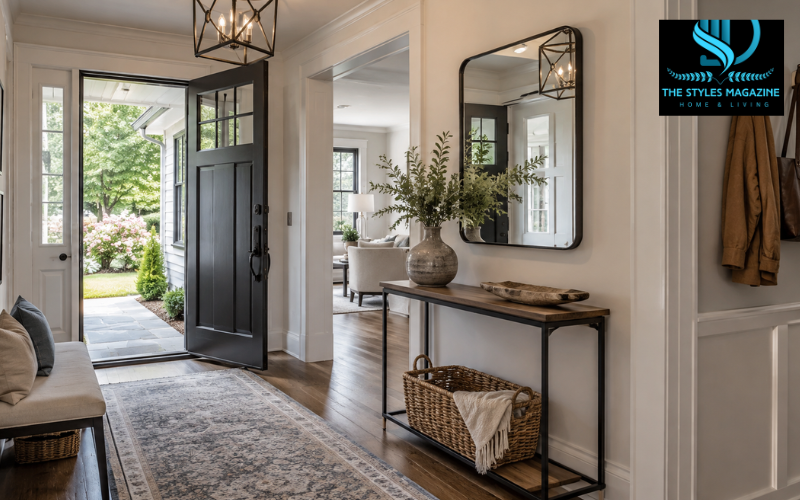
A foyer is the area just inside the main entrance of a home or building. It connects the front door with the rooms beyond it. In some homes, it is a separate hallway or small room. In others, it may be an open corner leading directly into a living room, dining room, or staircase.
A foyer has practical, decorative, and transitional purposes. It gives people a place to pause, remove shoes or coats, set down bags, and prepare to move farther inside. It can also introduce the style of the property through lighting, furniture, color, artwork, and flooring. Because it is usually the first indoor area visitors see, it often shapes their first impression.
Foyers are found in houses, apartments, hotels, theaters, offices, schools, and other public buildings. Their size and design may differ, but their basic role remains the same: welcoming people and guiding them from the entrance into the interior.
Quick Guide to Foyer Types
| Term | Main Purpose | Common Location |
| Foyer | Welcoming and transition space | Inside the main entrance |
| Vestibule | Blocks drafts and outdoor weather | Between exterior and interior doors |
| Entryway | General entrance area | Homes and apartments |
| Lobby | Waiting and reception space | Hotels, offices, and theaters |
| Mudroom | Stores shoes, coats, and outdoor gear | Side or back entrance |
Useful Foyer Essentials
- Slim console table for keys and mail
- Mirror to reflect light and add depth
- Bench or stool for changing shoes
- Hooks, baskets, or cabinets for storage
- Durable rug or runner for floor protection
- Warm lighting for a welcoming atmosphere
The Meaning and Origin of Foyer
Today, “foyer” usually means an entrance hall, lobby, or open area near a main door. In a home, it is the space that welcomes residents and guests before they enter the main living areas. In a theater or public building, it is often a larger lobby where people wait, meet, or move between rooms.
The word comes from French. Foyer en français can refer to a hearth, fireplace, home, household, or center of activity, depending on the sentence. The older link to a hearth is important because the hearth was once the warm central place where people gathered. Over time, the word developed into a term for a welcoming indoor area and later for an entrance hall.
A residential foyer is normally smaller and more personal. A public foyer is often larger and designed for movement, waiting, and gathering. Both still act as transition spaces between the outside and the main interior.
How to Pronounce Foyer Correctly
Many people search for how to pronounce foyer because two versions are commonly heard. In American English, it is often pronounced “FOY-er.” This form has two clear syllables and may rhyme loosely with “lawyer,” depending on the speaker’s accent.
A French-influenced pronunciation sounds closer to “fwah-YAY” or “foy-YAY.” Many English speakers also use this form, especially in formal settings or places where French pronunciation is familiar. Both versions are widely understood, and pronunciation can vary by region.
The phrase foyer or foyay usually shows uncertainty about spelling and sound. “Foyay” is not the standard spelling; it is simply a phonetic attempt to show the French-style pronunciation.
The search phrase foyer lawyer meaning may appear because people compare the sounds of “foyer” and “lawyer.” It is not a standard interior design expression. In most home-related contexts, “foyer” is the correct word for the entrance area.
Foyer in a House: Purpose and Everyday Function
A foyer in a house creates a useful buffer between outdoor and indoor life. Instead of the front door opening directly into the main living space, the entrance has a clear place for arriving and leaving.
In daily use, the foyer often becomes a drop zone for shoes, bags, keys, coats, umbrellas, and mail. When the area is planned well, these items have proper places and are less likely to spread through the home. A tray can hold keys, hooks can support coats and bags, and a bench can make changing shoes easier.
The foyer also creates the first visual message of the house. A clean rug, useful mirror, warm light, and well-sized table can make the entrance feel calm and welcoming. It can also protect nearby rooms by catching dirt and water from shoes before they travel farther inside.
What Is a Foyer in an Apartment?
A foyer in an apartment is the entrance area immediately inside the front door. It may be a small hall, a narrow passage, or simply a defined corner within an open-plan room. Even without separating walls, the area can still function as a foyer.
Apartment foyers are often compact, so each item should serve a purpose. A slim shelf, wall hooks, mirror, and narrow runner may be enough. A small bench with storage underneath can provide seating while holding shoes or bags.
Renters can create a foyer without permanent changes. Freestanding furniture, removable hooks, baskets, plug-in lights, and rugs can define the entrance. Furniture placement can also separate the doorway from the living area.
In a studio apartment, the foyer may only cover a few feet. It does not need to look grand. It simply needs to create an organized transition and keep everyday items from taking over the main room.
Foyer vs Vestibule, Entryway, Lobby, and Mudroom
A foyer is usually the main indoor entrance area of a home or public building. It may be formal or decorative, but it also serves practical needs. An entryway is a broader and less formal term that can describe almost any space near an entrance.
A vestibule is usually a small enclosed area between an exterior door and an interior door. It helps reduce drafts and creates a barrier between outdoor weather and the main interior. In a foyer vs vestibule comparison, the vestibule is normally smaller and more enclosed, while the foyer feels more connected to the inside of the building.
A lobby is common in hotels, offices, apartment buildings, and theaters. It is usually larger than a home foyer and may include reception, seating, or security.
A mudroom is mainly practical. It often sits near a side or back entrance and includes storage for shoes, coats, tools, pet items, or laundry supplies. A foyer is more focused on welcoming people, while a mudroom is designed to manage mess and outdoor gear.
Essential Elements of a Practical Foyer
A practical foyer does not need many items, but each one should fit the space and household routine. A slim console table can hold keys, mail, a lamp, or a small decorative piece. In a narrow entrance, a wall-mounted shelf can offer the same function without using floor space.
Seating makes it easier to put on or remove shoes. A bench is useful because it can also include shelves, baskets, or hidden storage. In a very small foyer, a stool or single chair may be enough.
Storage prevents clutter. Hooks work well for coats and bags, while baskets can hold shoes or scarves. Closed cabinets create a cleaner look, but open storage keeps daily items easy to reach.
A mirror is useful for checking appearance and reflecting light. A rug or runner can define the entrance, protect the floor, reduce noise, and catch dirt. It should be easy to clean and should not slide or block the door.
Foyer Design Principles for a Balanced Entrance
Good foyer design begins with proportion. Furniture should fit the space without blocking doors, stairs, or walking paths. A large table may suit a spacious hall but feel awkward in a narrow entrance. Slim furniture often works better in smaller areas.
Visual balance also matters. A mirror or artwork above a console can create a focal point. Lamps, baskets, and decorative objects should support that feature rather than compete with it. The arrangement should feel calm instead of crowded.
Movement must guide the layout. People need enough room to enter, close the door, remove shoes, and continue into the home. The door swing should stay clear, and storage should not project too far into the path.
The foyer can also introduce the wider style of the house. Wood furniture may suit a warm, natural interior, while glass or metal may fit a modern one. The entrance should feel connected to nearby rooms without needing to copy them exactly.
Small Foyer Ideas That Save Space
A small foyer works best when walls are used as carefully as the floor. Wall hooks, narrow shelves, floating cabinets, and tall mirrors provide function without making the area feel crowded.
Slim furniture is usually better than deep cabinets. A shallow console can hold keys and mail while leaving enough space to walk. A bench with shoe storage can replace several separate pieces.
Mirrors can make a narrow entrance feel brighter, especially when they reflect a window or light source. A ceiling light, wall fixture, or small lamp can remove dark corners and make the foyer more inviting.
For awkward layouts, choose furniture that follows the available wall. A corner shelf, small stool, or narrow runner may fit better than standard furniture. The main path from the door to the next room should always stay open.
In very tight spaces, hooks, a mirror, and a small key shelf may be all that is needed. A small foyer should feel useful rather than full.
Designing an Open-Concept Foyer
An open-concept home may not have walls around the entrance, but the foyer can still be defined visually. A rug is one of the easiest ways to mark the entrance zone without blocking light or movement.
Furniture placement can also create separation. A console behind a sofa may divide the entrance from the living area. A bench, open shelf, or screen can provide a gentle boundary as long as it does not interfere with the walking path.
Lighting helps identify the foyer as its own area. A pendant or ceiling fixture above the entrance creates focus, while a nearby lamp adds warmth. A change in paint color, wallpaper, or flooring can also make the zone feel distinct.
The foyer should still connect with the rest of the room. Repeating a wood tone, metal finish, or fabric color can help both spaces feel related.
Foyer Lighting, Colors, Flooring, and Decor
Lighting strongly affects how a foyer feels. Chandeliers suit large or tall entrances and can create a focal point. Pendants work well in medium-sized foyers, while wall sconces brighten narrow halls without using floor space. Lamps add a soft glow, and recessed lighting gives a clean look where ceilings are lower.
Color should respond to the size and light level of the space. Light neutrals can make a small or dark foyer feel more open. Warm shades can make a large entrance feel comfortable, while deeper colors add character when enough light is available.
Flooring should be durable and easy to clean. Tile, stone, sealed wood, and quality vinyl can handle regular foot traffic. Rugs and runners add comfort and style, but they need a non-slip backing and enough clearance for the door.
Decor gives the foyer personality. A mirror, artwork, plant, vase, or seasonal accent can make it feel complete. A few carefully chosen pieces usually work better than a crowded display that removes useful surface space.
Planning Foyer Storage and Organization
Foyer storage should match the household’s routine. Families may need low hooks, shoe baskets, and simple storage for school bags. Frequent hosts may need extra coat space. Pet owners may want a basket for leads, towels, and outdoor supplies.
Open storage is convenient because items are easy to see and reach. Hooks, shelves, cubbies, and baskets work well for daily belongings. The disadvantage is that the area can look messy when too much remains on display.
Closed storage creates a calmer appearance. Cabinets, drawers, and closets hide shoes, coats, and bags, but they need enough room to open. Many foyers work best with a mixture of open and closed storage.
Trays can control keys, coins, and wallets, while wall organizers can hold mail. Umbrella stands and shoe trays help contain water and dirt. Frequently used items should remain close at hand, while seasonal belongings can be stored elsewhere.
Regular clearing is also important. Removing old mail, unused shoes, and out-of-season coats prevents the foyer from becoming overcrowded.
Common Foyer Design Mistakes to Avoid
One common mistake is choosing furniture that is too large. A table, bench, or cabinet should not block the door swing or make the walking path feel tight. Measuring before buying can prevent this problem.
Rug size and placement also matter. A rug that is too small may look disconnected, while one that is too thick can catch under the door. Slippery rugs can also create a safety risk near wet shoes.
Another mistake is focusing only on decoration. A foyer may look attractive but become frustrating if there is no storage for daily items. Appearance and function should support each other.
Poor lighting can make even a well-designed entrance feel unwelcoming. It is also easy to overlook electrical outlets, switch locations, ceiling height, and the scale of a light fixture.
Finally, the foyer should not become a permanent storage pile. Too many shoes, bags, boxes, or coats can block movement and make the whole home feel disorganized from the moment someone enters.
Conclusion: Creating a Welcoming and Useful Foyer
A foyer is more than the space beside the front door. It is where the outside world meets the interior of a home or building. It welcomes people, supports everyday routines, protects nearby rooms from dirt, and introduces the style of the spaces beyond it.
A successful foyer depends on a clear layout, useful storage, comfortable lighting, durable materials, and decoration that fits the available space. Large entrances may support statement furniture and lighting, while small or open-plan foyers often work better with slim pieces and simple visual boundaries.
The best foyer is not necessarily the largest or most formal. It is the one that suits the household, keeps daily items under control, and allows people to move in and out easily. When the space reflects both real needs and personal style, it becomes welcoming, practical, and pleasant to use every day.
Frequently Asked Questions
What Is The Main Purpose Of A Foyer?
A foyer creates a transition between the outdoors and the interior. It welcomes guests, supports daily routines, stores frequently used items, and introduces the style of the home.
Is A Foyer The Same As An Entryway?
The terms are often used interchangeably, but a foyer usually feels more defined or formal. An entryway can be any small area located near the main entrance.
How Do You Pronounce Foyer?
Foyer is commonly pronounced “FOY-er” in American English. A French-influenced version sounds like “foy-YAY.” Both pronunciations are widely understood and accepted in everyday English.
Can A Small Apartment Have A Foyer?
Yes. A small hall, entrance corner, or section of an open-plan room can function as a foyer when it includes storage, lighting, a rug, or a mirror.
What Furniture Works Best In A Foyer?
A slim console table, compact bench, wall hooks, and narrow shoe storage usually work well. Furniture should fit the available space without blocking the door or walking path.
Enjoyed it? Find more exclusive content on The Styles Magazine.
Disclaimer: This article provides general foyer design and organization guidance. Always measure your space and consider safety, building rules, and household needs before making layout or installation changes.