Does green and gray go together? It’s a question many people ask when decorating a room, choosing paint colors, or even putting together an outfit. The short answer is yes—green and gray not only go together, but they also create one of the most balanced and stylish color combinations you can use today.
People often search for this pairing because they want something that feels fresh but not overwhelming, modern but still comfortable. Green represents nature, growth, and calmness, while gray brings neutrality, simplicity, and balance. When these two come together, they create a look that feels both natural and refined.
You’ll commonly see this color combination in home design, especially in living rooms, bedrooms, and bathrooms. It’s also popular in fashion, where green and gray outfits offer a clean and effortless look. Whether you’re decorating your space or updating your wardrobe, this pairing gives you flexibility without losing style.
How to Use Green and Gray Together
| Area | Best Green Shade | Best Gray Shade | Resulting Look |
| Living Room | Olive / Sage | Light to Mid Gray | Cozy, modern, balanced |
| Bedroom | Sage / Mint | Soft Gray | Calm, relaxing, airy |
| Bathroom | Pale Green | Cool Light Gray | Fresh, spa-like feel |
| Feature Wall | Emerald / Dark Green | Charcoal | Bold, dramatic, elegant |
| Clothing | Olive / Dark Green | Charcoal / Light Gray | Smart, clean, versatile |
Why Green and Gray Work So Well Together
Green and gray work so well together because they naturally balance each other. Green is a lively, earthy color that brings energy into a space, while gray is calm and neutral. When combined, gray tones down the brightness of green, making the overall look more relaxed and easy to live with.
There is also a psychological effect behind this pairing. Green is known to create a sense of calm and connection to nature, while gray gives a feeling of stability and sophistication. Together, they create a peaceful and grounded atmosphere that works well in both homes and clothing.
Designers often use this combination because it is versatile. It can feel soft and minimal in lighter shades or bold and dramatic when darker tones are used. This flexibility allows it to fit into different styles, from modern and minimalist to cozy and traditional. That is one of the main reasons why the question “does green and gray go together” continues to come up—it’s a pairing that adapts to many needs.
Popular Green and Gray Color Combinations That Always Look Good
Not all greens and grays are the same, and the exact shades you choose can change the entire look. Some combinations feel calm and airy, while others feel rich and dramatic.
Sage green paired with light gray creates a soft and peaceful environment. This combination is often used in bedrooms or bathrooms because it feels gentle and relaxing. It works especially well in spaces where you want to unwind.
Olive green and mid-gray offer a warmer and more grounded look. This pairing is perfect for living rooms or casual spaces where you want comfort without losing style. It has a slightly earthy feel that works well with wood and natural materials.
Emerald or dark green with charcoal gray creates a bold and dramatic effect. This is often used in feature walls or more formal spaces. It feels luxurious and works well when paired with metallic accents like brass or gold.
Mint or seafoam green combined with soft gray gives a fresh and airy look. This combination can make smaller spaces feel more open and bright, which is why it’s often used in compact rooms or apartments.
How to Use Green and Gray in a Living Room
When people ask, “does green and gray go together in a living room,” the answer is a clear yes. In fact, green and gray living room ideas are some of the most popular in modern design.
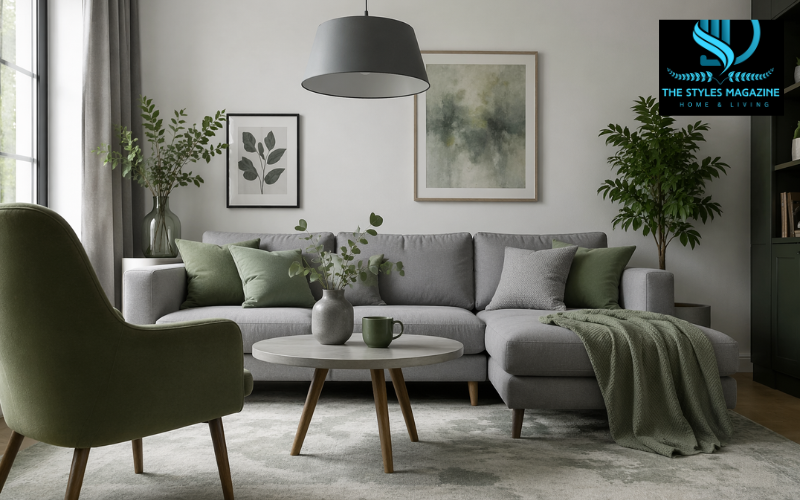
A simple way to start is by using gray as the base color. Gray walls or a gray sofa can create a neutral foundation. Then you can add green through cushions, plants, rugs, or artwork. This keeps the room balanced and prevents it from feeling too heavy.
For a more modern gray and green living room, you can use clean lines, minimal furniture, and a mix of textures. Light gray walls with a deep green sofa can create a stylish contrast without feeling overwhelming. On the other hand, if you prefer a cozy look, you can use warmer grays and softer greens with layered fabrics like throws and curtains.
In smaller living rooms, lighter shades of both colors help keep the space open and bright. In larger rooms, you can experiment with darker tones to create depth and character. The key is to keep a balance so that neither color takes over the space completely.
Green and Gray in Bedroom and Bathroom Spaces
Green and gray are perfect for bedrooms and bathrooms because they create a calm and relaxing environment. In bedrooms, soft greens paired with light gray can make the space feel peaceful and comfortable. This combination works well with simple bedding and natural materials.
When it comes to bathrooms, many people wonder, “does green and grey go together in a bathroom?” The answer is yes, especially if you want a spa-like feel. Pale green tiles combined with gray walls or fixtures can create a clean and refreshing look.
In both spaces, it’s important to choose shades that match the level of comfort you want. Softer tones create a calm atmosphere, while deeper tones can add a sense of luxury. Lighting also plays a role here, as brighter lighting can make the colors feel fresh, while softer lighting makes them feel warm and cozy.
Choosing the Right Green and Gray Wall Paint Combination
Selecting the right green and grey combination wall paint is one of the most important steps in creating a balanced space. The choice between light and dark shades can completely change the mood of a room.
Light green with light gray creates a soft and open feeling, making it ideal for smaller spaces. Dark green with darker gray, on the other hand, can make a room feel more dramatic and intimate.
Accent walls are a popular way to use this combination. You might paint one wall in a rich green while keeping the rest of the room in gray. This adds interest without overwhelming the space. Full-room color schemes can also work well if you carefully balance the shades.
The finish of the paint also matters. Matte finishes give a soft and modern look, while glossy finishes reflect light and add a touch of brightness. Textured walls or materials can also enhance the overall effect.
Do Dark Green and Gray Work Together?
Many people specifically ask, “does dark green and grey go together?” The answer is yes, but it needs to be done carefully.
Dark green and gray can create a bold and elegant look, especially in larger or well-lit spaces. This combination works best when there is enough natural or artificial light to prevent the room from feeling too dark.
To balance darker shades, you can add lighter elements such as white, beige, or metallic accents. This helps break up the heaviness and keeps the space visually interesting.
Materials also play a role. Adding textures like wood, glass, or metal can make the combination feel more dynamic and less flat. When done right, dark green and gray can look very sophisticated and modern.
How to Match Green and Gray in Clothing and Outfits
The question “does green and gray go together clothes” is just as common as its interior design version. In fashion, this combination is both practical and stylish.
For casual wear, olive green jackets or pants pair well with gray t-shirts or joggers. This creates a relaxed, everyday look that still feels put together. The colors are easy to mix and match, making them a reliable choice.
For more formal outfits, a dark green suit with a charcoal gray shirt or a sage green dress with light gray accessories can create a refined and modern appearance. These combinations offer a fresh alternative to traditional black and white outfits.
Seasonal changes also influence how you use these colors. Lighter greens and grays work well in spring and summer, while darker shades are more suitable for fall and winter. This flexibility makes the green and grey combination outfit a practical choice throughout the year.
Simple Design Rules to Make Green and Gray Look Better
To make green and gray look their best, it helps to follow a few simple design principles. One popular approach is using the same accent color in multiple places within a space. This creates a sense of connection and balance.
Adding a third color can also improve the overall look. Warm tones like mustard yellow, soft pink, or even beige can prevent the combination from feeling too flat. These accents add warmth and depth without overpowering the main colors.
Mixing different textures is another effective technique. Combining soft fabrics, smooth surfaces, and natural materials can make the space feel more interesting and complete. This approach works well in both home design and fashion.
Common Mistakes to Avoid When Pairing Green and Gray
Even though green and gray go together, there are some common mistakes that can affect the final result. One of the biggest issues is ignoring undertones. Not all grays are the same—some have warm tones, while others have cool tones. Matching these correctly with your chosen green is important.
Using too many dark shades together can also make a space feel heavy and closed in. It’s better to balance darker tones with lighter elements to keep the space comfortable.
Another mistake is not creating enough contrast. If the colors are too similar in tone, the design can look flat and uninteresting. Adding variation in shades or textures can solve this problem.
How Lighting and Undertones Affect This Color Combination
Lighting plays a major role in how green and gray appear in a space. Natural light can make colors look brighter and more vibrant, while artificial lighting can change their tone.
Warm gray tones, which have hints of beige or pink, can make green feel softer and more inviting. Cool gray tones, with blue or green undertones, create a more modern and crisp look.
The direction of the room also matters. Rooms that receive a lot of sunlight can handle darker shades, while rooms with less light benefit from lighter tones. Understanding these factors helps you choose the right shades and achieve a balanced result.
Conclusion: Is Green and Gray a Good Combination for You?
So, does green and gray go together? Absolutely. It’s a timeless combination that works across different spaces and styles, from modern living rooms to casual outfits.
The beauty of this pairing lies in its flexibility. You can keep it soft and calming with lighter shades or make it bold and dramatic with darker tones. It works well in both home design and fashion, making it a reliable choice for many situations.
By paying attention to undertones, lighting, and balance, you can create a look that feels natural, stylish, and comfortable. Whether you are updating your home or your wardrobe, green and gray offer a simple yet effective way to achieve a modern and polished result.
FAQs
Does Green And Gray Go Together In A Living Room?
Yes, green and gray work beautifully in living rooms. Gray creates a neutral base, while green adds freshness. Together, they make the space feel modern, calm, and inviting without being too bold.
Does Dark Green And Gray Go Together?
Dark green and gray can look very elegant when used correctly. Pairing them with good lighting or lighter accents helps prevent the space from feeling too dark or heavy.
Does Green And Gray Go Together In Clothes?
Yes, green and gray outfits look stylish and easy to wear. This combination works for both casual and formal looks, offering a clean and balanced appearance without trying too hard.
What Is The Best Green And Gray Combination For Walls?
Sage green with light gray is one of the best combinations for walls. It creates a soft, calming feel and works well in most rooms, especially bedrooms and living areas.
Can I Use Green And Gray In Small Spaces?
Yes, lighter shades of green and gray can make small spaces feel bigger and brighter. Avoid using too many dark tones, as they can make the room feel more closed.
Enjoyed it? Find more exclusive content on The Styles Magazine.
Disclaimer: This article is for informational purposes only. Color choices may vary based on lighting, space, and personal preference. Always test colors and combinations before making final design or styling decisions.