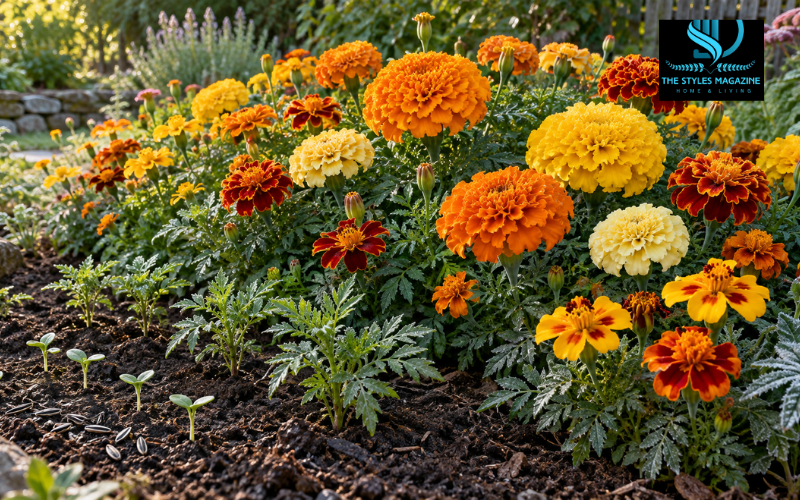
A marigold can brighten a bare border within weeks. These warm-season Tagetes flowers are recognised by their yellow, gold, orange, red or cream blooms and strongly scented, divided leaves. They grow quickly, flower for months and need little attention once established.
Most garden marigolds are annuals, completing their life cycle in one growing season. In temperate climates, they usually bloom from summer until the first hard frost. Depending on the variety, they suit edging, containers or cut-flower beds. This guide covers their types, care, problems, uses and cultural importance.
| Quick fact | Marigold information |
| Botanical group | Tagetes species and hybrids |
| Plant family | Asteraceae, or the daisy family |
| Usual life cycle | Grown mainly as an annual |
| Best light | Full sun, ideally at least six hours daily |
| Flowering period | Summer to the first hard frost |
| Typical height | About 15 cm to 1.2 m, depending on the cultivar |
| Preferred soil | Moderately fertile and well drained |
| Frost tolerance | Frost-tender |
Marigold Identity, Origins, and Name Confusion
Tagetes belongs to the Asteraceae family, alongside daisies and sunflowers. The genus comes from the Americas, and several familiar species originated in Mexico and Central America. Despite its name, the African marigold, Tagetes erecta, is not native to Africa; “African” is a historical garden name.
Calendula officinalis, often called pot or English marigold, belongs to the same family but a different genus. Calendula usually has broader leaves and open, daisy-like flowers, while Tagetes has divided, often pungent foliage. Their uses are not interchangeable. Wisconsin Horticulture also warns against confusing pot marigold with true Tagetes marigolds.
Quick-Answer Definition:
Marigold is the common name for colourful flowering plants in the Tagetes genus. These sun-loving, frost-tender plants are valued for long-lasting blooms, easy care, cultural importance, and attractive garden displays.
Simple Marigold Growing Steps
- Choose a position receiving at least six hours of direct sunlight.
- Plant outdoors only after the local frost risk has passed.
- Use moderately fertile soil or compost that drains freely.
- Water around the roots when the upper soil begins to feel dry.
- Avoid excessive fertiliser, especially products containing high nitrogen levels.
- Remove faded flowers regularly to encourage a longer flowering display.
French, African, Signet, and Other Marigold Types
The name “marigold” covers plants of very different sizes. These main groups provide a useful starting point.
| Type | Botanical name | Typical size | Flowers and colours | Best uses |
| French marigold | Tagetes patula | About 15–30 cm | Small single or double blooms in yellow, orange, red and bi-colours | Edging, pots and the front of borders |
| African or Aztec marigold | Tagetes erecta | About 50–120 cm | Large, often rounded blooms in yellow, orange, cream or white | Background planting, large pots and cut flowers |
| Signet marigold | Tagetes tenuifolia | Often 15–30 cm | Many small single flowers, usually yellow or orange | Edging, containers and edible garnishes when correctly identified |
| Triploid hybrid | Usually T. erecta × T. patula | Varies by cultivar | Vigorous plants with medium to large flowers | Long displays in beds and containers |
These measurements are guides. Dwarf African and taller French cultivars are available, so check each plant’s mature size. The University of Minnesota Extension identifies French, African and signet marigolds as the three main ornamental groups.
Mexican mint marigold, Tagetes lucida, has small yellow flowers and anise-scented leaves. It can be perennial in frost-free places but is grown as a tender annual or protected plant in colder regions.
Choosing the Right Marigold for Your Space
Choose for the position, not only the flower photograph. Compact French and signet varieties suit window boxes, path edges and border fronts. Medium hybrids add blocks of colour, while tall African cultivars need room near the back of a bed or in a cutting patch.
Single flowers expose their centres and are generally easier for visiting insects to reach than dense doubles. A mixture provides both a full display and accessible feeding points. For pots, consider mature spread as well as height.
If you search for “marigold near me,” choose compact plants with evenly coloured leaves and unopened buds. Avoid sticky foliage, webbing, badly tangled roots or soft, dark stems. A clear cultivar label should state the final size and spacing.
The Best Time and Place to Plant Marigolds
Marigolds enjoy warmth and are damaged by frost. Plant them outside only after frost risk has passed and the soil has warmed. In much of the UK, gardeners sow under cover in spring and plant outside around late May or early June, but colder districts may need to wait. Local weather matters more than a fixed date.
Choose an open position with full sun. Six hours of direct light is a useful minimum; too much shade can produce stretched stems and fewer blooms.
Good drainage is equally important. Marigolds tolerate short dry periods better than wet roots. Moderately fertile soil is enough; heavily enriched ground can favour leaves over flowers. The RHS profile for French marigold recommends full sun and well-drained soil and notes that the plants do not survive freezing.
Growing Marigolds Successfully from Seed
Indoor sowing provides a head start in cool climates. Direct sowing needs less equipment but must wait until frost has passed and the soil is warm, so flowering starts later.
- Fill a tray or small pots with fresh seed-starting compost and moisten it evenly.
- Sow seeds about 6 mm deep, then cover them lightly.
- Keep the compost moist but not waterlogged at roughly 21–24°C.
- Move seedlings into strong light as soon as they emerge. Under suitable conditions, germination often takes about five to eight days, although it can take longer.
- Thin crowded seedlings or move them into individual pots once they are easy to handle.
- Harden them off gradually for about a week before planting outside after frost risk has passed.
Start seeds roughly six to ten weeks before planting outside. Weak light causes leaning seedlings, while excess water encourages damping-off disease. Remove collapsed seedlings and improve airflow. For direct sowing, wait until the soil is around 18°C, then thin according to the packet. These details follow University of Minnesota Extension guidance.
Planting Marigolds in Beds, Borders, and Containers
Loosen compacted soil and add a little mature compost only if the ground is poor. Set each transplant at its previous depth, firm gently and water thoroughly.
Spacing should follow the cultivar label. Compact plants may sit 15–25 cm apart, while large African marigolds may need 30 cm or more. Adequate space allows leaves to dry after rain and reduces competition for light.
For containers, use fresh multipurpose compost and open drainage holes. One large plant or several compact plants perform better than an overcrowded mix. Repeat one colour for a clear edge or blend several shades through a border. In vegetable beds, keep both flowers and crops accessible.
Watering, Feeding, and Everyday Care
Newly planted marigolds need regular moisture while their roots spread into the surrounding soil. Once established, water deeply when the upper layer of soil feels dry rather than giving a small splash every day. Containers dry faster than beds and may need daily checking during hot or windy weather.
Direct water onto the soil, preferably in the morning. Constantly wetting the foliage and flower heads can leave dense blooms more likely to rot in humid conditions. A thin mulch can slow moisture loss and reduce weeds, but keep it away from the main stem.
Marigolds are light feeders. Plants in reasonable garden soil often need no extra fertiliser after planting. Container plants may benefit from a diluted flowering-plant feed used according to its label. Avoid frequent high-nitrogen feeding: it can create lush green growth with disappointing flowering.
Keeping Marigolds Flowering from Summer to Frost
Deadheading keeps plants tidy and discourages early seed production. Remove each faded bloom with its short stalk just above the next leaves or side shoot. It is optional, but often extends the display.
Pinching the growing tip of a young, established plant can encourage branching. Tall African varieties may also need a small support in an exposed position, especially when rain makes their large flower heads heavy.
If a plant has plenty of leaves but few blooms, first check its light and feeding. Shade and excess nitrogen are common causes. Severe drought, waterlogged roots and prolonged weather stress can also interrupt flowering.
To save seed, let several healthy flowers dry on the plant. Separate the long black-and-cream seeds and store them in a labelled paper packet somewhere cool and dry. Hybrid offspring may not match the parent. After frost, clear dead plants and discard badly diseased material.
Common Marigold Pests, Diseases, and Growing Problems
Marigolds are dependable but not problem-free. Check their growing conditions before applying a treatment.
| Symptom | Likely cause | Sensible response |
| Yellowing leaves | Soil staying wet, poor drainage or stressed roots | Check moisture, reduce watering and improve drainage |
| Wilting | Dry soil, damaged roots or waterlogged roots | Feel the soil and inspect roots before adding water |
| Long, weak stems | Insufficient light or overcrowding | Move pots into stronger light and give plants more space |
| Brown or rotting flowers | Persistent moisture and poor airflow | Deadhead promptly, water at soil level and improve spacing |
| White powder on leaves | Powdery mildew | Remove badly affected growth and improve light and airflow |
| Many leaves but few flowers | Too much nitrogen or too little sun | Stop unnecessary feeding and provide more direct light |
Slugs and snails may chew young plants. Aphids gather on soft growth, while spider mites can cause pale speckling and fine webbing in hot, dry conditions. Start gently: hand-pick slugs, remove badly infested shoots or rinse off small aphid colonies. Good airflow, clean tools and sensible watering prevent more trouble than routine spraying. If treatment is needed, identify the pest and use a product approved for that purpose locally.
Marigolds as Companion Plants: Benefits and Limits
Marigolds are useful companions because they fill gaps, add colour and provide flowers that some pollinators and beneficial insects can visit. However, the popular claim that their smell creates a protective shield around every vegetable is too broad. A few marigolds beside tomatoes will not reliably repel all aphids, whiteflies, slugs, rabbits or deer.
The evidence concerning nematodes is more specific. Certain Tagetes species and cultivars can reduce populations of certain plant-parasitic nematodes, including some root-knot nematodes. Success depends on matching the marigold to the nematode, growing a dense stand for long enough and using it as part of a planned rotation or cover crop. Some marigolds can even host nematodes that other varieties suppress.
The University of Florida’s nematode guidance explains these cultivar and pest differences. It does not support the idea that one decorative plant instantly cleans the surrounding soil. Where root-knot nematodes are suspected, proper identification and a wider plan—such as resistant crops, rotation and professional soil advice—are more dependable than marigolds alone.
Marigold Color, Meaning, and Cultural Significance
Marigold colours include lemon yellow, deep gold, orange, copper, red, mahogany, cream and bi-colours. Pale shades soften a planting, while red-and-gold blooms create contrast. Some multi-toned French varieties change colour as they age.
Marigold meaning is not universal. The flowers may suggest joy and energy in one setting but remembrance, grief, devotion or welcome in another. Context matters more than a single online definition.
In Mexican Day of the Dead traditions, cempasúchil—commonly associated with Tagetes erecta—may decorate ofrendas, graves and arches, while petals form paths. Its colour and scent are traditionally understood as guiding deceased loved ones to the family’s offerings. This is an act of remembrance, not merely seasonal décor. An Associated Press account from Oaxaca describes cempasúchil arches and paths used to welcome those being remembered.
Marigolds also appear in garlands, festivals, weddings and religious ceremonies in parts of South Asia. The meaning changes between communities and occasions, so it is more respectful to describe the particular tradition than to assign one fixed symbol to every use.
Safe and Creative Ways to Use Marigolds
Fresh marigolds suit arrangements, table displays and garlands. Pick newly opened flowers with clean scissors and place the stems in water promptly. Tall African cultivars suit larger arrangements; French flowers work well in compact displays.
Some marigold flowers are edible, but the common name does not confirm safety. Correctly identified signet marigolds are used as citrus-flavoured garnishes. Eat only a known edible species grown without pesticides unsuitable for food crops; never assume an unknown ornamental plant has the same use.
For a marigold drawing, look beyond the round head. French and African doubles have layered petals, while signet flowers show a simpler centre. Branching stems and narrow, divided, toothed leaves make the plant recognisable.
Handling may also matter. The RHS profile for Tagetes erecta notes that its foliage may aggravate skin allergies. Anyone who develops irritation should wear gloves, wash exposed skin and stop handling the plant if symptoms continue.
Conclusion
A healthy marigold needs no complicated routine. Choose the right size, wait until frost has passed, provide full sun and use freely draining soil. Water according to moisture, feed lightly and deadhead for a longer display. Marigolds can support a varied garden, but they do not cure every pest problem.
A simple seasonal routine is enough:
- Spring: Sow seeds under cover or buy clearly labelled young plants.
- Early summer: Harden plants off, move them outside after frost and water them while they establish.
- Summer: Check soil moisture, deadhead and watch for pests or disease.
- Autumn: Collect mature seed if wanted, then clear plants after frost.
With the right type in the right place, marigolds can provide reliable colour from early summer until cold weather brings the season to an end.
Frequently Asked Questions
Do Marigolds Come Back Every Year?
Most garden marigolds are grown as annuals and die after frost. Some Tagetes species are perennial in warm climates, while saved or self-sown seed may produce new plants.
Do Marigolds Need Full Sun?
Marigolds flower best with at least six hours of direct sunlight daily. They may survive in light shade, but plants can become leggy and produce fewer flowers.
How Often Should Marigolds Be Watered?
Water newly planted marigolds regularly until established. Afterwards, water when the upper soil feels dry. Container plants need checking more often, especially during hot or windy weather.
Do Marigolds Repel Garden Pests?
Marigolds do not repel every garden pest. Certain Tagetes cultivars can suppress particular nematodes when grown correctly, but planting one flower beside a vegetable does not guarantee protection.
Are Marigold Flowers Edible?
Some correctly identified marigolds, especially signet marigolds, have edible flowers. Only eat plants known to be suitable for food and grown without pesticides that are unsafe for edible crops.
Enjoyed it? Find more exclusive content on The Styles Magazine.
Disclaimer: This article provides general gardening information about Tagetes marigolds and is not a substitute for advice from a qualified horticulturist, agricultural extension service, medical professional, or pest specialist. Plant size, flowering time, growth, and pest resistance can vary by cultivar, climate, soil, and care. Always confirm a plant’s botanical identity before using its flowers as food, and never eat plants treated with products that are not approved for edible crops. Follow local pesticide instructions and regulations. Anyone who experiences skin irritation should avoid direct contact or wear protective gloves. thestylesmagazine.co.uk only provides information about this topic and cannot guarantee particular gardening results.