The Dick Proenneke cabin is one of the most respected wilderness cabins in America. It stands on the south shore of Upper Twin Lake in Lake Clark National Park & Preserve, Alaska, surrounded by water, mountains, spruce trees, and quiet backcountry. What makes the cabin special is not only where it sits, but how it was built and what it represents. Dick Proenneke built this small log cabin by hand, using simple tools, local materials, and a deep understanding of the land around him.
For many readers, the Dick Proenneke cabin is more than an old structure. It is a symbol of self-reliance, patience, craftsmanship, and simple living. Proenneke chose to live in this remote place without electricity, running water, a telephone, or the comforts most people consider normal. His life at Twin Lakes was not about showing off or escaping responsibility. It was about living carefully, working with his hands, observing nature, and respecting the wilderness.
This article explains who Dick Proenneke was, where his cabin is located, how he built it, what life inside the cabin was like, and why his story became famous through books, journals, film footage, and the PBS-connected documentary Alone in the Wilderness. It also covers photos, visiting details, preservation, Dick Proenneke death information, and common questions readers often search for.
Quick Guide Table
| Topic | Quick Details |
| Main Keyword | dick proenneke cabin |
| Location | Upper Twin Lake, Lake Clark National Park & Preserve, Alaska |
| Built By | Dick Proenneke |
| Built Around | 1967–1968 |
| Cabin Size | About 12 feet by 16 feet |
| Known For | Handmade log design, wilderness living, self-reliance |
| Famous Through | One Man’s Wilderness and Alone in the Wilderness |
| Visitor Access | Mostly by floatplane, depending on weather and season |
| Best Reader Intent | History, cabin design, visiting info, photos, documentary, legacy |
Who Was Dick Proenneke?
Richard Louis Proenneke, better known as Dick Proenneke, was a craftsman, naturalist, photographer, and wilderness observer. He was not an architect in the formal sense, but his cabin shows a level of skill that many trained builders admire. The National Park Service describes him as a master craftsman who used local materials, simple hand tools, and personal ingenuity to create a home that matched the wilderness around him.
Proenneke first visited Upper Twin Lake in 1962 through friends Spike and Hope Carrithers. He returned to the area in later years, and after an eye injury in the late 1960s, he decided to put down roots in the Twin Lakes wilderness. In 1967, at age 51, he arrived to choose a site for his own cabin. The place he selected was close enough to the lake for water and travel, but still quiet and private enough for the life he wanted to build.
Some readers search for “dick proenneke wife” because they want to understand his personal life. The most reliable public sources about Proenneke focus mainly on his cabin, journals, friendships, family letters, and wilderness observations. It is best not to make unsupported claims about his private life. His lasting public story is connected most strongly to Twin Lakes, his handmade cabin, and the record he left behind.
Where Is the Dick Proenneke Cabin Located?
The Dick Proenneke cabin is located on the south shore of Upper Twin Lake in Lake Clark National Park & Preserve, Alaska. Twin Lakes is known in Dena’ina as Niłqidlen Vena, meaning “lakes that flow into one another.” The cabin sits in a remote area near the Hope Creek delta, in a landscape shaped by cold water, forests, mountains, and changing weather.
This location is important because it explains much of the cabin’s meaning. Proenneke was not building in a town, beside a highway, or near a supply store. The area is roadless. Visitors usually arrive by small aircraft, and summer access normally requires a floatplane because there are no suitable beaches or runways for wheeled planes. The flight from Port Alsworth is typically about 30 minutes, while the flight from Anchorage is just over an hour.
The remote setting adds to the emotional appeal of the cabin. It helps readers understand why Proenneke’s work feels so impressive. Every log, stone, tool handle, roof detail, and storage solution mattered because he was building in a place where mistakes were harder to fix.
The Story Behind Building the Dick Proenneke Cabin
The story of the Dick Proenneke cabin began with careful planning rather than sudden adventure. In 1967, Proenneke scouted the area and harvested spruce trees. In 1968, he began construction on the cabin that would become his wilderness home for the next three decades. The National Park Service notes that he built the cabin during the summers of 1967 and 1968, using mostly local materials and simple handheld tools.
What makes the building story so memorable is the way Proenneke worked. He did not depend on power tools or modern construction equipment. He shaped logs, cut notches, made tool handles, repaired broken tools, and filmed the process. His approach was slow, careful, and practical. He was not trying to build the largest cabin in Alaska. He was building a home that would serve one person well in a demanding environment.
This is why the cabin still fascinates people. It shows patience in a world that often values speed. It shows skill without luxury. Most of all, it shows that a small structure can become historically important when it is made with purpose and preserved with care.
Cabin Design, Size, and Handcrafted Features
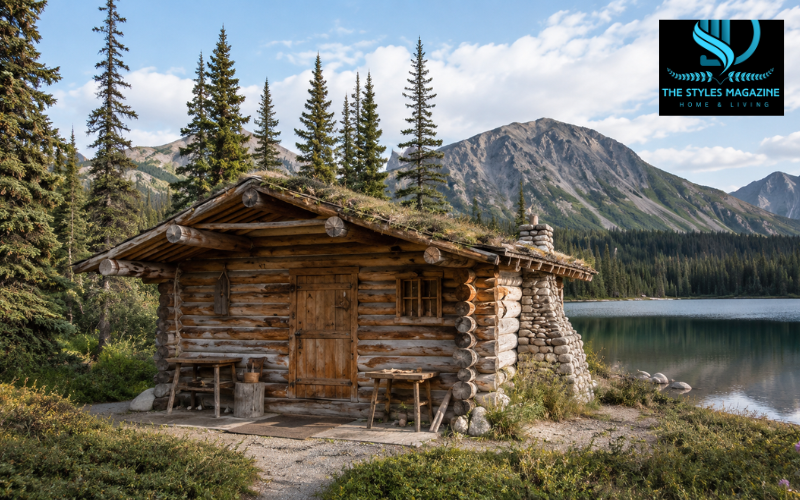
The Dick Proenneke cabin is small, but every part of it has a purpose. The cabin measures roughly 12 feet by 16 feet and is made from peeled, round spruce logs. The corners are carefully saddle-notched, which means the logs fit together in a strong, interlocking pattern. The roof is a gable roof made from spruce poles and covered with sod and moss.
The cabin has three windows, including two on the west side and one on the east wall. It also has a handmade Dutch door with wooden hinges and a wooden lock. These details matter because they show Proenneke’s care for both function and beauty. Even the door hardware reflected his ability to solve problems with simple materials.
One of the cabin’s most recognized features is the beach stone fireplace rising from the south wall. The fireplace was practical for heat, but it also gave the cabin a strong visual identity. Nearby, Proenneke also built a raised log cache for storage and a combined woodshed and outhouse. These outbuildings show that his home was not just the cabin itself, but a small, carefully planned living system.
Life Inside Dick Proenneke’s Cabin
Life inside the Dick Proenneke cabin was simple, but it was not careless. Proenneke lived there without electricity, running water, a telephone, or many modern conveniences. That meant heat, cooking, water, storage, repairs, and daily comfort all depended on his own effort and planning.
The cabin supported a disciplined routine. Firewood had to be cut and stored. Tools had to be sharpened and repaired. Food had to be protected from weather and wildlife. The raised cache south of the cabin helped keep supplies safer, while the woodshed kept fuel and tools close at hand. These details make the cabin feel less like a romantic hideaway and more like a real working home.
Proenneke’s life was not about rejecting every connection to the outside world. The National Park Service notes that he was not a hermit. He maintained friendships, wrote letters, and shared his experience through films and journals. His solitude was real, but it was also thoughtful and connected to a larger respect for wilderness.
Dick Proenneke’s Journals, Film Footage, and Daily Documentation
One reason the Dick Proenneke cabin is so well known today is that Proenneke carefully documented his life. He wrote detailed journals, filmed his work, and recorded observations about wildlife, weather, seasons, and visitors. The National Park Service describes him as a tireless writer whose journals cover nearly 30 years.
His film footage is especially important because it lets viewers see the cabin being built and used. He filmed with a wind-up camera and captured daily tasks that many people today only read about: cutting logs, shaping joints, working around the cabin, watching animals, and adjusting to seasonal change. These records help readers understand that the cabin was not just a structure. It was part of a larger way of observing and living.
This is also where the search phrase “dick proenneke alone in the wilderness” naturally fits. Alone in the Wilderness became popular because it showed Proenneke’s real footage and helped viewers see the cabin through his own careful work and quiet routine.
Dick Proenneke Book: One Man’s Wilderness
The best-known Dick Proenneke book is One Man’s Wilderness: An Alaskan Odyssey. The book is strongly connected to the cabin because it is based on Proenneke’s journals and photography, with Sam Keith shaping the material into a readable account. For many people, this book is the first deep introduction to the cabin, the Twin Lakes landscape, and Proenneke’s daily life.
What makes the book useful is that it does not treat the cabin as a simple tourist attraction. It gives readers a closer look at the thinking behind Proenneke’s choices. The cabin becomes part of a larger story about work, weather, quiet observation, and the satisfaction of doing something well.
Readers still search for the book because it helps answer questions that photos alone cannot answer. A picture can show the cabin’s size and setting, but the journal-based story explains the patience, routine, and personality behind it.
Dick Proenneke PBS Documentary and Alone in the Wilderness
The Dick Proenneke PBS connection comes mainly through Alone in the Wilderness, the documentary made from his original footage. The program introduced many viewers to the cabin and helped turn Proenneke’s story into a lasting part of American wilderness culture. Producer information describes the documentary series as seen on PBS, and public television stations have also listed Alone in the Wilderness programming connected to Proenneke’s life.
The documentary is powerful because it does not need dramatic effects to hold attention. Viewers watch Proenneke select materials, shape logs, cook meals, handle weather, and live by routine. His cabin becomes the center of the story because it shows both his skill and his values.
For readers searching “dick proenneke pbs,” the key point is simple: PBS and public television exposure helped bring his quiet wilderness life to a much wider audience. The film made the cabin feel real to people who may never visit Upper Twin Lake in person.
Dick Proenneke’s Cabin on Twin Lakes Photos and What They Show
Many people search for “dick proenneke’s cabin on twin lakes photos” because the cabin is highly visual. Photos often show the log walls, the handmade door, the stone chimney, the lake in front of the cabin, and the surrounding mountain scenery. They also show the small scale of the structure, which helps readers understand how modest the home really was.
Photos also reveal details that are easy to miss in writing. The saddle-notched corners show how cleanly the logs were fitted. The roof shows how local materials were used. The cabin interior, tools, and nearby outbuildings help explain how Proenneke lived and worked. The National Park Service provides image collections and virtual views connected to the Proenneke site, which are useful for understanding the cabin’s setting and preservation.
It is important to use accurate captions when publishing photos of the cabin. Some images online may be mislabeled, outdated, or taken from different angles. A helpful article should avoid claiming a specific image shows something unless the source is reliable.
Visiting the Dick Proenneke Cabin Today
The Dick Proenneke cabin can still be visited, but it is not a casual roadside stop. The site is in a roadless wilderness area, so most visitors arrive by small plane that lands on Upper Twin Lake. In summer, visitors normally need a floatplane. Winter access depends on snow and ice conditions and may involve skis, wheels, or wheeled-skis.
The National Park Service says visitors do not need to pay entrance fees, make reservations, or obtain NPS permits for recreational activities in Lake Clark National Park & Preserve, including visiting Dick Proenneke’s cabin. However, travel planning, air taxi arrangements, weather awareness, and bear-safe behavior are still very important.
Rangers and volunteers are usually housed nearby from late May to late September, and they may lead cabin tours in summer. The cabin is locked during the winter months, though the surrounding area may be explored year-round. Visitors are not allowed to sleep in or occupy the cabin, cache, or woodshed, and camping is prohibited within the National Historic Register boundaries.
Preservation and Historic Importance of the Cabin
The Dick Proenneke cabin is preserved because it is historically and culturally important. The cabin and outbuildings were listed on the National Register of Historic Places in 2007. The site is recognized as a strong example of an Alaskan bush log cabin and as a reminder of Proenneke’s role in shaping public understanding of wilderness conservation.
Preservation matters because the cabin contains more than wood and stone. It carries evidence of Proenneke’s choices, habits, tools, repairs, and daily life. The handmade door mechanisms, original structures, and surrounding paths all help tell the story. The National Park Service asks visitors to leave artifacts in place, stay on trails, treat the door gently, and avoid cooking or making fires inside the historic structures.
This careful protection helps keep the cabin from becoming just another worn-out attraction. It remains a real historic place where people can learn about craftsmanship, restraint, and respect for fragile wilderness.
Dick Proenneke Death and Later Legacy
Readers often search “dick proenneke death” or “when did dick proenneke die” because they want to understand what happened after his years at Twin Lakes. Dick Proenneke died on April 20, 2003, in Hemet, California. The National Park Service lists his place of death as Hemet and his date of death as April 20, 2003.
Before his death, Proenneke’s connection to Twin Lakes had already become widely respected. His final visit to the cabin took place in 2000, when he was 84 years old, and the NPS later shared a video about that visit.
Some people also search “richard proenneke net worth,” but that is not the best way to understand his life. There is no widely reliable public financial record that defines his legacy in money. His real legacy is the cabin, the journals, the films, and the influence his careful life had on people interested in wilderness, conservation, and handmade work.
Common Myths and Questions About Dick Proenneke’s Cabin
One common myth is that the Dick Proenneke cabin was a luxury retreat. In reality, it was a practical wilderness home. It was small, carefully built, and designed to support one person living in a remote place. Its value comes from craftsmanship and meaning, not size or comfort.
Another question is whether Proenneke lived completely alone. He did live in deep solitude for long periods, but he was not completely cut off from people. The National Park Service explains that he maintained friendships, wrote letters, and used his journals and films to share his experience with others.
Questions about wife, family, and money should be handled carefully. A helpful article should not invent personal details to satisfy search curiosity. It is better to say clearly what reliable sources support and what they do not. Proenneke’s public story is strongest when focused on the cabin, the land, his observations, and the careful record he left behind.
Conclusion
The Dick Proenneke cabin remains important because it tells a rare and powerful story in a simple way. It shows what one skilled and patient person could build with hand tools, local materials, and steady effort. It also shows how a small cabin can become a lasting symbol of independence, respect for nature, and thoughtful living.
Located on Upper Twin Lake in Lake Clark National Park & Preserve, the cabin continues to draw interest from readers, documentary viewers, book lovers, photographers, and wilderness travelers. Its appeal is not based on luxury or fame. It comes from honesty, usefulness, and the feeling that every piece of the cabin was made with care.
Today, the Dick Proenneke cabin stands as one of Alaska’s most meaningful historic wilderness homes. It reminds visitors that simple things can last when they are built well, protected properly, and connected to a life of purpose.
FAQs
What Is The Dick Proenneke Cabin?
The Dick Proenneke cabin is a small hand-built log cabin on Upper Twin Lake in Alaska, known for its simple design, wilderness setting, and connection to Proenneke’s self-reliant life.
Where Is The Dick Proenneke Cabin Located?
The cabin is located on Upper Twin Lake inside Lake Clark National Park & Preserve in Alaska, a remote area mainly reached by small aircraft or floatplane.
Can You Visit Dick Proenneke’s Cabin Today?
Yes, visitors can see the cabin, but access is remote and usually requires a floatplane. Summer ranger-guided tours may be available depending on park conditions.
What Book Is Connected To Dick Proenneke Cabin?
The best-known Dick Proenneke book is One Man’s Wilderness: An Alaskan Odyssey, which is based on his journals and describes his cabin life at Twin Lakes.
When Did Dick Proenneke Die?
Dick Proenneke died on April 20, 2003. His cabin remains preserved as an important symbol of Alaska wilderness history and handmade craftsmanship.
Enjoyed it? Find more exclusive content on The Styles Magazine.
Disclaimer: This article is for informational and educational purposes only. Travel access, ranger tours, weather conditions, and park rules may change, so readers should check official National Park Service guidance before planning a visit.