Pea gravel is one of the most useful and easy-to-work-with materials for outdoor spaces. It is made of small, rounded stones that are usually about the size of a pea, which is where the name comes from. Most pea gravel is around 3/8 inch in size, although some products may be slightly smaller or larger. Because the stones are naturally smooth, they feel softer underfoot than sharp crushed rock and give outdoor areas a relaxed, natural look.
Homeowners often choose pea gravel because it works well in many places. It can be used for garden paths, patios, walkways, drainage areas, dog runs, play spaces, rock gardens, and around outdoor seating areas. It also comes in soft natural colors such as tan, gray, white, brown, cream, and mixed earth tones, so it blends easily with plants, pavers, brick, wood, and stone edging.
Another reason pea gravel is popular is that it is usually easier to install than concrete, large pavers, or other hardscape materials. It does not need heavy machinery for small projects, and it allows rainwater to drain through instead of collecting on the surface. In this guide, you will learn what pea gravel is, where it works best, how to buy it, how much you may need, and how to keep it looking neat over time.
Quick Guide Table for Pea Gravel
| Topic | Quick Answer |
| Best uses | Patios, walkways, garden paths, dog runs, drainage areas, and decorative beds |
| Common size | Usually around 3/8 inch, with some options from 1/4 to 1/2 inch |
| Main benefit | Affordable, easy to install, natural-looking, and drains water well |
| Main drawback | Can shift, spread, or sink without proper edging and base preparation |
| Best buying option | Use bagged pea gravel for small projects and bulk pea gravel for larger areas |
| Helpful tool | A pea gravel calculator helps estimate how much gravel you need by area and depth |
| Buying places | Local suppliers, Home Depot, Lowe’s, Ace Hardware, Walmart, and landscape yards |
What Is Pea Gravel?
Pea gravel is a small landscaping stone made from naturally rounded rock. These stones are often formed by water movement in rivers or other natural areas, which gives them their smooth shape. Unlike crushed stone, which has sharp edges, pea gravel has a softer, rounded surface.
The most common pea gravel size is about 3/8 inch, but products can range from around 1/4 inch to 1/2 inch depending on the supplier. Some retailers also sell mixed sizes for decorative landscaping. For example, Lowe’s lists pea gravel products in small bagged options with mixed colors and sizes that may be around one-half inch or less, depending on the product.
Pea gravel is different from crushed stone because crushed stone is broken by machines and has angular edges. Crushed stone locks together better, so it can be more stable for driveways or firm bases. Pea gravel, on the other hand, stays looser because of its rounded shape. It is also different from larger river rock, which is smoother but usually much bigger. Decorative gravel can include many types of stone, while pea gravel refers more specifically to small, rounded stones.
Its color range is one of its biggest advantages. Most pea gravel has a natural blend of gray, tan, cream, brown, white, golden, and sometimes darker stones. This mixed look makes it useful for both casual gardens and more polished outdoor designs.
Key Features of Pea Gravel
The main feature of pea gravel is its smooth, rounded texture. This makes it comfortable to walk on compared with sharper types of gravel. It is not as smooth as a flat patio surface, but it has a softer feel than crushed rock, especially when installed at the right depth.
Pea gravel also drains well. Because there are small spaces between the stones, water can pass through easily. This makes it a good choice for areas where you want to reduce puddles or help water move away from a surface. It is often used in drainage trenches, around pipes, and in landscape beds where water flow matters.
Another helpful feature is its natural appearance. Pea gravel does not look too formal or heavy. It works well with cottage gardens, modern patios, rustic paths, and simple backyard seating areas. It can soften the look of hard edges and bring a clean, finished feel to outdoor spaces.
It is also friendly for DIY projects. For many small areas, you can move it with a shovel, wheelbarrow, bucket, or rake. It does not require mixing, curing, or cutting like concrete or stone slabs. However, good preparation still matters. Pea gravel performs best when the area is cleared, edged, and installed over the right base.
Best Uses for Pea Gravel Around the Home
Pea gravel is commonly used for garden paths and walkways. It creates a soft, natural path through a yard and makes a light crunching sound when walked on. This sound can be pleasant in garden spaces and can also make paths feel more defined.
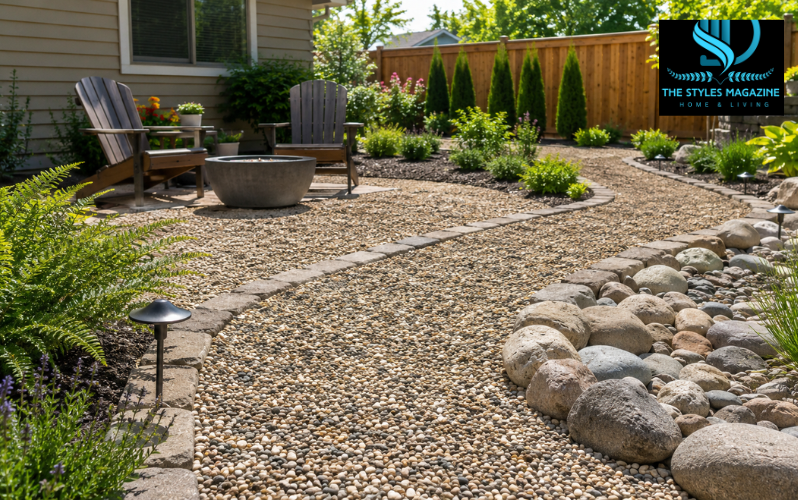
It is also popular for patios and seating areas. A pea gravel patio can be a simple place for chairs, a bench, a small table, or a fire pit area. It is often less expensive than a full paver or concrete patio and can fit into curved or irregular shapes more easily.
Rock gardens and decorative borders are also good places for pea gravel. It can fill empty spaces between plants, highlight garden edges, and reduce bare soil. Because it does not break down like wood mulch, it can last for years with occasional refreshing.
Pea gravel can be used around fire pits and outdoor living spaces, but it is important to plan the area carefully. Furniture may wobble if the gravel is too deep or uneven, so a firm base and proper depth help. It also works nicely between stepping stones or pavers, where it fills gaps and adds texture without looking too heavy.
Pea Gravel for Drainage and Landscaping
Pea gravel is useful in drainage areas because water can move through it more easily than compacted soil. It is often used around French drains, drainage trenches, and pipe bedding. In these projects, pea gravel helps create open space around the drain system so water can flow instead of sitting in the soil.
In landscaping, pea gravel can also work as a mulch alternative. It covers bare soil, gives garden beds a clean look, and does not decay like bark or wood chips. Since it does not decompose, it does not need to be replaced as often as organic mulch. However, it also does not add nutrients to the soil, so it is best used where long-term coverage and drainage are more important than soil improvement.
When used with landscape fabric, pea gravel can help reduce weed growth. The fabric acts as a barrier below the stones, while the gravel protects the fabric and keeps the bed looking finished. This does not mean weeds will never appear, because dust and organic material can collect on top over time. Still, it can make weed control easier when installed properly.
Pea gravel can also help retain some moisture by protecting soil from direct sun and wind. This can be useful around drought-tolerant plants, dry garden beds, and xeriscaping designs where a clean, low-water landscape is preferred.
Pea Gravel for Dog Runs, Play Areas, and Walkways
Pea gravel is often used in dog runs because its rounded shape is easier on paws than sharp crushed rock. It can provide a cleaner surface than bare soil and drains better after rain. For pet areas, drainage is especially important because standing water and mud can make the space harder to clean.
For dog runs, the gravel should not be too deep or too loose. A stable base and edging help keep the material contained. It is also important to remove waste quickly and rinse the area when needed. Some pet owners prefer pea gravel because it can be refreshed by adding a thin new layer when the surface starts to look worn.
In play areas, pea gravel can feel softer than some hard surfaces, but it still needs regular care. It should be installed at a safe depth for the intended use and kept free of sharp debris, glass, sticks, and weeds. It may not be ideal for very young children who might put stones in their mouths, so supervision and smart placement matter.
For walkways, pea gravel works best in areas with foot traffic rather than heavy wheel traffic. It is comfortable enough for casual walking, but it can shift under bicycles, wheelbarrows, strollers, or wheelchairs unless a stabilizing grid is used.
Pea Gravel Patio Ideas and Design Options
A pea gravel patio can be simple, attractive, and practical when it is planned well. One of the easiest designs is a small rectangular or curved seating area with metal, brick, stone, or wood edging. The edging keeps the gravel in place and gives the patio a clean border.
Pea gravel also works with many design styles. For a rustic look, it can be paired with natural stone, wooden furniture, and informal planting beds. For a modern look, it can be combined with straight metal edging, square pavers, and simple outdoor furniture. For a cottage-style garden, pea gravel pairs well with stepping stones, flowers, clay pots, and curved paths.
It is also useful in areas where concrete or pavers may feel too permanent. Because pea gravel is loose, it can follow unusual shapes and can often be changed more easily later. This makes it a good option for renters, budget-conscious homeowners, or anyone testing a new outdoor layout.
However, pea gravel is not always the best choice for every patio. If you want a very firm surface for dining chairs, grills, or heavy furniture, pavers or concrete may be easier to use. Pea gravel can still work, but it needs careful leveling, a compacted base, and the right gravel depth.
Black Pea Gravel and Other Color Choices
Black pea gravel is a darker decorative version of pea gravel used to create stronger contrast in landscaping. It may be naturally dark stone or a dyed decorative product, depending on the supplier. Before buying, it is a good idea to ask whether the color is natural or treated, because dyed gravel may change in appearance over time.
Color choice affects the overall look of the landscape. Light pea gravel can make a space feel brighter and more open, while darker gravel can create a bold contrast against green plants, white walls, or modern outdoor designs. Mixed earth-tone pea gravel is often the safest choice for a natural look because it blends with soil, plants, and many types of edging.
Heat is also worth thinking about. Dark gravel may absorb more heat in sunny areas, which can make it less comfortable for bare feet or pet paws during hot weather. Lighter gravel may show dirt or leaves more clearly, but it can help keep the space looking softer and cooler.
The best color is usually the one that matches the home exterior, garden style, and nearby materials. If possible, look at a sample in natural sunlight before buying a large amount.
Pea Gravel Pros and Cons
Pea gravel has many benefits. It is often affordable, easy to install, attractive, and good for drainage. It can be used in many outdoor areas and works with different garden styles. Since it is loose, it can fill curves and small spaces more easily than rigid materials.
Another advantage is that pea gravel can be a long-lasting ground cover. It does not decay like wood mulch, and it can be refreshed by adding more gravel when needed. Some bagged products are also marketed for moisture retention, landscape coverage, and easy application. Home Depot, for example, lists bagged pea gravel products for landscape use and provides coverage guidance by depth.
The main downside is that pea gravel shifts. Because the stones are rounded, they do not lock together tightly. This can make the surface feel loose, especially in areas with heavy foot traffic, furniture, wheels, or slopes. It can also spread outside the intended area if edging is weak or missing.
Pea gravel can sink into bare soil if it is installed without a proper base or fabric. Leaves and snow can also be difficult to remove because the small stones move with rakes, shovels, and blowers. These problems do not mean pea gravel is a bad choice, but they do mean proper installation and maintenance are important.
How to Install Pea Gravel the Right Way
A good pea gravel project starts with planning. First, measure the area and decide how deep the gravel should be. Then remove grass, weeds, roots, loose soil, and debris. The cleaner the area is at the start, the better the finished surface will look.
For patios and paths, a compacted base can help create a firmer surface. Some projects use a layer of compacted crushed stone or gravel base below the pea gravel. This is especially helpful for areas that will get regular foot traffic. Lowe’s recommends using about two to three inches of pea gravel over the prepared base for a DIY pea gravel patio.
Landscape fabric is often placed under pea gravel to help reduce weeds and keep the stone from sinking into the soil. The fabric should be heavy-duty and water-permeable so rain can still pass through. Avoid using plastic sheeting under drainage areas because it can trap water.
Strong edging is one of the most important parts of pea gravel installation. Metal edging, brick, stone, treated wood, or flexible bender board can help hold the gravel in place. Without edging, pea gravel can spread into grass, garden beds, or nearby paving.
For most decorative paths and patios, a depth of about two to three inches is common. For drainage projects, the depth depends on the trench, pipe, and water-flow needs. For dog runs or play areas, the depth should balance comfort, drainage, and stability.
Pea Gravel Calculator: How Much Pea Gravel You Need
A pea gravel calculator helps estimate how much material you need based on length, width, and depth. This is important because ordering too little can leave the surface thin and uneven, while ordering too much can waste money and create storage problems.
The basic idea is simple. You measure the length and width of the space, then decide the depth. A shallow decorative layer needs less gravel, while a patio, walkway, or drainage area may need more. Many calculators let you enter measurements in feet or meters and then estimate cubic feet, cubic yards, or tons.
Bagged pea gravel is easier for small projects, but it can take many bags to cover a larger area. For example, a common half-cubic-foot bag may only cover a small number of square feet depending on depth. Home Depot’s product information for a 0.5 cu. ft. bag notes coverage of about 1.98 square feet at a 3-inch depth, which shows why larger projects often require many bags.
Bulk pea gravel is usually better for patios, long paths, large garden beds, and drainage projects. Before ordering bulk material, confirm whether the supplier sells by cubic yard, ton, or scoop, because measurements can vary.
Buying Pea Gravel: Bulk, Bagged, and Local Options
Pea gravel is available in both bulk and bagged forms. Bulk pea gravel is usually the better choice when you need a large amount. It is commonly delivered by a landscape supply company, stone yard, or local gravel supplier. This can save time and reduce packaging waste for bigger projects.
Bagged pea gravel is more convenient for small jobs. It works well for filling planters, touching up garden beds, adding stone between stepping stones, or completing a small border. Bagged products are also easier to transport if you only need a few bags and have a suitable vehicle.
Many people search for “pea gravel near me” because local availability can vary by region. Local suppliers may offer more natural color choices and better bulk pricing, while big-box stores may be easier for small weekend projects. When comparing suppliers, check the stone size, color, cleanliness, delivery fee, and return policy.
Before buying, look closely at the material if possible. Good pea gravel should be fairly clean, rounded, and consistent enough for your project. Some variation is normal, especially with natural stone, but very dusty or muddy gravel may need rinsing or may not give the finished look you want.
Where to Find Pea Gravel: Home Depot, Lowe’s, Ace Hardware, and Walmart
Pea gravel is commonly sold at home improvement stores, garden centers, and online retailers. Home Depot often carries bagged pea gravel and landscape rock options for small and medium projects. Product details may include bag size, coverage, color, and suggested uses, but availability can change by location.
Lowe’s also lists pea gravel landscaping rock products and DIY project guidance. Its pea gravel category includes options for pathways, garden accents, dry creek beds, and borders, with product filters such as color, brand, and bag capacity.
Ace Hardware may be useful for smaller projects, especially if you need landscaping rock, edging, tools, or supplies from a nearby local store. Walmart also lists gravel and rock mulch options, including garden rocks in bags or bulk-like sizes for small touchups and landscape coverage.
When comparing pea gravel Home Depot, pea gravel Lowe’s, pea gravel Ace Hardware, or pea gravel Walmart options, do not look at price alone. Compare bag size, stone size, color, delivery cost, pickup options, and coverage depth. A cheaper bag may not be the better deal if it covers less area or does not match the look you want.
Pea Gravel Maintenance and Long-Term Care
Pea gravel is low-maintenance, but it is not no-maintenance. Over time, the stones can shift, spread, or settle. A simple rake can help level the surface and move gravel back into low spots. High-traffic areas may need more frequent smoothing.
Leaves and debris should be removed regularly. A leaf blower can work if used gently, but a strong setting may move the gravel. A rake can also help, although small stones may get pulled along with the leaves. Pea gravel is not ideal under trees that drop a lot of leaves, seed pods, or sticky fruit.
Weeds can appear if soil, dust, and organic matter build up on top of the fabric. Pulling weeds early is easier than waiting until roots spread. If the area becomes thin or uneven, add a fresh layer of pea gravel and rake it smooth.
Edging should also be checked from time to time. If edging loosens, pea gravel can escape into lawns or nearby beds. Keeping the border secure is one of the easiest ways to keep the whole area looking clean.
Conclusion: Is Pea Gravel the Right Choice for Your Project?
Pea gravel is a practical and attractive choice for many outdoor projects. It works well for garden paths, patios, drainage areas, dog runs, rock gardens, borders, and casual seating spaces. Its smooth texture, natural colors, and strong drainage ability make it useful for both decorative and functional landscaping.
The biggest benefits of pea gravel are its affordability, simple installation, natural appearance, and flexibility. The main limitations are shifting, spreading, sinking, and extra maintenance in areas with leaves, snow, wheels, or heavy furniture. These issues can often be reduced with a compacted base, heavy-duty landscape fabric, proper depth, and strong edging.
If you want a natural-looking material that is easy to install and works in many parts of the yard, pea gravel is worth considering. Choose the right color, measure carefully, compare bagged and bulk options, and prepare the area properly before installation. With the right setup, pea gravel can give your outdoor space a clean, comfortable, and lasting finish.
FAQs
What Is Pea Gravel Best Used For?
Pea gravel is best for garden paths, patios, walkways, drainage areas, dog runs, fire pit spaces, and decorative landscaping. It works well where you want a natural look and good water drainage.
How Deep Should Pea Gravel Be?
For most patios and walkways, pea gravel is usually installed about 2 to 3 inches deep. Drainage projects may need more depth depending on the trench, pipe, and water-flow needs.
Does Pea Gravel Stop Weeds?
Pea gravel can help reduce weeds, especially when installed over heavy-duty landscape fabric. However, weeds may still grow over time if soil, dust, or leaves collect on top.
Is Pea Gravel Good For Dogs?
Yes, pea gravel can work well for dog runs because the stones are rounded and easier on paws than sharp gravel. It also drains well and can be cleaned or refreshed when needed.
Should I Buy Pea Gravel In Bulk Or Bags?
Buy bagged pea gravel for small touchups, planters, or short paths. Choose bulk pea gravel for larger patios, long walkways, garden beds, or drainage projects because it is usually more practical.
Enjoyed it? Find more exclusive content on The Styles Magazine.
Disclaimer: This article is for general landscaping and home improvement information only. Pea gravel prices, product availability, colors, sizes, and delivery options may vary by location, supplier, and retailer. Always check local store details, project requirements, drainage needs, and safety conditions before buying or installing pea gravel.