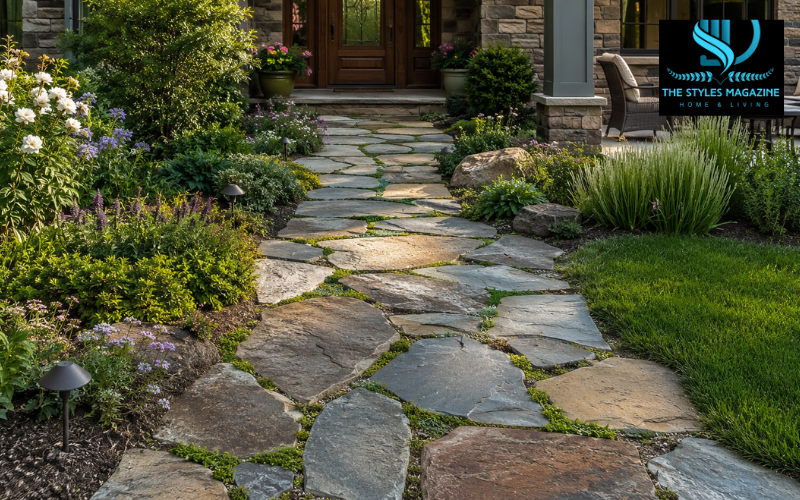
A flagstone walkway is an outdoor path made from flat pieces of natural stone. These stones are often used in gardens, front yards, patios, side yards, and home entryways because they create a strong and attractive walking surface. Unlike plain concrete, flagstone has natural color, texture, and shape, which gives each walkway a more personal and timeless look.
Homeowners choose a flagstone walkway because it can fit many different landscape styles. It can look rustic and relaxed when irregular stones are placed in a natural pattern, or it can look clean and modern when cut flagstone pavers are arranged in straight lines. This makes flagstone a flexible choice for both traditional homes and newer homes with simple designs.
Another reason flagstone is popular is its surface texture. Natural stone is usually less slippery than many smooth paving materials, especially when the right type of stone and finish are used. It also feels solid underfoot and can last for many years when installed correctly.
A flagstone walkway can be styled in many ways. Some paths are set in grass for a soft garden look. Others include gravel, mulch, moss, or creeping thyme between the stones. Some walkways have borders to keep the shape neat, while others connect naturally to a flagstone patio or outdoor seating area.
Quick Guide Table: Flagstone Walkway Options
| Flagstone Walkway Type | Best For | Look & Feel | Main Benefit |
| Irregular flagstone path | Gardens and rustic yards | Natural, puzzle-like, relaxed | Blends beautifully with plants |
| Cut flagstone pavers | Modern homes and patios | Clean, straight, organized | Creates a neat, stylish walkway |
| Flagstone in grass | Lawns, side yards, gardens | Soft, simple, natural | Easy way to create a casual path |
| Flagstone with border | Front entries and formal paths | Defined and polished | Helps keep the walkway shape clean |
| Dry-laid flagstone | DIY paths and garden walkways | Flexible and natural | Easier to repair if stones shift |
| Wet-laid flagstone | Front doors and high-traffic areas | Stable and smooth | Strong, long-lasting surface |
Helpful Bullet List: Before Building a Flagstone Walkway
- Choose the walkway location first: front door, garden, patio, or side yard.
- Pick a style that matches your home: rustic, modern, grass-set, or bordered.
- Decide between irregular flagstone and cut flagstone pavers.
- Plan the infill material, such as gravel, mulch, moss, grass, or polymeric sand.
- Make sure the stones are wide, level, and comfortable for walking.
- Compare dry-laid and wet-laid installation before setting your budget.
- For front entries or large projects, consider hiring a professional installer.
Why a Flagstone Walkway Is a Smart Choice for Outdoor Spaces
A flagstone walkway is a smart choice because it adds beauty and function at the same time. It gives people a clear place to walk while also improving the overall look of the yard. Whether the path leads to the front door, garden, patio, or backyard, it can make the outdoor space feel more finished and welcoming.
One of the biggest advantages of flagstone is its natural appearance. Each stone has its own color, edge, and surface pattern. This helps the walkway blend into the landscape instead of looking too plain or artificial. Depending on the stone, the colors may include gray, tan, brown, blue, rust, or soft earth tones.
Flagstone is also known for durability. When the base is prepared well, the stones can handle regular foot traffic, changing weather, and outdoor use for a long time. This makes it useful for both decorative garden paths and practical entry walkways.
Another benefit is that flagstone works with many home styles. It can soften a modern home, add charm to a cottage-style garden, or create a classic path for a traditional front yard. Because it is natural stone, it rarely looks outdated when paired with the right landscape design.
Best Flagstone Walkway Ideas for Different Home Styles
The best flagstone walkway ideas depend on the home, yard, and purpose of the path. For a cottage-style garden, irregular flagstones are often a great choice. Their uneven shapes create a relaxed, natural look that feels like it belongs among flowers, shrubs, and curved planting beds.
For a modern home, cut flagstone pavers can create a cleaner design. Square or rectangular stones placed with even spacing give the walkway a calm and organized look. This style works especially well with gravel, grass, or simple low-growing plants between the stones.
A curved flagstone walkway is ideal for gardens and backyards where a straight path may feel too formal. Curves help guide the eye through the landscape and make the path feel more peaceful. Irregular stones are often best for this type of walkway because their natural shapes fit the softer design.
For front yards, a more formal walkway may be better. A path leading to the front door should look attractive, but it should also feel safe and easy to use. Wider stones, even spacing, and a defined border can help create a polished look that improves curb appeal.
Flagstone Walkway to Front Door Design Tips
A flagstone walkway to front door should be both beautiful and practical. Since this is usually one of the first things visitors see, the design should feel welcoming and match the style of the home. A front entry path should not feel too narrow, uneven, or confusing. It should clearly guide people from the driveway, sidewalk, or gate to the main entrance.
Wider stones are helpful for front walkways because they make each step feel more stable. If the path is used often, the stones should be placed close enough together for comfortable walking. Large gaps may look attractive in a garden, but they can be inconvenient near a front door where guests, children, or older adults may need an easier path.
The color of the flagstone also matters. Soft gray stone may look great with modern homes, while warm tan or brown stone can work well with brick, wood, or traditional exteriors. The goal is not to match everything perfectly, but to choose a stone color that feels connected to the house and surrounding landscape.
A front entry flagstone walkway should also be level and properly supported. Uneven stones can become a tripping hazard, especially in busy areas. Good base preparation, proper spacing, and strong edging can help the walkway stay attractive and safe over time.
Flagstone Walkway in Grass for a Natural Look
A flagstone walkway in grass creates a simple and natural path across a lawn. This style is often used in backyards, side yards, and garden areas where a full solid walkway may feel too heavy. Large stepping stones placed directly within the grass can give the yard a calm and open feeling.
This design works best when the stones are large enough for a full step. If the pieces are too small or placed too far apart, walking may feel awkward. A good layout follows the natural walking pattern, so people can move across the path without having to adjust every step.
Grass around the stones needs regular trimming to keep the walkway neat. If the grass grows over the edges, the stones may become hidden or uneven-looking. Keeping the edges clean helps the path stay attractive and easy to use.
This style is especially useful for connecting a patio to a garden, leading to a shed, or creating a quiet path through a lawn. It is less formal than a mortared walkway, but it can be very charming when the stones are placed carefully.
Irregular Flagstone Walkways for a Rustic Garden Path
Irregular flagstone walkways are popular for rustic and natural landscapes. These stones are left in their organic shapes, so the path looks more relaxed and handmade. Instead of a straight grid, the stones fit together like a puzzle, creating a walkway with movement and character.
This style is well suited for cottage gardens, backyard paths, and informal outdoor spaces. The uneven edges help the walkway blend with plants, trees, and flower beds. A curved layout can make the path feel even more natural, especially when it winds through a garden.
The spaces between irregular stones can be filled in different ways. Soil gives a simple and natural finish, while gravel adds texture and helps with drainage. Moss can create a soft, old-world look in shaded areas, and creeping thyme can add greenery and a pleasant garden feel.
Irregular flagstone does require careful placement. Even though the design looks casual, the walking surface should still be stable. Stones should be set firmly so they do not wobble, and the main walking area should be as level as possible.
Modern Flagstone Pavers for a Clean, Linear Design
Modern flagstone pavers are a good choice for homeowners who prefer a clean and simple look. Instead of irregular shapes, these stones are usually cut into squares or rectangles. When placed in straight lines with even spacing, they create a neat walkway that feels organized and contemporary.
This style works well near modern homes, patios, pool areas, and front entries. The straight edges of the stones can match the lines of the architecture, while the natural stone texture keeps the design from feeling cold or plain.
Spacing plays an important role in modern flagstone walkways. Equal gaps between the stones give the design a calm rhythm. These gaps can be filled with gravel for a crisp contrast or grass for a softer look. Both options can make the walkway stand out without making it feel too busy.
Modern flagstone pavers are also useful when connecting a walkway to a flagstone patio. Using the same or similar stone can help the outdoor space feel connected. The result is a smooth transition from one area to another.
Flagstone Walkway With Border Ideas
A flagstone walkway with border can look more finished and easier to maintain. Borders help define the shape of the path and keep surrounding materials in place. They are especially helpful when the walkway includes gravel, mulch, soil, or small stones between and around the flagstone pieces.
There are several border options to consider. Stone edging creates a natural look and works well with rustic paths. Brick can add warmth and traditional charm. Metal edging is slim and simple, making it a good choice for modern landscapes. Concrete edging can create a clean and strong boundary.
A border can also make a walkway feel more intentional. Without edging, some paths may slowly lose their shape as gravel spreads or grass grows into the walking area. A good border keeps the path organized and reduces maintenance.
The best border style should match the overall landscape. A formal front walkway may look better with straight edging, while a garden path may feel more natural with stone borders and soft curves.
Flagstone Walkway Materials and Infill Options
The material between flagstones can change the look and performance of the walkway. Gravel is one of the most common choices because it drains well and creates a clean contrast with the stone. It is useful for both rustic and modern designs.
River rock gives a more decorative texture. It can work well in garden paths or areas where water drainage is important. However, rounded rocks may shift more easily than compact gravel, so they are often better for decorative spaces than heavy walking areas.
Mulch can create a soft garden-style path. It is affordable and natural-looking, but it may need to be refreshed more often than stone or gravel. It works best in informal areas rather than main entry paths.
Plants such as moss or creeping thyme can create a beautiful living finish between flagstones. Moss is better for shaded and moist spaces, while creeping thyme usually needs more sun. These options add softness, but they may require care to stay healthy.
Polymeric sand is another option for more stable joints. It helps reduce movement and can limit weed growth when installed correctly. It is often used where a cleaner, firmer joint is preferred.
Dry-Laid vs. Wet-Laid Flagstone Walkway Installation
There are two common ways to install a flagstone walkway: dry-laid and wet-laid. A dry-laid walkway is built over a base of compacted gravel and sand. The stones are placed on top, and the joints are filled with materials such as gravel, sand, soil, or polymeric sand.
Dry-laid flagstone is popular because it can adjust better to natural ground movement. If one stone shifts or settles, it is usually easier to lift and reset. This method is often used for garden paths, backyard walkways, and casual outdoor areas.
A wet-laid walkway is more permanent. The stones are set in mortar over a concrete base, and the joints are also filled with mortar. This creates a flatter and more stable surface, which can be a good choice for high-traffic areas like front entries.
The right method depends on the location and purpose of the walkway. Dry-laid installation is often better for natural garden paths and areas where some movement is expected. Wet-laid installation may be better when the walkway needs to feel very firm, smooth, and formal.
Flagstone Walkway Cost Factors to Consider
Flagstone walkway cost can vary because every project is different. The type of stone, size of the path, installation method, and labor needs all affect the final price. A simple stepping-stone path in grass will usually cost less than a large mortared front walkway with borders and drainage work.
Stone type and thickness are important cost factors. Thicker stones are often stronger and more stable, but they can also be heavier and more expensive. Some flagstone colors and varieties may also cost more depending on local availability.
The size and layout of the walkway also matter. A straight path is usually easier to install than a curved walkway with many cuts. Irregular stones can create a beautiful look, but fitting them together carefully may take more time.
Labor is another major factor. Professional installation often costs more upfront, but it can be worth it for front entries, wet-laid walkways, drainage issues, or complex designs. DIY installation may save money on smaller garden paths, but it still requires careful base preparation.
Flagstone Walkway Maintenance and Long-Term Care
A flagstone walkway is generally easy to maintain, but it still needs basic care. Sweeping the surface regularly helps remove leaves, dirt, and debris. Rinsing the stones with water can keep the walkway looking fresh, especially after storms or heavy use.
Weeds may appear between stones, especially in dry-laid walkways. Removing them early helps prevent roots from spreading. Using the right joint material can also help reduce weed growth, but no outdoor walkway is completely maintenance-free.
Loose joint material may need to be replaced from time to time. Gravel, sand, mulch, or soil can shift because of rain, foot traffic, or seasonal changes. Refreshing the joints helps the walkway stay neat and stable.
It is also wise to check for uneven stones after winter, heavy rain, or ground movement. A loose or raised stone should be fixed before it becomes a tripping risk. Some types of flagstone may benefit from sealing, but this depends on the stone and the desired look.
Flagstone Walkway Near Me: Choosing the Right Installer or Supplier
Searching for a flagstone walkway near me can help homeowners find local suppliers and contractors, but it is important to choose carefully. A good installer should understand stone selection, base preparation, drainage, spacing, and the difference between dry-laid and wet-laid methods.
Before hiring someone, ask about their experience with flagstone walkways. It is helpful to see photos of past projects, especially ones similar to your home or yard. A contractor who has worked with front entries, garden paths, and patios will usually be better prepared to recommend the right method.
Stone samples are also important. Flagstone can look different in person than it does online. Seeing the color, thickness, and texture before buying can help you avoid surprises.
Comparing quotes is useful, but the lowest price is not always the best choice. Look at what is included in the estimate, such as base preparation, edging, drainage, joint material, and cleanup. For small garden paths, DIY may be reasonable. For larger or high-traffic walkways, professional installation may be the safer and longer-lasting option.
Conclusion: Creating a Flagstone Walkway That Looks Good and Lasts
A flagstone walkway can add natural beauty, structure, and long-term value to an outdoor space. Whether it leads to the front door, winds through a garden, crosses a lawn, or connects to a flagstone patio, the right design can make the area feel more welcoming and complete.
The best walkway starts with the right style. Irregular stones create a rustic and organic look, while cut flagstone pavers offer a cleaner and more modern design. Grass, gravel, mulch, moss, and borders can all change the final appearance and function of the path.
It is also important to choose the right installation method. A dry-laid walkway works well for many garden and backyard paths, while a wet-laid walkway may be better for formal front entries and high-traffic areas. Cost, maintenance, drainage, and safety should all be considered before starting the project.
When planned carefully, a flagstone walkway is more than just a path. It becomes a natural part of the landscape, helping the home feel more beautiful, useful, and connected to the outdoors.
FAQs
What Is A Flagstone Walkway Used For?
A flagstone walkway is used to create a strong and attractive outdoor path. It can lead to a front door, garden, patio, side yard, or backyard seating area.
Is A Flagstone Walkway Good For A Front Door?
Yes, a flagstone walkway works very well for a front door when the stones are level, wide, and properly installed. It can improve curb appeal and create a welcoming entry.
Can You Put A Flagstone Walkway In Grass?
Yes, flagstone can be placed in grass to create a natural stepping-stone path. This style works best with large stones and proper spacing for comfortable walking.
Is A Dry-laid Or Wet-laid Flagstone Walkway Better?
Dry-laid flagstone is better for flexible garden paths and easier repairs. Wet-laid flagstone is better for stable, high-traffic areas like front entries and formal walkways.
How Much Does A Flagstone Walkway Cost?
Flagstone walkway cost depends on stone type, walkway size, base preparation, labor, edging, and installation method. DIY paths usually cost less than professionally installed mortared walkways.
Enjoyed it? Find more exclusive content on The Styles Magazine.
Disclaimer: This article is for general informational purposes only. Flagstone walkway costs, materials, and installation needs can vary by location, soil condition, drainage, stone type, and contractor pricing. Always consult a qualified local professional for complex projects, safety concerns, or structural installation needs.