Learning how to trim bushes is one of the simplest ways to keep your yard looking clean, healthy, and well cared for. Bush trimming means cutting back unwanted, uneven, weak, or overgrown branches so the plant keeps a better shape and grows in a healthier way. It is not just about making the outside look neat. Good trimming also helps the inside of the bush receive more sunlight and fresh air.
When bushes are left alone for too long, they can become thick, uneven, and hard to manage. Some branches may block windows, touch walls, grow across walkways, or crowd nearby plants. Regular trimming helps control this growth before it becomes a bigger problem.
The best way to trim bushes depends on several things, including the type of bush, its size, the season, and the tools you have. A small flowering bush may need careful hand pruning, while a long hedge may be easier to shape with an electric trimmer. An overgrown bush may need gradual trimming over time, while a young bush may only need light shaping.
In this guide, you will learn how to trim bushes safely and correctly, when to trim them, what tools to use, how to shape them by hand or with an electric trimmer, and how to avoid common mistakes that can harm the plant.
Quick Guide Table: How to Trim Bushes
| Step | What to Do | Why It Matters |
| 1. Check the bush first | Look for dead, damaged, crossing, or overgrown branches | Helps you trim with a clear plan |
| 2. Choose the right tool | Use hand shears, scissors, or an electric trimmer based on branch size | Prevents rough cuts and plant damage |
| 3. Remove bad branches | Cut away dead, diseased, damaged, or rubbing branches first | Improves plant health and structure |
| 4. Shape from bottom to top | Start near the lower sides and work upward | Keeps the bush balanced and natural |
| 5. Keep the base wider | Make the bottom slightly wider than the top | Allows sunlight to reach lower branches |
| 6. Trim lightly | Remove small amounts at a time | Reduces stress and prevents uneven cutting |
| 7. Step back often | Check the shape from a distance | Helps avoid lopsided or over-trimmed bushes |
Why Trimming Bushes Matters for Healthy Growth
Trimming bushes is important because it helps the plant stay healthy, balanced, and attractive. When you remove dead, weak, or damaged branches, the bush can send more energy to stronger growth. This helps the plant look fuller and healthier over time.
Bushes also need sunlight and airflow. If the outside becomes too thick, the inner branches may not get enough light. This can lead to bare spots, brown patches, or weak growth inside the plant. Trimming opens the bush slightly so light and air can reach more areas.
A well-trimmed bush also keeps its shape better. Without trimming, some branches may grow faster than others, making the plant look uneven or messy. This is especially noticeable with bushes in front of the house, where the shape affects the overall look of the landscape.
Trimming also helps prevent bushes from becoming too large for their space. A bush that blocks a window, crowds a walkway, or grows too close to siding can create both appearance and maintenance problems. With simple, regular trimming, you can keep bushes neat without having to cut them back harshly later.
Best Time to Trim Bushes
The best time to trim bushes depends on when the plant blooms and how much trimming it needs. Some bushes should be trimmed after they flower, while others do better when trimmed before new spring growth begins.
Spring-blooming bushes, such as lilacs and forsythia, should usually be trimmed soon after they finish flowering. These plants often form next year’s flower buds during the growing season. If you trim them too late, you may remove the buds and reduce next year’s blooms.
Summer-blooming bushes are often trimmed in late winter or early spring before new growth starts. This gives the plant time to grow fresh branches and flowers during the warmer months. Light shaping can also be done during the growing season if the bush is getting uneven or untidy.
It is best to avoid heavy trimming during extreme heat, drought, or freezing weather. These conditions can stress the plant and slow its recovery. You should also avoid cutting too much at once unless the bush is healthy and the plant type can handle stronger pruning.
For most homeowners, light and regular trimming is safer than waiting until a bush becomes badly overgrown. A little maintenance at the right time helps the bush stay attractive and easier to manage.
Tools Needed to Trim Bushes Safely
Using the right tools makes bush trimming easier, cleaner, and safer. The tool you choose depends on the size of the bush, the thickness of the branches, and the kind of shape you want.
Hand pruning shears are useful for small stems, detailed cuts, and careful shaping. They are a good choice when you want more control, especially for flowering bushes or plants with a natural shape. If you are learning how to trim bushes by hand, pruning shears are often the best tool to start with.
A manual or electric hedge trimmer is helpful for larger hedges or bushes that need straight lines and even surfaces. If you want to learn how to trim shrubs with a hedge trimmer, the main goal is to move slowly and avoid cutting too deep at once. Electric trimmers save time, but they can also remove too much growth quickly if you are not careful.
Scissors may be used for very light touch-ups on soft new growth, but they are not ideal for thick stems. If you are wondering how to trim bushes with scissors, use them only for small, soft areas and minor shaping.
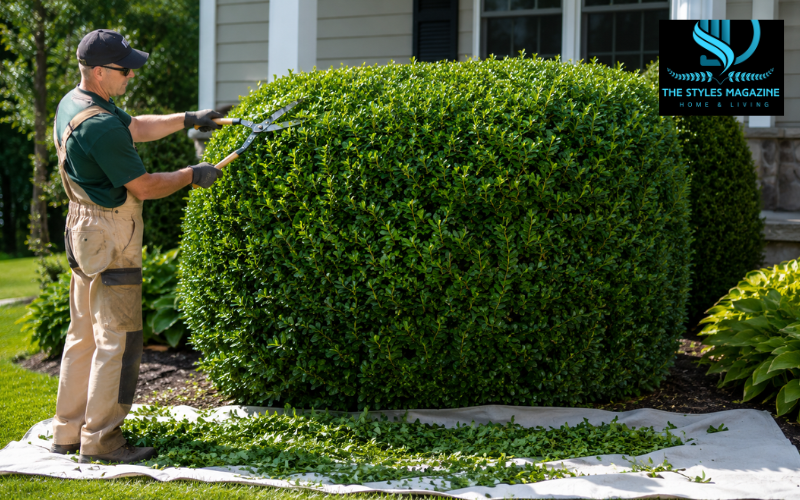
You should also wear gloves and safety glasses to protect your hands and eyes. A tarp or drop cloth placed around the base of the bush can make cleanup much easier. Sharp, clean tools are important because dull blades can tear stems and leave rough cuts that heal more slowly.
How to Prepare Bushes Before Trimming
Before you start cutting, take a few minutes to look at the bush from all sides. This simple step helps you understand its natural shape and decide where trimming is needed. Many trimming mistakes happen because people begin cutting too quickly without checking the whole plant first.
Clear away leaves, sticks, or debris around the base so you can move safely. If the bush is near a walkway, wall, window, or fence, check which branches are causing problems. Laying down a tarp around the plant can help catch clippings and make cleanup faster.
Next, look inside the bush. Search for dead, diseased, damaged, crossing, or rubbing branches. These should usually be removed before you shape the outside. Dead branches may look dry, brittle, or gray. Damaged branches may be cracked or bent. Crossing branches can rub against each other and create wounds on the plant.
It is also important to notice the plant’s natural growth habit. Some bushes naturally grow round, while others grow upright, spreading, or loose. When possible, trim the bush in a way that works with its natural form instead of forcing it into a shape that does not suit it.
How to Trim Bushes Step by Step
The best way to trim bushes is to start with problem branches before shaping the outside. Remove dead, diseased, damaged, crossing, or weak branches first. Make clean cuts just above a healthy branch, bud, or growth point. Try not to leave long stubs, because they can dry out and look unattractive.
After the problem branches are removed, begin shaping the sides. Start near the lower half of the bush and work upward. A helpful rule is to keep the base slightly wider than the top. This allows sunlight to reach the lower branches and helps prevent the bottom from becoming thin or brown.
Trim slowly and lightly. It is better to remove small amounts at a time than to cut too much and regret it later. If you are using a trimmer, let the tool skim the outer growth rather than digging deep into the center of the bush. The goal is to shape the plant, not scalp it.
Step back often as you work. Looking at the bush from a few feet away helps you see uneven spots that may not be obvious up close. Continue making small adjustments until the shape looks balanced. For most bushes, a natural and slightly soft shape looks better than a very hard or flat cut.
How to Trim Bushes by Hand
Trimming bushes by hand is a good choice when you want careful control. It works well for small bushes, flowering shrubs, young plants, and bushes that should keep a softer, more natural shape. Hand pruning also helps you avoid removing too much growth from the outside.
When using hand pruning shears, choose one branch at a time. Cut just above a healthy bud, leaf joint, or side branch. A clean angled cut helps water run off and allows the branch to heal better. Avoid crushing the stem, and make sure your shears are sharp enough to cut cleanly.
Hand trimming is especially useful when you need to thin out the inside of a bush. Instead of simply shaving the outside, you can remove selected branches from deeper inside the plant. This improves airflow and keeps the bush from becoming too dense.
A common mistake when trimming by hand is cutting random tips without looking at the whole shape. Another mistake is removing too many inner branches at once. Work slowly, step back often, and focus on keeping the plant balanced. If you are unsure, cut less rather than more.
How to Trim Bushes With an Electric Trimmer
An electric trimmer is useful for larger bushes, hedges, and plants that need a cleaner, more even surface. It can save time, especially when trimming long rows of shrubs or shaping bushes along the front of a house.
To use an electric trimmer safely, hold it firmly with both hands and move it in smooth, steady motions. For the sides, use gentle upward and downward sweeping movements. Keep the bottom of the bush slightly wider than the top so light can reach the lower growth.
When trimming the top, move slowly across the surface. If you want a straight top, you can use a string line as a guide. However, avoid cutting too deeply into old, woody areas unless you know the plant can recover from it. Some bushes do not grow back well from bare inner wood.
Safety is very important when using powered tools. Wear safety glasses, gloves, and closed-toe shoes. Keep the cord away from the blades if you are using a corded trimmer. Never rush, and turn the tool off before clearing stuck branches or moving to another area.
How to Trim Bushes in Front of the House
Bushes in front of the house play a big role in curb appeal. They frame the home, soften hard edges, and make the yard look more finished. But when they become too large, they can block windows, cover walkways, and make the exterior look crowded.
When trimming bushes in front of the house, start by checking the space around doors, windows, steps, and paths. Cut back branches that block views, touch siding, or grow into walking areas. The goal is to keep the bushes neat while still allowing them to look natural.
Avoid trimming every bush into a flat box unless that style suits the plant and the home. Many front-yard bushes look better with a soft rounded or natural form. If the bush has flowers, be careful not to remove too many buds at the wrong time of year.
It is also wise to leave some space between bushes and the house. Better airflow around the plant can reduce moisture buildup near walls and siding. A clean, balanced shape improves both plant health and the appearance of your home.
How to Trim Overgrown Bushes
Overgrown bushes need a slower and more careful approach. If you cut too much at once, the plant may become stressed, weak, or bare. Start by removing dead, damaged, crossing, or diseased branches. This improves the structure before you reduce the size.
After that, decide how much height or width needs to be removed. For many bushes, it is best not to remove more than one-third of the total growth in a single trimming session. This gives the plant a better chance to recover and produce healthy new growth.
If the bush is very large, reduce it gradually over more than one season. This is often safer than cutting it back heavily all at once. Focus first on branches that are blocking paths, windows, or nearby plants.
In some cases, severe rejuvenation pruning may be needed. This means cutting an old or overgrown bush back hard so it can restart growth. However, not all bushes respond well to this method. Before doing severe cutting, make sure the plant type can handle it.
How to Trim Bushes Naturally
Natural trimming means shaping the bush in a way that follows how it already grows. Instead of forcing the plant into a stiff shape, you remove selected branches to keep it tidy, healthy, and balanced.
This method works well for many landscape bushes, especially flowering shrubs and plants with graceful branching. Use hand pruners to cut back longer branches to a side branch or healthy growth point. This keeps the cuts less visible and helps the bush maintain a soft appearance.
Avoid heavy surface shaving if you want a natural look. When only the outside is clipped again and again, the outer layer can become thick while the inside becomes bare. Selective trimming helps prevent this problem because it opens the plant more evenly.
When learning how to trim bushes naturally, remember that not every branch needs to be the same length. A natural bush should look clean and cared for, but not overly shaped. The best result is a plant that looks healthy, balanced, and suited to its space.
How to Trim Bushes Round
Round bushes can look neat and attractive when shaped carefully. This style works best for plants that naturally have a rounded growth habit, such as some boxwoods and compact shrubs. Trying to make every bush round can look unnatural, so choose this shape only when it suits the plant.
Start by shaping the sides first. Trim small amounts while slowly working around the bush. Keep your cuts light and gradual so you do not create flat spots. Once the sides begin to look even, lightly shape the top to complete the rounded form.
If you are using shears or a hedge trimmer, move in gentle curved motions instead of cutting straight lines. Step back often and look at the bush from different angles. This helps you see whether one side is higher, wider, or flatter than the other.
For a smoother round shape, avoid trying to finish the bush in one heavy cut. Small adjustments are much easier to control. With regular light trimming, round bushes become easier to maintain over time.
Common Bush Trimming Mistakes to Avoid
One of the most common mistakes is cutting the top wider than the base. When this happens, the upper growth shades the lower branches. Over time, the bottom may become thin, brown, or bare. Keeping the base slightly wider helps sunlight reach the whole plant.
Another mistake is removing too much growth at once. Heavy cutting can stress the bush and may leave it looking uneven for a long time. In most cases, light regular trimming is better than harsh cutting after years of neglect.
Trimming at the wrong time can also cause problems. If you trim spring-blooming bushes too late, you may remove flower buds for the next season. If you trim during extreme heat or drought, the plant may struggle to recover.
Dull or dirty tools are another issue. Dull blades can tear stems instead of cutting them cleanly. Dirty tools can spread disease from one plant to another. Clean, sharp tools make trimming easier and healthier for the bush.
Finally, avoid cutting deeply into bare inner wood unless you know the plant can regrow from that area. Some bushes recover well, while others may stay bare. When in doubt, trim lightly and gradually.
Conclusion: Keeping Bushes Neat, Healthy, and Easy to Manage
Knowing how to trim bushes the right way can make a big difference in both plant health and yard appearance. The key is to use the right tools, trim at the right time, and follow the natural shape of the bush instead of cutting too aggressively.
Start by removing dead, damaged, diseased, or crossing branches. Then shape the sides and top slowly, keeping the base slightly wider than the upper part so sunlight can reach the lower branches. Whether you trim bushes by hand, with scissors for light touch-ups, or with an electric trimmer for larger hedges, careful cutting gives better results than rushing.
Regular light trimming is usually better than waiting until bushes become badly overgrown. It keeps plants easier to manage, improves airflow, and helps the landscape look clean without harming the bush. By paying attention to the plant’s natural growth, you can keep your bushes neat, healthy, and attractive throughout the year.
FAQs
When Is The Best Time To Trim Bushes?
The best time depends on the bush type. Spring-blooming bushes should be trimmed after flowering, while summer-blooming bushes are usually trimmed in late winter or early spring.
Can I Trim Bushes With Scissors?
Yes, scissors can be used for very light touch-ups on soft new growth. For thicker stems or larger bushes, hand pruning shears or hedge trimmers are better.
How Much Can I Trim Off A Bush At Once?
A safe rule is to avoid removing more than one-third of the bush at one time. Cutting too much can stress the plant and slow healthy regrowth.
How Do I Trim Bushes In Front Of The House?
Trim branches away from windows, walkways, siding, and doors. Keep the shape natural, leave space for airflow, and avoid making the bush too flat or boxy.
How Do I Trim Overgrown Bushes Safely?
Start by removing dead, damaged, and crossing branches. Then reduce size gradually over time instead of cutting everything back heavily in one session.
Enjoyed it? Find more exclusive content on The Styles Magazine.
Disclaimer: This article is for general home gardening and landscaping information only. Trimming needs can vary by plant type, climate, season, and plant health. For severely damaged, diseased, or valuable shrubs, consider asking a local gardening expert or arborist before heavy pruning.