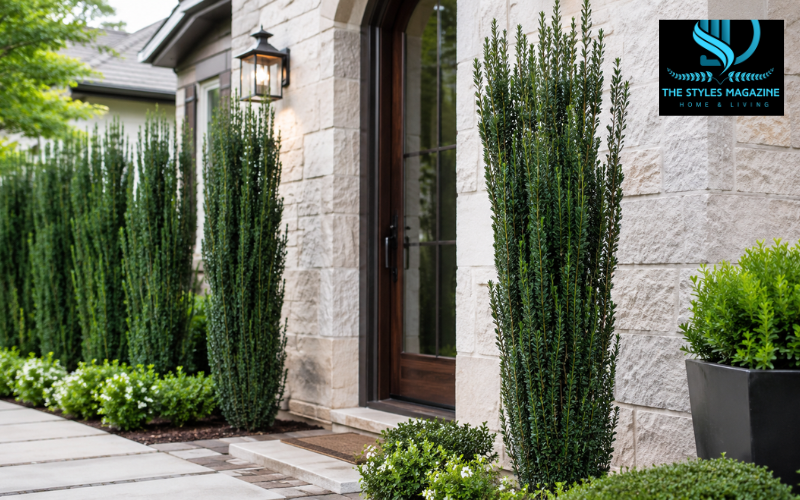
Sky Pencil Holly is a narrow evergreen shrub known for its tall, slim, upright shape. Its botanical name is Ilex crenata ‘Sky Pencil’, and it belongs to the Japanese holly family. Unlike many traditional hollies, this plant does not have sharp, spiny leaves. Instead, it has small, glossy, deep-green leaves that look neat and smooth throughout the year.
The main reason Sky Pencil Holly is so popular is its shape. It grows upward instead of spreading wide, which makes it very useful in tight spaces. Homeowners often plant it near entryways, along walkways, beside patios, in containers, or as a narrow hedge where wider shrubs would take up too much room. Its pencil-like form gives the landscape a clean and modern look without needing constant trimming.
This evergreen shrub is also valued because it is fairly low maintenance when planted in the right place. It adds height, structure, and year-round greenery to the garden. In this guide, you will learn about Sky Pencil Holly size, height, growth rate, suitable zones, care needs, hedge uses, common problems, and what to check before buying one.
Quick Guide Table: Sky Pencil Holly
| Feature | Quick Details |
| Botanical Name | Ilex crenata ‘Sky Pencil’ |
| Plant Type | Evergreen shrub |
| Mature Height | About 6 to 10 feet |
| Mature Width | About 2 to 3 feet |
| Growth Rate | Slow to moderate |
| Best Zones | USDA Zones 5 to 9 |
| Sunlight | Full sun to partial shade |
| Soil Type | Moist, acidic, rich, well-draining soil |
| Best Uses | Narrow hedge, privacy screen, entryway accent, container plant |
| Main Problems | Yellow leaves, root rot, leaf drop, splitting, pests |
| Care Level | Low to moderate |
Sky Pencil Holly at a Glance
Sky Pencil Holly usually grows about 6 to 10 feet tall and stays only around 2 to 3 feet wide. This makes it one of the best evergreen shrubs for narrow spaces. Its natural form is upright and column-shaped, so it does not need heavy pruning to stay tidy.
The foliage stays green all year, giving the landscape color even in winter. The leaves are small, rounded, and spineless, which gives the plant a softer appearance than many other hollies. It grows best in USDA Zones 5 to 9, though care needs can vary depending on local weather.
Sky Pencil Holly prefers full sun to partial shade. It also grows best in moist, rich, acidic soil that drains well. Once established, it can handle normal garden conditions, but it does not like soggy roots or highly alkaline soil. Common uses include entryway accents, narrow privacy screens, formal hedges, foundation planting, patio containers, and modern landscape designs.
Overall, its maintenance level is low to moderate. The most important parts of care are proper watering, good soil drainage, and occasional light pruning when needed.
Sky Pencil Holly Size and Mature Height
A mature Sky Pencil Holly usually reaches around 6 to 10 feet in height. In some ideal conditions, it may grow slightly taller, but most landscape plants stay within this range. Its narrow width is what makes it stand out. A typical mature plant is only about 2 to 3 feet wide, which is much slimmer than many other evergreen shrubs.
This narrow size is helpful for small yards, tight borders, townhomes, and garden areas where space is limited. Many shrubs grow too wide near sidewalks, driveways, or front doors, but Sky Pencil Holly keeps a slim profile. It adds vertical height without crowding the area around it.
When planted in the ground, Sky Pencil Holly usually reaches its best size because the roots have more room to spread. In containers, the plant may stay smaller depending on the pot size, soil quality, and watering routine. A large container can still support a healthy plant, but it may not grow as tall as one planted directly in the landscape.
Because of its controlled width, this shrub works well when you want height without bulk. It can soften a wall, frame a doorway, or create structure in a garden bed without taking over the space.
Sky Pencil Holly Growth Rate
The Sky Pencil Holly growth rate is slow to moderate. It does not usually shoot up quickly like some fast-growing privacy plants. Instead, it grows steadily over time and keeps a naturally neat shape. This slower growth can be a benefit, especially for formal landscapes where plants need to stay clean and controlled.
Several factors affect how fast Sky Pencil Holly grows. Sunlight is one of the most important. Plants growing in good light usually develop stronger, denser growth. Watering also matters, especially during the first growing season. If the plant dries out too often while young, growth can slow down and the lower leaves may become stressed.
Soil quality also plays a big role. Sky Pencil Holly prefers acidic, well-draining soil with enough organic matter. Poor soil, heavy clay, soggy roots, or alkaline conditions can affect growth and leaf color. Climate also matters. In very hot areas, afternoon shade can help reduce stress. In colder areas, winter wind protection can help the plant stay healthier.
After planting, readers should expect steady progress rather than instant height. Sky Pencil Holly is not the fastest option for privacy, but it is a good choice when you want a slim, elegant evergreen that improves year after year.
Best Sky Pencil Holly Zone and Climate Conditions
The best Sky Pencil Holly zone range is USDA Zones 5 to 9. This means it can grow in many parts of the United States, from cooler regions to warmer southern areas. However, its care needs may change depending on the climate.
In colder zones, winter protection can be useful, especially for young plants. Cold wind, heavy snow, and ice can sometimes damage upright branches. Because Sky Pencil Holly has a tall, narrow form, snow can weigh down the branches and may cause the plant to split open. Planting it in a spot protected from strong winter winds can help reduce this risk.
In warmer zones, especially Zones 8 and 9, afternoon shade is often helpful. Full sun may be fine in mild climates, but in hot regions, too much harsh afternoon sun can stress the plant. Partial shade during the hottest part of the day can help keep the foliage fresh and green.
Sky Pencil Holly is also known for handling urban conditions fairly well. It can tolerate air pollution better than many delicate shrubs, which makes it useful in city gardens, small front yards, and modern landscapes. Still, it performs best when it is not exposed to extreme wind, poor drainage, or long periods of drought.
Where to Plant Sky Pencil Holly in the Landscape
Sky Pencil Holly works best where its narrow shape can be seen and appreciated. It is often planted near front entries, along walkways, beside patios, at garden corners, near foundation beds, or in narrow borders. Because it grows upward, it brings vertical structure to the landscape without needing much ground space.
One of the most attractive ways to use Sky Pencil Holly is as a pair on both sides of a front door, gate, or pathway. This creates a formal and balanced look without requiring large shrubs or complicated pruning. It also works well in modern garden designs where clean lines and simple shapes are important.
In foundation beds, Sky Pencil Holly can add height between lower plants. It can also be used to soften the look of blank walls, fences, or corners. Since it stays slim, it will not usually block windows or spread too far into walkways when properly placed.
It is best to avoid planting Sky Pencil Holly in very exposed locations where strong wind or heavy snow can push the branches apart. It should also not be planted in soggy soil or in places where water collects after rain. A protected spot with good drainage gives the plant the best chance to stay healthy and attractive.
Sky Pencil Holly Hedge and Privacy Screen Uses
A Sky Pencil Holly hedge is a good choice when you need a narrow green screen in a limited space. Because the plant grows tall and slim, it can create privacy along small patios, side yards, walkways, or property edges without taking up as much space as wider shrubs.
For a tight hedge, Sky Pencil Holly is usually spaced about 2 to 2.5 feet apart. This closer spacing allows the plants to grow together and form a more continuous line. If you want each plant to stand as an individual accent, spacing them about 3 to 4 feet apart is better. This gives each shrub room to keep its own shape.
It is important to understand that Sky Pencil Holly works more like a narrow visual screen than a thick privacy wall. Its slim shape can block views and add separation, but it may not create the same dense coverage as a wide evergreen hedge. For patios, entryways, and narrow garden spaces, this is often exactly what homeowners need.
A Sky Pencil Holly hedge looks clean, formal, and organized. It can guide the eye through the landscape and create a polished border without looking too heavy. With proper spacing, watering, and light pruning, it can remain attractive for many years.
Sky Pencil Holly Care Requirements
Sky Pencil Holly care is simple when the plant is placed in the right growing conditions. It prefers full sun to partial shade. In cooler areas, full sun often helps the plant grow dense and strong. In hotter climates, some afternoon shade can protect it from heat stress.
Soil is very important for this shrub. Sky Pencil Holly grows best in moist, acidic, rich soil that drains well. It does not like standing water around its roots. If the soil stays too wet, the roots can become weak and may develop rot. On the other hand, soil that is too dry can cause stress, especially while the plant is young.
Watering is most important during the first growing season. New plants need deep watering so their roots can settle into the soil. Once established, Sky Pencil Holly can handle short dry periods better, but it still looks best with even moisture.
Fertilizing once a year in early spring can support healthy growth. A fertilizer made for acid-loving evergreens is usually a good choice. Late-summer fertilizing should be avoided because it may encourage tender new growth that can be damaged by cold weather. A layer of mulch around the base can help hold moisture, protect roots, and keep the soil temperature more stable.
Watering Sky Pencil Holly the Right Way
Watering is one of the most important parts of growing Sky Pencil Holly successfully. During the first growing season, the plant is still building its root system. If it does not receive enough water during this stage, it may struggle to grow, drop leaves, or develop bare lower branches.
A newly planted Sky Pencil Holly often needs deep watering 2 to 3 times a week, depending on the weather, soil, and rainfall. The goal is not to keep the soil constantly wet, but to keep it evenly moist while the roots establish. Deep watering is better than light surface watering because it encourages roots to grow downward.
Poor watering can cause several problems. If the plant is too dry, the leaves may look dull, curl slightly, or drop from the lower parts of the shrub. If the plant receives too much water or sits in soggy soil, the roots may not get enough air. This can lead to yellowing leaves, weak growth, and root rot.
A simple way to check watering needs is to feel the soil a few inches below the surface. If it feels dry, the plant may need water. If it feels wet or muddy, it is better to wait. Good drainage and steady moisture are both important for long-term health.
Pruning and Shaping Sky Pencil Holly
Sky Pencil Holly naturally grows in a slim, upright shape, so heavy pruning is usually not needed. This is one of the reasons many people like it. It can keep a formal look with very little effort.
Light pruning can be done in late winter or early spring before new growth begins. This is a good time to remove damaged branches, tidy the shape, or reduce the height if the plant is getting too tall. Some gardeners lightly trim the top to encourage a stronger, fuller base and to reduce the chance of the plant splitting open during wind or snow.
Because the plant is narrow, it is better to prune gently rather than cutting deeply into the sides. Removing too much growth at once can affect the natural shape. The goal should be to guide the plant, not force it into a completely different form.
If the branches begin to spread apart, gentle shaping can help bring the plant back into balance. In snowy regions, some gardeners loosely tie the plant during winter to prevent heavy snow from pulling the branches open. This should be done carefully so the stems are not damaged.
Growing Sky Pencil Holly in Containers
Sky Pencil Holly grows well in containers, which makes it useful for patios, balconies, entryways, and small outdoor spaces. Its narrow shape fits nicely in large pots and gives a clean, vertical look without needing much room.
The most important part of container growing is drainage. The pot should have drainage holes so extra water can escape. Without drainage, the soil may stay too wet, which can lead to root problems. A loose, well-draining soil mix is best. Since Sky Pencil Holly prefers acidic conditions, using a mix suitable for hollies, azaleas, or other acid-loving plants can be helpful.
Container plants usually dry out faster than plants in the ground, so watering should be checked more often. During hot weather, potted Sky Pencil Holly may need water more frequently. At the same time, the soil should not stay soggy.
Winter care is also important for potted plants in colder zones. Roots in containers are more exposed to cold than roots in the ground. Moving the pot to a protected location, using a larger container, or adding mulch over the soil surface can help protect the roots during winter.
Common Sky Pencil Holly Problems
Most Sky Pencil Holly problems are related to soil, water, weather, or planting location. When the plant is grown in the right conditions, it is generally dependable. However, stress can show up in several ways.
Yellow leaves are one common issue. This can happen when the soil is too alkaline or when the plant is not getting the nutrients it needs. Since Sky Pencil Holly prefers acidic soil, alkaline conditions can make it harder for the plant to take up certain nutrients. Improving soil conditions and using the right fertilizer can often help.
Root rot can happen when the plant sits in wet, poorly drained soil. Signs may include yellowing leaves, weak growth, and general decline. The best prevention is planting in well-draining soil and avoiding overwatering.
Leaf drop or bare lower branches can occur when the plant is stressed. Poor watering, too much shade, drought, root problems, or harsh exposure can all contribute. Keeping the soil evenly moist and placing the plant in a suitable location can reduce this problem.
Splitting is another issue, especially in areas with heavy snow or strong wind. Since the branches grow upright, they can open under pressure. Light pruning, protected placement, and winter support can help. Pests and diseases are not usually severe, but gardeners should still watch for scale, mites, or leaf spot if the plant looks unhealthy.
Sky Pencil Holly for Sale: What to Check Before Buying
When looking for Sky Pencil Holly for sale, it is important to choose a healthy plant from the beginning. A strong nursery plant will establish more easily and perform better in the landscape.
Look for dense green foliage, upright stems, and a balanced shape. The leaves should look fresh and healthy. Avoid plants with many yellow leaves, dry soil, weak stems, broken branches, or signs of pests. It is also wise to check whether the plant is root-bound. If roots are tightly circling the inside of the pot, the plant may need extra care after planting.
Plant size also matters. Smaller plants are often easier to establish, while larger plants give a more immediate effect. For hedges, buying plants of similar size helps create an even look. For containers or entryway accents, choose plants that already have a straight and attractive shape.
Always check that Sky Pencil Holly is suitable for your growing zone before buying. A reputable local nursery or trusted garden center can often provide better advice for your climate than a random online listing. Buying from a reliable source also reduces the risk of getting weak or poorly grown plants.
Conclusion: Is Sky Pencil Holly Right for Your Landscape?
Sky Pencil Holly is a great choice for gardeners who want height, structure, and evergreen color without using a lot of space. Its slim upright shape makes it especially useful near entryways, patios, walkways, narrow borders, and small yards. It also works well as a formal accent, container plant, or narrow hedge.
This shrub is best for people who want a clean, polished look with moderate care. It does not need heavy pruning, and its evergreen foliage provides year-round interest. However, it does need the right conditions to look its best. Moist, acidic, well-draining soil, proper watering, suitable spacing, and protection from harsh exposure can make a big difference.
If you need a narrow evergreen that brings height without spreading too wide, Sky Pencil Holly can be a smart and attractive option. With good planting and simple care, it can add beauty, privacy, and structure to the landscape for many years.
FAQs About Sky Pencil Holly
How Tall Does Sky Pencil Holly Grow?
Sky Pencil Holly usually grows around 6 to 10 feet tall while staying only 2 to 3 feet wide. Its narrow shape makes it useful for small yards and tight spaces.
Is Sky Pencil Holly Good For A Hedge?
Yes, Sky Pencil Holly works well as a narrow hedge or visual screen. For a tighter hedge, space plants about 2 to 2.5 feet apart.
What Are Common Sky Pencil Holly Problems?
Common problems include yellow leaves, root rot, leaf drop, bare lower branches, and splitting from snow or wind. Most issues come from poor watering, bad drainage, or unsuitable soil.
Can Sky Pencil Holly Grow In Containers?
Yes, Sky Pencil Holly grows well in large containers. Use a pot with drainage holes and acidic, well-draining soil to help prevent soggy roots and plant stress.
How Fast Does Sky Pencil Holly Grow?
Sky Pencil Holly has a slow to moderate growth rate. It grows steadily each year, but it is not an instant privacy plant, so patience is important after planting.
Enjoyed it? Find more exclusive content on The Styles Magazine.
Disclaimer: This article is for general gardening and landscaping information only. Plant growth and care results may vary depending on climate, soil, watering, and local conditions. For serious plant health issues, consult a local nursery, extension service, or gardening professional.