A garbage disposal is a helpful kitchen appliance that sits under the sink and grinds small food scraps so they can wash down the drain more easily. When it works well, it keeps cleanup simple and helps reduce food waste in the trash. But over time, small bits of food, grease, and residue can stick inside the disposal. These trapped scraps can create bad odor, slow draining, and sometimes even a clogged disposal.
Learning how to clean garbage disposal properly is important because rinsing with water alone is not always enough. Food can hide under the rubber splash guard, around the grinding chamber, and near the drain opening. Grease can also coat the inside and hold onto more food particles. This is why a sink may still smell bad even after you run water for several minutes.
The good news is that you do not need complicated tools to clean it. A simple routine using dish soap, baking soda, vinegar, ice, salt, and sometimes a garbage disposal cleaner can help remove buildup and freshen the drain. The safest method is to start by turning off the power before touching or scrubbing any part of the disposal. Then you can clean the visible areas, deodorize the inside, and flush everything away. With the right steps, your disposal can smell fresher, run better, and stay cleaner for longer.
Quick Guide Table: How to Clean Garbage Disposal
| Cleaning Need | Best Method | What It Helps With |
| Bad smell | Baking soda and vinegar | Removes light odor and freshens the drain |
| Hidden grime | Scrub the rubber splash guard | Cleans trapped food slime and buildup |
| Inside residue | Ice cubes and salt | Helps knock loose stuck debris |
| Light freshness | Citrus peels | Adds a natural fresh scent |
| Slow drain or clog | Check debris and trap safely | Helps find stuck food or blockage |
| Regular maintenance | Clean every 2–4 weeks | Prevents odor, buildup, and clogs |
Why Your Garbage Disposal Gets Dirty and Smelly
A garbage disposal gets dirty because it handles wet food scraps every day. Even if the unit grinds food well, tiny pieces can still stick to hidden areas inside the sink opening. The rubber splash guard is one of the biggest places where grime collects. Its underside often catches bits of food, grease, and slimy residue that are easy to miss during normal rinsing.
The grinding chamber can also hold residue. When food is ground up, small particles can cling to the inner walls and grinding parts. If grease or oil enters the disposal, it may coat the chamber and trap more debris. As this buildup sits, it can start to break down and create an unpleasant smell.
Small scraps can also collect near the drain or trap under the sink. The trap is designed to hold water and block sewer smells from coming back up, but it can also catch food particles if the disposal is not flushing properly. This is one reason a smell may return soon after cleaning the sink surface. The odor is not always coming from the top of the drain. Sometimes it is coming from hidden food buildup lower in the drain area.
If your garbage disposal smell keeps coming back, it usually means the source of the odor has not been fully removed. A complete cleaning routine should focus on the splash guard, grinding chamber, drain opening, and good flushing habits.
Safety Steps Before Cleaning a Garbage Disposal
Safety should always come first when cleaning a garbage disposal. Even when the unit is turned off at the wall switch, you should treat it carefully. Before scrubbing or removing anything by hand, unplug the disposal under the sink if you can reach the plug. If your unit is hardwired, turn off the circuit breaker that controls it.
Never place your bare hand inside the disposal. The inside parts can still be sharp or rough enough to cause injury, even when the power is off. If you see food scraps, bones, a bottle cap, a spoon, or any other stuck object, use long tongs or pliers to remove it. A flashlight can help you see inside the opening more clearly.
Before turning the power back on, check that no tools, cloths, or loose objects are near the drain. If the disposal was jammed or clogged, do not force it to run. A humming sound without grinding can mean something is stuck or the motor is struggling. In that case, turn it off right away and inspect it safely.
Taking a few extra minutes for safety protects both you and the appliance. Once the visible debris is removed and the area is clear, you can move on to cleaning and deodorizing.
Basic Supplies Needed for Cleaning
You can clean most garbage disposals with simple household items. Dish soap is useful for cutting through grease, especially around the rubber splash guard. Baking soda helps absorb odor and lightly scrub surfaces. White vinegar can loosen light residue and help freshen the drain when used correctly.
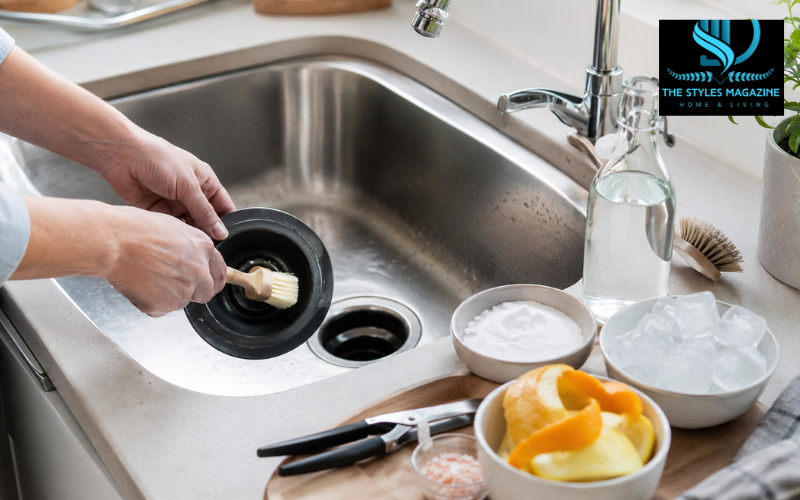
Ice cubes are helpful because they knock loose bits of buildup from the grinding area as they break apart. Kosher salt or rock salt can add extra scrubbing power when used with ice. An old toothbrush or small scrub brush works well for cleaning the underside of the splash guard. Tongs or pliers are important for removing visible debris safely.
A store-bought garbage disposal cleaner is optional. It may be useful if your disposal has strong odor or if you prefer a ready-made product. However, many regular cleaning jobs can be handled with baking soda, vinegar, ice, salt, citrus peels, and good rinsing habits.
Avoid using harsh drain chemicals unless the disposal manufacturer says they are safe. Strong chemicals can be risky for the disposal, pipes, and anyone working near the sink. Simple cleaning methods are usually safer for regular maintenance.
Cleaning the Rubber Splash Guard Properly
The rubber splash guard is the flexible flap at the top of the disposal opening. It helps stop water and food from splashing back up while the disposal runs. But because it sits right where food enters the drain, it can collect a lot of hidden grime.
To clean it properly, first turn off the power to the disposal. Then lift the rubber flaps gently and look underneath with a flashlight. You may see dark residue, slime, or stuck food. This buildup is a common cause of garbage disposal smell.
Dip an old toothbrush or small scrub brush in warm water with dish soap. You can also add a little baking soda to the brush for extra cleaning. Scrub the top and underside of the splash guard, paying close attention to the folds and edges. If your splash guard is removable, take it out and wash both sides in the sink. Rinse it well before putting it back.
If the splash guard is cracked, loose, badly stained, or no longer fits well, it may be time to replace it. A damaged guard can trap more debris and may not control splashing properly. Keeping this part clean makes a big difference because it removes odor at one of the most common sources.
How to Clean Garbage Disposal with Baking Soda
Baking soda is one of the easiest ways to freshen a disposal. It helps absorb odor and can loosen light grime without using harsh chemicals. It is especially useful when the disposal smells bad but is still draining normally.
To clean garbage disposal with baking soda, pour about half a cup directly into the drain opening. Try to spread it around the inside instead of letting it sit only in one spot. Let it sit for about 10 to 15 minutes. This gives it time to work on odors and light buildup.
After waiting, run warm water into the drain to rinse it through. You can also turn on the disposal briefly while the water runs, but only after you are sure nothing is stuck inside. For a mild smell, baking soda alone may be enough. For stronger odor, it often works better when followed by vinegar or an ice-cleaning step.
Baking soda is gentle, affordable, and easy to use regularly. It is a good choice for routine cleaning between deeper disposal cleanings.
How to Clean Garbage Disposal with Vinegar
White vinegar is another common household cleaner used for freshening a garbage disposal. It can help loosen light residue and reduce odor inside the drain. It works best when the disposal is not clogged and water is flowing normally.
To clean garbage disposal with vinegar, pour about one cup of white vinegar into the drain. Let it sit for several minutes so it can reach the inside surfaces. Then rinse well with water. Some people like to use vinegar after baking soda because the fizzing action helps move the mixture around the drain opening.
Vinegar should be used carefully. Do not mix it with bleach or strong chemical cleaners. Mixing cleaning products can create unsafe fumes. If you recently used a commercial drain cleaner, do not add vinegar unless the product label says it is safe.
After using vinegar, flush the disposal thoroughly. Use cold water while running the disposal, and use warm water afterward if you are simply rinsing away loosened grime. The key is to avoid leaving loosened residue sitting inside the drain.
How to Clean Garbage Disposal with Baking Soda and Vinegar
Using baking soda and vinegar together is a popular method for cleaning and deodorizing a garbage disposal. It is simple, low-cost, and helpful for light grime and odor. This method is best for maintenance cleaning, not for serious clogs or mechanical problems.
Start by turning off the disposal. Pour half a cup of baking soda into the drain opening. Let it settle inside the disposal. Then slowly pour one cup of white vinegar over the baking soda. The mixture will fizz and bubble. This reaction can help loosen light buildup around the drain opening and inside the chamber.
Let the mixture sit for 10 to 15 minutes. Do not turn on the disposal while it is fizzing. After the waiting time, run water to flush everything away. You can turn the disposal on briefly with running cold water to rinse the chamber. Continue the water for a few seconds after turning the disposal off so loosened debris moves through the drain.
This method is helpful when your sink has a mild sour or stale smell. If the smell is strong, clean the splash guard first. Many odors come from the rubber guard, and baking soda and vinegar may not reach that area well enough on their own.
How to Clean Your Garbage Disposal with Ice
Ice is useful for cleaning the inside of a garbage disposal because it helps knock loose stuck-on food particles. As the disposal breaks the ice, the pieces move around the grinding chamber and help remove residue from the inner surfaces.
To clean your garbage disposal with ice, place about two cups of ice cubes into the drain. Add a small handful of kosher salt or rock salt for extra scrubbing. Turn on cold water, then run the disposal until the ice is fully broken down. The sound may be loud at first, but it should quiet down as the ice clears.
Cold water is important during this process because it helps move food particles through the disposal and drain. It also helps keep grease more solid so it can be chopped and flushed instead of coating the pipe.
You can use the ice method every few weeks as part of regular maintenance. It is especially helpful after cleaning the splash guard and using baking soda or vinegar. However, ice does not sharpen blades, because most disposals use grinding parts rather than sharp blender-style blades. Its main benefit is cleaning and loosening buildup.
How to Clean a Garbage Disposal When It’s Clogged
A clogged disposal may drain slowly, smell bad, make a humming sound, or stop working altogether. Before cleaning a clogged disposal, turn off the power. Do not keep switching it on and off if it is jammed. This can stress the motor.
Use a flashlight to look inside the drain opening. If you see a stuck item, remove it with tongs or pliers. Never reach inside with your hand. Once the visible debris is removed, check whether the disposal has a reset button on the bottom of the unit. Many disposals have a small red reset button that can be pressed after the motor cools down.
If the disposal is still stuck, it may need to be loosened from underneath using the proper tool that came with the unit. Many models have a place at the bottom where an Allen wrench can be inserted to move the grinding plate back and forth. Only do this with the power off.
For a clog caused by food buildup, try flushing with water after the disposal moves freely again. Avoid using chemical drain cleaners unless they are clearly safe for garbage disposals. If water backs up into the sink, the clog may be in the drain line or trap rather than the disposal itself. At that point, it may be better to call a plumber.
How to Clean Garbage Disposal Trap
The trap is the curved pipe under the sink. It holds a small amount of water to block sewer gases from coming back into your home. When food particles, grease, or sludge collect there, the sink may smell bad or drain slowly.
Before checking the trap, turn off the disposal and avoid using the sink. Place a bucket under the trap because water will likely spill out when it is opened. If you are comfortable with basic sink maintenance, you can loosen the slip nuts by hand or with pliers and carefully remove the trap. Empty the contents into the bucket, then rinse the trap with warm soapy water.
Look for food scraps, grease, or thick buildup. After cleaning, reconnect the trap securely and run water to check for leaks. If the fittings are old, tight, cracked, or difficult to remove, do not force them. A small mistake under the sink can lead to leaks.
Cleaning the garbage disposal trap is not always needed for routine odor. In many cases, cleaning the splash guard and grinding chamber solves the problem. But if odor or slow draining continues after cleaning the disposal, the trap may be the next place to check.
Best Garbage Disposal Cleaner Options
The best garbage disposal cleaner depends on the problem. For regular maintenance, homemade options are usually enough. Baking soda helps with odor, vinegar helps loosen light residue, and ice with salt helps scrub the inside. Citrus peels can add a fresh scent after the main cleaning is done.
Store-bought disposal cleaning tablets or pods can also be useful. Many are designed to foam inside the disposal and reach areas that plain water may miss. These products can be a good choice if your disposal smells bad often or if you want a quick monthly cleaning method. Always follow the product label and make sure it is made for garbage disposals.
Avoid harsh cleaners that are not meant for disposals. Strong drain openers, bleach mixtures, and abrasive chemicals can create safety problems or damage parts depending on the product and plumbing. If a clog is serious, a cleaner may only hide the problem for a short time. In that case, removing the blockage safely is more important than adding more product.
For most homes, the best routine is simple: scrub the splash guard, deodorize with baking soda and vinegar when needed, use ice and salt for the grinding chamber, and flush well with water.
How to Clean Garbage Disposal Smell and Keep It Fresh
To clean garbage disposal smell and keep it from coming back, focus on both cleaning and daily habits. A bad smell usually means food residue is trapped somewhere. The first place to clean is the splash guard because it often holds the strongest odor. After that, clean the inside with baking soda, vinegar, and ice.
Citrus peels can help add a fresh scent. Use small pieces of lemon, lime, or orange peel and run them through the disposal with cold water. Do not use large amounts at once because too many peels can create their own clogging problem. Citrus is best used as a finishing step after the disposal is already clean.
Good habits matter just as much as cleaning. Run cold water before, during, and after using the disposal. Feed food scraps slowly instead of pushing in a large amount at one time. Avoid pouring grease or oil into the drain because it can stick to pipes and trap food. Coffee grounds, bones, fibrous foods like celery, onion skins, corn husks, and large amounts of starchy foods can also cause trouble.
For odor control, clean the disposal every two to four weeks. If you cook often or use the disposal daily, a light weekly rinse and a deeper monthly cleaning can help keep the sink fresher. Regular care prevents buildup before it becomes a bigger problem.
Conclusion: Keeping Your Garbage Disposal Clean Naturally
Knowing how to clean garbage disposal the right way can make your kitchen sink smell fresher and work better. The safest routine starts with turning off the power before removing debris or scrubbing the splash guard. After that, simple household items like dish soap, baking soda, vinegar, ice, salt, and citrus peels can handle most cleaning and odor problems.
For regular maintenance, clean the rubber splash guard, use baking soda to absorb smells, add vinegar for light buildup, and run ice with salt to clean the grinding chamber. If the disposal is clogged, avoid forcing the motor and check safely for stuck items. If odor or slow draining continues, the trap or drain line may need attention.
You do not need to over-clean or use harsh chemicals to keep a disposal fresh. A simple routine every few weeks, along with smart daily habits, can help prevent smells, clogs, and food buildup. With careful cleaning and regular flushing, your garbage disposal can stay cleaner, safer, and more pleasant to use.
FAQs
How Often Should I Clean My Garbage Disposal?
You should clean your garbage disposal every two to four weeks. If you cook often or notice odor sooner, a light weekly rinse and splash guard cleaning can help keep it fresh.
Can I Clean Garbage Disposal With Baking Soda And Vinegar?
Yes, baking soda and vinegar can help remove light odor and loosen mild buildup. Let the mixture fizz for 10 to 15 minutes, then flush the disposal well with water.
Is Ice Good For Cleaning A Garbage Disposal?
Yes, ice helps knock loose food residue inside the grinding chamber. For better cleaning, add kosher salt or rock salt and run the disposal with cold water.
Why Does My Garbage Disposal Still Smell After Cleaning?
The smell often comes from hidden grime under the rubber splash guard, food trapped near the drain, or buildup in the trap. Cleaning only the visible drain may not remove the source.
What Should I Avoid Putting In A Garbage Disposal?
Avoid grease, oil, bones, coffee grounds, onion skins, celery, corn husks, and large amounts of starchy food. These items can cause buildup, bad smells, or clogs.
Enjoyed it? Find more exclusive content on The Styles Magazine.
Disclaimer: This article is for general home cleaning and maintenance information only. Garbage disposal models may vary, so always follow your manufacturer’s safety instructions. If your disposal is jammed, leaking, making unusual sounds, or still clogged after basic cleaning, contact a qualified plumber or appliance professional.