Weeds are simply plants growing where you do not want them. They may appear in your lawn, garden beds, vegetable garden, gravel paths, rock areas, driveway cracks, or around flowers and shrubs. Some weeds grow from seeds, while others spread through deep roots, runners, or small pieces left behind in the soil. This is why pulling the top of a weed often does not solve the problem for long.
If you want to know how to get rid of weeds properly, the most important thing to understand is that there is no single method that works everywhere. A weed growing between patio stones can be treated more aggressively than a weed growing next to tomatoes, roses, or lawn grass. The wrong method may remove the weed but damage the plants, soil, or surface around it.
The best approach is to match the weed removal method to the location. Quick methods can remove visible weeds fast, but long-term prevention is what keeps them from coming back again and again.
Quick Guide: Best Ways to Get Rid of Weeds by Area
| Weed Location | Best Method | What to Avoid |
| Lawn | Hand pulling, mowing high, selective lawn weed killer | Vinegar, salt, or non-selective sprays |
| Garden beds | Hand weeding, shallow hoeing, mulch, cardboard smothering | Salt, harsh sprays, deep digging |
| Vegetable garden | Pulling roots, mulch, careful hoeing | Chemical overspray near edible plants |
| Rocks and gravel | Boiling water, vinegar spot treatment, manual removal | Letting soil and leaves build up |
| Pavement cracks | Boiling water, scraping, careful spot treatment | Using salt near lawns or garden beds |
The First Step: Identify Where the Weeds Are Growing
Before choosing a weed control method, look closely at where the weeds are growing. Weeds in lawns need a different approach from weeds in garden beds. In a lawn, the goal is to remove the weeds without killing the grass. In flower beds or vegetable gardens, the goal is to protect wanted plants and keep the soil healthy.
Weeds in rocks, gravel, pavement cracks, and driveways are usually easier to treat because there are fewer nearby plants to protect. However, even in these areas, you should still be careful with salt, vinegar, flame weeders, and chemical sprays because runoff can reach nearby soil or plants.
This first step saves time and prevents mistakes. A strong weed killer may work well on a driveway, but it can harm flowers, vegetables, and grass. In the same way, gentle hand pulling may be perfect for a garden bed but too slow for a large gravel path. The location should guide the method.
How to Get Rid of Weeds Quickly
If you need to get rid of weeds quickly, focus on the visible growth first. Hand pulling, hoeing, boiling water, and spot treatments are some of the fastest options. Hand pulling works best when the soil is damp because the roots slide out more easily. This is especially helpful for young weeds and weeds with taproots, such as dandelions.
Hoeing is useful for small weeds in loose garden soil. A shallow scrape across the soil surface can cut young weeds before they become established. For pavement cracks, boiling water can wilt weeds quickly without leaving chemical residue. It is best used on hard surfaces because boiling water can also damage nearby grass or garden plants.
Spot sprays may also work quickly, but they should be used carefully. Some products only burn the leaves, while the roots may survive and regrow. Always keep pets, children, and wanted plants away from freshly treated areas until it is safe according to the product label or method used.
How to Get Rid of Weeds Naturally
Many people prefer natural weed control, especially around gardens, pets, and outdoor spaces used by children. Natural methods can work well, but they are usually most effective when weeds are small or when you combine several methods together.
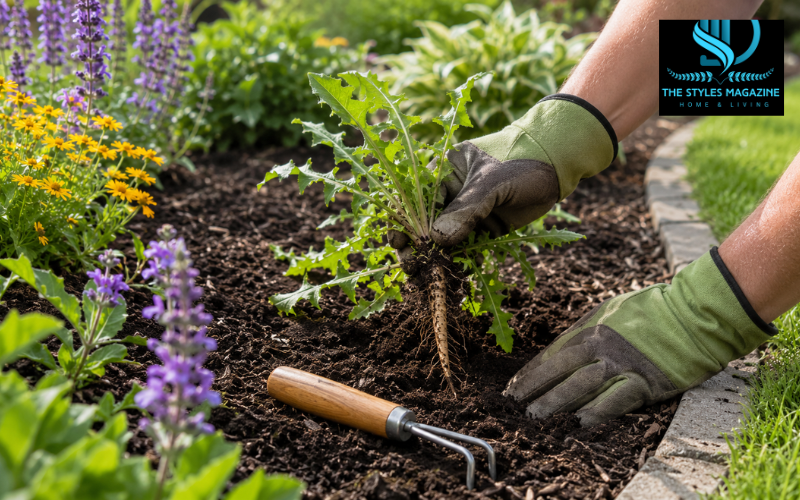
Hand pulling is one of the simplest natural methods. It works best after rain or watering because damp soil makes it easier to remove the whole root. If the root breaks, some weeds may grow back. A hand weeder, garden fork, or small trowel can help loosen the soil around deeper roots.
Mulching is another reliable natural method. A layer of wood chips, bark, straw, leaves, or compost can block sunlight from reaching weed seeds. Without light, many weed seeds cannot sprout easily. In garden beds, cardboard or newspaper under mulch can also smother weeds and improve control over time.
Boiling water is a natural option for cracks and hard surfaces. It is simple, fast, and chemical-free, but it should not be poured near plants you want to keep.
How to Get Rid of Weeds With Vinegar
Vinegar is a popular home remedy for weeds, but it is important to understand what it can and cannot do. Vinegar works mainly by burning or drying out the leaves it touches. This means it can make weeds look dead quickly, especially on a hot, sunny day, but it may not kill deep roots.
Household vinegar is usually most useful for small weeds, young weeds, and weeds growing in pavement cracks, gravel, or isolated areas. It is not a good choice for spraying across lawns or garden beds because vinegar is non-selective. That means it can damage grass, flowers, vegetables, and other wanted plants if it touches them.
Vinegar can also affect soil life and nearby plants if used repeatedly in the same area. For this reason, it is better as a careful spot treatment rather than a general garden spray. If you use vinegar, apply it only to the weed leaves, avoid windy days, and keep it away from roots and foliage of plants you want to protect.
How to Get Rid of Weeds Overnight
Many people search for how to get rid of weeds overnight, but it is important to have realistic expectations. Some methods can make weeds wilt or look dead by the next day, but that does not always mean the roots are dead. Deep-rooted weeds can return if the root system remains alive underground.
For fast overnight results, boiling water can work well on weeds in driveway cracks, sidewalks, patios, and rock areas. Vinegar spot treatment may also cause quick browning on small weeds when used in warm, sunny weather. Some contact weed killers can produce visible results within hours, but they may still only damage the top growth.
The best overnight methods are usually for hard surfaces and isolated weeds, not lawns or crowded garden beds. Around flowers, vegetables, and grass, fast methods can easily cause unwanted damage. A weed may look gone overnight, but true control often takes follow-up removal and prevention. Permanent overnight weed control is rarely realistic.
How to Get Rid of Weeds in the Garden
Garden weeds should be removed with care because flowers, shrubs, vegetables, and herbs may be growing close by. In garden beds, hand weeding is often the safest method. Pull weeds when the soil is moist and try to remove the roots. For small weeds, shallow hoeing can work well, but avoid digging too deeply because it may bring buried weed seeds closer to the surface.
Mulch is one of the best long-term tools for garden weed control. A steady layer of organic mulch helps block sunlight, reduce new weed growth, and protect soil moisture. Keep mulch a little away from plant stems to prevent rot and allow air movement.
Avoid using salt or harsh sprays in garden beds. Salt can stay in the soil and make it harder for plants to grow. Strong sprays may drift onto leaves or soak into the soil around wanted plants. In gardens, slow and careful control is usually better than aggressive treatment.
How to Get Rid of Weeds in Rocks and Gravel
Weeds in rocks and gravel can be frustrating because they often grow through tiny pockets of dust, soil, and organic matter. Over time, leaves and debris break down between stones, creating a place where weed seeds can sprout. To get rid of weeds in rocks, start by removing as much of the root as possible.
Boiling water can be useful for weeds growing in gravel paths or between decorative stones, especially if there are no nearby plants. Vinegar can also be used as a careful spot treatment, but it should not run into flower beds, lawns, or tree roots. For larger weeds, manual removal is often needed before any treatment will work well.
Landscape fabric can help under new rock areas, but it is not a perfect solution. Soil and debris can still collect on top of the fabric, allowing weeds to grow above it. To prevent this, keep rock areas clean, remove fallen leaves, and refresh thin gravel where needed.
How to Get Rid of Weeds in the Lawn Without Killing Grass
Lawn weeds require a careful approach because the goal is to remove the weeds while keeping the grass healthy. Hand pulling works well for scattered broadleaf weeds, especially after rain. Try to remove the full root, not just the leaves. A weeding tool can help with dandelions and other deep-rooted lawn weeds.
Mowing height also matters. Cutting grass too short gives weed seeds more sunlight and weakens the lawn. Taller grass shades the soil, helps protect moisture, and gives weeds less room to grow. A thick lawn is one of the best natural defenses against weeds.
If weeds have spread widely, a selective lawn weed killer may be useful. These products are made to target certain weeds without killing the grass when used correctly. Always choose a product that matches your grass type and weed problem, and follow the label carefully. Healthy lawn care should still be part of the plan, because sprays alone will not fix thin or stressed grass.
How to Get Rid of Weeds Permanently
When people ask how to get rid of weeds permanently, they usually want weeds to stop coming back. The honest answer is that permanent weed control is about prevention, not one single treatment. Weed seeds can blow in from nearby yards, drop from birds, or already exist in the soil for a long time.
To get long-term control, you need to remove existing weeds, stop seeds from sprouting, and reduce open spaces where weeds can grow. In garden beds, this means removing roots, covering bare soil with mulch, and planting densely enough that weeds do not get much light. In lawns, it means growing thick, healthy grass that can compete with weeds.
Pre-emergent weed control can help in some areas by stopping certain weed seeds from establishing. However, it will not kill weeds that are already growing. For permanent results, think in terms of regular maintenance. Remove weeds early, block light, cover soil, and avoid letting weeds flower or set seed.
How to Get Rid of Weeds in Garden Permanently
To get rid of weeds in a garden permanently, focus on making the garden harder for weeds to invade. Start with clean, covered soil. Pull existing weeds by the roots, then cover the bed with mulch or use sheet smothering with cardboard or newspaper under mulch. This blocks sunlight and weakens weeds that try to grow from below.
Dense planting also helps. When flowers, vegetables, shrubs, or ground covers fill the space, weeds have less room and light. Bare soil is an open invitation for weed seeds, so try not to leave large empty patches exposed for long.
It also helps to disturb the soil less often. Deep digging can bring buried weed seeds to the surface, where they can sprout. Instead, remove weeds when they are young and use shallow cultivation only when needed. Most importantly, pull weeds before they flower or form seeds. One mature weed can create many future weeds.
Weed Removal Methods to Avoid or Use Carefully
Some weed removal methods work, but they can cause problems when used in the wrong place. Salt is one of the biggest examples. It may kill weeds in pavement cracks, but it can also damage soil and harm nearby lawns, flowers, shrubs, and trees. It should never be used in garden beds or areas where you want plants to grow.
Vinegar should also be used carefully. It can burn weed leaves, but it can burn wanted plants too. Overspray on grass, flowers, or vegetables can cause damage quickly. Flame weeders can be effective on some hard surfaces, but they should never be used in dry, windy, or fire-prone conditions.
Non-selective herbicides can kill many types of plants, not just weeds. If they drift or splash onto wanted plants, they may cause serious damage. Even selective products should be used only as directed. Overusing chemicals without improving soil cover, lawn health, or garden spacing often leads to the same weed problem returning.
Long-Term Weed Prevention That Actually Works
The best way to control weeds is to stop them before they become large and difficult to remove. In garden beds, mulch bare soil and refresh it when it becomes thin. Organic mulch breaks down over time, so it may need to be topped up. In lawns, mow higher and keep the grass thick through proper watering, feeding, and repair of bare patches.
Watering deeply but less often can also help. Light daily watering can encourage shallow roots and weed germination near the surface. Deep watering supports stronger plants and healthier lawns. In garden beds, watering near the base of wanted plants instead of soaking every bare area can reduce weed growth.
Pre-emergent products may help prevent certain weeds when used at the right time, often before seasonal weed seeds sprout. However, they should be chosen carefully, especially in vegetable gardens or areas where you plan to plant seeds. The simplest habit is still one of the most powerful: remove weeds before they go to seed.
Conclusion: The Smartest Way to Keep Weeds Away
Learning how to get rid of weeds starts with choosing the right method for the right place. Weeds in pavement cracks, gravel, lawns, and garden beds should not all be treated the same way. A method that is safe for a driveway may be harmful in a vegetable garden, and a lawn treatment may not belong near flowers or shrubs.
For quick results, remove visible weeds with hand pulling, hoeing, boiling water, or careful spot treatments. For lasting results, focus on prevention. Cover bare soil, mulch garden beds, mow lawns higher, keep grass thick, and pull weeds before they spread seeds.
No method keeps every weed away forever with one treatment. The most effective approach is a simple routine: remove weeds early, protect the soil, and reduce the spaces where new weeds can grow. With steady care, you can spend less time fighting weeds and more time enjoying your garden, lawn, and outdoor spaces.
FAQs
How Do I Get Rid Of Weeds Quickly?
The fastest way is to pull weeds from damp soil, hoe small weeds, or use boiling water on pavement cracks. Quick methods may remove visible growth, but roots can still regrow.
Can Vinegar Get Rid Of Weeds Permanently?
Vinegar can burn weed leaves quickly, but it usually does not kill deep roots permanently. It works best on small weeds in cracks, gravel, or isolated areas.
What Is The Best Natural Way To Get Rid Of Weeds?
Hand pulling, mulching, boiling water, and cardboard smothering are good natural options. These methods work best when weeds are young and the soil is covered afterward.
How Do I Stop Weeds From Coming Back?
Cover bare soil with mulch, keep grass thick, pull weeds before they seed, and avoid disturbing soil too often. Prevention is the real key to long-term weed control.
Is Salt Good For Killing Weeds?
Salt can kill weeds, but it can also damage soil and nearby plants for a long time. It should not be used near lawns, flowers, vegetables, shrubs, or trees.
Enjoyed it? Find more exclusive content on The Styles Magazine.
Disclaimer: This article is for general gardening and lawn-care information only. Results may vary depending on weed type, soil, weather, and location. Always follow product labels carefully when using herbicides or weed-control treatments.