How to clean stainless steel appliances is one of the most common home-care questions because stainless steel looks beautiful when it is clean, but it also shows fingerprints, grease, water spots, smudges, and streaks very easily. A refrigerator door, oven front, dishwasher panel, range hood, or microwave trim can look dull even when it is not actually dirty. Most of the time, the problem is not the stainless steel itself. The problem is usually the cleaning method, the type of cloth, the amount of cleaner used, or the surface not being dried properly.
The safest everyday method is simple: use mild dish soap, warm water, and a soft microfiber cloth. This basic routine works well for normal fingerprints, kitchen dust, food splashes, and light grease. It is gentle enough for most stainless steel surfaces and does not rely on strong chemicals. The key is to wipe with the grain, rinse away soap residue, and dry the surface immediately with a clean towel.
In this guide, you will learn how to clean stainless steel appliances without streaks, how to use vinegar safely, when baking soda can help, what to do with fingerprint-resistant and black stainless finishes, how to approach Whirlpool-style appliances, and which cleaning mistakes can damage the surface. You will also get a simple maintenance routine to keep your appliances shiny for the long term.
Quick Guide Table
| Cleaning Need | Best Method | What to Avoid |
| Everyday fingerprints | Mild dish soap + warm water | Too much cleaner |
| Streak-free shine | Rinse and buff with microfiber | Air-drying |
| Water spots | Diluted vinegar on standard stainless steel | Vinegar on coated finishes |
| Grease marks | Gentle baking soda paste | Hard scrubbing |
| Black/fingerprint-resistant stainless | Soap, water, microfiber only | Polish, vinegar, oil, harsh cleaners |
Why Stainless Steel Appliances Get Streaky
Stainless steel appliances get streaky for several simple reasons. One of the biggest causes is fingerprints. Every time someone opens a refrigerator, touches a dishwasher handle, or adjusts the oven door, natural oils from the skin transfer to the surface. These oils catch light and create smudges, especially on darker or polished stainless finishes.
Hard water can also leave marks. If your tap water has minerals in it, those minerals may stay behind after the water dries. This is why a surface can look clean while it is wet but show cloudy spots later. Soap residue is another common reason. When too much dish soap or cleaner is used, a thin film can remain on the appliance. That film turns into streaks when it dries.
Grease and cooking splatter are also common, especially around ovens, cooktops, microwaves, and range hoods. Grease can spread when wiped with the wrong cloth, making the surface look worse instead of better. Wiping against the grain can also drag dirt into the tiny lines of the metal, which makes streaks more visible. Finally, letting stainless steel air-dry often leads to water marks. Drying and buffing are not optional steps if you want a streak-free finish.
Know the Grain Before You Start Cleaning
Before you clean stainless steel, look closely at the surface. Most stainless steel appliances have fine brush lines called the grain. These lines may run horizontally from side to side or vertically from top to bottom. On some appliances, the grain is easy to see. On others, you may need to look at the surface from an angle under good light.
Wiping with the grain matters because stainless steel is not completely smooth. The fine lines can trap grease, dust, cleaner, and minerals. When you wipe parallel to the grain, your cloth moves in the same direction as the surface texture. This helps lift away dirt more evenly and reduces the chance of visible streaks.
Avoid circular scrubbing. It may seem like a good idea when a spot is stubborn, but circular movement can leave uneven marks and may push grime across the grain. If the surface has a clear horizontal grain, wipe left to right. If it has a vertical grain, wipe up and down. This small step makes a big difference in the final shine.
Best Everyday Method to Clean Stainless Steel Appliances
The best everyday way to clean stainless steel appliances is also the easiest. Start by mixing a few drops of mild dish soap with warm water. You do not need a strong cleaner for regular cleaning. In fact, too much cleaner can leave behind a film that causes streaks.
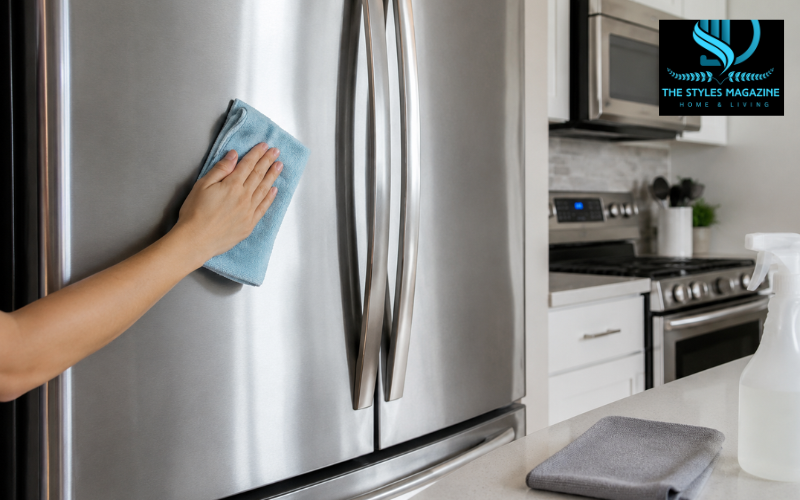
Dip a microfiber cloth into the soapy water, then wring it out so it is damp, not dripping wet. Wipe the appliance gently with the grain. Pay extra attention to handles, edges, and areas around buttons because these spots collect fingerprints and grease quickly. For a refrigerator, clean the handles first, then move across the door panels. For an oven or dishwasher, begin at the top and work downward.
After cleaning, use a second microfiber cloth dampened with plain clean water to remove any soap residue. This step is important because dried soap can make stainless steel look cloudy. Once the surface is rinsed, dry it immediately with a fresh microfiber towel. Use light pressure and buff with the grain until the surface feels dry and looks clear.
This method is safe for most regular stainless steel appliances and is also the best first step before trying vinegar, baking soda, or any specialty cleaner.
How to Clean Stainless Steel Appliances Without Streaks
If you want to know how to clean stainless steel appliances without streaks, the secret is not using more cleaner. It is usually using less. A small amount of soap or cleaner is enough. When too much product is used, it becomes harder to remove fully, and the leftover residue creates lines after drying.
Always rinse after cleaning. Even if the surface looks fine after the first wipe, a clean damp cloth helps remove the thin layer of soap that may still be sitting on the metal. After rinsing, dry the surface right away. Do not let water sit on stainless steel, especially if you live in an area with hard water.
If hard water marks are a regular problem in your home, try using distilled water for the final rinse. Distilled water has fewer minerals, so it is less likely to leave cloudy spots. A dry microfiber cloth is also better than paper towels because microfiber is softer and less likely to leave lint behind.
Buffing is the final step that gives stainless steel its clean look. Use a dry cloth and move with the grain in long, even strokes. If the appliance still looks streaky, lightly dampen a clean cloth with water, wipe again, and buff dry. Most streaks are simply leftover cleaner or moisture.
How to Clean Stainless Steel Appliances With Vinegar
Vinegar can be useful for fingerprints, smudges, and light water spots on standard stainless steel. It helps cut through oily marks and mineral residue. A simple way to use it is to mix equal parts white vinegar and water in a spray bottle. For a gentler approach, use more water than vinegar.
Spray the solution lightly onto a microfiber cloth instead of soaking the appliance directly. Then wipe the surface with the grain. After that, use a clean damp cloth to remove any vinegar residue and dry the surface fully with another microfiber towel.
Vinegar should be used carefully. Do not leave it sitting on stainless steel for a long time. Long exposure to acidic cleaners can dull or affect some finishes. Also avoid vinegar on fingerprint-resistant stainless steel, black stainless steel, or any appliance with a special coating unless the manufacturer clearly says it is safe.
For most homes, vinegar is not something you need every day. Use it only when soap and water are not enough for smudges or light water marks. The safest routine is still mild soap, warm water, and careful drying.
How to Clean Stainless Steel Appliances With Baking Soda
Baking soda can help with stuck-on grease, light grime, and small dirty spots that do not come off with soap and water. It should be used gently because stainless steel can scratch if you scrub too hard or use the wrong tool.
To clean stainless steel appliances with baking soda, mix baking soda with a small amount of water until it forms a soft paste. The texture should be smooth and thick, not dry and gritty. Apply the paste to the dirty area and let it sit for a few minutes. This gives it time to loosen the grease or residue.
Use a damp microfiber cloth to wipe the paste gently with the grain. Do not use steel wool, rough sponges, or hard scrubbing pads. Once the spot is clean, rinse the area with a clean damp cloth until all baking soda is gone. Then dry the surface fully with a soft towel.
Baking soda is best for small problem areas, not for coating an entire appliance door. It is especially helpful near oven doors, cooktop fronts, and range hoods where grease is more common. For fingerprint-resistant or black stainless finishes, avoid baking soda unless your appliance manual allows it.
How to Remove Permanent Streaks on Stainless Steel Appliances
Many people search for how to remove permanent streaks on stainless steel appliances, but not every streak is truly permanent. Often, what looks permanent is actually soap residue, hard water minerals, dried cleaner, oil buildup, or polish left behind from previous cleaning. These marks may look stubborn, but they can often be improved with the right steps.
Start with the simplest method first. Clean the surface with mild dish soap and warm water, wipe with the grain, rinse with clean water, and dry fully. If the streaks fade, the issue was probably residue. If the marks remain, try a light vinegar-and-water solution on standard stainless steel only. Wipe, rinse, and dry immediately.
If the streaks look cloudy or greasy, avoid adding more oil or polish. Too much polish can build up and make the appliance look uneven. In that case, remove the buildup first with soap and warm water before trying any shine product.
If the marks are actual scratches, they may not come out with normal cleaning. Deep scratches, discoloration, or damage from harsh chemicals should be handled according to the manufacturer’s care guide. Trying to scrub them away may make the damage worse.
Cleaning Fingerprint-Resistant and Black Stainless Steel Appliances
Fingerprint-resistant and black stainless steel appliances need extra care because many of them have a protective coating. This coating helps reduce smudges, but it can be damaged by the wrong cleaner. If the coating becomes dull, scratched, or peeled, normal cleaning will not fix it.
For these finishes, the safest method is usually mild soap, warm water, and a microfiber cloth. Clean gently with the grain if the grain is visible, rinse with a damp cloth, and dry completely. Avoid vinegar, baking soda, mineral oil, olive oil, abrasive cleaners, bleach, ammonia, and commercial polish unless your manual says they are safe for your exact model.
Black stainless steel can look modern and smooth, but scratches may show more clearly than on traditional stainless steel. Fingerprint-resistant finishes can also react badly to rough cloths or paper towels. Use only soft, clean cloths and avoid anything gritty.
Before using any stronger cleaner, check your brand’s care instructions. This is especially important for newer appliances because finishes can vary by model, even within the same brand.
How to Clean Stainless Steel Appliances Whirlpool and Similar Brands
When people search for how to clean stainless steel appliances Whirlpool, they often want advice that works for common kitchen appliances such as refrigerators, ovens, dishwashers, and microwaves. The safest approach is to check the appliance manual first, especially if the appliance has a fingerprint-resistant finish.
For routine cleaning, use warm water, mild dish soap, and a microfiber cloth. Wipe with the grain, rinse away residue, and dry the appliance completely. This method is gentle and works well for normal fingerprints, food splashes, and light grease.
Avoid abrasive pads, steel wool, bleach, ammonia, gritty powders, and harsh all-purpose cleaners. These can scratch or dull the finish. If the appliance has a special coating, stay away from vinegar, baking soda, and polish unless the manual clearly allows them.
The same general advice applies to many similar brands. Brand-specific cleaners may be useful for certain models, but they are not always needed for everyday cleaning. A gentle routine used consistently is usually better than using a strong cleaner only when the appliance looks very dirty.
How to Clean Stainless Steel Pans Safely
Stainless steel pans are different from stainless steel appliances. Appliances are often brushed, polished, or coated on the outside. Pans are made for cooking and can usually handle more direct cleaning, but they still need care to avoid scratches, stains, and water spots.
For daily cleaning, wash stainless steel pans with dish soap and warm water. Let the pan cool before washing because sudden temperature changes can affect cookware over time. Use a soft sponge or cloth for normal food residue. For cooked-on food, soak the pan in warm soapy water before cleaning.
Baking soda paste can help with stuck-on food or light discoloration. Apply the paste, let it sit briefly, and wipe gently. Avoid harsh scouring on polished areas if you want the pan to keep its shine. After rinsing, dry the pan fully instead of leaving it on the rack with water drops.
Do not treat appliance doors and cookware exactly the same way. A method that works on a pan may be too rough for a refrigerator door or a coated dishwasher panel.
Cleaning Mistakes That Can Damage Stainless Steel
Some cleaning mistakes can make stainless steel look worse or even damage the finish. The biggest mistake is using steel wool or rough scouring pads. These can leave scratches that are difficult to remove. Gritty powders and abrasive cleaners can also dull the surface.
Another mistake is cleaning against the grain. This can leave marks and make grime harder to remove. Always follow the direction of the brush lines when wiping. Leaving water to air-dry is also a common problem because it can create water spots and streaks.
Bleach, ammonia, and harsh chemical cleaners should be avoided on stainless steel appliances. They can discolor the finish or damage protective layers. Paper towels may also cause issues on some finishes because they can leave lint or create fine marks, especially when used with pressure.
Using too much oil or polish is another mistake. A tiny amount may add shine to standard stainless steel, but too much can attract dust and fingerprints. On coated finishes, oil and polish may not be safe at all. When in doubt, keep the routine simple.
What People Often Suggest Online and What Actually Works
If you search for tips on forums or look up how to clean stainless steel appliances Reddit, you will find many different opinions. Some people recommend vinegar, others suggest baking soda, mineral oil, olive oil, glass cleaner, baby oil, or commercial sprays. Some advice works in certain cases, while other tips can be risky depending on the appliance finish.
The safest advice is also the least exciting: mild dish soap, warm water, microfiber, and proper drying. This method works because it removes the real causes of most streaks, such as oil, residue, dust, and water minerals. It is also less likely to damage the surface compared with harsh cleaners or strong DIY mixtures.
Vinegar can work on standard stainless steel for smudges and light water spots, but it should not be left on the surface. Baking soda can help with small greasy spots, but it should be used gently. Oil can add shine, but too much oil creates buildup.
Before trying a viral cleaning hack, test it on a small hidden area first. This is especially important if your appliance is new, black stainless, or fingerprint-resistant.
Simple Maintenance Routine for Long-Term Shine
A simple routine is the easiest way to keep stainless steel appliances looking clean. For daily care, wipe fingerprints from handles and high-touch areas with a slightly damp microfiber cloth, then dry the area. This takes less than a minute and prevents buildup.
Once a week, clean the main appliance surfaces with warm water and mild dish soap. Rinse with a clean damp cloth and dry immediately. This weekly routine helps remove light grease, dust, and hand oils before they become stubborn.
Once a month, check areas near the stove, oven, microwave, and range hood for heavier grease. Use soap and warm water first. If needed, use a gentle baking soda paste on standard stainless steel for small stuck-on spots. Always rinse and dry fully.
Keep your microfiber cloths clean. A dirty cloth can spread grease and leave streaks. Wash them regularly and avoid using fabric softener, which can reduce their cleaning ability. Also avoid switching between bathroom, floor, and kitchen cloths because grit from other areas can scratch appliance surfaces.
Conclusion
Learning how to clean stainless steel appliances is mostly about using the right method and avoiding damage. The safest streak-free routine is mild dish soap, warm water, a soft microfiber cloth, a clean rinse, and immediate drying. This removes fingerprints, light grease, and everyday marks without relying on harsh chemicals.
Always wipe with the grain and avoid circular scrubbing. If streaks remain, they are often caused by soap residue, hard water, polish buildup, or moisture left behind. Vinegar can help with smudges and light water spots on standard stainless steel, while baking soda can help with small greasy spots. However, both should be used carefully and avoided on coated finishes unless your manual allows them.
For fingerprint-resistant and black stainless steel appliances, keep the method simple and gentle. Before using stronger cleaners, oils, vinegar, baking soda, or commercial polish, check your appliance finish and follow the manufacturer’s care instructions. A gentle routine used regularly will keep stainless steel appliances clean, bright, and easier to maintain over time.
FAQs
What Is The Best Way To Clean Stainless Steel Appliances?
The best way is to use mild dish soap, warm water, and a microfiber cloth. Wipe with the grain, rinse with clean water, and dry immediately to prevent streaks.
Can I Use Vinegar To Clean Stainless Steel Appliances?
Yes, diluted white vinegar can help remove fingerprints and light water spots from standard stainless steel. Avoid vinegar on black stainless steel or fingerprint-resistant coated appliances.
Why Do My Stainless Steel Appliances Look Streaky After Cleaning?
Streaks usually happen because of soap residue, hard water, too much cleaner, wiping against the grain, or letting the surface air-dry instead of buffing it dry.
Is Baking Soda Safe For Stainless Steel Appliances?
Baking soda can be safe for small greasy spots if used gently as a soft paste. Do not scrub hard, and avoid using it on coated stainless steel finishes.
How Often Should I Clean Stainless Steel Appliances?
Wipe fingerprints daily if needed, clean with soap and water weekly, and deep-clean grease spots monthly. Regular light cleaning prevents buildup and keeps the surface shiny.
Enjoyed it? Find more exclusive content on The Styles Magazine.
Disclaimer: This article is for general informational purposes only. Cleaning results may vary depending on appliance brand, finish, coating, age, and condition. Always check your appliance manual before using vinegar, baking soda, polish, or stronger cleaning products.