A rug under a dining room table does more than just decorate a space. In a real home, it helps define where the dining area begins and ends, protects your flooring from constant chair movement, and softens the overall feel of the room. Whether your dining area is part of an open layout or a separate room, the right rug can make the space feel complete and comfortable.
When choosing a rug under a dining room table, it is important to focus on more than just how it looks. Size, shape, material, and everyday practicality play a much bigger role in how well the rug works in daily life. A beautiful rug that is too small or hard to clean can quickly become frustrating.
This article will guide you through everything you need to know, from sizing and materials to placement and maintenance. By the end, you will be able to choose a rug that not only looks good but also works smoothly with your table, chairs, and daily routines.
Rug Under Dining Room Table
| Factor | What to Choose | Why It Matters |
| Size | Extend 24 inches beyond table | Keeps chairs on rug when pulled out |
| Shape | Match table shape | Creates a balanced, clean look |
| Material | Wool, synthetic, washable | Durable and easy to maintain |
| Pile Height | Low-pile or flatweave | Easy chair movement & cleaning |
| Color/Pattern | Medium tones or patterns | Hides stains and crumbs better |
| Rug Pad | Non-slip pad | Prevents sliding and adds comfort |
Why a Rug Under a Dining Room Table Matters
A rug under a dining room table plays an important role in shaping the overall feel of your space. One of its main benefits is that it visually defines the dining area, especially in open-concept homes where the dining space blends into the living or kitchen area. The rug creates a clear boundary, making the room feel more organized and intentional.
It also helps protect your flooring. Dining chairs are moved in and out frequently, which can cause scratches and wear over time. A rug acts as a protective layer, reducing direct contact between chair legs and the floor.
Another advantage is noise reduction. Without a rug, chairs scraping against the floor can be loud and unpleasant. A rug softens these sounds and creates a quieter, more relaxed environment.
In addition, a rug adds warmth and texture to the room. It can balance the visual weight of the dining table and make the space feel more inviting. Even a simple rug can transform a dining area from plain to well-designed.
Getting the Rug Size Right
Choosing the correct size is one of the most important steps when selecting a rug under a dining room table. A rug that is too small is the most common mistake, and it can make the entire setup feel awkward and incomplete.
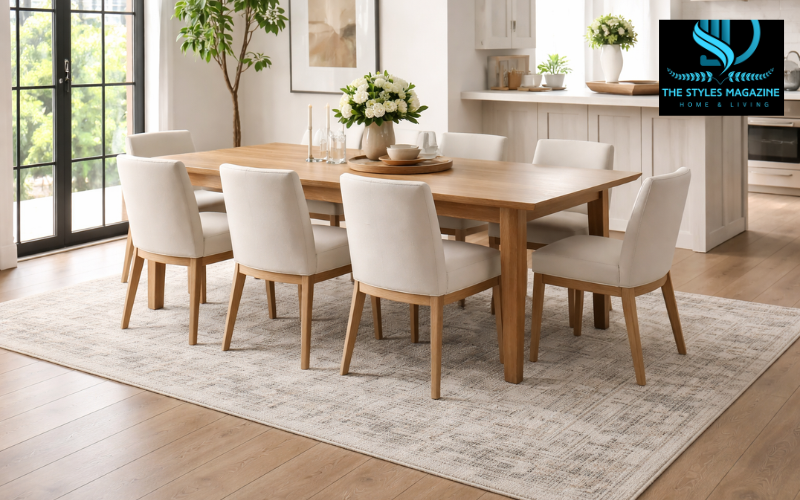
The general rule is that the rug should extend well beyond the table on all sides. This allows chairs to remain on the rug even when they are pulled out for seating. If the rug is too small, the back legs of the chairs will fall off the edge, which feels unstable and can damage both the rug and the floor.
Chair movement plays a key role in determining the ideal size. You should always consider how far chairs are pulled back during use, not just how they look when tucked under the table. A larger rug ensures a smoother and more comfortable dining experience.
It is also important to leave some visible floor space around the rug. This creates balance in the room and prevents the rug from making the space feel crowded. A well-sized rug should feel like it belongs in the room without overwhelming it.
Standard Rug Sizes for Different Dining Table Setups
The size of your dining table and the number of seats will guide you toward the right rug dimensions. For smaller dining tables with four seats, a rug that is around 8 by 10 feet usually provides enough space for chairs to move comfortably.
For medium-sized tables that seat six people, a slightly larger rug, such as 9 by 12 feet, works better. This allows for additional chair movement and keeps the proportions balanced.
Larger dining tables that seat eight or more people require even more space. In these cases, a rug around 10 by 14 feet is often a good choice. This size ensures that all chairs stay on the rug, even when fully pulled out.
In oversized rooms or spaces with extended dining tables, you may need to go beyond standard sizes. The goal is always to maintain comfort and proportion rather than strictly following fixed measurements.
Matching the Rug Shape to the Table
The shape of the rug should generally match the shape of the dining table for a clean and balanced look. A rectangular table works best with a rectangular rug, as both shapes align naturally and create a sense of order.
Round dining tables pair well with round rugs. This combination highlights the table’s shape and creates a smooth, cohesive appearance. It also works well in smaller spaces where softer lines feel more open.
Square tables can be matched with square rugs, although this setup is less common. When done correctly, it can create a neat and symmetrical look.
There are also situations where mixing shapes can work. For example, a rectangular rug under a round table can still look good if the room layout supports it. The key is to ensure that the rug feels balanced within the space and does not look out of place.
Best Rug Materials for a Dining Room
The material of your rug plays a major role in how it performs in a dining area. Wool is a popular choice because it is durable and naturally resistant to stains. It can handle regular use and tends to hold its shape well over time.
Synthetic materials such as polypropylene or nylon are also excellent options. They are often more budget-friendly and are designed to handle high-traffic areas. These rugs are usually easier to clean and maintain, making them practical for everyday use.
Washable rugs have become increasingly popular, especially in homes with children or pets. Being able to clean the rug easily can make a big difference in keeping your dining area looking fresh.
Natural fiber rugs, such as jute or sisal, offer a beautiful, textured look. However, they may not be the best choice for dining spaces because they can be harder to clean and may absorb spills more easily.
Low-Pile vs High-Pile Rugs in Dining Spaces
Pile height is an important factor when choosing a rug under a dining room table. Low-pile and flatweave rugs are generally the best options for dining areas. They allow chairs to slide in and out smoothly without resistance.
Low-pile rugs are also easier to clean. Crumbs and debris are less likely to get trapped, making regular maintenance much simpler. This is especially helpful in a space where food and drinks are used daily.
High-pile or shag rugs, on the other hand, can create challenges. Chairs may not move easily, and cleaning becomes more difficult as crumbs can get stuck deep within the fibers. While these rugs may look soft and cozy, they are usually not practical for dining spaces.
How to Make Sure Dining Chairs Stay on the Rug
To ensure comfort and stability, it is important to measure your rug based on how the chairs are actually used. Instead of measuring the table alone, you should consider the chairs when they are fully pulled out.
This approach helps you choose a rug that supports the entire dining experience. When chairs remain on the rug, they move more smoothly and feel more stable. It also protects your flooring from repeated contact with chair legs.
Many people make the mistake of choosing a rug based only on the table size. This often leads to a rug that feels too small in everyday use. Taking the time to measure correctly can help you avoid this problem.
Rug Placement Tips for a Balanced Dining Room
Proper placement is key to making a rug under a dining room table look and feel right. The rug should be centered with the table so that it looks balanced from all sides. This creates a clean and organized appearance.
Consistent spacing around the table is also important. The rug should extend evenly in every direction to maintain symmetry. Uneven placement can make the room feel off balance.
In open-concept layouts, the rug helps define the dining area within a larger space. It acts as a visual anchor, separating the dining zone from other areas like the living room or kitchen.
The size of the rug should also feel proportionate to the room. A rug that is too large can overwhelm the space, while one that is too small can feel disconnected.
Colors, Patterns, and Styles That Work Under a Dining Table
Choosing the right color and pattern can make a big difference in how practical your rug is. In a dining area, it is often helpful to select a design that can hide crumbs, spills, and everyday wear.
Patterns and slightly darker tones tend to be more forgiving than very light or solid colors. They help maintain a clean appearance even with regular use.
It is also important to balance the rug with the rest of the room. A bold pattern can add interest, but it should not clash with the table, chairs, or other decor. Neutral rugs offer a more subtle look and can easily blend into different styles.
The overall goal is to choose a rug that complements your dining space while remaining practical for daily life.
Practical Features Worth Considering Before You Buy
When selecting a rug under a dining room table, practical features should not be overlooked. Stain resistance is one of the most important qualities, as spills are common in dining areas.
Easy cleaning is another key factor. A rug that can be vacuumed or cleaned without much effort will save time and keep the space looking neat.
Using a non-slip rug pad is also important. It keeps the rug in place, prevents bunching, and adds a layer of cushioning. This not only improves comfort but also protects your flooring.
Durability is essential in a high-traffic area like a dining room. A strong, well-made rug will last longer and continue to perform well over time.
Common Mistakes to Avoid With a Rug Under a Dining Room Table
There are several common mistakes people make when choosing a rug under a dining room table. One of the biggest is selecting a rug that is too small. This can make the entire setup feel unbalanced and uncomfortable.
Another mistake is choosing a thick rug that makes it difficult to move chairs. This can quickly become frustrating in everyday use.
Ignoring the proportions of the room can also lead to poor results. A rug should fit both the table and the surrounding space.
Some people choose materials that are difficult to clean, which can be problematic in a dining area. Others forget to use a rug pad, which can cause the rug to slip or bunch up.
Avoiding these mistakes can help you create a more functional and visually appealing dining space.
How to Choose the Right Rug for Your Dining Room
Choosing the right rug under a dining room table involves bringing together several factors. You need to consider the size of the room, the shape of the table, how the chairs move, and the material of the rug.
It is helpful to focus on function first. A rug that works well in daily life will always feel more satisfying than one that only looks good. Once the practical aspects are covered, you can choose a style that matches your personal taste.
The best rug is one that feels natural in your space. It should support how you use your dining area while adding comfort and visual balance.
Conclusion
A rug under a dining room table is both a practical and design-focused addition to your home. It protects your floors, defines your space, and enhances the overall look of your dining area.
By paying attention to size, shape, material, and everyday usability, you can avoid common mistakes and choose a rug that truly works for your needs.
In the end, the right rug should not only look good but also fit properly and handle daily life with ease.
FAQs
How Big Should A Rug Be Under A Dining Room Table?
The rug should extend at least 24 inches beyond the table on all sides so chairs stay on the rug even when pulled out.
Should Dining Chairs Stay On The Rug When Pulled Out?
Yes, all chair legs should remain on the rug to ensure comfort, stability, and to protect your flooring.
What Type Of Rug Is Best Under A Dining Room Table?
Low-pile or flatweave rugs made from wool or synthetic materials are best because they are durable and easy to clean.
Is It Okay To Use A High-pile Rug Under A Dining Table?
It is not recommended because chairs become hard to move and crumbs can get trapped, making cleaning difficult.
What Color Rug Works Best For A Dining Room?
Medium tones or patterned rugs work best as they help hide stains, crumbs, and everyday wear.
a dining room table, balancing style, comfort, and everyday usability.
Disclaimer: This article is for informational purposes only. Individual preferences, room sizes, and usage needs may vary. Always measure your space and consider your lifestyle before making a final purchase decision.
Loved Reading This? Discover More Exclusive Stories And Updates At The Styles Magazine!